
Jaroensook: Clinch Violence
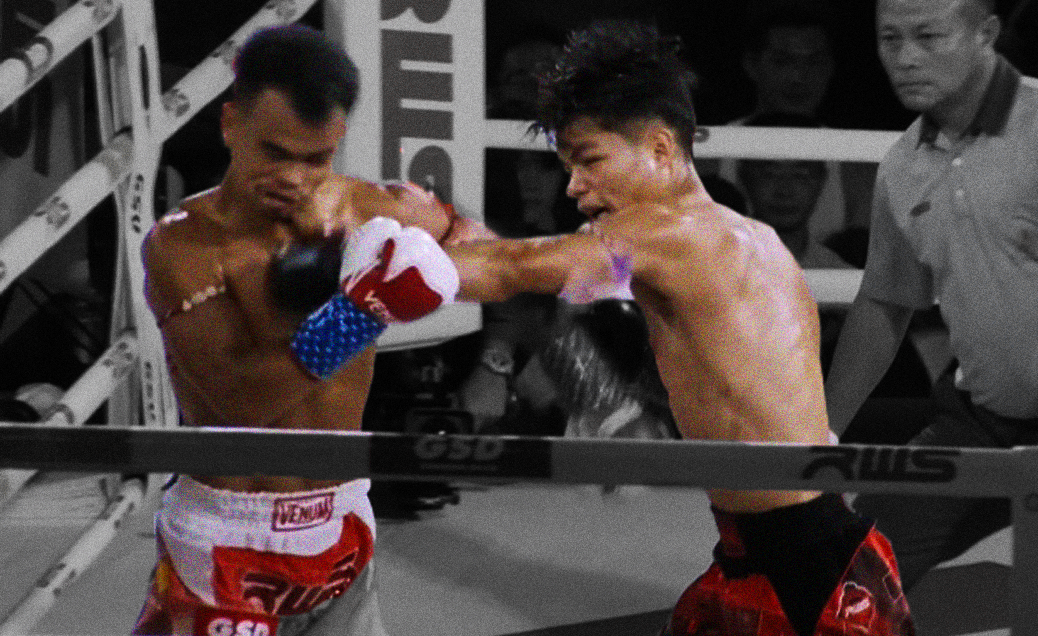
In December 2023, Jaroensook took his first kickboxing match. Impetuously, he did this against the top ten pound-for-pound ranked Kazuki Osaki. We have studied Osaki at length because he is something special, but on that night Jaroensook was able to take some lumps out of Osaki’s prestige with his stepping knees and left the arena justifiably peeved by the RISE judges siding with the Japanese kickboxer.
Two years later, Jaroensook was Rajadamnern stadium champion, and the promoters invited Osaki to the return the favour and meet Jaroensook under Muay Thai rules. Now able to hang onto Osaki and repeat the knee as many times as he wanted, Jaroensook bludgeoned Osaki with over one hundred and forty knee strikes over the course of five rounds and took an easy decision.
Jaroensook has had close to a hundred fights, but this small story in a much larger career should give you the read on Jaroensook. He is a fighter who has the tools to perform under almost any striking ruleset you present to him, but he will hit you with everything those rules permit. He beat (or didn’t) Osaki at his own game because that was what he signed up to. The moment Osaki made the mistake of signing up for Muay Thai rules, Jaroensook had a field day in the clinch. If he took a Lethwei fight I would expect him to become one of the world’s most vicious headbutters overnight.
Clinching in the Dead Clinch Age
In our last article, we discussed the stepping knee and its role in kickboxing, after Jonathan Haggerty used the stepping knee to the chest and face to keep Yuki Yoza in a shell. The knee in kickboxing is legal, and powerful, but limited. In Muay Thai, the clinch allows the knee strike to reach its full potential. But in the modern era the clinch is a source of controversy within the Muay Thai community.
Between ONE Championship and Rajadamnern World Series, Thailand’s two top stadiums are prioritizing exciting fights and while ONE Championship basically kills clinch work immediately, RWS has also reduced the amount of clinchwork that is permitted. Like the slow death of the true infight in boxing, this is more down to trends in referees and enforcement than any formal decree. If the handful of referees who officiate the big shows don’t like something, it quickly ripples down through the sport.
Jaroensook’s recent title fight with Captainteam Adsanpatong bucked the trend: with both men seeking the clinch and the referee permitting them to meet there. This was probably helped by the obvious desire of both men to fight in the clinch rather than just one, but Jaroensook’s frantic pace when the fight gets to the inside also allows him to get more done in the short bursts before the referee jumps in.
We so seldom get a chance to discuss the clinch in Muay Thai that it is worth taking a second to note how peculiar it is. Fighting traditions are just that, traditions. Unless it is an all-out, biting and scratching sort of fight, there are going to be some rules, and those rules shape how the game is played from culture to culture. For instance, the Burmese allowed headbutts in their kickboxing, and their neighbours, the Thais have always said “no thank you.” I am sure if headbutts were brought into Muay Thai tomorrow, the young boys in gyms up and down the country would adopt them in an instant, but it just isn’t part of the Muay Thai tradition.
The clinch is a grueling battle in the trenches, elbows whistling past just an inch off target, but all governed by tradition. Until you get your eye attuned to it, it can be difficult to tell why one dump is legal and another very similar looking trip garners a warning. It also means that while we can all agree that Muay Thai clinch work has a great deal to offer mixed martial arts, there are some habits that top fighters have in those clinches that would be suicidal to replicate in a fight with more permissive grappling / wrestling rules.
The “vice clinch” or “long clinch” that Jaroensook favours is a great example of a technique that you will probably only ever see in Muay Thai. Syvlie von Duuglas-Ittu had a great episode of her Muay Thai Library with Tanadet Tor. Pran49 wherein he explained his version of this lock. Essentially the fighter slips his head beneath the opponent’s jaw, and then joins his hands and straightens his arms: creating a pinch between his biceps and the top of his head.
Across most combat sports, inside control is a primary concern in clinched positions. In Fighting Library: The Orchid Man we examined a few passages from a 1914 text called Favourite Ring Tactics, wherein the author stressed:
[Jim] Driscoll annexes the inside lines right away. Let any man charge him, or let Jim himself deem it advisable to go into a clinch. No matter which may be the case, you will almost invariably discover Master Jim Driscoll with both his arms between his opponent's, and you will find him keeping them there.
In boxing, wrestling, and Muay Thai, inside ties are ubiquitous. Yet to attain the vice clinch, a fighter will often give up inside position. Figure 1 shows how some fighters will pummel their arms over the opponent’s shoulders and give them underhooks first, then drop their head below the opponent’s jaw and look for the vice clinch.
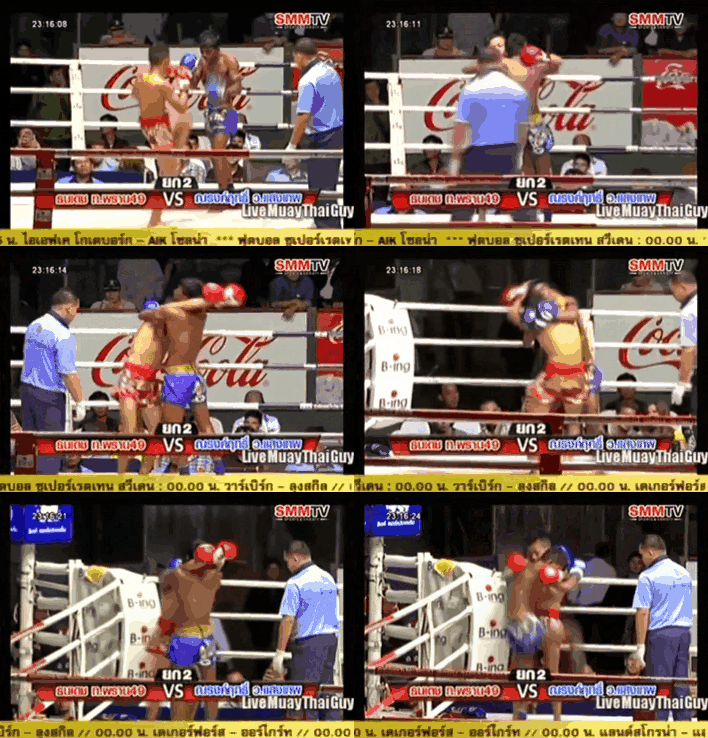
Fig. 1
Jaroensook will go over both of his opponent’s arms sometimes, but much of the time he will keep one underhook and apply the pinch of the vice clinch in the same way: crossing his gloves and straightening his arms. Here Jaroensook has an underhook with his right arm but is able to apply the vice clinch anyway.
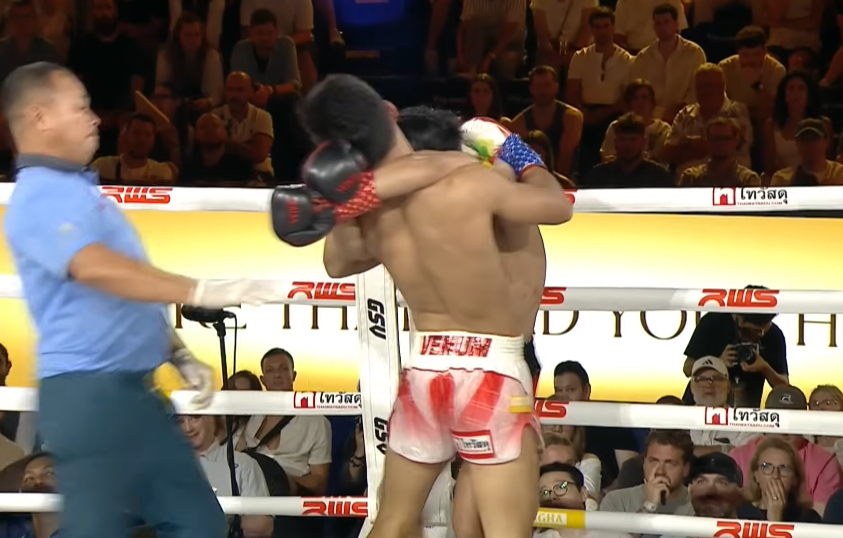
Fig. 2
Being able to reach over the opponent’s arms and not immediately be bodylocked to the floor is one way in which the Muay Thai clinch is different to the mixed martial arts clinch. Another way is in the use of headlocks. Side headlocks—as opposed to front headlocks— are near worthless in grappling sports because the opponent is one slip of your grip away from your back. Old timey carnival wrestlers would often let their local challengers get headlocks because it excited crowds but the carnie would remain firmly in the driver’s seat. However in Muay Thai, variations of the headlock are particularly potent.
Here is a clip of Yothin shucking amateur fighter, Tino Brunner into a side headlock and I am sure you can work out why this would be bad for Brunner: the knee. There is a caveat though, referees almost always move to break the clinch quickly on the headlock.
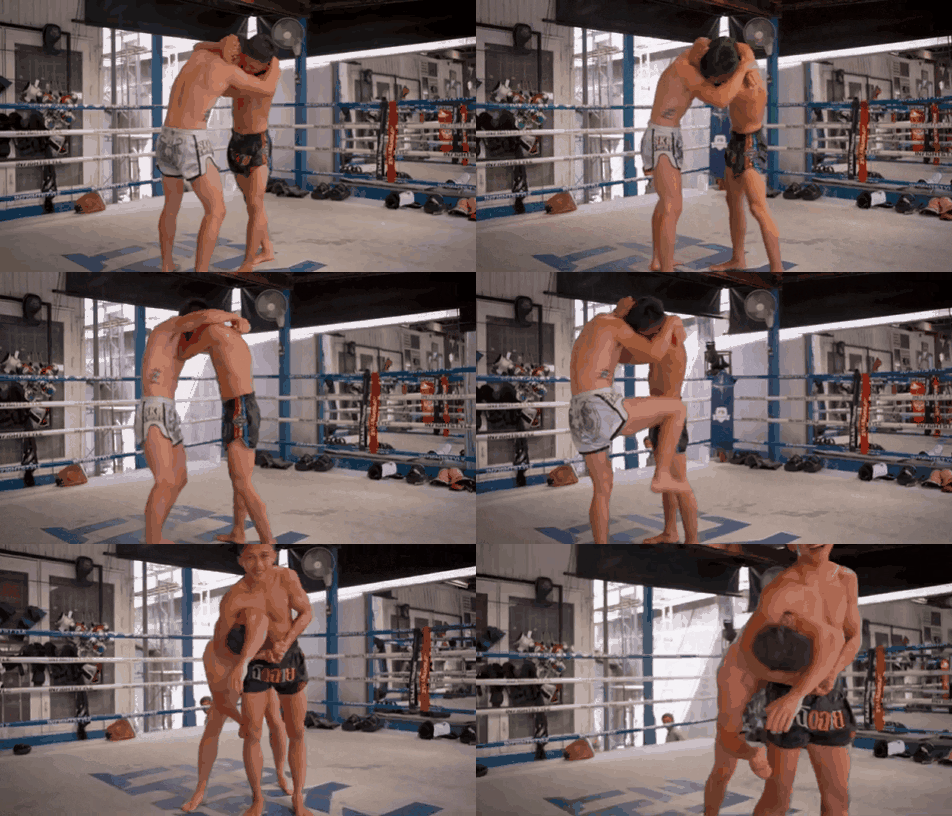
Fig. 3
Having just confidently declared that side headlocks are near worthless, I must immediately double back and point out that because Brunner’s arm is inside the lock, this is much more akin to a merkle: a very powerful wrestling position that you will sometimes see used effectively in MMA. But that is combat sports: you announce a rule and immediately have to explain the many times that rule is not true.
To return to Jaroensook, it is remarkable how often his vice clinch organically funnels the opponent into a headlock with their head low enough for him to knee. The vice clinch forces the opponent bolt upright, killing their knee strikes and straightening up their body as a target. It also allows the clincher to get his hips back and angle his straight knees better into the opponent. The moment the clinchee begins to create some movement, their head ends up going to one side or the other and their body bends to follow it. They begin to peak out behind the man with the vice grip, but the two men begin to fall forward in a schoolboy sort of headlock.
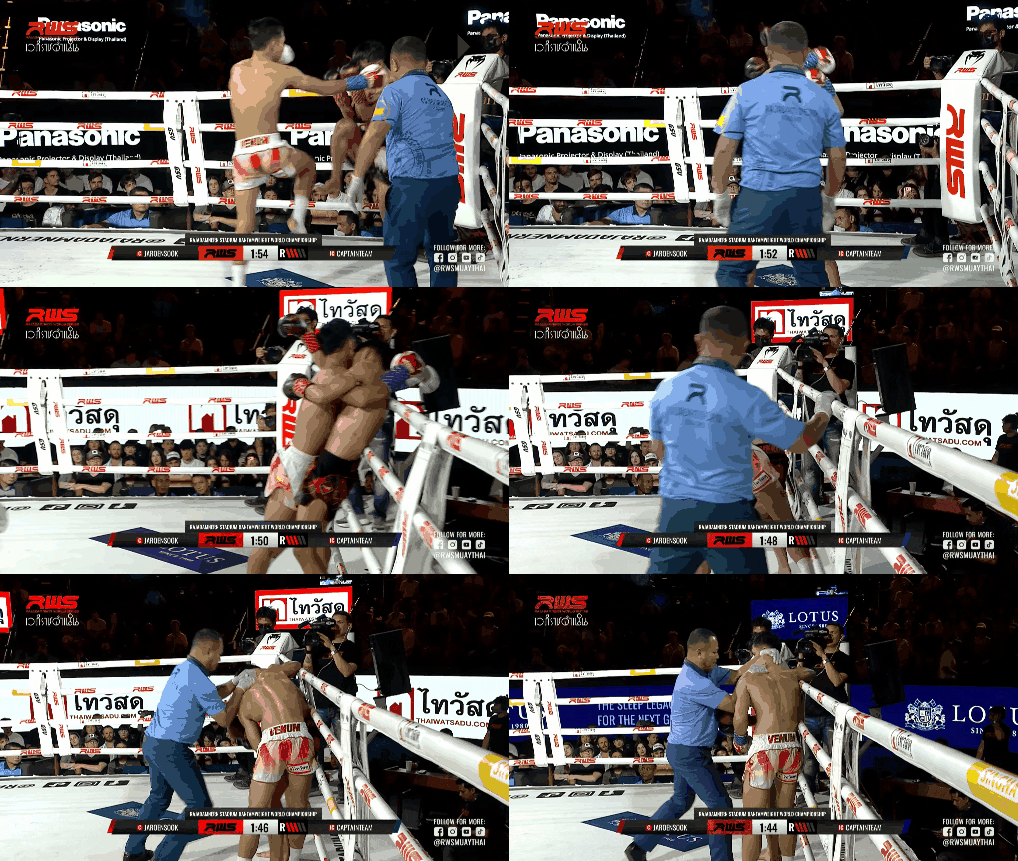
Fig. 4
It results in these very scrappy looking periods along the ropes that the referee will quickly break. But if the official is a little slow, Jaroensook can sneak in some especially effective knees. This was how Jaroensook knocked out Captainteam in his second RWS title defense, and he had just as much success kneeing former Rajadamnern stadium champion and all around hard bastard, Kumandoi in eye multiple times.
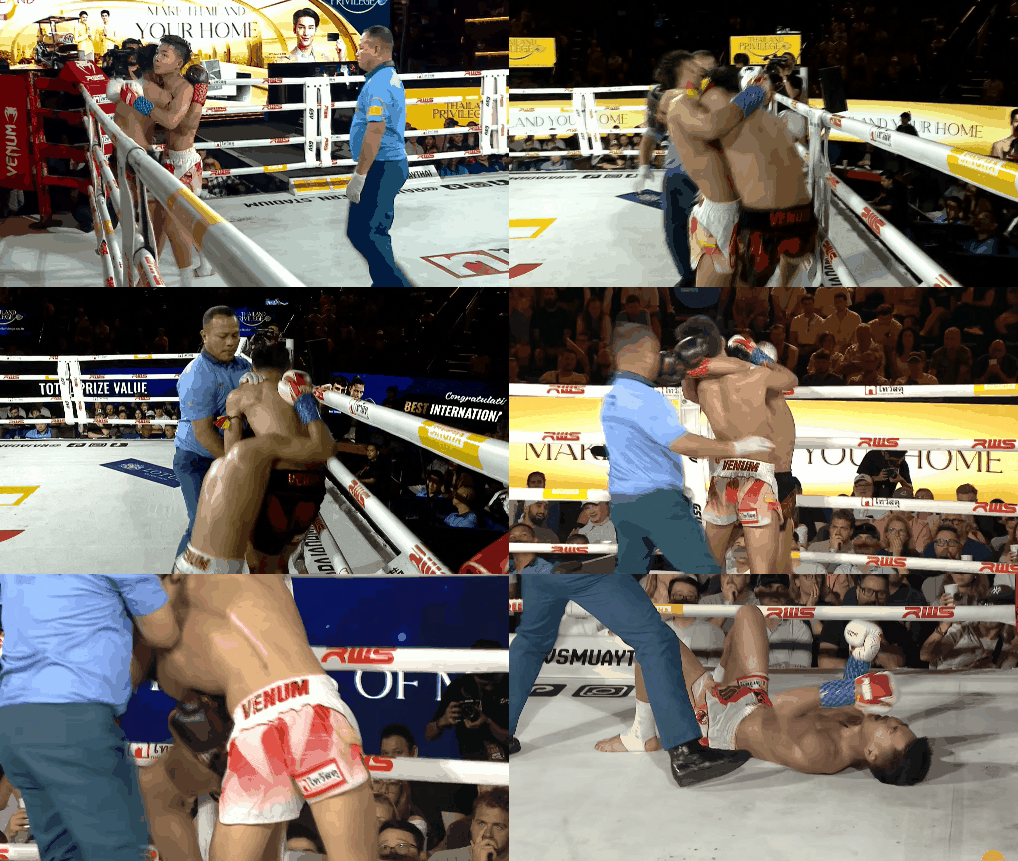
Fig. 5
Another key aspect of Jaroensook’s clinch also flies in the face of most combat sports clinchwork. When he does take the inside lines in the clinch, Jaroensook has a beautiful elbow that is delivered with a full turn of the hips and shoulders but travels about three inches to the opponent’s jaw and then through it. It is like a completely committed left hook, with the elbow going clean through the target, and after which the fighter ends up facing away from his opponent if he misses.
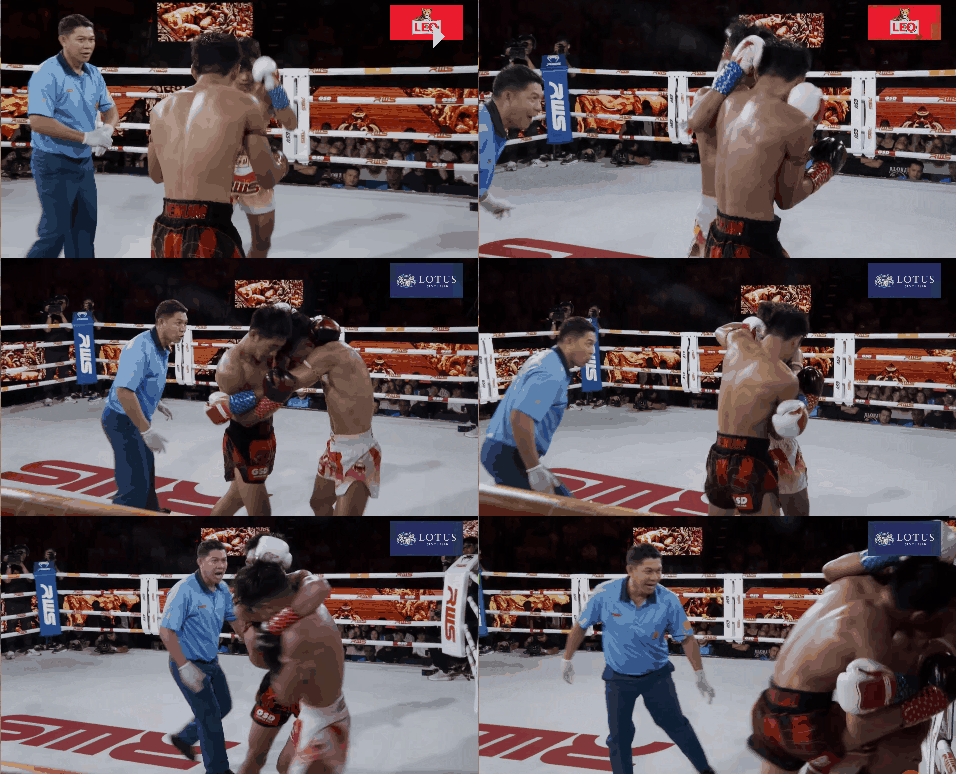
Fig. 6
Against Kumandoi he repeatedly threw these, missed them, and then either ended up with Kumandoi behind him (which the referee soon broke up), or reset his inside control and tried again.
Figure 7 shows a beautiful sequence off a typically Kumandoi missed kick to backfist. Jaeronsook clinches, taking the inside line with his right hand. He snicker-snacks a quick elbow across Kumandoi’s jaw and his arm comes to a high underhook as the two turn. Jaroensook then pummels his right arm back to the inside line, lands the elbow again, and turns into a headlock—threatening to bend Kumandoi forwards into a knee again.
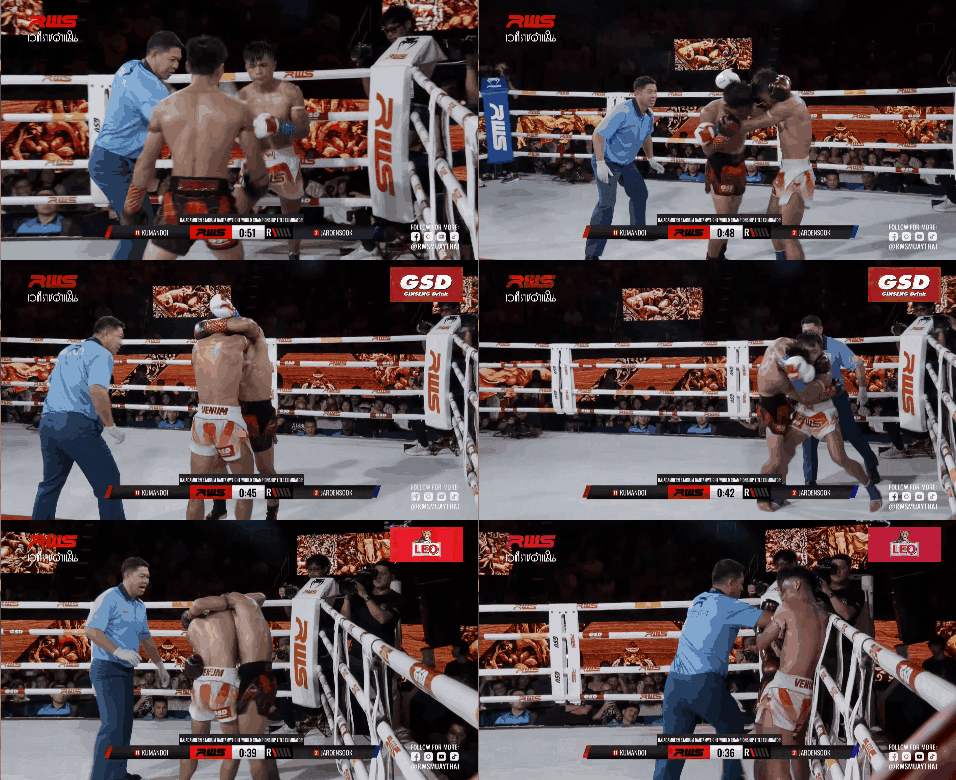
Fig. 7
For a clinch fighter, a good frame with the shin or knee can be quite a hindrance. When Superlek met the Elbow Zombie, Muangthai, he parked his shin across Muangthai’s belt line every time they came together and Muangthai never found a way around it. Jaroensook commits to the classical Muay Boran style downward elbow the instant his opponent’s leg lingers against him. He isn’t going to score any TKOs via elbow to thigh, but the power of the strike often shifts the frame and the damage is secondary.
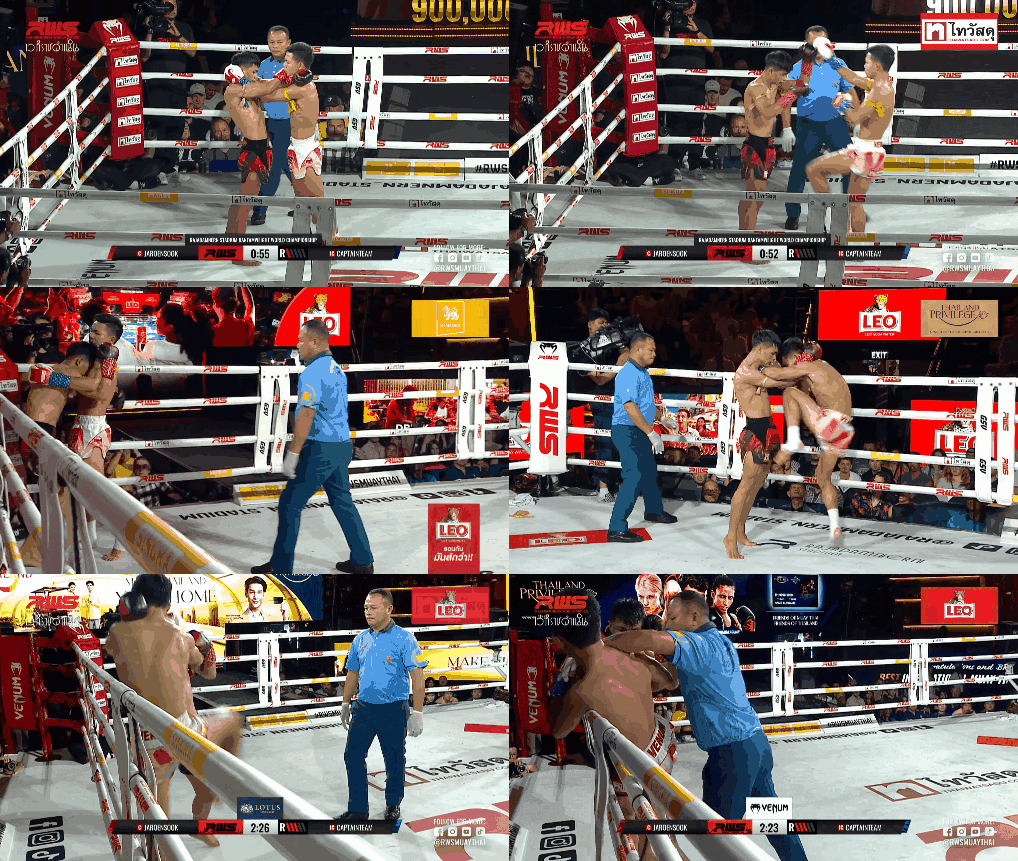
Fig. 8
Simple Closers, Done Right
As a strong clinch fighter in an era that apparently hates clinch fighting, Jaroensook has the same problem as our beloved Yothin FA Group: he must safely and consistently close the distance. A lot of that is accomplished through his solid traditional defense. He is not pulling his head back or limboing under strikes to look good, he uses a high guard or a long guard to close on the opponent and most of the time he can block the first shot they throw and have his hands on them before the second.
Here Puanyai does what you are supposed to when under pressure from an opponent hiding behind their guard: he throws elbows and tries to time Jaroensook stepping in. Jaroensook manages to move his long guard to meet everything coming back, sneaking in a good left hand, and eventually timing a left elbow the sends Puanyai down for the count.
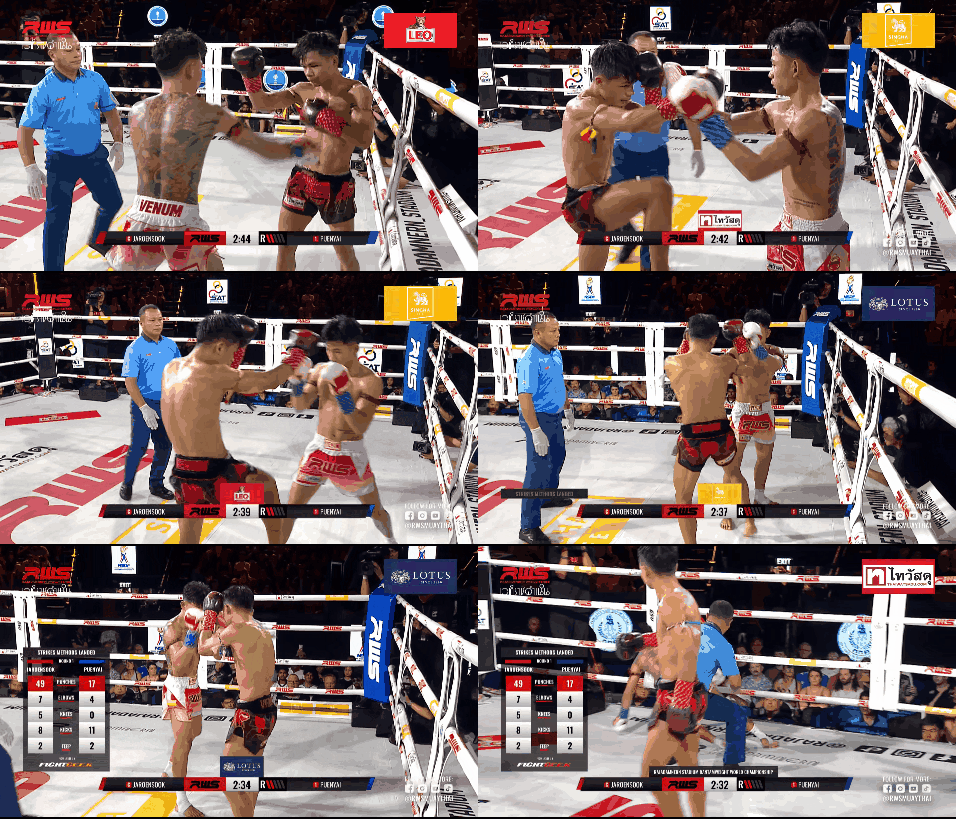
Fig. 9
In his gruelling clinch battle with Captainteam, Jaroensook often came in behind a raised knee and hopped toward the inside: expecting a return that he could then stick to. Jaroensook was not even teeping in this fight, there was no deception, he just floated in behind the high knee over and over. This does make it difficult for the opponent to step back and time clean kicks between your advances, denying them a nice clean kickboxing contest.
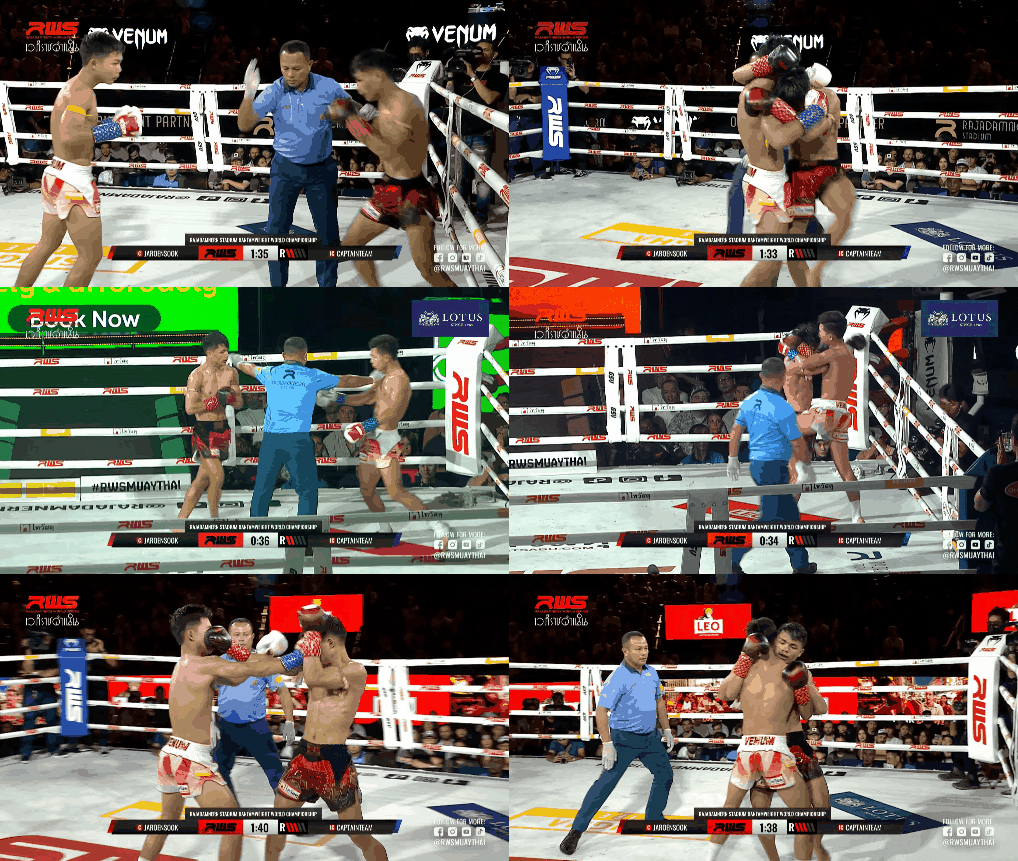
Fig. 10
Most of the time though, Jaroensook’s one-two bridges the gap. Though he is a southpaw, it does not matter much which stance his opponent stands in and he is not that concerned with outside foot position against orthodox opponents. He is not seeking to score and disengage, or to turn the opponent, but rather to smash in on top of them.
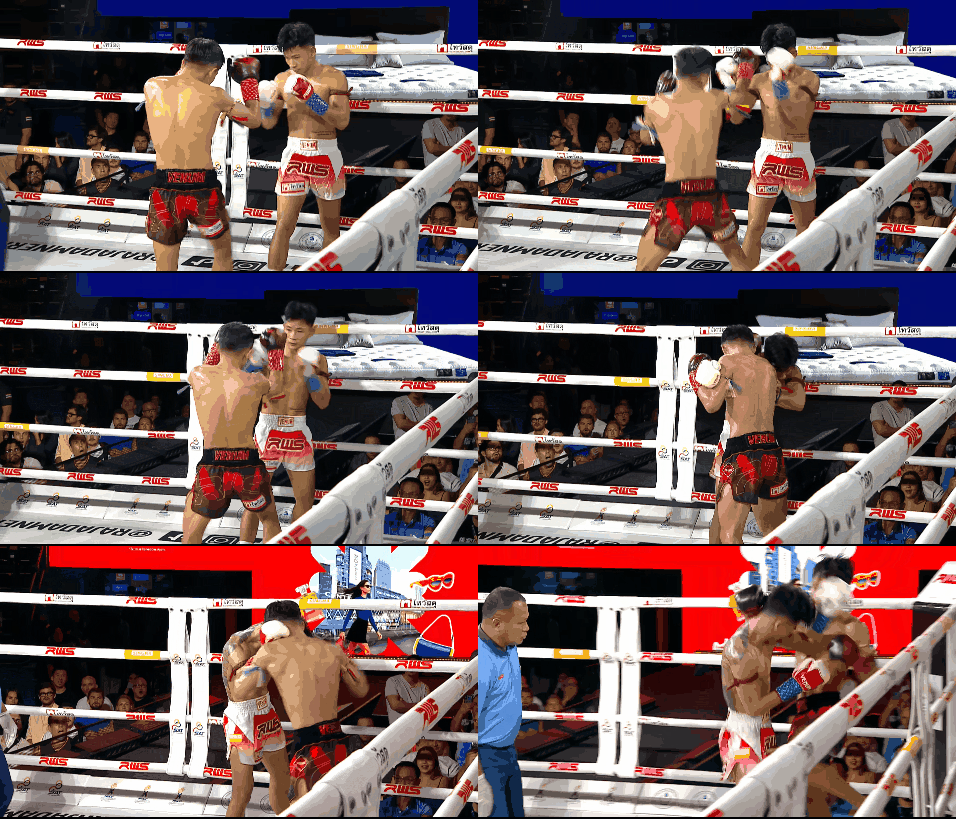
Fig. 11
Because his intention is to close, he never has to worry much about counterpunching as long as he commits wholeheartedly to the left hand and advancing through it. Apropos of nothing, here is a lovely left kick pump fake into a slight angle, and a left straight.
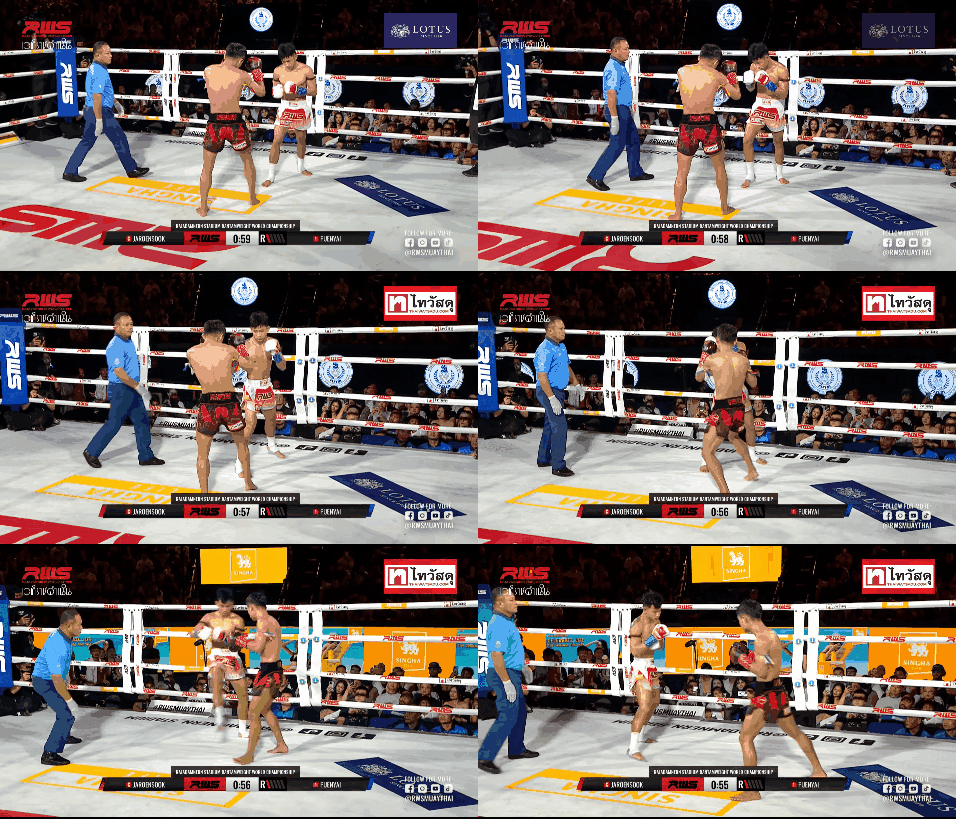
Fig. 12
The stepping knee off the one-two is a fabulously effective combination for Jaroensook because it carries him straight into the clinch. More than that, he was able to use it under kickboxing rules. This was almost one hundred percent of Jaroensook’s output against Kazuki Osaki. It might be a minor point of mechanics, but the way that Jaroensook always gets his three steps on the one-two, rear knee is simply beautiful.
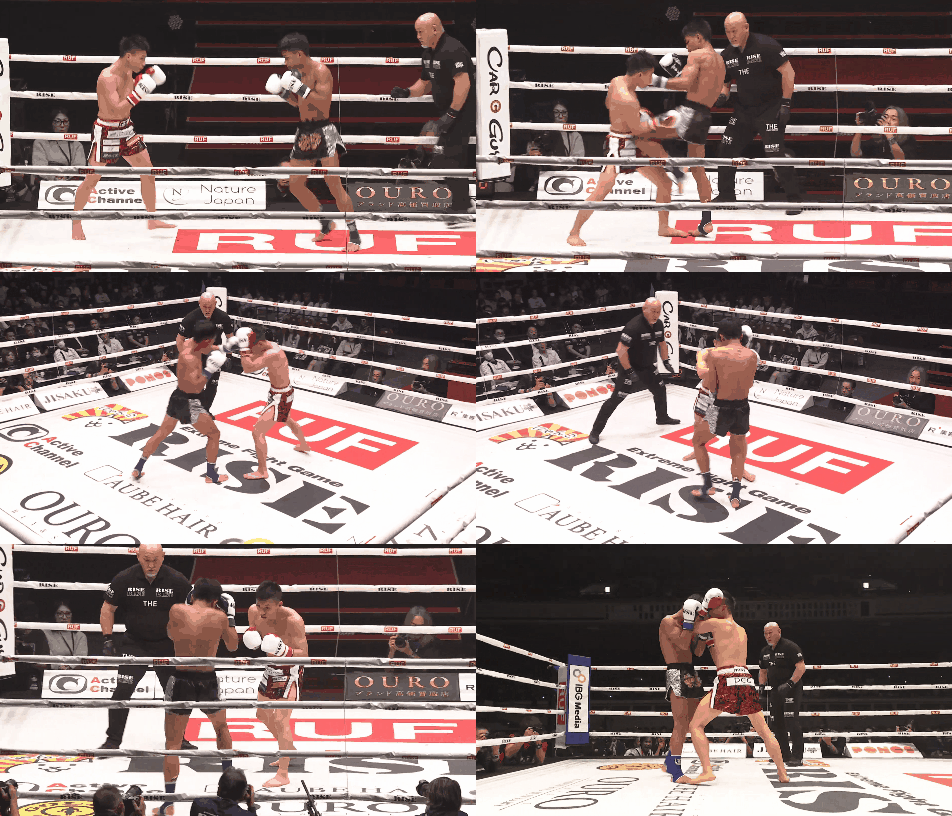
Fig. 13
Not only is this the textbook way to do it, but it also covers more distance. Jab with the lead foot, cross with the rear foot, and then step with the lead foot again into the knee. You often see this combination abridged to just one step and it becomes a lunging mess. Even if the opponent does not retreat, the three steps give the fighter plenty of control to pull up short with the knee.
Jaroensook is just as effective with a one-two in a step up knee with his lead leg. This tends to punish opponents for bringing their hands up ready to push off or begin taking the inside lines in the clinch. He often slots a step up right body kick in the same opening instead.
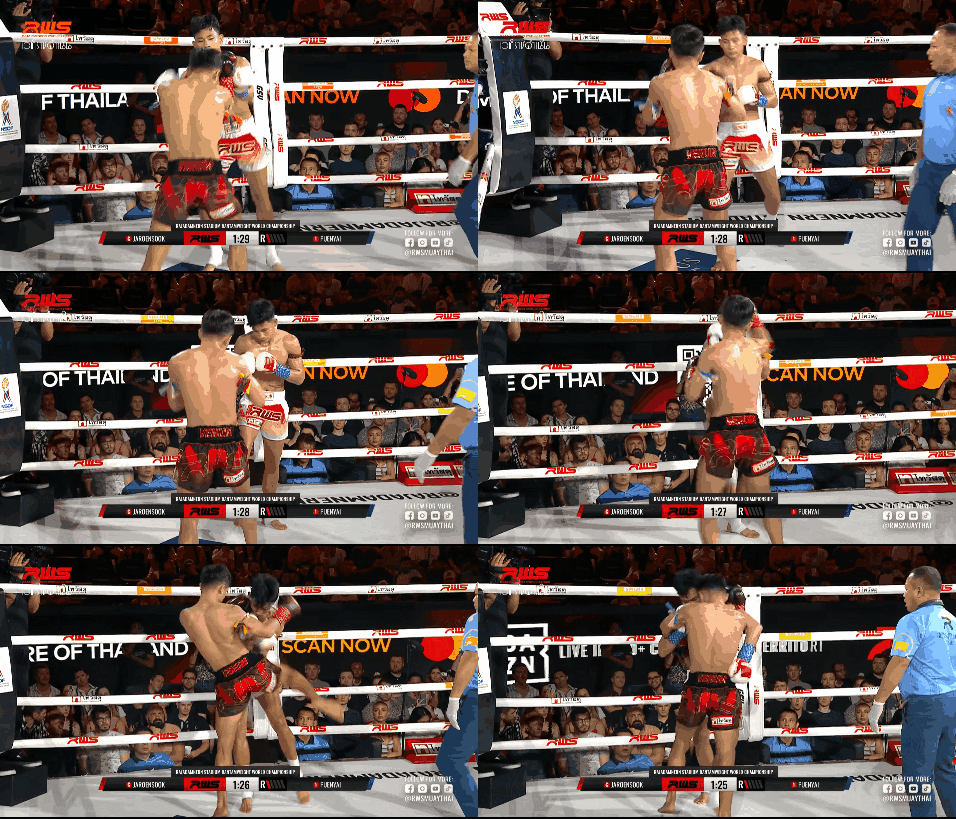
Fig. 14
Jaroensook does not have a particularly deep bag of tricks out at range, but one neat look that has scored him some great connections is to spread his feet, lower his stance, and jump forward with both feet in a leaping right hook into a left straight. Spreading his weight and lowering his stance before he starts allows him to perform the bounce forwards with both feet on the hook, just refer to some Jose Napoles highlights to see that performed best. The hook is more of a slap to take anything in front of him out of the way, and then the left hand extends far beyond the hook. It is somewhat similar to the way that the pocket rocket, Duan 99 swings his left hand out to clear the air between himself and his opponent an instant before he throws his head forwards and pitches his right overhand.
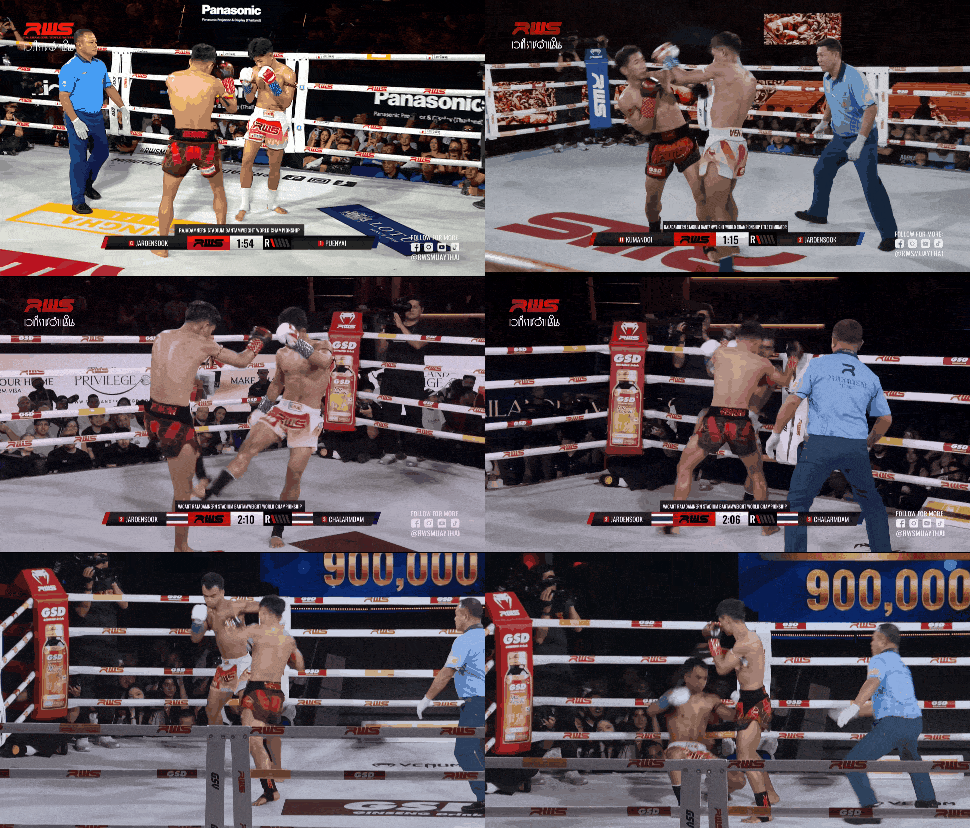
Fig. 15
Two weeks ago, Jaroensook notched his third successful defense of the Rajadamnern Stadium bantamweight title with an elbow knockout of Puenyai. In all of this praise, I failed to mention that Jaroensook is just nineteen years old. When he met Osaki at the height of his powers, Jaroensook was just seventeen. Not only is that unbelievably impressive, it feels like it should probably also be illegal.
The trend in Muay Thai is to burn through your talent young and end up “washed” but still a decent kickboxer in your late twenties. Superlek and Yothin have somewhat bucked that trend, still looking crisp in their thirties. Whether Jaroensook burns bright and short, or can maintain this kind of form for a decade or more, is worth sticking around to see.