
Fighting Library - The Orchid Man
In the course of a life in martial arts, my library has become a source of pride. I cannot claim a desire to own every tome on combat sports or fighting that was ever published because I would end up with a collection of over a hundred variations on the “Beginners Guide to Karate,” and a new boilerplate boxing biography would have to be purchased every day. But if a text looks even a little unusual, obtaining it becomes an obsession. When I pass a second hand bookshop, I will delay plans to stop in, on the off-chance that they have some small sporting section that might surprise me with a new gem.
And so today, we finally begin a series examining this writer’s favourite unusual books on the art of fighting.
My Methods or Boxing as a Fine Art – Georges Carpentier
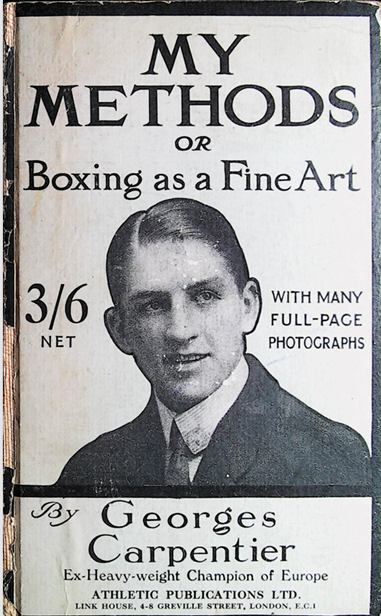
As the British and American schools of boxing traded victories, Georges Carpentier was arguing that he had created a new style altogether: the French school. This little book was published in 1929, and yet the techniques and tactics Carpentier presents are considerably more modern than those of his peers. There is a comparison to be made with the work of Carpentier’s most famous opponent: Jack Dempsey. Dempsey’s “Championship Fighting”, was published much later in 1950 and is almost entirely devoted to the mechanics of punching with tremendous power. The sole tactical note that you might take from it is Dempsey’s love for the “sneaker” on the break from a clinch. Though coincidentally, one of Carpentier’s finest knockouts came in such a way.
Carpentier’s book is instead a compendium of tactics he attempted against different types of boxer, with very little time given to “this is the jab”, “this is the cross” and “this is the hook.” He seems not to be interested in teaching a novice to fight, but instead to demonstrate how he fought differently.
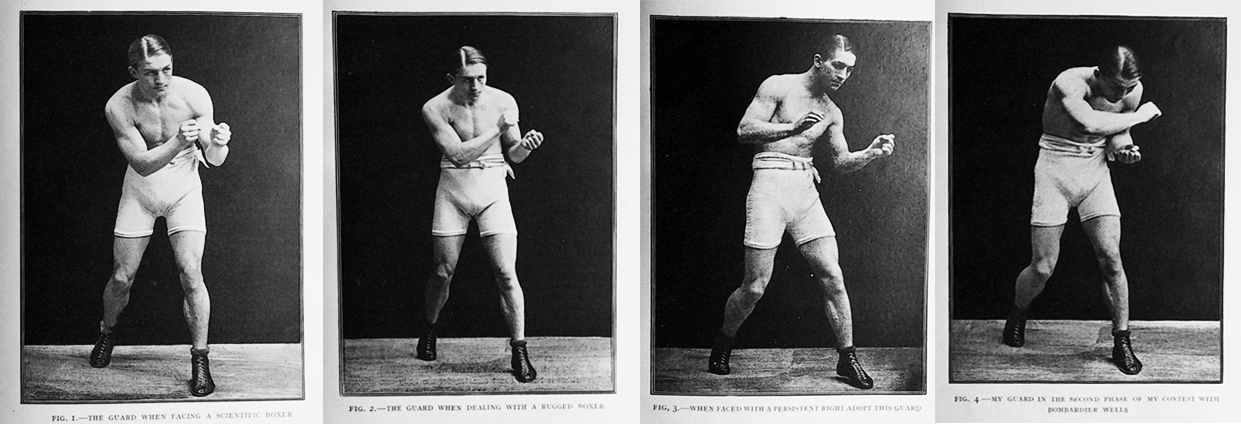
“Most boxers mechanically adhere to the same guard. This shows a woeful lack of subtle appreciation, one that may turn possible victory into disaster. The really pensive boxer should be able to adapt himself to the requirement of the occasion that presents itself.”
In the course of a brief chapter on the stance, Carpentier describes a stance for use against a scientific boxer, a rugger fighter, a right hand heavy fighter, and the folding guard he used for closing on Bombardier Billy Wells.
For a fighter who was active in the 1910s and 1920s, there is a good amount of footage of Carpentier available, even if it is not all terrific quality. In much of the footage it can take a while to work out which fighter is Carpentier because he so often affects a different stance and posture. Against Joe Beckett, he is hunched forward, ready to leap in with right hands and left hooks. Against Frank Klaus, his head is hanging back over his rear foot.
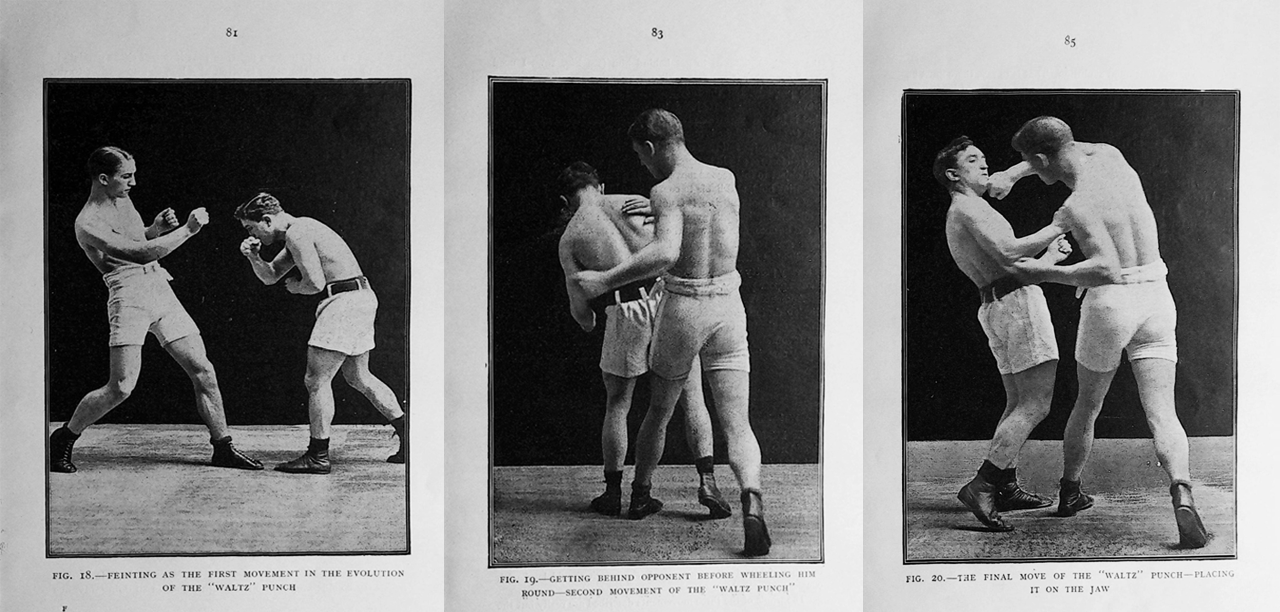
Two signature Carpentier looks covered in his book are “the body shift” and the “waltz punch.” We are lucky enough that the existing footage of Carpentier shows him using these techniques against high level fighters, and we can compare these to the staged photographs and descriptions under teaching conditions.
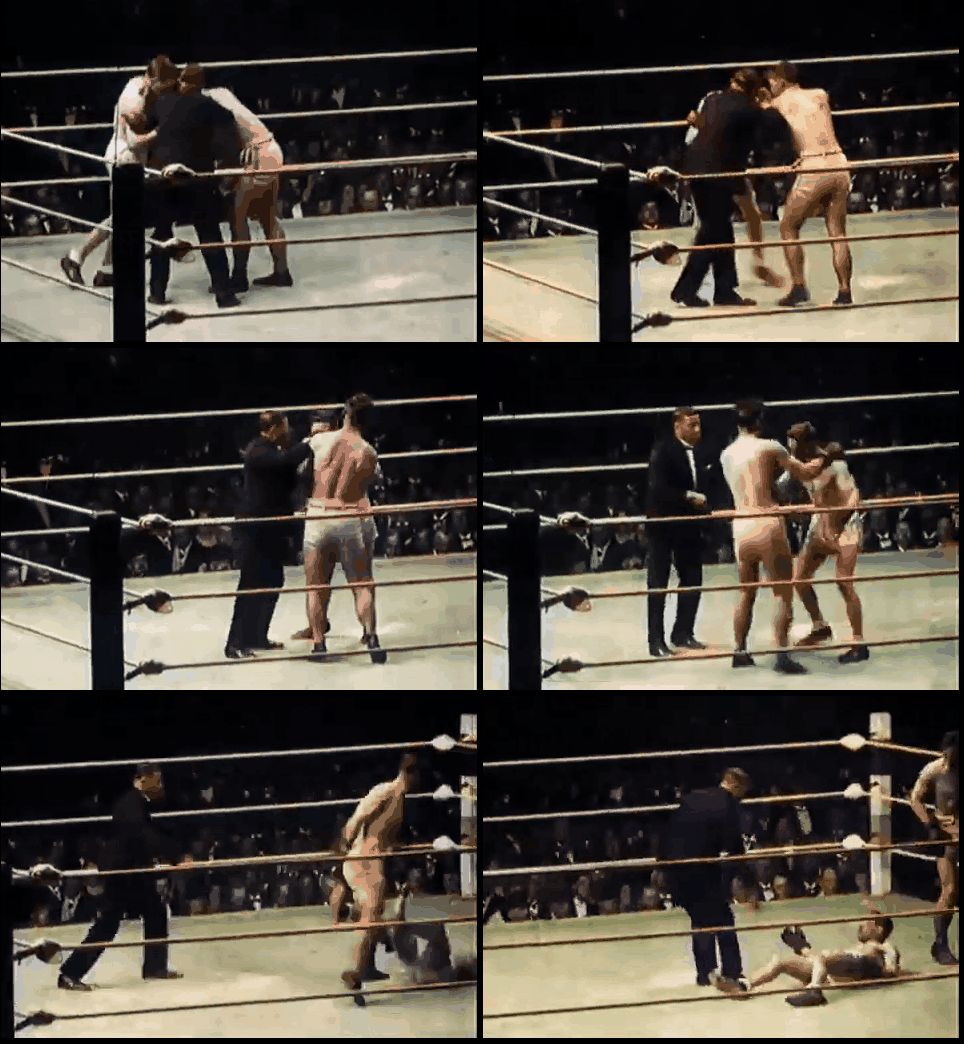
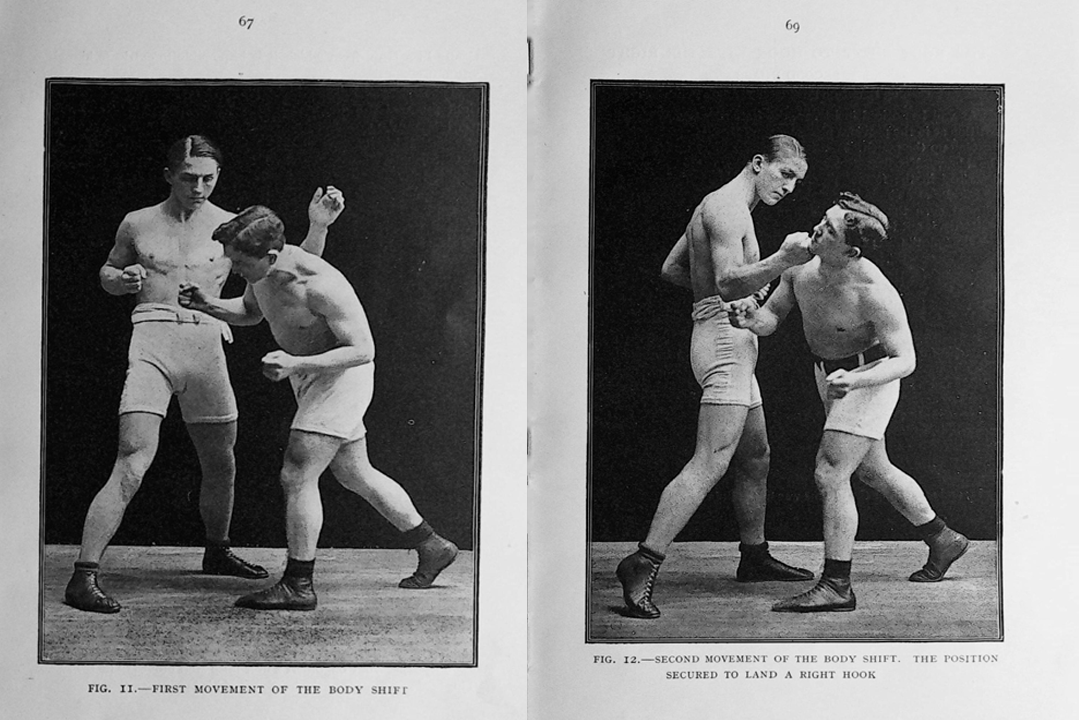
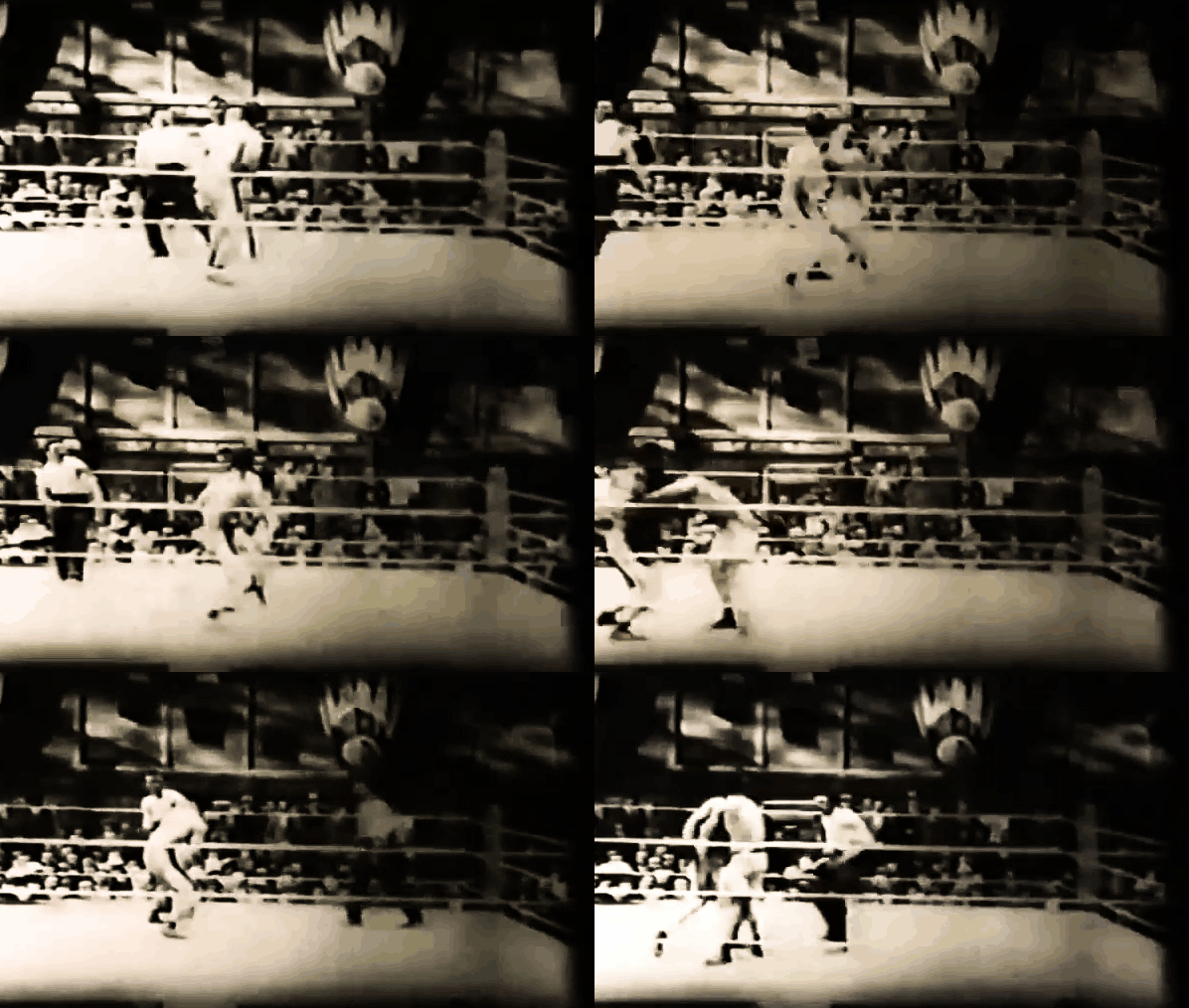
In the case of the body shift, Carpentier describes swaying back and blading his body as an opponent lunges in behind their right hand, allowing them to fall onto a counter uppercut. Or to put it more fruitily:
“The impetus he has gained just before reaching you is such that by half turning your body away as shown in Figure 11, he perforce falls on to the punch that you have in store for him.”
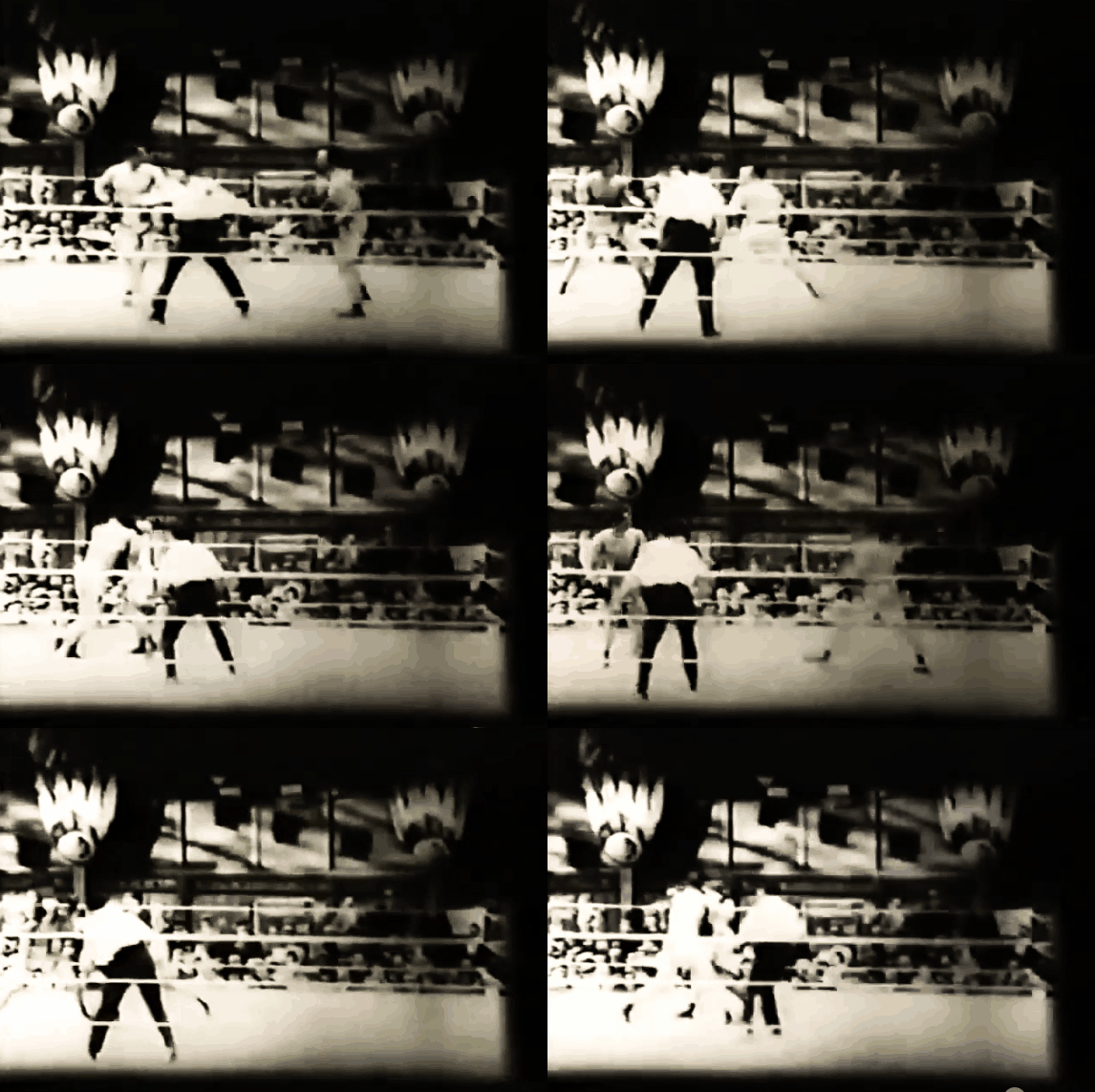
Carpentier states specifically that he used this technique against the great American infighter, Frank Klaus. Here are the instances from the Klaus fight.
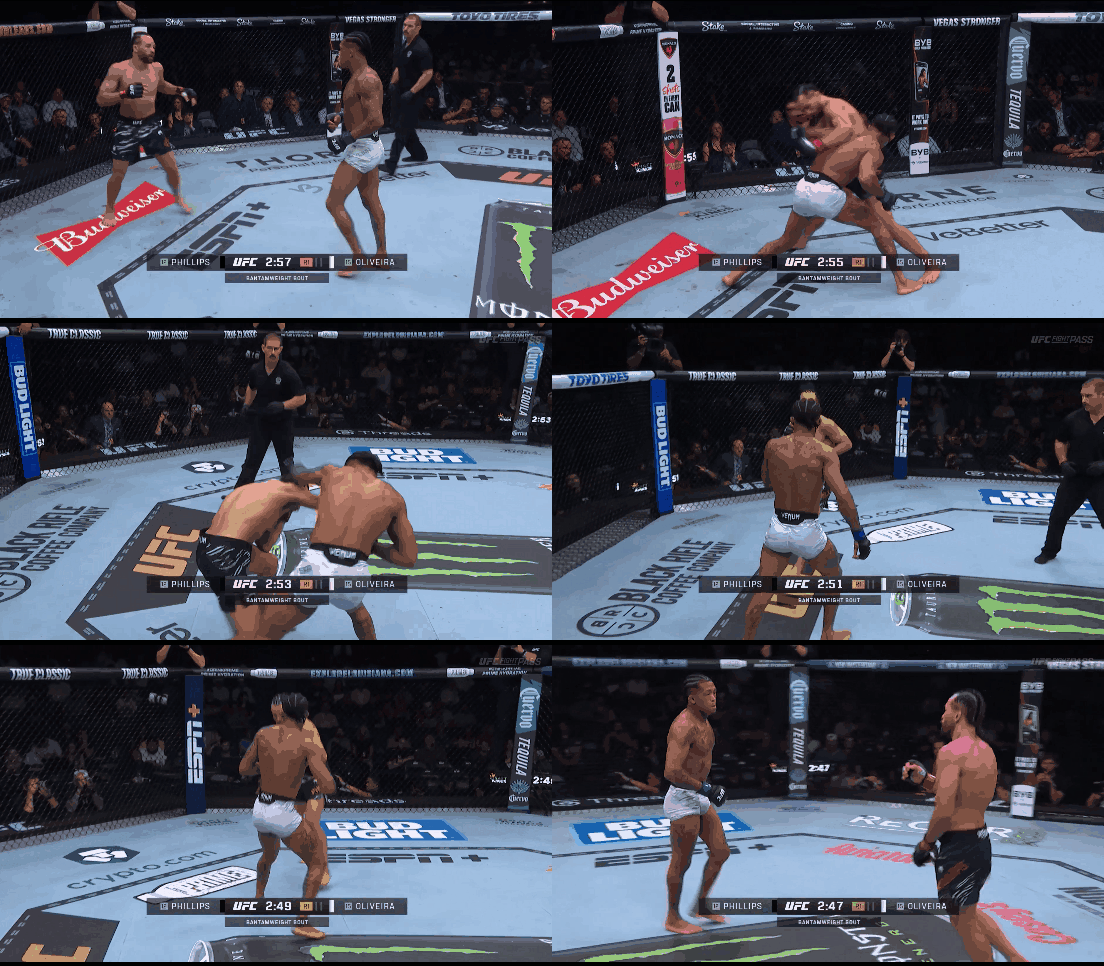
You will notice that this movement is similar to using the shoulder roll to pivot out off the opponent’s right hand—as we discussed in Cruz vs Muratalla.
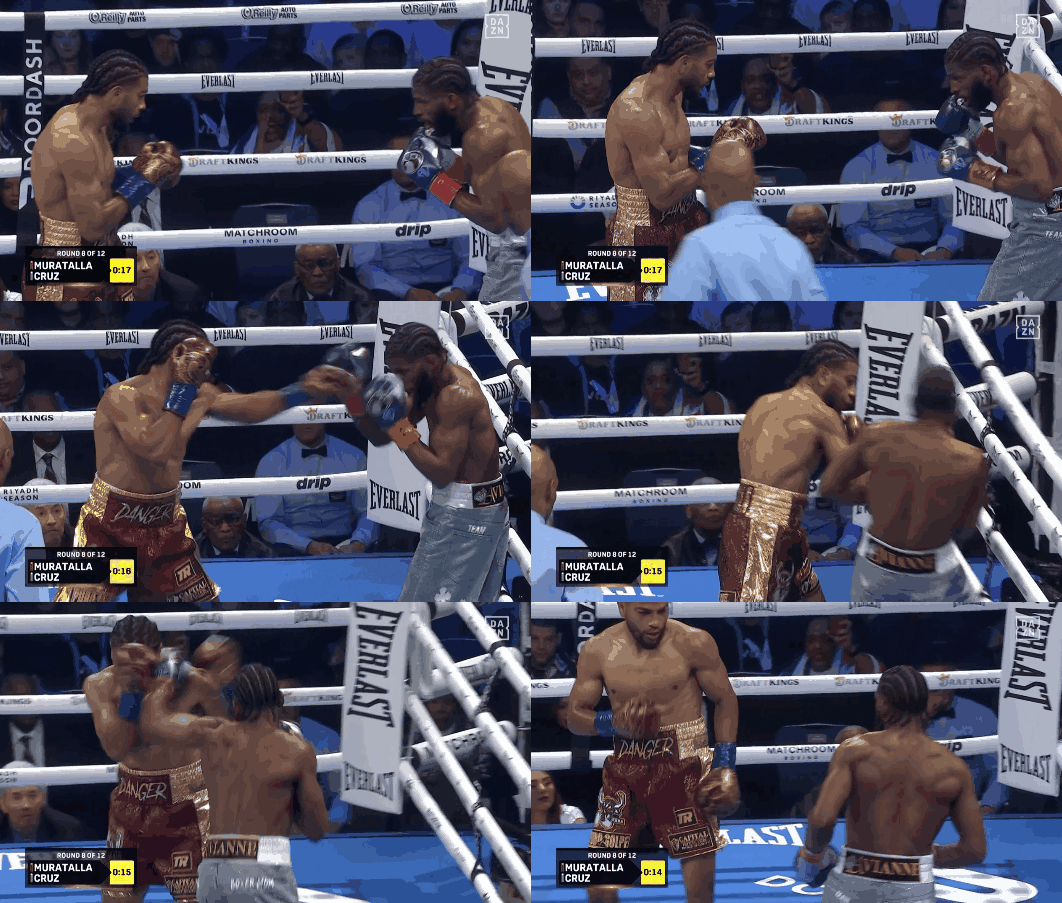
But where that is a pivot around the lead foot, in Carpentier’s variation the left foot is stepped out to the left slightly. Though as the fighter is turning to his right, this is essentially a backward step.
When revisiting this section of My Methods, I was immediately hit with a sense of deja vu. Vinicius Oliveira uses the same body motion while advancing on opponents. He probably overuses it, and makes it look sloppy as hell, but it does keep him in position to return with his wide right hand.
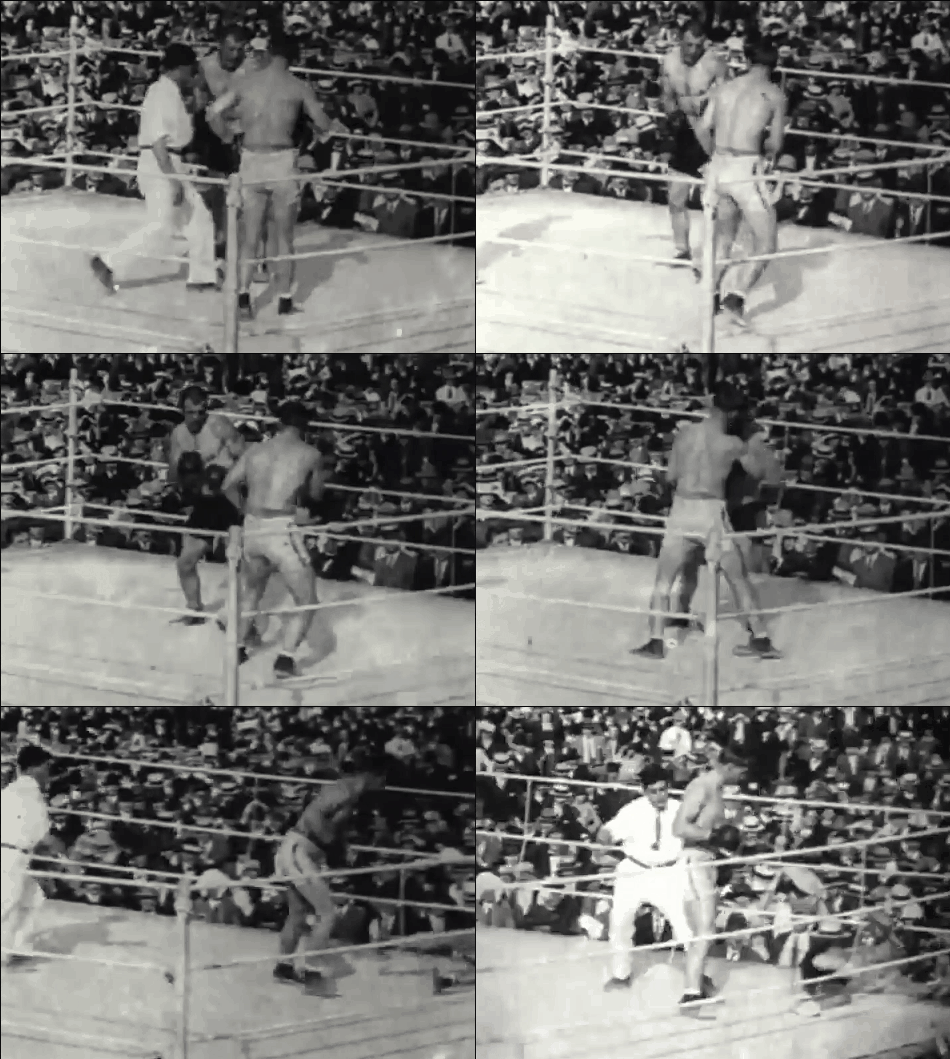
The Waltz is the technique for which Carpentier is remembered. Often it worked like an elbow pass in wrestling. A stiff parry high on the biceps, used to steer the opponent past you, combined with a step out to the right and behind them.
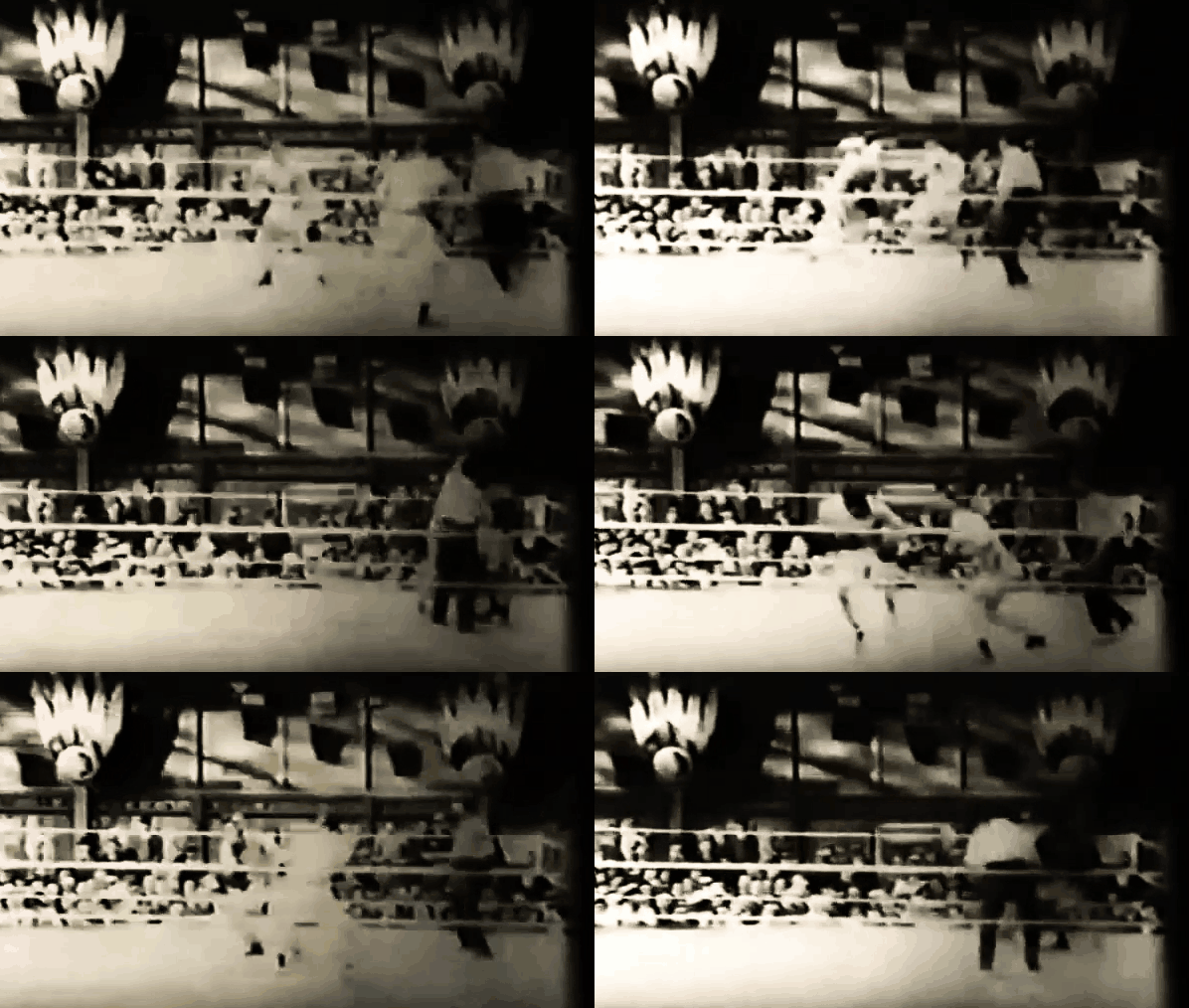
Once again, the bout with Frank Klaus is the perfect fight to go looking for examples, because Klaus, along with the great Harry Greb, was the foremost proponent of the “American school” of two-handed hitting on the inside. In the below examples you will see Carpentier draw a lunge, side step it, and try to parry Klaus past him by the shoulder. He achieves a good angle and pursues Klaus with a leaping left hook.
In My Methods, Carpentier declares: “When I fought Frank Klaus, I had but a very vague notion on infighting […] After the meeting I made up my mind to profit by the lesson, and study half-arm body punching. It was, perhaps, a trifle strange at first, but the more I persevered, the more I felt that a new power was being born unto me.” In the film we have of Carpentier, it is fair to say that he held his own on the inside against Klaus, and in other fights both before and after, he demonstrates himself a force with the uppercut in tight.
At several points in the book, Carpentier details the folding guard he used to get in on the taller Bombardier Wells.
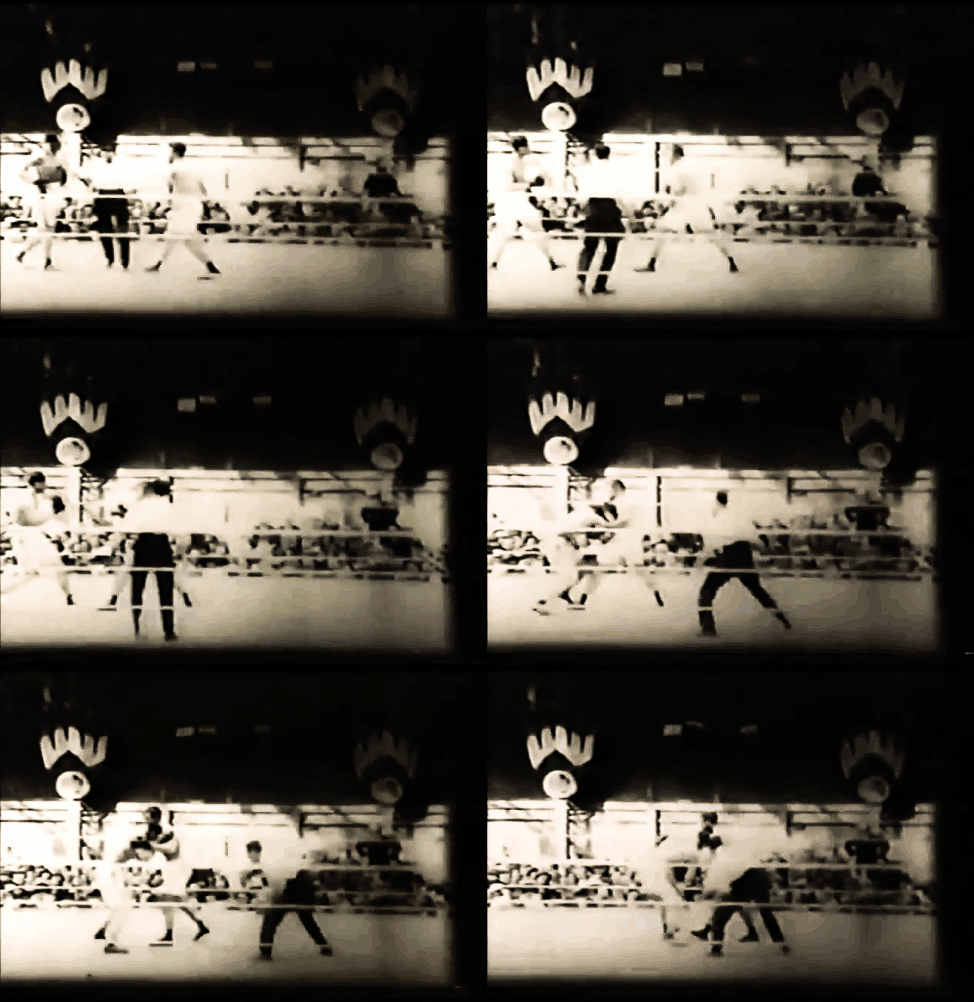
Carpentier also devotes a great many words to the ideas of feinting and drawing, and in his fights you can see him using these to find openings. Here is a beautiful feint to force Klaus into a cover before coming underneath with the uppercut.
Favourite Ring Tricks of Boxing Champions - The Editor of Boxing
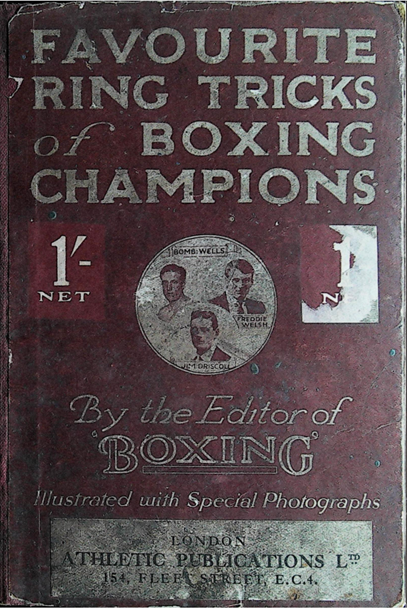
This brings us to a little book from 1914 called Favourite Ring Tactics of Boxing Champions.
We have often disparaged the state of the infight in modern boxing. Referees are now so afraid of accidental head clashes that they choose to interpret the provision against holding in the strictest sense. Drape an arm over your opponent’s back and Kenny Bayless will leap in to break the action and restart you at range. And in that we have lost the art of the infight because there is simply no time for it to play out.
In 1914 the infight was still alive and well. And while the author of Favourite Ring Tactics clearly holds a jingoistic opposition to the American school, he demonstrates an understanding of the principles of infighting that most boxing pundits simply breeze by today.
Favourite Ring Tactics is devoted almost entirely to three British fighters: Freddie Welsh, Jim Driscoll and Bombardier Billy Wells. Welsh and Driscoll were born ten miles away from each other around Cardiff, but while Jim Driscoll became the British champion and the standard bearer of the British style, Welsh moved to the United States early in his career to teach physical culture. When Welsh returned to Britain the two sparred, cornered each other, and got into a spat that turned into a years long rivalry. While Driscoll was worshipped in Great Britain as Peerless Jim, he never attained the “world” title that Welsh was able to win in the United States, keeping him out of boxing’s simplest historical record.
In a section on Scientific Clinching, the author of Favourite Ring Tactics compares the two men on the inside:
Driscoll annexes the inside lines right away. Let any man charge him, or let Jim himself deem it advisable to go into a clinch. No matter which may be the case, you will almost invariably discover Master Jim Driscoll with both his arms between his opponent's, and you will find him keeping them there.
Fred Welsh on the other hand, may enter into a clinch either willingly or at the other fellow’s option. Here again it does not seem to matter. Nor does it matter much to Welsh whether the other fellow has started by securing one or both inside lines, because Freddie is fully capable of taking them, abandoning one or both of them and securing them again with the utmost ease […] He seems to have a knack which is surely peculiar to himself of blocking an opponent’s body blows with his elbows and forearms, and to have a further knack of so blocking the punches of both the other fellow’s gloves with one elbow and one forearm only, thus leaving his other glove free for outside attack.
While it is difficult at times to picture what the author is describing, and he holds his own biases against the American school and infighting, it is clear that he nevertheless understands it as a fighting method. The emphasis he repeatedly impresses on “inside line” or what we would call inside control through biceps ties today is especially telling. Watching Freddie Welsh fight, or the Carpentier - Klaus bout, it is clear that each man is attempting not to hold, but to control while keeping his hands free to hit.
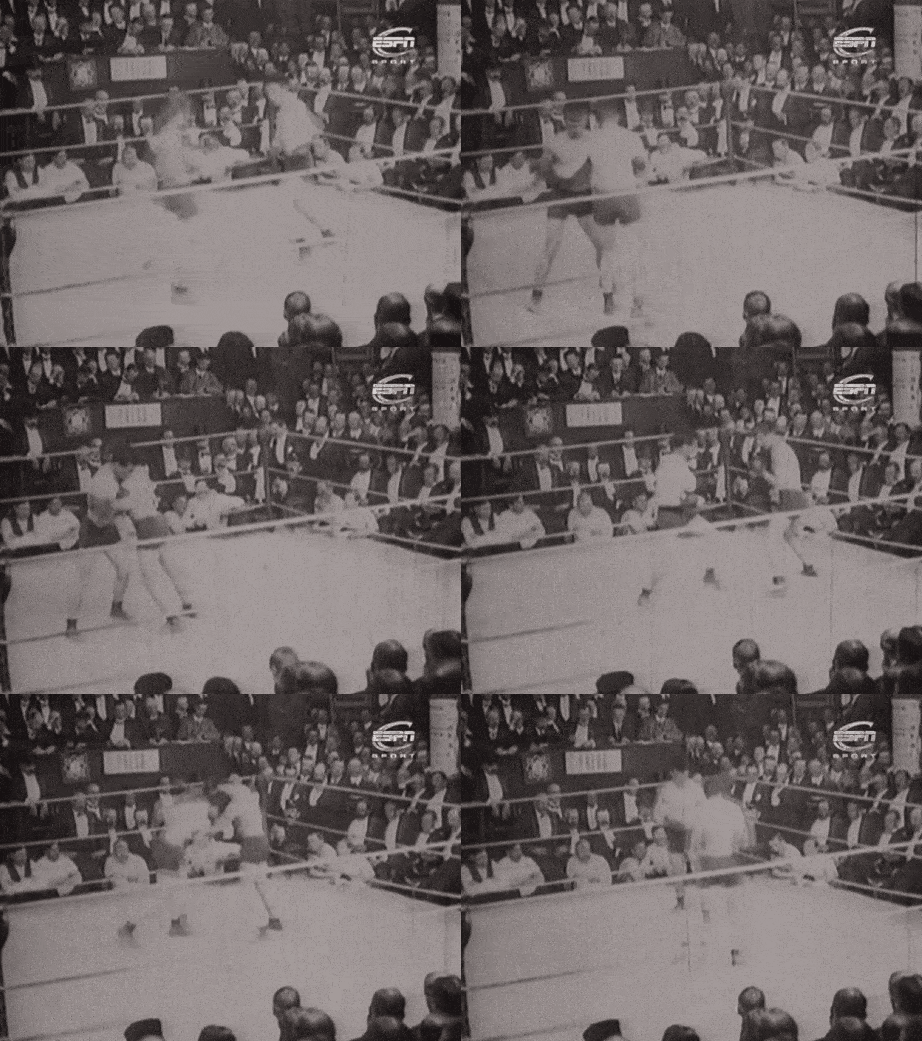
Freddie Welsh vs Packy McFarland
Freddie Welsh and Jim Driscoll did fight for the European title in 1910 and in that fight it was what the author of Favourite Ring Tactics calls “The Result of Welsh’s American Apprenticeship” that got the better of Driscoll. The author rants about the ubiquity of the kidney punch, heeling with the palm, butting and elbows in the American prize ring. “It will be no earthly use looking at the referee for protection […] the average American boxing “fan” is not strong on the sympathetic side.” It was this mastery of American tactics that led to Driscoll shouting “If we are to have a butting match, let’s have one” and delivering “half a dozen” nodders that the referee could not ignore. For all Welsh’s reputation as a fouler, it was Driscoll who lost the match by disqualification.
Boxing Taught Through the Slow Motion Film - C. Rose
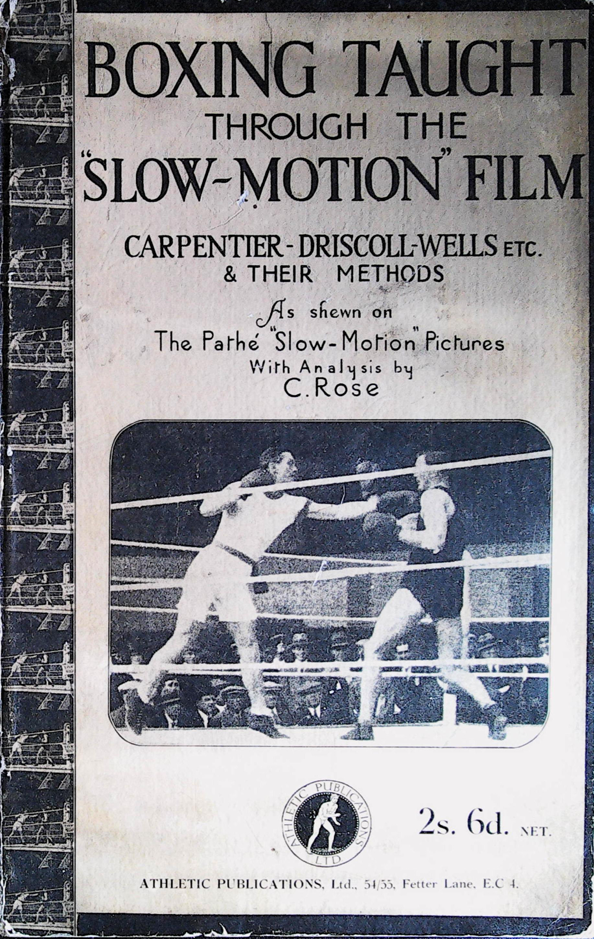
The author of Favourite Ring Tactics waxes lyrical about the subtleties of Freddie Welsh’s inside game and, sadly, it is difficult to fully comprehend without posed photographs, diagrams, or fight film. And this brings us to our final selection from the library for today, Boxing Taught Through the Slow Motion Film. This book has since been republished by the Naval Military Press, but my copy is from the first run. Naval Military Press states that this was first published in 1944, but if that is the case I would imagine it was written some time earlier, as it focuses on all the same names that appear in Favourite Ring Tactics, thirty years before.
There is little technical or tactical information to be gleaned from this text, but it fascinates me purely for personal reasons. Rose is attempting to share his observations about fighters he has studied in the flesh and on film, through a medium that is simply not made for it. There are perhaps thirty or forty stills from fight film in this book and I can only imagine how difficult it was to get this printed. The stills often appear together in clumps, a good distance away from the passages discussing them.
Most of the stills from fight footage fail to illustrate much at all, but the centrepiece holding the entire booklet together—featured on the cover and repeatedly referenced throughout the book—is a picture perfect jab, delivered with an open glove by the great Georges Carpentier in an exhibition match.
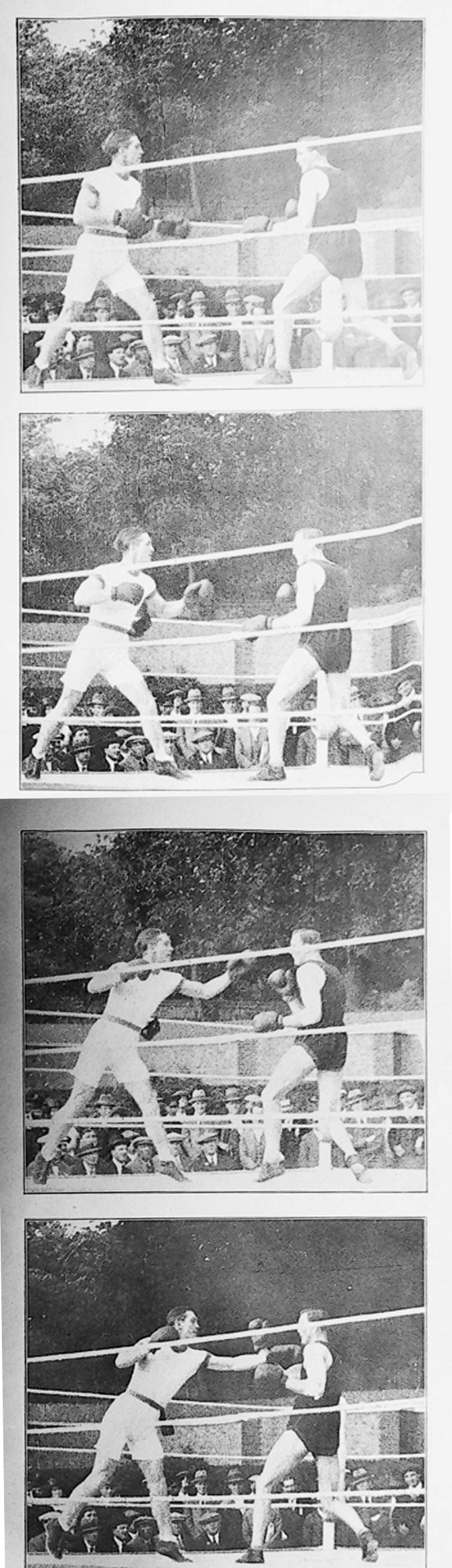
Boxing Taught Through the Slow Motion Film might be a book only appeals to me. Not because of the content but as a historical document. Charles Rose was essentially trying to write the studies that I write, with technical limitations that made his observations—whether they were meaningful or completely surface level—almost not matter. The book makes me grateful not just to have access to the means of sharing examples from film, but to even be able to study that wealth of fight film to begin with. Because of Rose I count it a blessing to not have to stare at the negatives under a lens for hours, trying to decide if the few minutes of footage I have demonstrate anything useful at all.