
Yothin Returns: Running Down the Counter Kicker
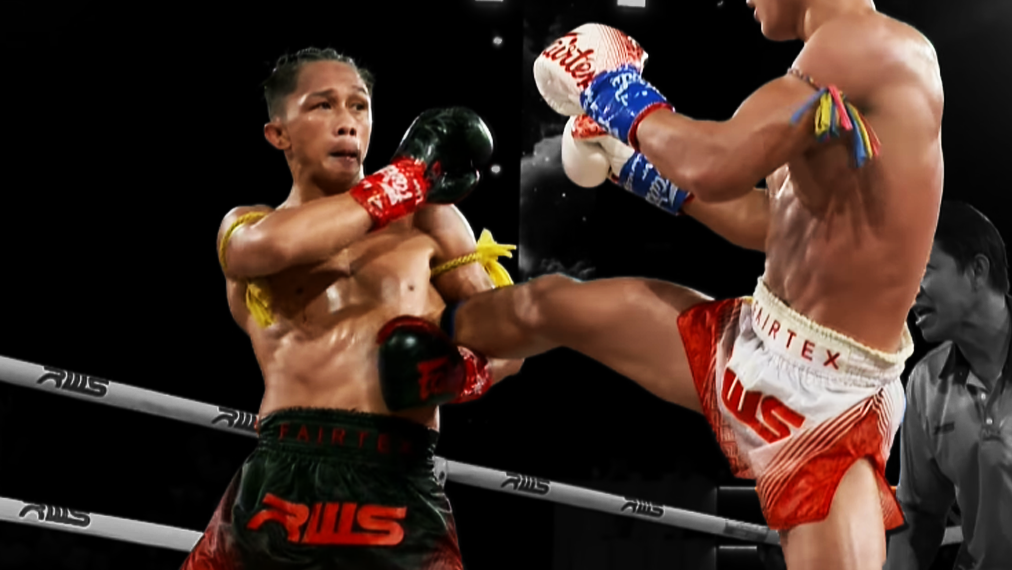
After three hundred and sixty five fights, the great Yothin is going to hang up his gloves. At least that is the plan that the former Rajadamnern featherweight champion has laid out, following his victory over Fairang in his three hundred and sixty fourth fight last weekend. This marked a rebound from Yothin losing his belt five months ago, and lines up a rematch with Chiabkard, the man who took it. That Chiabkard has already lost the belt to Narak in a great fight we examined a few weeks ago is neither here nor there, the Yothin – Chiabkard rematch is the finale that Yothin has chosen.
Fairang is not a huge name in Muay Thai, and this was his first appearance in RWS. But the 17-year-old was riding an eight fight winning streak in the stadiums, and this fight alone was enough to demonstrate that he has plenty of talent. We have covered Yothin a couple of times before because he is a fighter who does effective work with a limited, unusual, and dare I say “simple” skillset. A right kick and a shifting elbow are the meat and potatoes of Yothin’s game, and then he adds herbs and spice to tailor the dish to whoever he is facing.
Yothin 101
One of the staples of Yothin’s game is the calf kick. Against the southpaw Chaila, he even went as far as kicking almost along the floor to the inside of the ankle. But anyone worth a damn is going to begin picking their lead leg up and getting it out of the way. That is step one of the system. Step two is to begin capitalizing on the time that the opponent is on one leg. The two main ways that Yothin does that are the hip fake to body kick, and the shifting elbow.
The hip fake to body kick is a fantastic point scorer, and allows Yothin to win long range kickboxing matches despite being a clinch fighter at heart. The beauty of this technique is that once the opponent begins consistently checking the calf kick, the whole exchange is on rails. The hip fake draws the check, the opponent immediately returns their leg to the floor to regain their ability to fight and move, but Yothin only takes a beat between the fake and the body kick, so the body kick easily slips in through the hole that the check coming down creates.
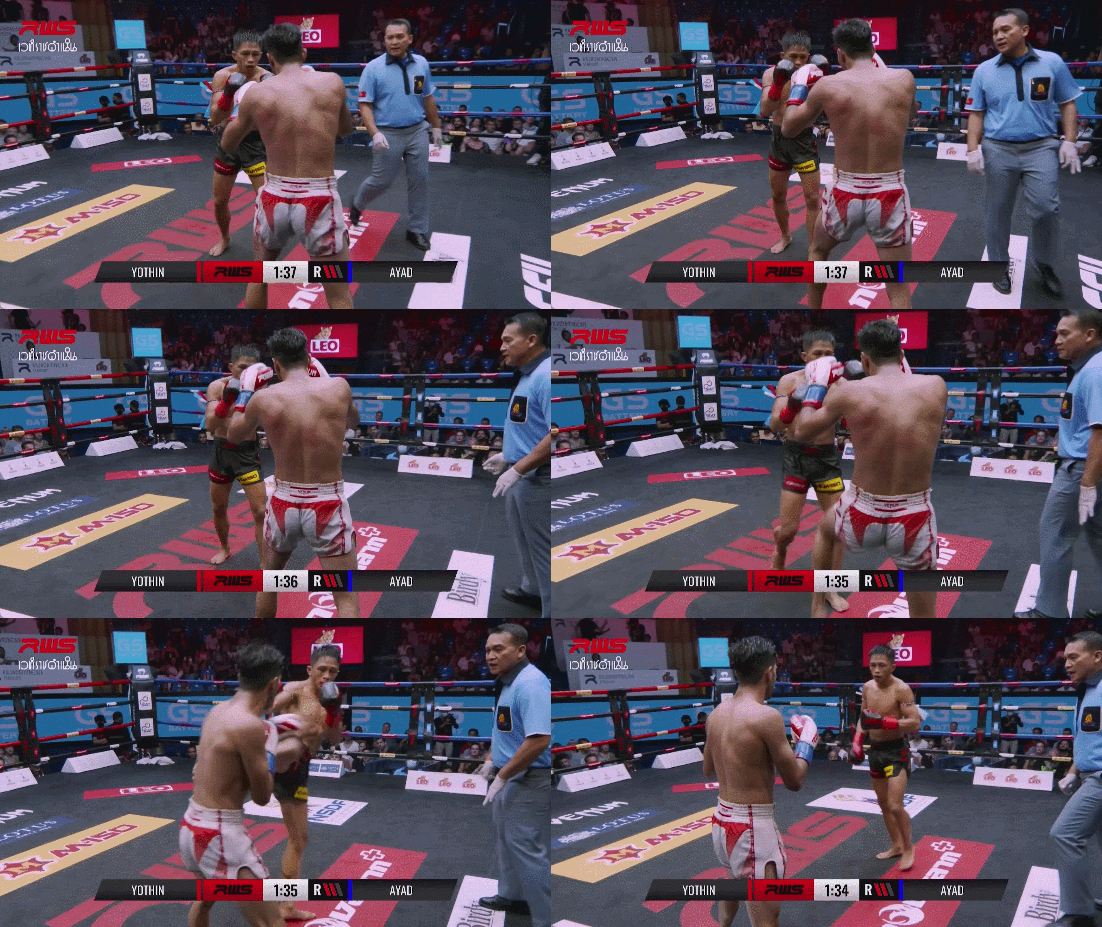
Fig. 1
The shifting elbow is often the difference maker. Elbows score fantastically in Muay Thai, and the damage they inflict often outweighs all the other action in a competitive round. Yothin takes a small step with his left foot, as if to throw the low kick, and his opponent begins to check. Yothin instead steps all the way through to southpaw and essentially runs in to elbow his opponent. Half of them see it coming but once they have committed to standing on one leg to check they just cannot get out of the way or counter meaningfully.
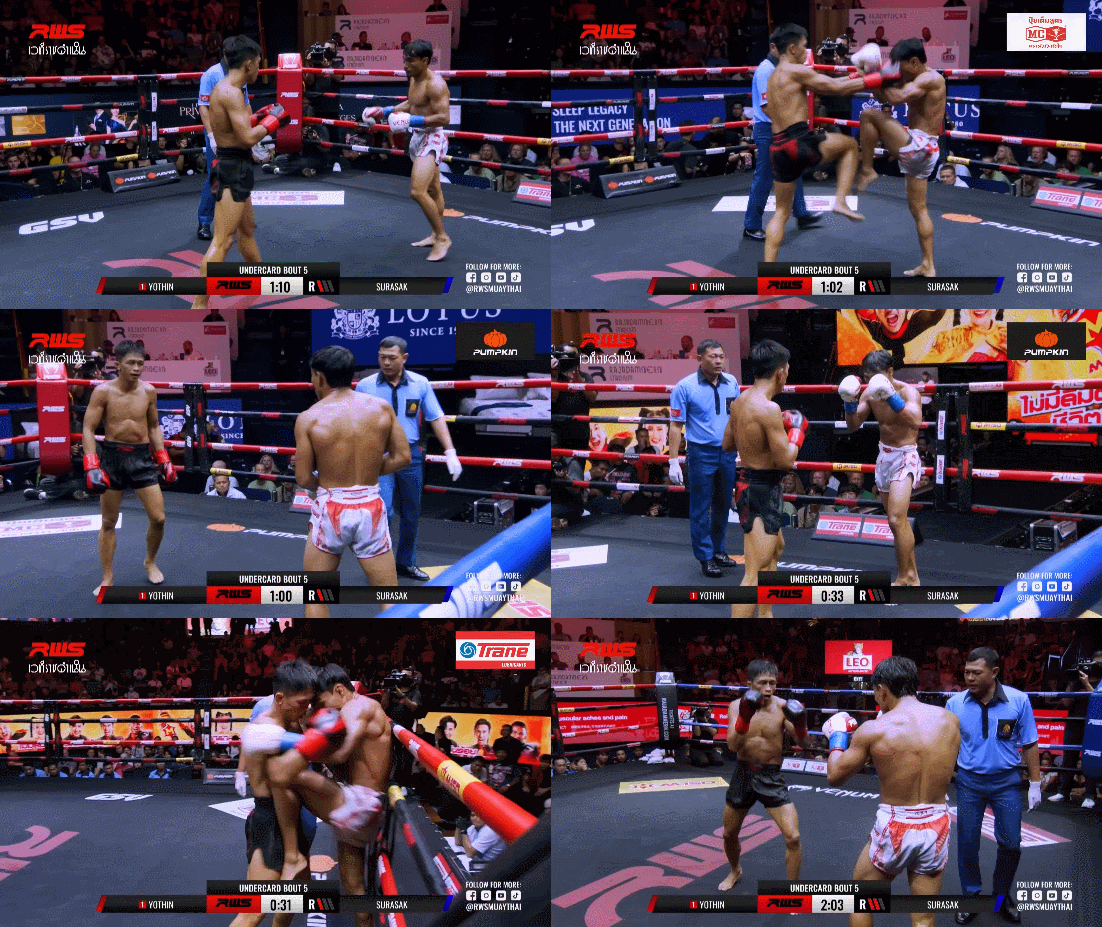
Fig. 2
The two follow up techniques synergize with each other because the response to the hip fake to body kick is often to stay on one leg longer in order to check the delayed body kick. This makes the fighter extremely vulnerable to the shifting elbow.
The Fairang Strategy
The curious part of this Fairang fight was that Yothin was not able to establish his low kick at all. He came out showing the hip fake to body kick, without the initial threat of the low kick. Sometimes skilled fighters get so tied up in their secondary attacks that they forget how long it can take to establish the initial attack, but on second viewing it seemed as though Yothin had recognized early that Fairang was only going to give ground.
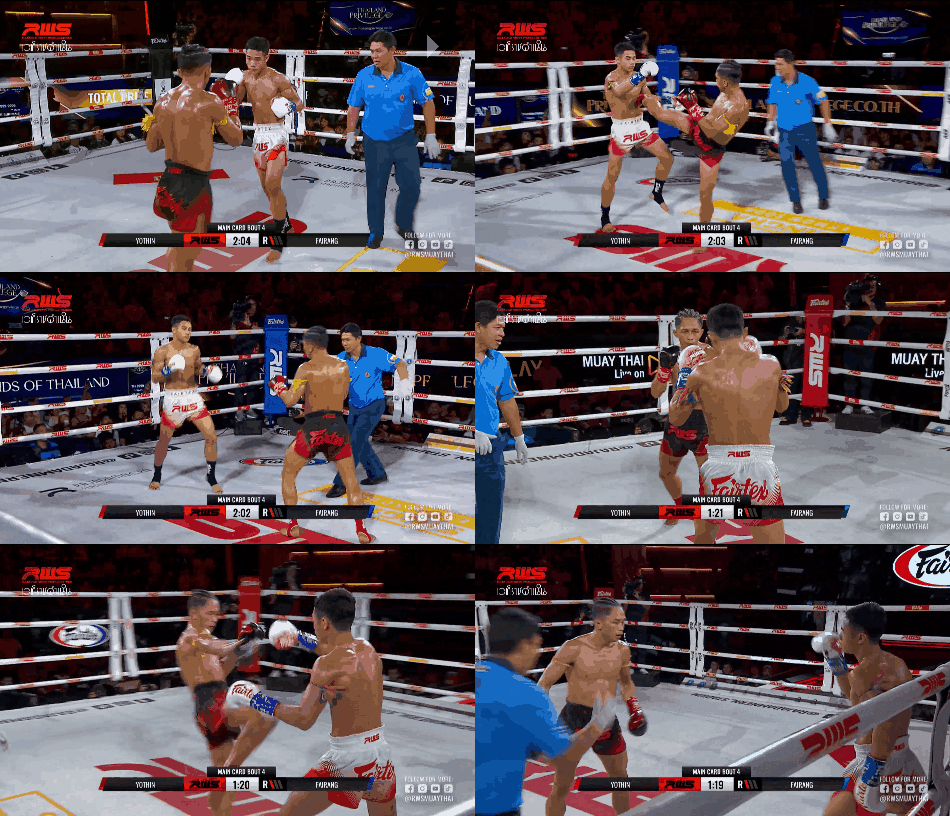
Fig. 3
Fairang was not standing still and checking. Every time Yothin showed him a fake or a legitimate kick, he gave slid back. He looked to glide back and return with his own right kick. This creates an interesting comparison with Narak’s performance against Chiabkard the other week, where he scored fade-away high kicks by sliding back as Chiabkard advanced. Yothin was on the receiving end of a dangerous kick that caught him over the back of the head in the style of pro wrestling’s enzuigiri in round one.
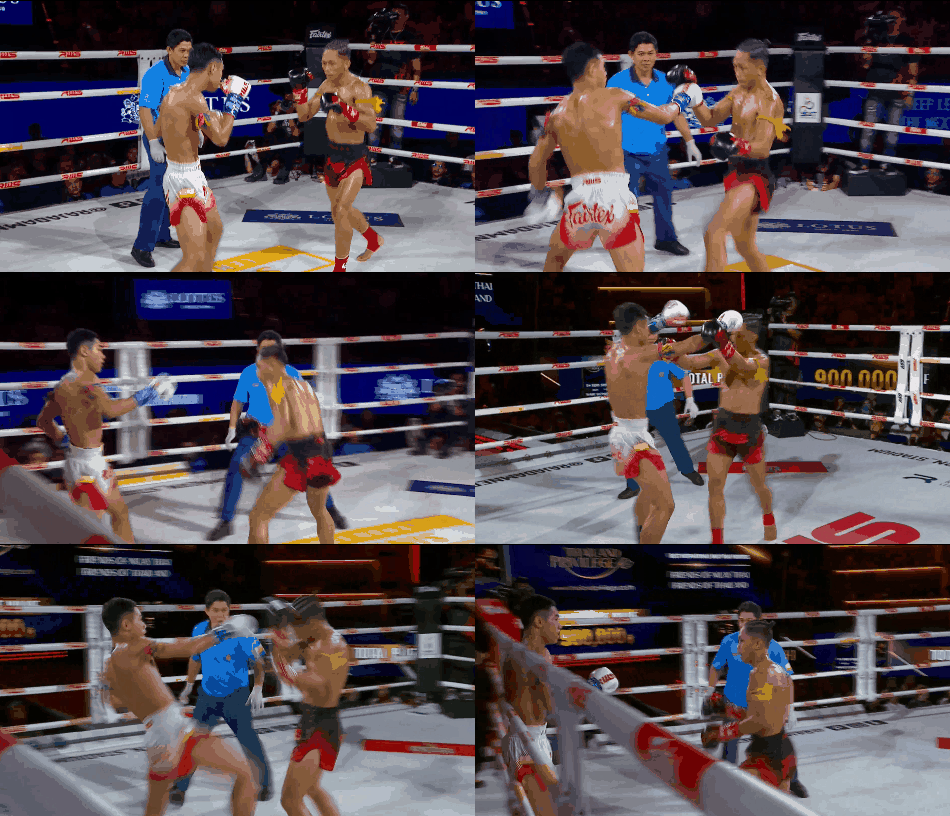
Fig. 4
Pretty quickly, Yothin’s hip fake to body kick turned into a hip fake into a check against the expected counter kick.
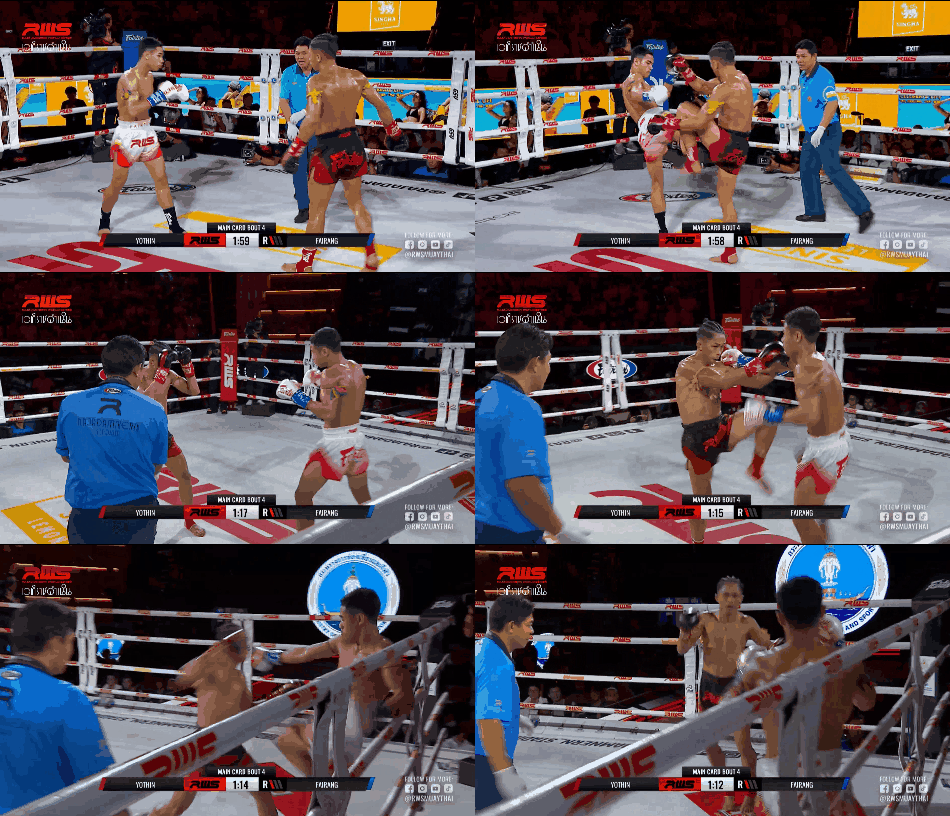
Fig. 5
In this manner Yothin was able to chew up some distance and get Fairang towards the ropes, where Yothin could step in with a good shot at an elbow.
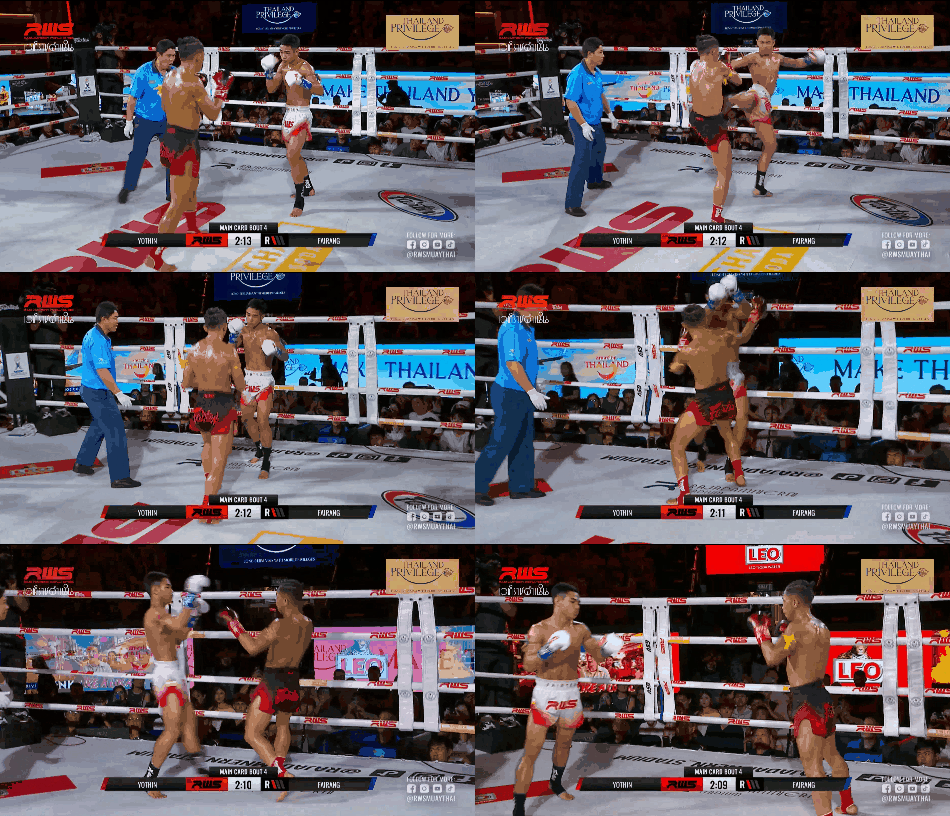
Fig. 6
Fairang’s tactics changed slightly through the fight. In the early going he gave ground to try to sneak in kicks as Yothin advanced. In rounds two and three he spent more time standing his ground and firing the same right kick back in response to Yothin’s.
The Catch at the Elite Level
Yothin is a “big moments” fighter whose fights are usually defined by a handful of good elbow or knee connections. The two ways that he manufactured his eye catching moments of offence in this fight were to push Fairang back to the ropes, and to utilize the catch.
When advancing and trying to check Fairang’s counter kick, he was occasionally able to reach down and salvage a catch by plucking Fairang’s foot straight off his ankle. In Figure 7 he pushes to the ropes and lands a good knee.
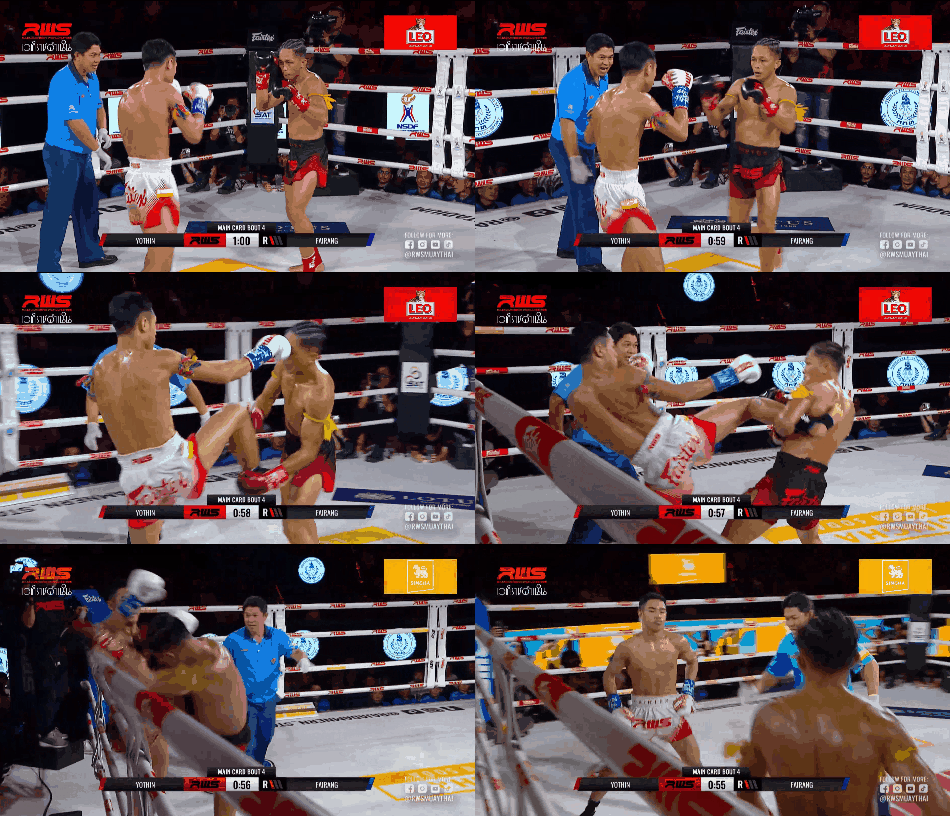
Fig. 7
Mainly though, this fight was an advertisement for the traditional Muay Thai body kick catch. This is taught in every gym from day one, but always with the understanding that you can get yourself into a lot of trouble overusing it. The lazier you get with your feet, the more you stray from the belt-and-braces effect of blocking with your cross hand, the more likely you are to get winded by a kick you are looking right at.
Figure 8 shows the sequence that played out repeatedly through the second and third rounds. Yothin throws his body kick, Fairang returns, and Yothin catches the kick under his left arm. In catching a kick, the fighter opens his elbow, and this creates vulnerability in almost all combat sports. So the fighter’s job is to mitigate the risk of exposing his body by:
1) Stepping away from the power of the kick.
2) Taking the kick on his back more than his side.
3) Bringing the free hand across the body to meet the kick and take some heat off it.

Fig. 8
In a rapid fire kicking exchange, one of these will almost always suffer. In this example Yothin is not able to get much of a step away from the kick, but takes the brunt of it on his back and uses his right glove to block as well. The growing pink welt on the left side of Yothin’s back throughout the fight confirmed that the kicks were indeed, still kicks.
Yothin’s position after the catch is also textbook. In his kicking game the core idea isn’t “if the opponent checks,” he assumes that any opponent good enough to be in with him will check. Similarly, he catches the kick and it is not a case of keeping a guard up just in case the opponent punches, the opponent at this level will invariably punch. When Fairang fired straight punches on one leg, Yothin used his free hand to shield them in the same manner than Zab Judah used to in his southpaw shoulder roll.
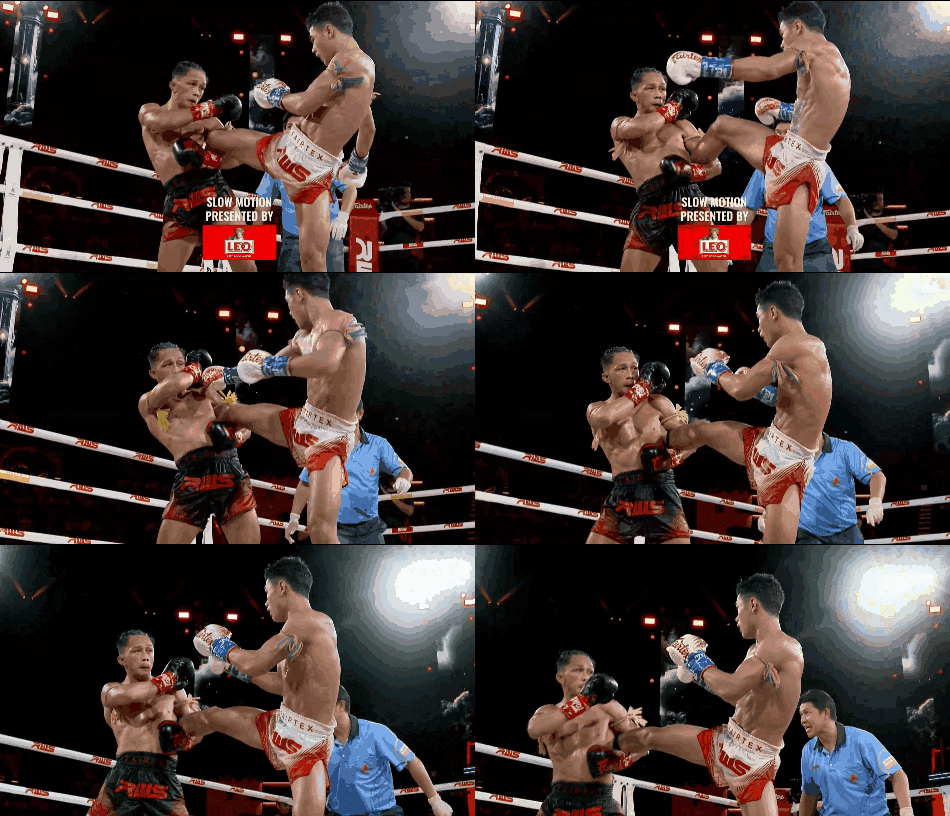
Fig. 9
Once Yothin had the catch, he could create moments of all-out offence. The act of catching the leg and running the opponent all the way across the ring to the opposite ropes—called “ploughing”—has been illegal for a generation at this point. But two steps is still legal, and if the catch happens a reasonable distance from the ropes, they can still be reached with a good shove, which is just what Yothin was able to do.
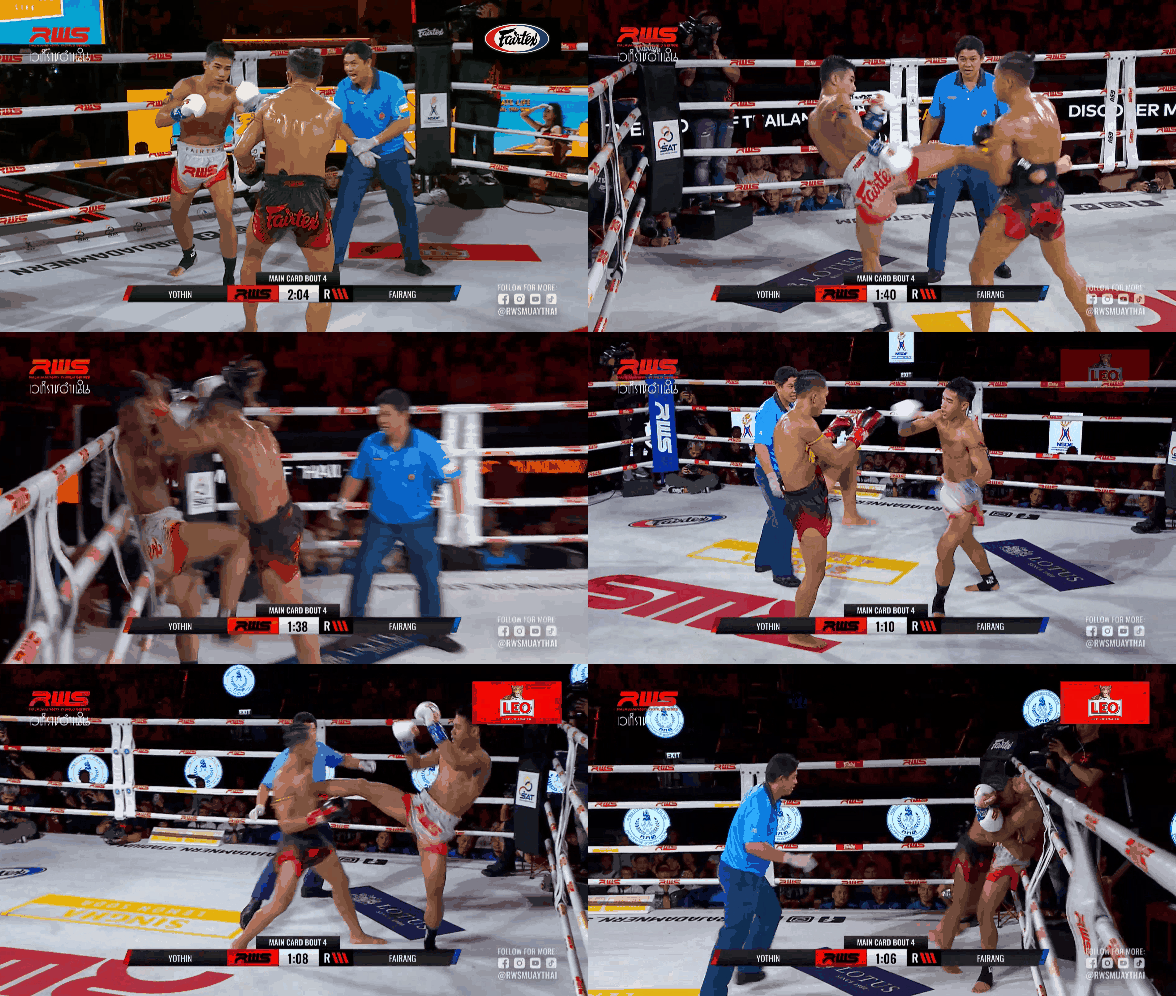
Fig. 10
When the boundary was nowhere near, or Yothin’s own back was to the ropes, he found great success with a long right knee to the body. To this writer’s eye, these were the most beautiful strikes of the fight. Fully extended, swung in rather than pushed, and landing just above the belt line.
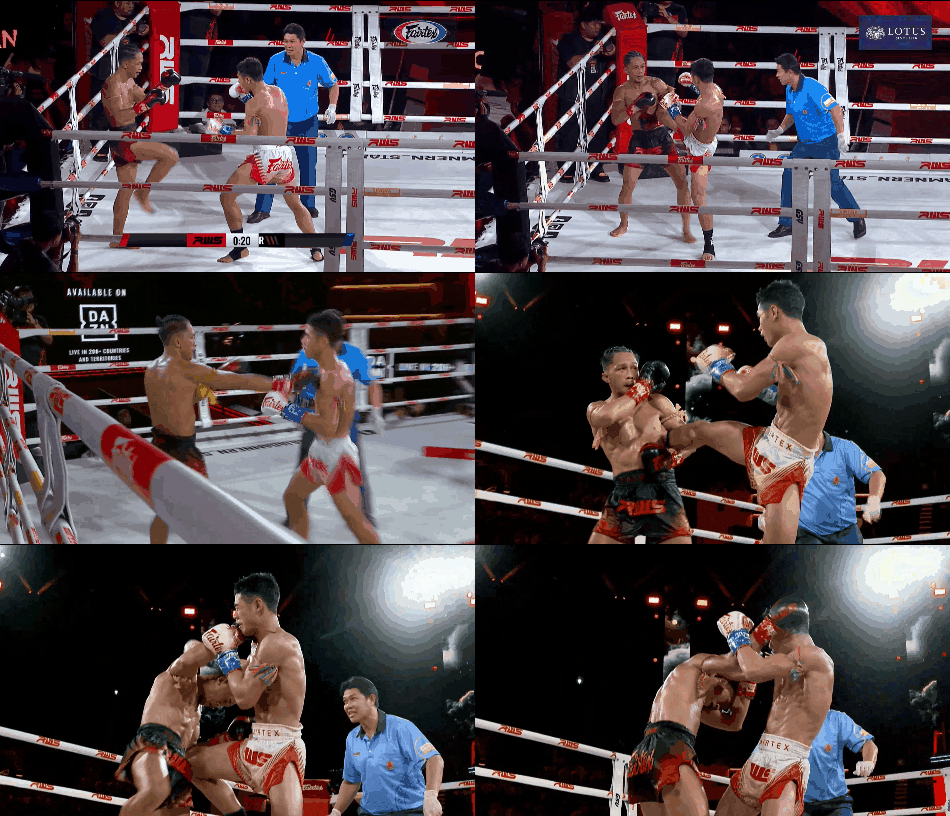
Fig. 11
And while Yothin has never been much of a boxer, the right straight off the catch can still send the opponent’s head flying back if his hands aren’t obstructing it. Even in the slow-motion replay of Figure 12, you can see that Yothin jumps on spot to pivot his back into the kick for the catch.
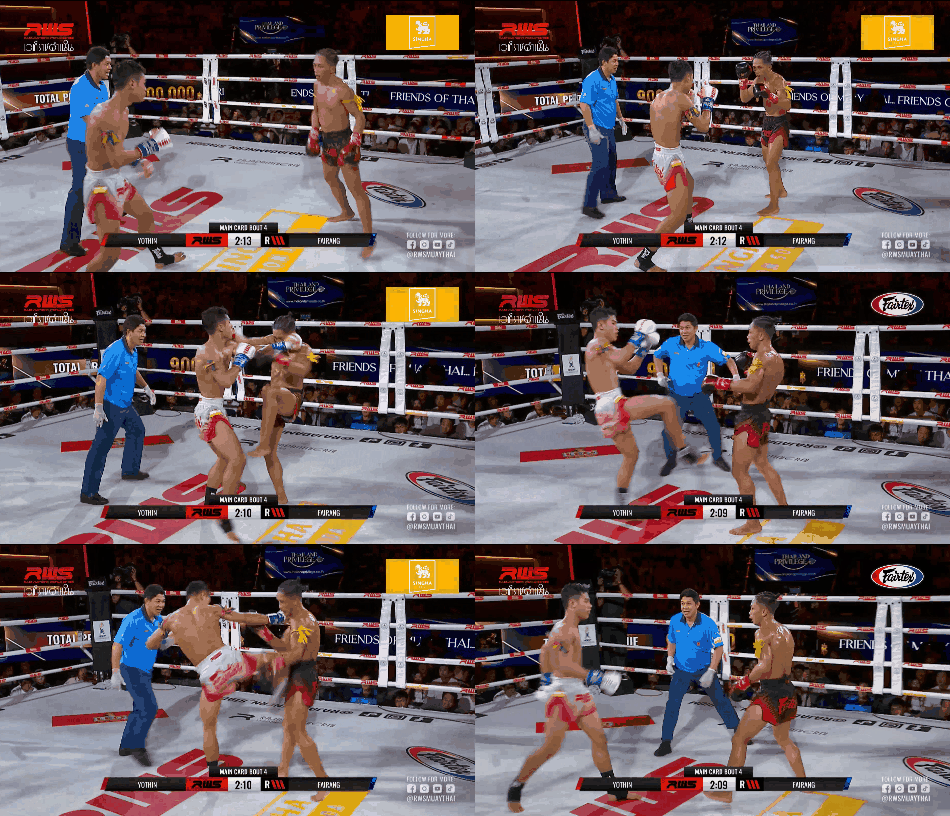
Fig. 12
Yothin’s tactic of kicking to initiate a kick-off, and then catching Fairang’s leg was great for producing his big moments, but he missed two catches for every one that succeeded. Perhaps it was a read, perhaps it was Yothin saying “screw it,” but after missing a catch, Yothin had success immediately shifting in with his elbow again. He had been unable to set up his usual trap by forcing the check, but it seemed that just after failing to catch Fairang’s leg, Fairang momentarily forgot about Yothin’s constant yearning to sprint to the clinch.
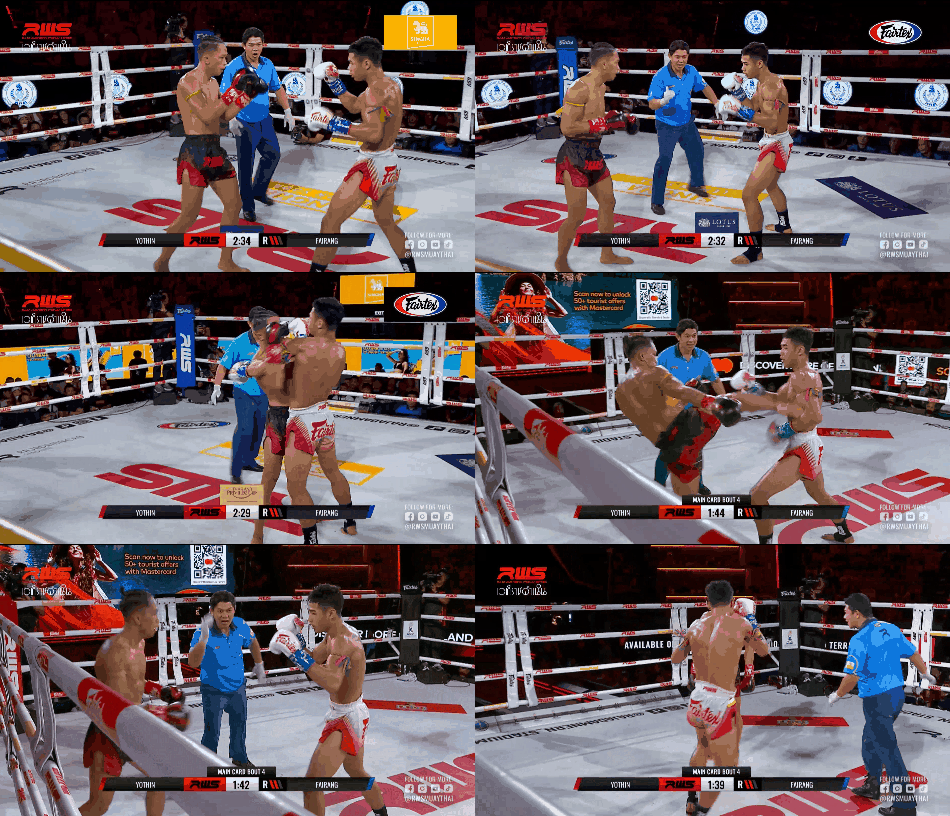
Fig. 13
A final thought on this fight takes us back to what intrigued me about Yothin in the first place: he is a Muay Khao (or maybe Muay Sok if you’re being anal about it) who has succeeded in an era in which the officiating has been hostile to clinch fighters. He has been forced to have kickboxing matches punctuated by great elbow and knee work, and he beats much cleaner, faster kickers. Establishing the calf kick and building off the opponent’s check is one way in which he does this, but against Fairang he would sometimes get a point ahead by throwing his usual hip fake body kick, with the knee drawn all the way across Fairang’s belly to create a shin frame the instant Fairang tried to return.
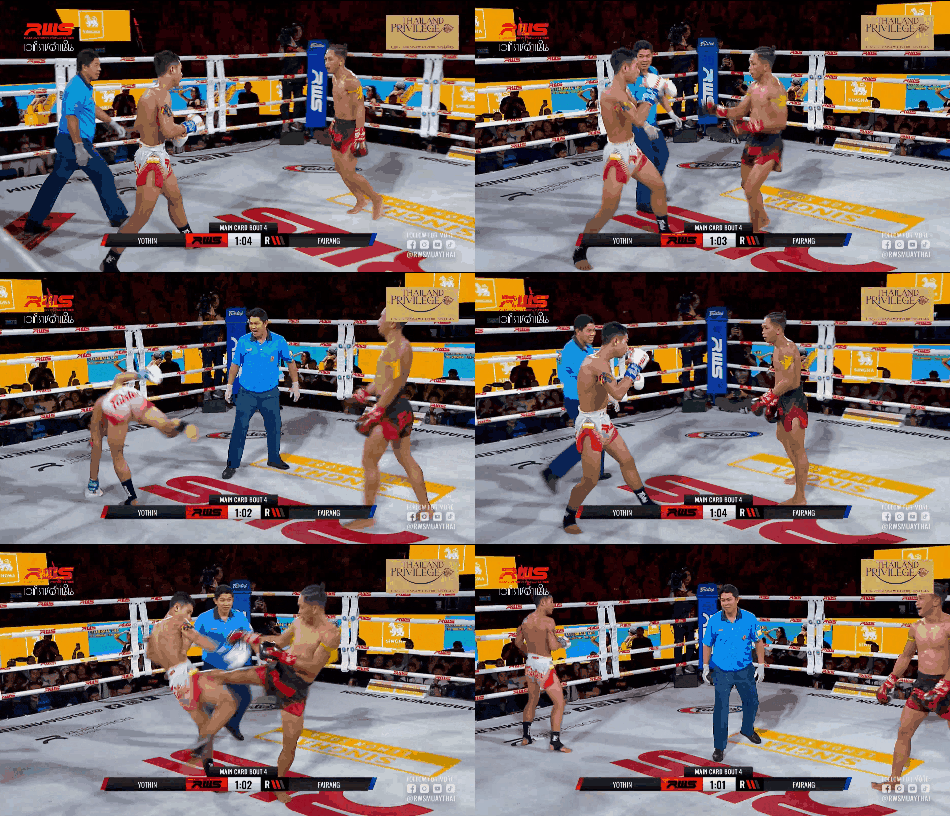
Fig. 15
If this is truly Yothin’s penultimate fight, I feel unfortunate to have discovered him so late in his career. On the other hand, some of those 364 previous fights must have found their way onto film and that will serve as a vault for neat elbow and knee ideas for the next few years. While RWS has allowed him to escape the walls of Thailand’s stadiums and make it to the wider combat sports audience, he is still thirty four years old. He is ancient in Muay Thai terms. If one more fight is all we get from this tricky, playful, violent little man, we must mark it down it a day for celebration.