
Narak: Juggling with the Teep
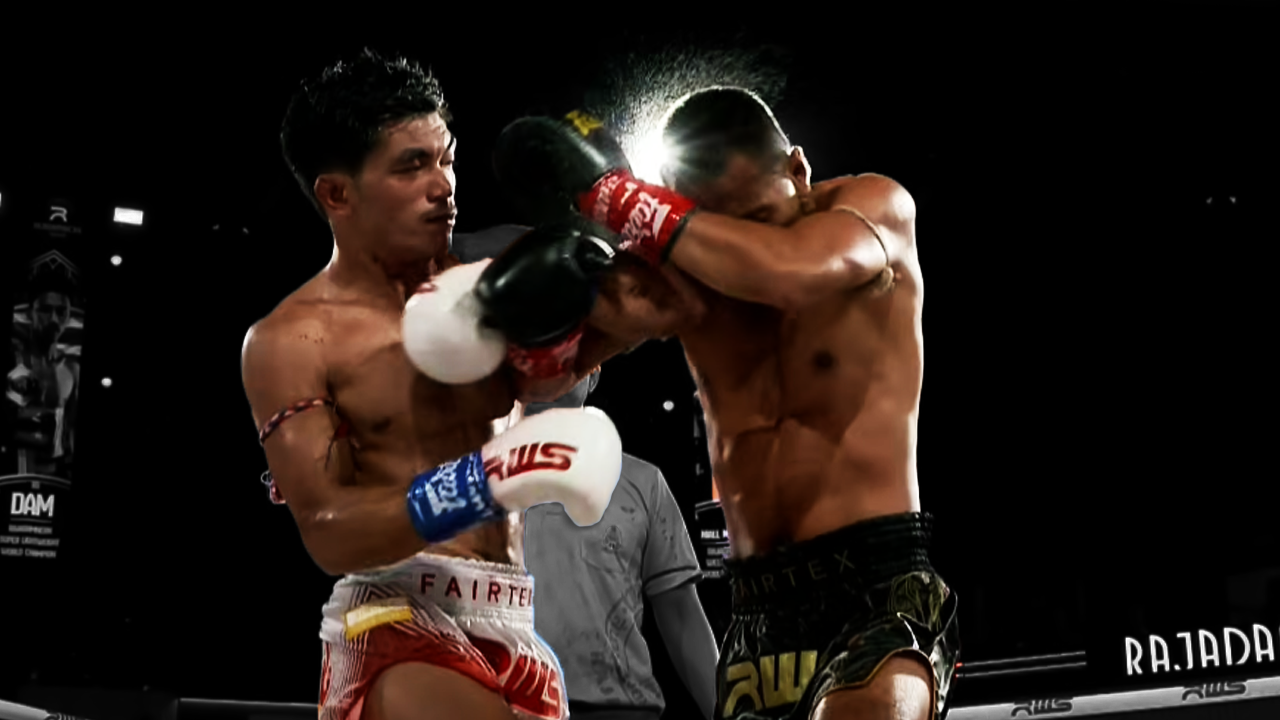
Yothin FA Group is the kind of fighter worth scrutinizing and digging out every minute of tape for. We have published articles and film studies on Yothin, the King of Knees and one of the most vicious elbow fighters in the modern Muay Thai scene. So when Yothin lost his RWS belt to the rugged but straight-forward Chiabkard in March, it came as a shock. Last weekend, Narak stepped up to challenge for Chiabkard’s new RWS featherweight title and just as Chiabkard had fought the bout of his life against Yothin, Narak ran Chiabkard ragged.
After an early high kick knocked Chiabkard down, he was forced to go after the smooth southpaw, and Narak was able to alternate between keeping Chiabkard away, and pulling him close, always with a slicing elbow as Chiabkard charged uncontrollably through the space in between.
Juggling with the Teep
The heavy bag is one of the most accessible tools in combat sports, and it has the ability to be a great boon to your fighting ability, or turn you into a flat footed, defensively irresponsible palooka. One well established drill passed down from the golden age of boxing is to match your blows to the direction in which the bag is already swinging. In boxing this means you might open with a couple of good straight punches, and then circle ninety degrees around the bag so that the arc of its swing carries it into the power of your left hook. This is best done with a bag hanging from a good length of chain, and it quietly teaches a fighter that the best hitting is done when the target is already moving to meet the brunt of the blow.
A similar principle can be seen in every Muay Thai gym in the world: if you throw a stepping knee against a dead hanging bag it is okay, but if you teep that bag first and step in to meet the returning swing with the knee, the connection feels as if it could stop a charging bull. This teaches the fighter that the knee is best when it intercepts the opponent moving forward, and is pretty poorly suited for chasing.
The first three rounds of Narak versus Chiabkard saw the challenger, Narak using the teep to “juggle” Chiabkard just as you would to keep a heavy bag swinging back and forth. Narak could not keep Chiabkard from stepping in on him forever, or even for half a minute at a time, but through measured use of the teep he could control when he let Chiabkard in.
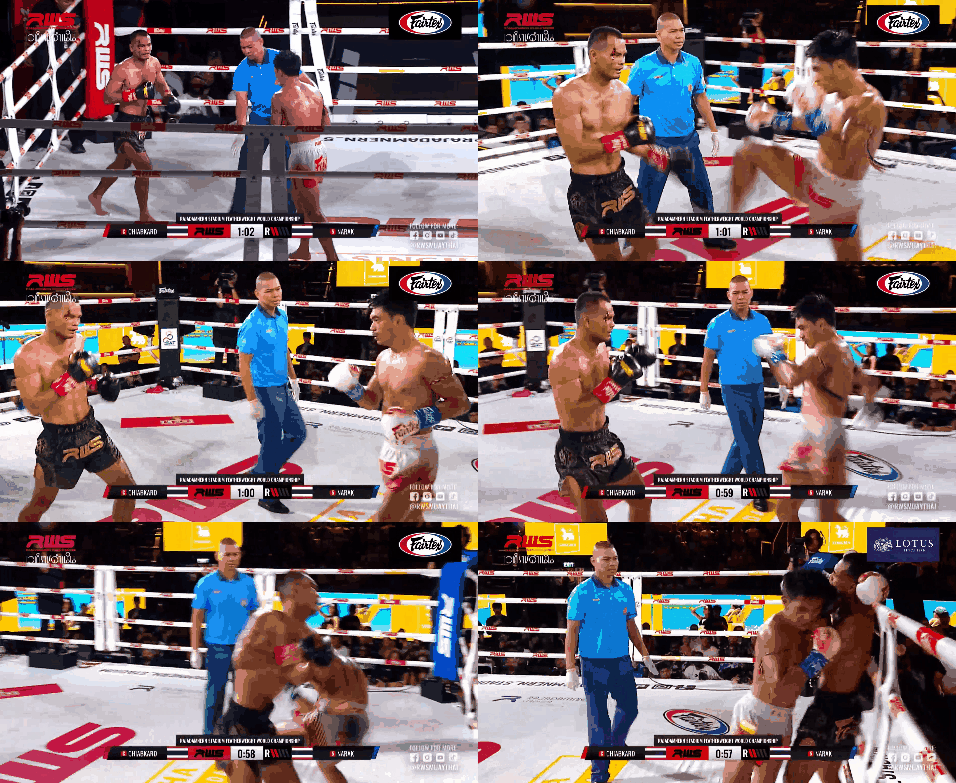
Fig. 1
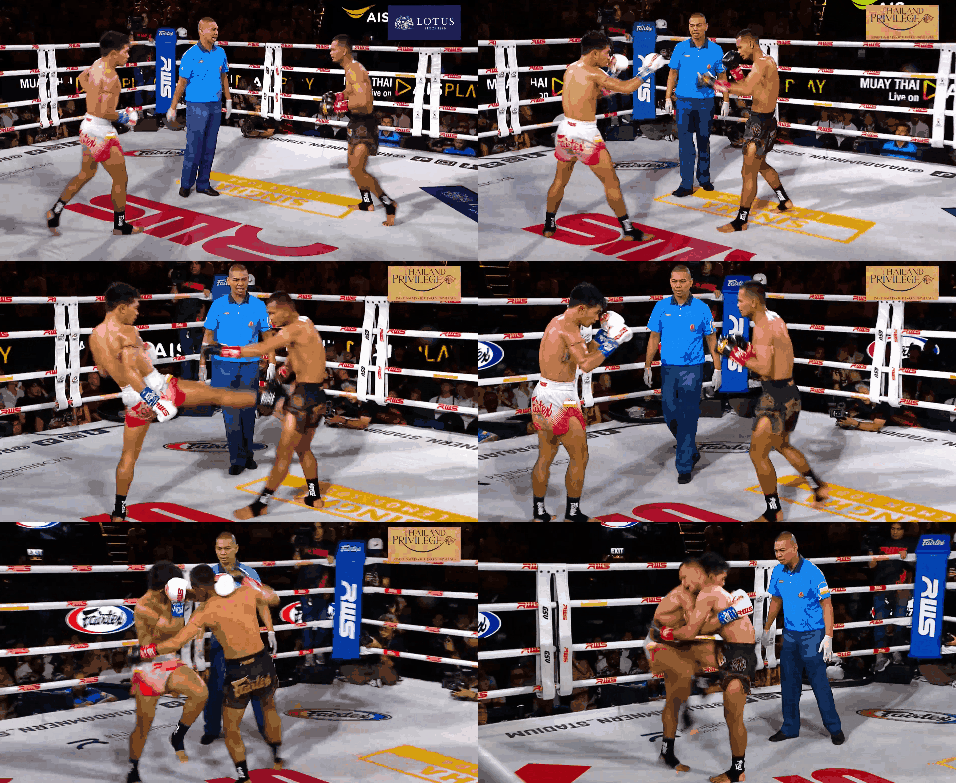
Fig. 2
At the start of the fight, this juggling was used by Narak to set up his left high kick. Initially, he teeped Chiabkard back, and then as Chiabkard attempted to drive back in, Narak threw a high kick that was delivered hopping on spot.
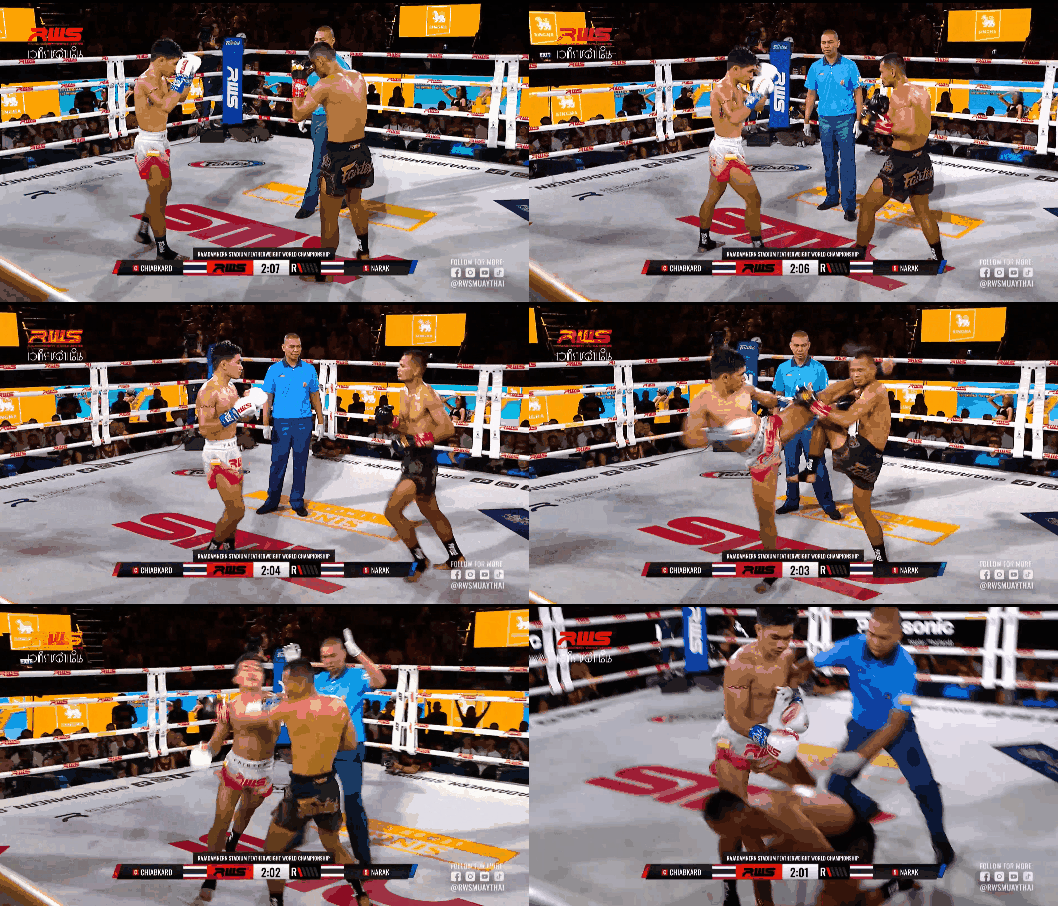
Fig. 3
The kick that Narak looked for throughout the fight was similar to Jonathan Haggerty’s terrific lead leg high kick which the ONE champ can often deliver while hopping backwards. It is often the real test of a fighter’s flexibility and dexterity because anyone can step in and use their full weight to throw their leg into a higher angle, but to do it hopping on spot is another thing entirely.
The teep is a direct means of holding that bubble of distance while under pressure, but Narak was also able to use his left body kick, take a large step back immediately with the returning leg, and time the high kick on the advancing Chiabkard just the same. Though you can see the danger in the example below as Chiabkard is able to push in through the body kick and even land the right straight to the body that he used to wear down Yothin.
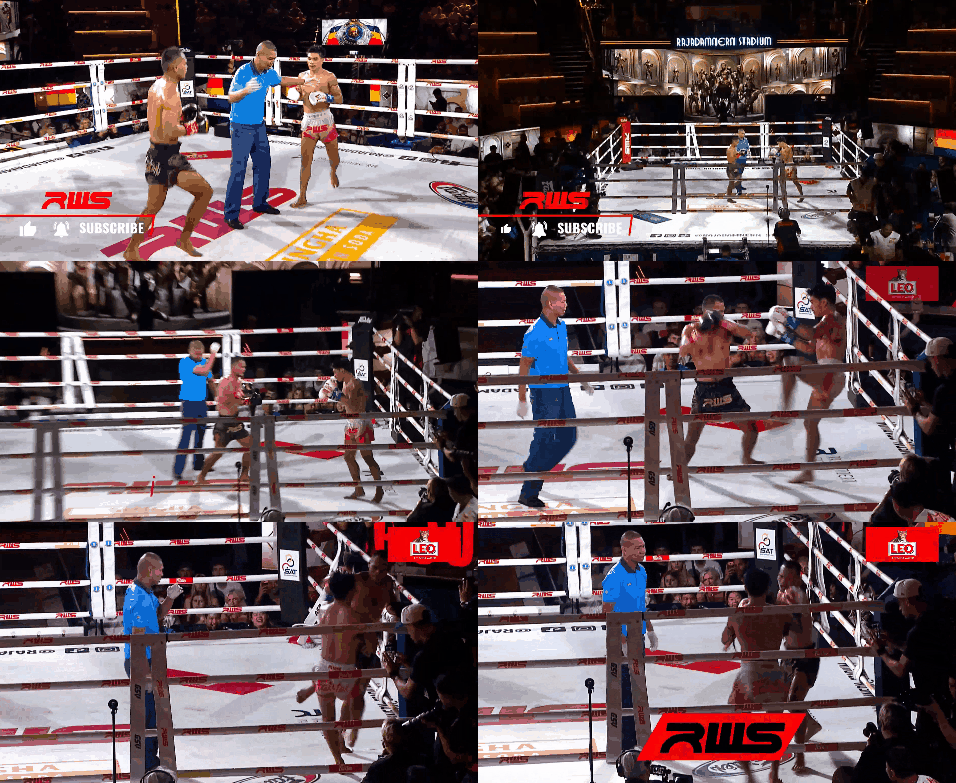
Fig. 4
Intercepting Elbows
Narak’s high kick dropped Chiabkard early in the first round and the champion was sent into a panic. He had to close the distance and get inside those kicks at all costs. Following that first knockdown, Narak had spectacular success using his teep to bump Chiabkard back and then allowing Chiabkard to overcommit on a drive to punching range, during which Narak would intercept him with an elbow.
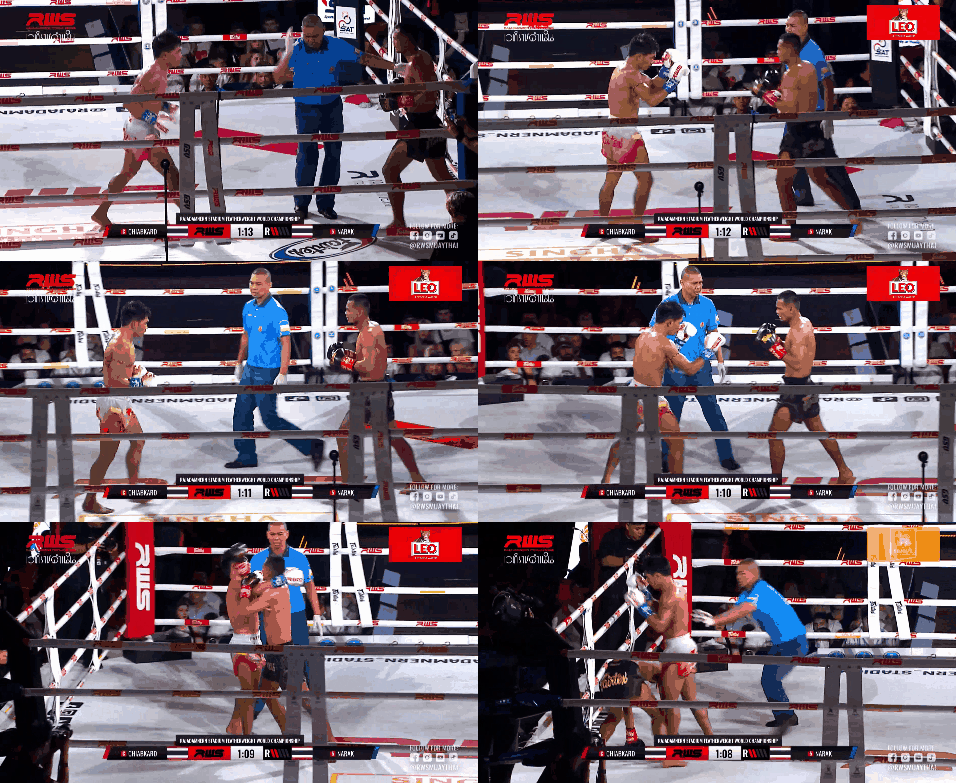
Fig. 5
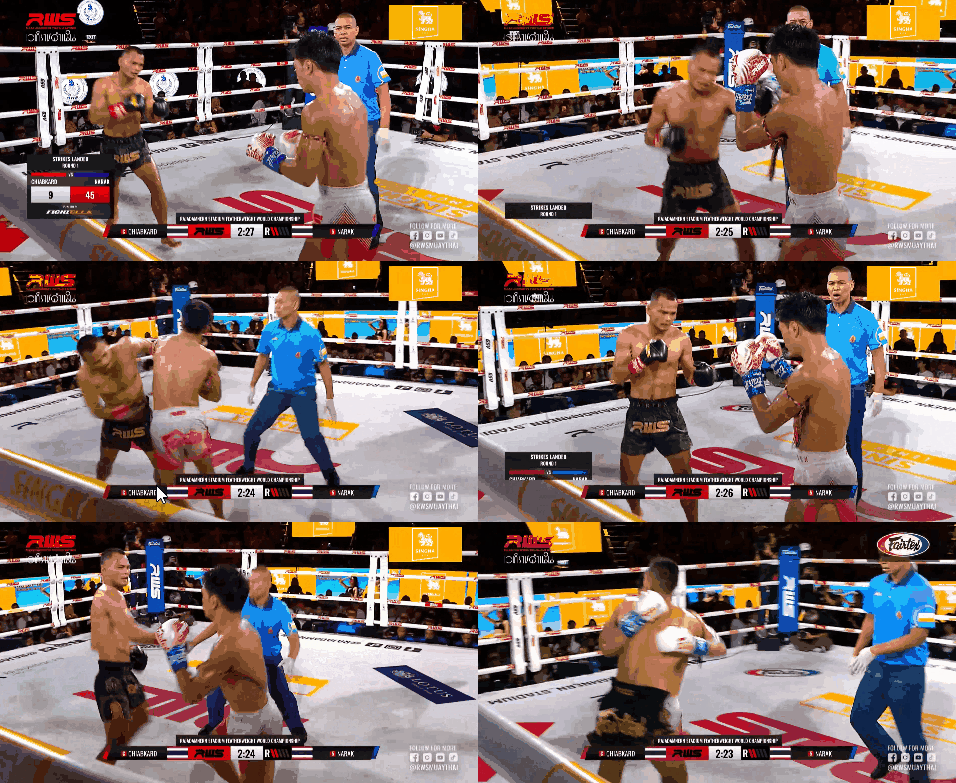
Fig. 6
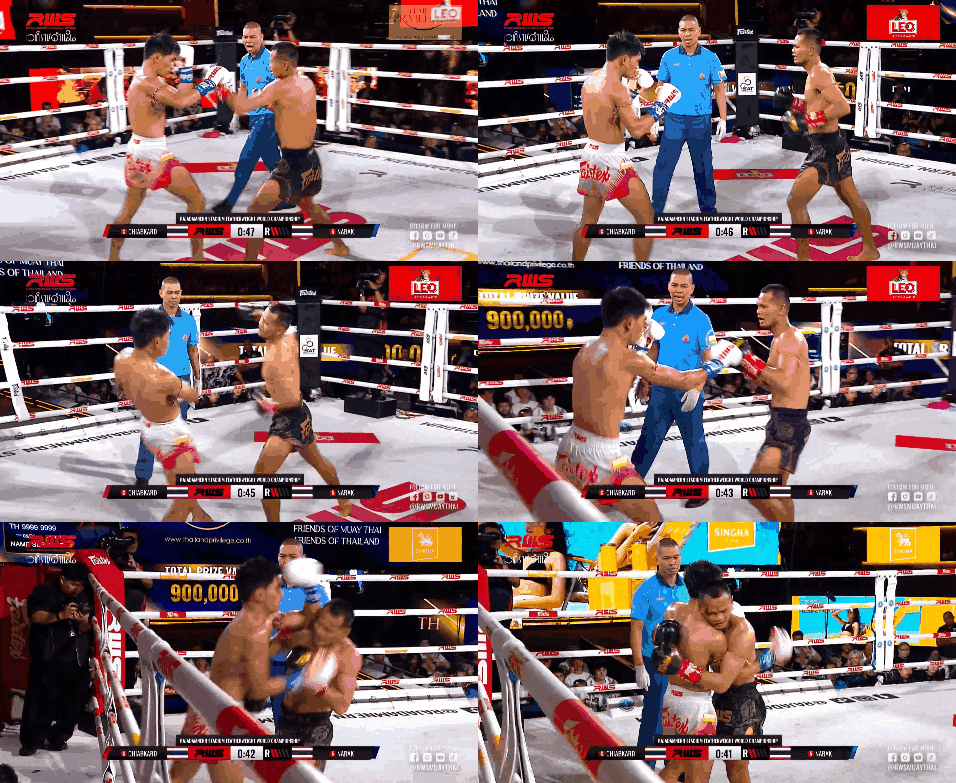
Fig. 7
Chiabkard’s love affair with his right hand was used to punish him through this fight. Lunging in behind it, Chiadkard would expose himself to the open side counter as Narak slid back to the left and returned with his own left hand. The open side counter became even more devastating as Narak used the same opening to land elbows instead of left straights.
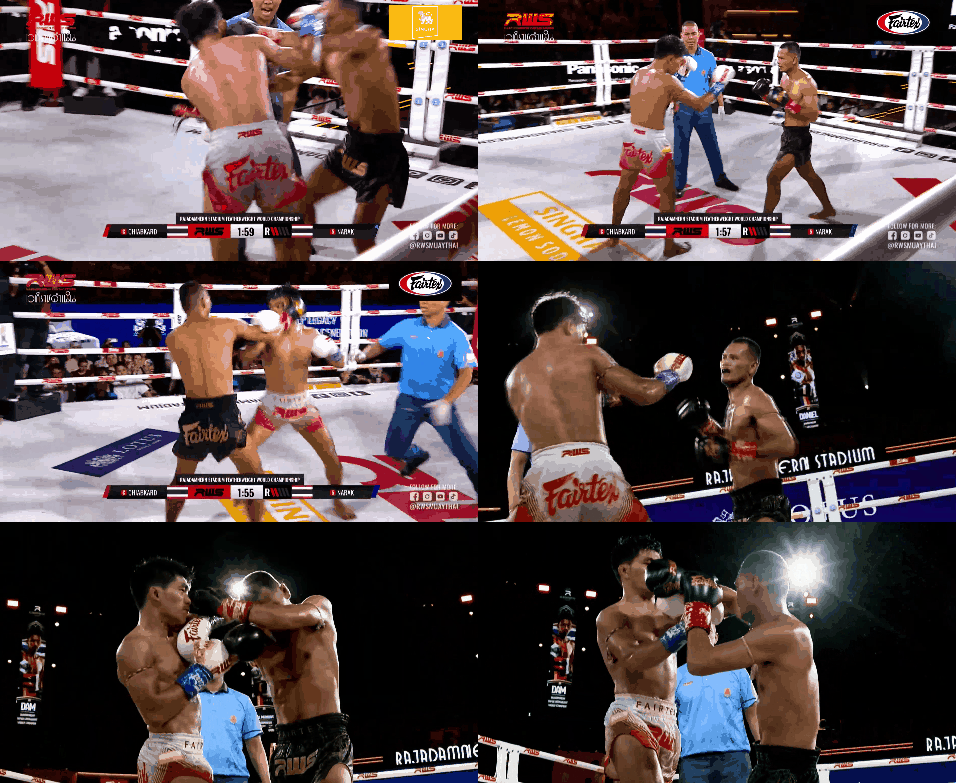
Fig. 8
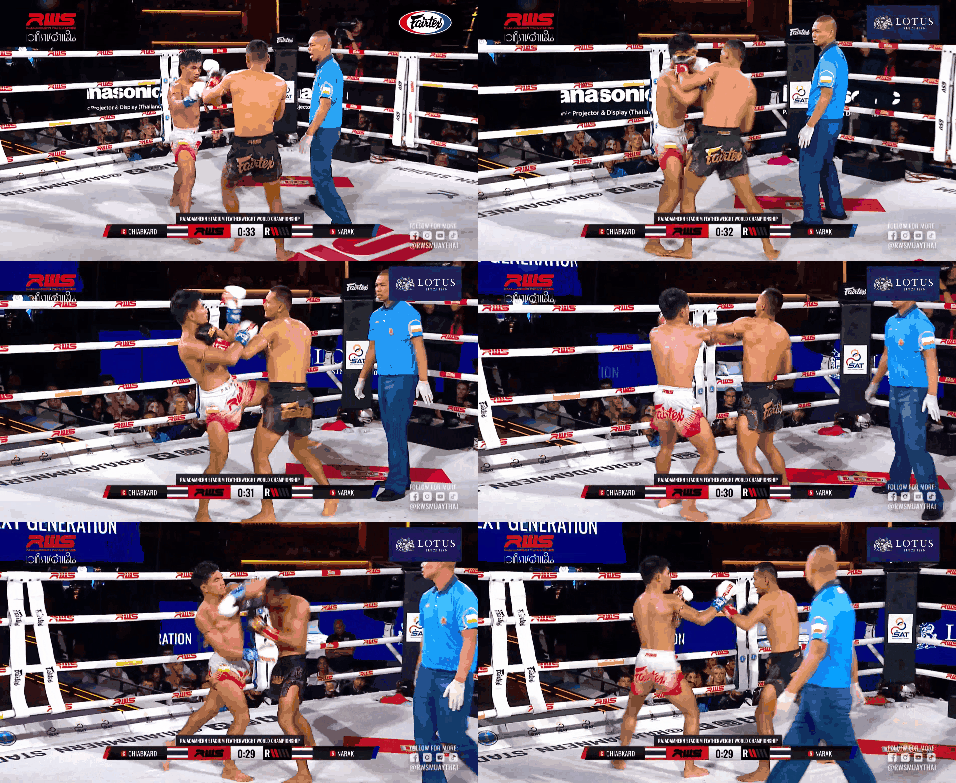
Fig. 9
In the late third round, and through the fourth and fifth, Chiabkard began to linger out at range. This meant that teeping him to time his charge no longer worked, but also that it also meant that this was no longer necessary. Chiabkard was going to try to box himself in from kicking range, and that gave Narak the chance to use kicks he had been rushing to get off up to that point.
Applying feints, set-ups, and high-lows are all tough tasks if the opponent is simply hoping to bulldoze into you. The feint is a tool that works better the more the opponent is looking at you and trying to read you. Now Chiabkard was standing back and looking at Narak, Narak had space to use the established threat of his left leg to set up fakes into left punches and elbows.
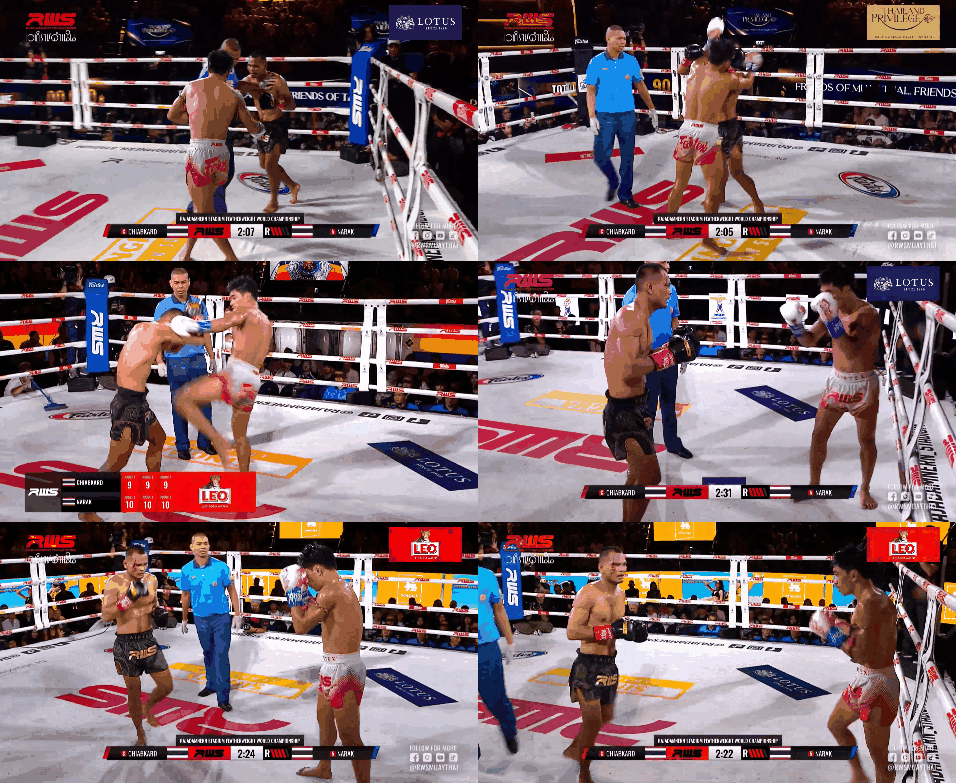
Fig. 10
Narak’s use of the teep to drop Chiabkard onto his elbows is enough to take away and practice, but this fight also gave the writer some new perspective on the inside low kick. Certainly in recent podcasts I have been giving the inside low kick a hard time. Dustin Jacoby used it and nothing else against Magomed Saidov last weekend, and I bemoaned that it simply cannot do the same damage as a few good, jarring low kicks on the outside of the leg.
Two weeks before that, Cezar Almeida paused in the middle of an excellent striking performance to throw a long, southpaw inside low kick against Damian Pinas. Pinas absorbed the kick and threw his right hand, catching Almeida open, on one leg, and instantly knocking him out.
Fig. 11
From a closed stance, the step-up inside low kick is just as useless for real hurting, but it has the benefit of attacking the opponent’s balance while placing the kicker right in the kitchen and ready to have a tear up. The kicking foot goes from the inside thigh to the floor directly below the opponent. Dan Henderson had terrific success coming down off his inside low kick and falling into his right hand.
But from an open stance, the inside low kick is a power kick delivered with the rear leg. This means that the foot must be recovered to get back onto fighting position. So you are taking a long, low reward shot, with a slow recovery, and often the harder you kick the longer it takes to get your foot back. The opponent would need to squint hard to make it look like the body kick and high kick that make up the open stance double attack, so it doesn’t exactly gel together with your strategy even if you have a great open stance kicking game. Yet Narak used a smacking southpaw inside low kick to draw Chiabkard forward.
Once Chiabkard had slowed down with his bull rushes, Narak could use this inside low kick to reliably draw the long right hand he had been countering so easily in the early rounds. The trick seemed to be that Narak threw the low kick, expecting to parry the right hand in addition to trying to lean back out of reach. It is still a risky game but it allowed him to come back with either his elbow or open side counter.
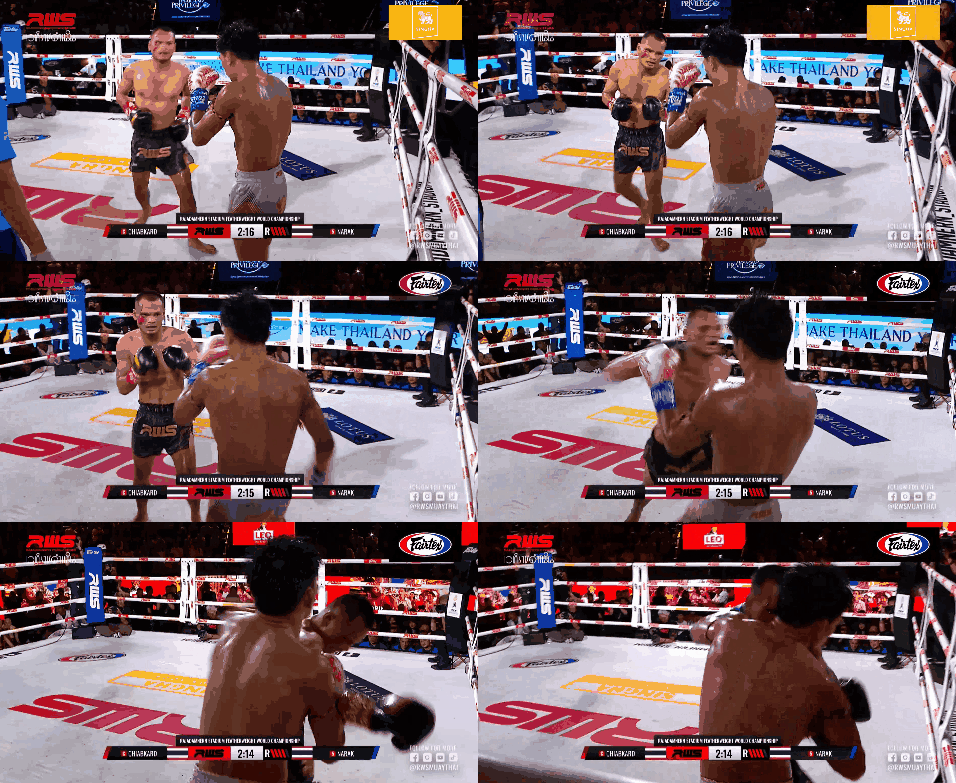
Fig. 12
Narak did not manage any fight changing connections off this particular draw, but it worked well enough that it is worth studying. In fact, Narak might view my aversion to the open stance inside low kick as cutting my nose off to spite my face, in the same way that Jose Aldo kneeing one man in the head during a body jab served to scare everyone in MMA off body jabbing for the next ten years.