
Muratalla vs Cruz:
Points vs Pressure
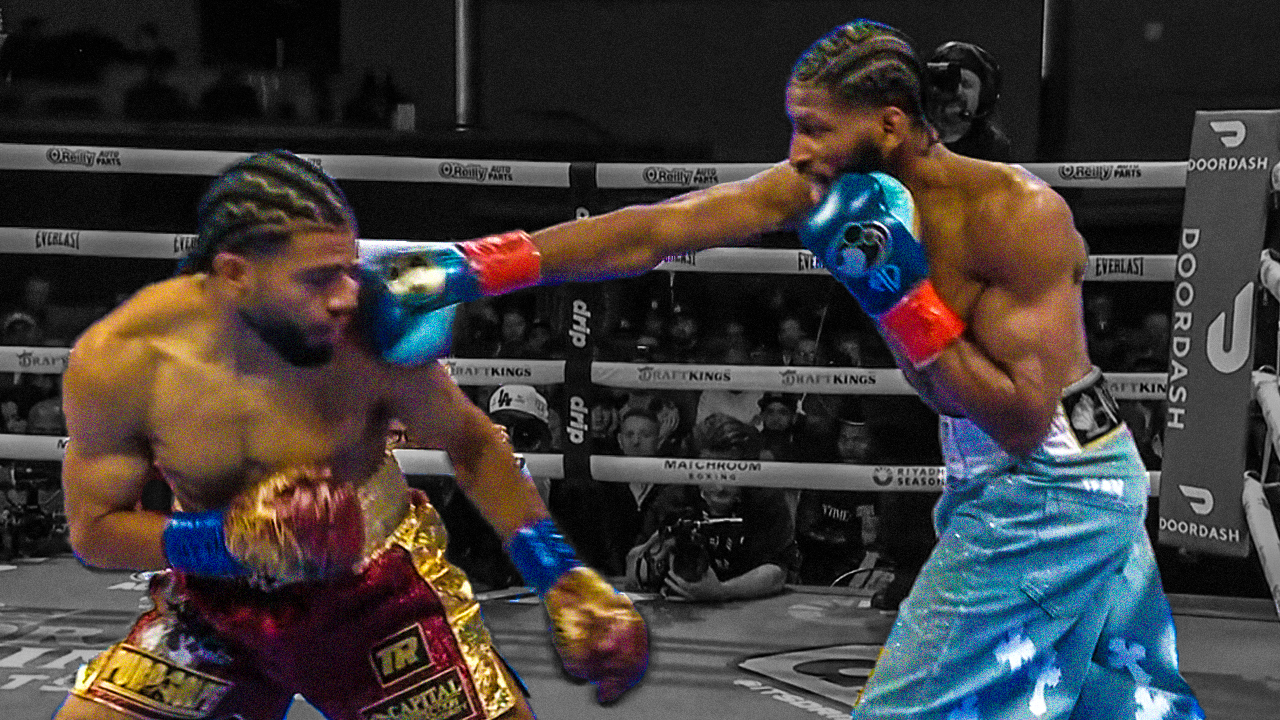
Style clashes are the lifeblood of combat sports, and few come more clear cut than that between IBF lightweight champion, Raymond Muratalla, and his first challenger, Andy Cruz. Cruz was a Cuban superstar, coming through that country’s much esteemed and long-standing amateur system. He won three world championships and an Olympic gold medal in 2020, and moved to the United States to turn professional. He quickly earned himself a place as mandatory challenger, and he received a world title fight in just his sixth professional outing. His footwork is graceful, his punches are crisp and designed to be seen clearly from all four sides of the ring.
Muratalla, a year younger than Cruz, is now into his tenth year as a professional. His style is that of a man who wants to make a fortune in professional boxing. His pressure is relentless, his jab exists to move the opponent, and his best work is done in spurts of brutal, tiring body punching. He is also extremely handsy, using his own gloves and wrists to pin the opponent’s as he scouts for holes on the other side.
The clash between Muratalla and Cruz took place at the less-than-sold-out Fontainbleau, and the resulting majority decision for Muratalla was far from decisive. Yet the battle between the two men contained a number of slick tricks and moments of stylistic flair that are well worth studying.
Muratalla’s pressure was immediately apparent and over the course of the twelve round contest, the calf of Cruz’s back leg was brushing the bottom rope for perhaps eight full rounds of it. Cruz is no slouch with his feet, and was moving constantly, but Muratalla’s ring cutting was beautiful to behold. There are a number of clips available of Muratalla’s coach, the great Robert Garcia, working with other fighters on the mitts and repeatedly forcing them to cut him off after finishing their combination. In mixed martial arts the movement between blows is often an afterthought, but it is clear that despite their completely opposing goals, Muratalla and Cruz put their punches behind their footwork.
The method that Muratalla used to win the IBF title in the first place was to walk his opponent to the ropes, attack them, and then drop away towards the middle of the ring when they came off the ropes.
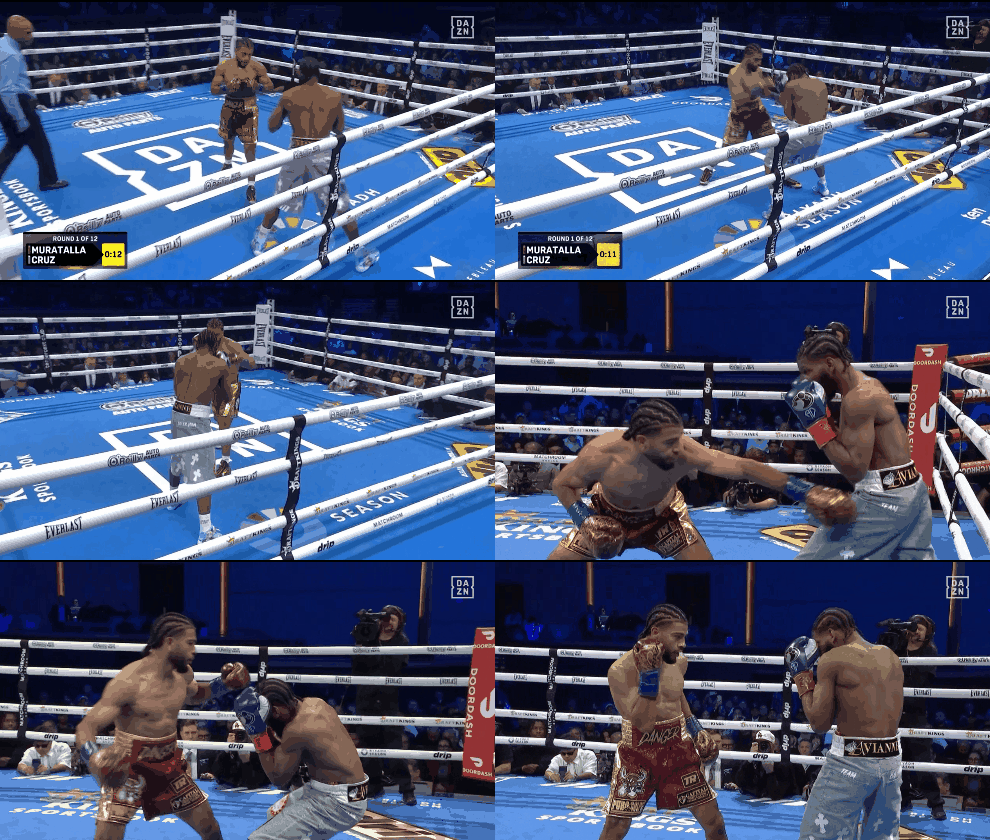
Against lesser opponents, he might catch them with a good counter left hook, or with a right hand off the shoulder roll, as they tended to overextend. Cruz was generally much to good for that, but still occasionally fell into overextension and got clipped on the counter at a couple of points.
Where some fighters lead to get on the counter, Muratalla seems to use this “first-and-third” tactic to try to dissuade the opponent from coming off the ropes. He seems to love nothing more than being given the chance to tear off a combination against the body of a defensive opponent.
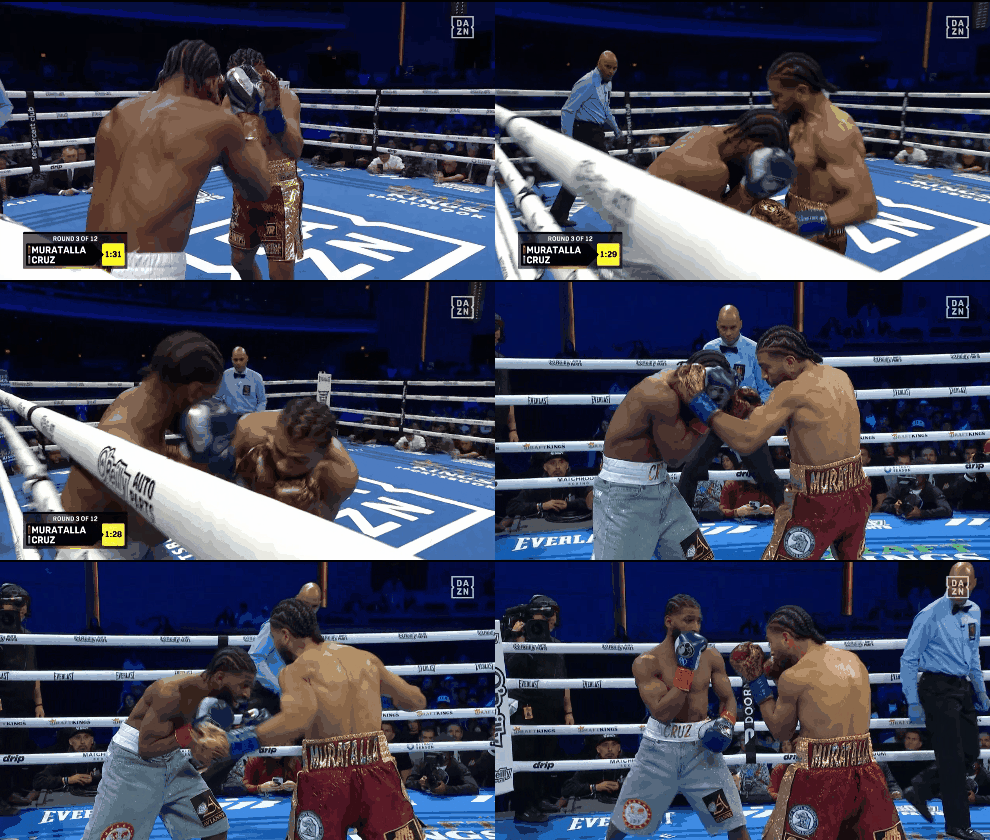
While Cruz spent the majority of the fight navigating positions of danger along the ropes, he was able to strike a balance where he only occasionally got stuck on them in a defensive shell, and rarely overextended himself even while regularly punching his way off of the ropes.
Cruz’s Clean Point Scorers
Cruz’s style is almost entirely built around straight hitting. Any time he entered the range in which he could uppercut or hook, he looked uncomfortable against the powerhouse infighter, Muratalla. This meant that for most of the fight he relied heavily on the body jab, the one-two, and the much less popular two-one.
It is worth contrasting the fighters’ body jabs. Muratalla uses the body jab constantly to enter along the ropes, and almost every time he bends at the waist and takes his head off to the right, blading his stance. In this position the fighter often feels as though he is able to get down behind his lead shoulder, but Cruz was able to land a solid counter early in the fight by timing a right straight high on the temple.
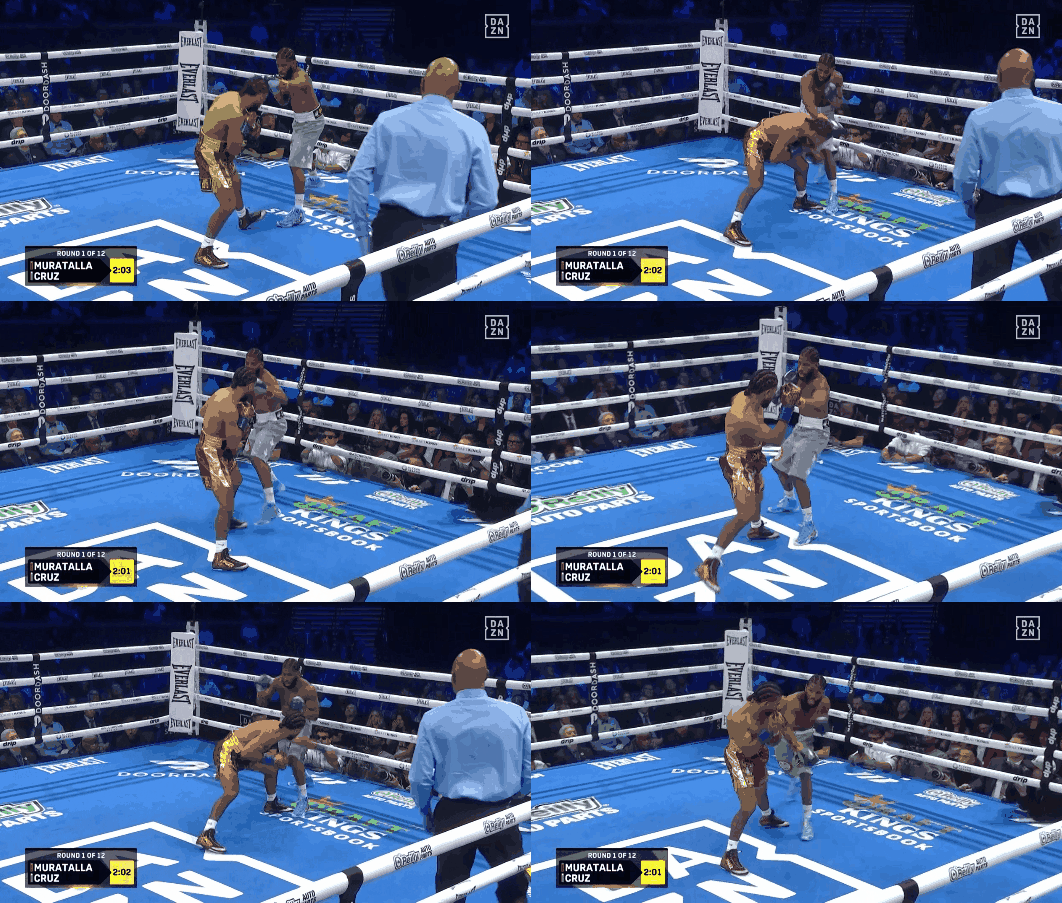
Cruz’s body jab, meanwhile, is rather peculiar. He does not blade his body, and does not bend at the waist. He does almost all of this level change at the legs, and even punches down to avoid bending his trunk. Muratalla’s jab looks more like he is hidden behind his lead shoulder, while Cruz’s requires him to perform an evasion to get back to safety, and yet perhaps that is the danger of the traditional body jab Muratalla employed: it feels safe, but no position is really safe. Cruz’s body jab seems more dangerous for the jabber, but he seems alert to the risk of a return at all times.
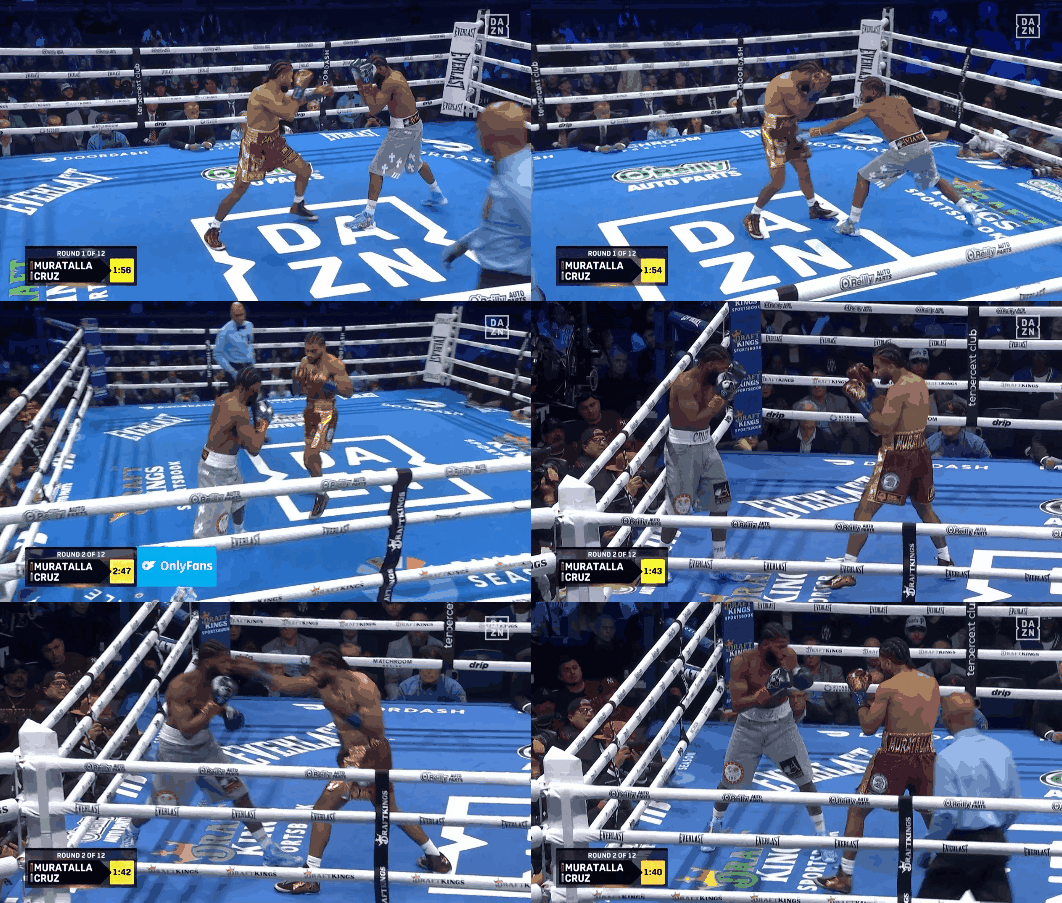
The one-two is obviously an extension of successful jabbing, but let us spend a moment examining the two-one. This is simply a right straight followed by a left jab. You do not see it that much nowadays, but it is curious that a few old boxing texts I have read refer to the one-two as two rapid straight punches, delivered either left, right, or right, left.
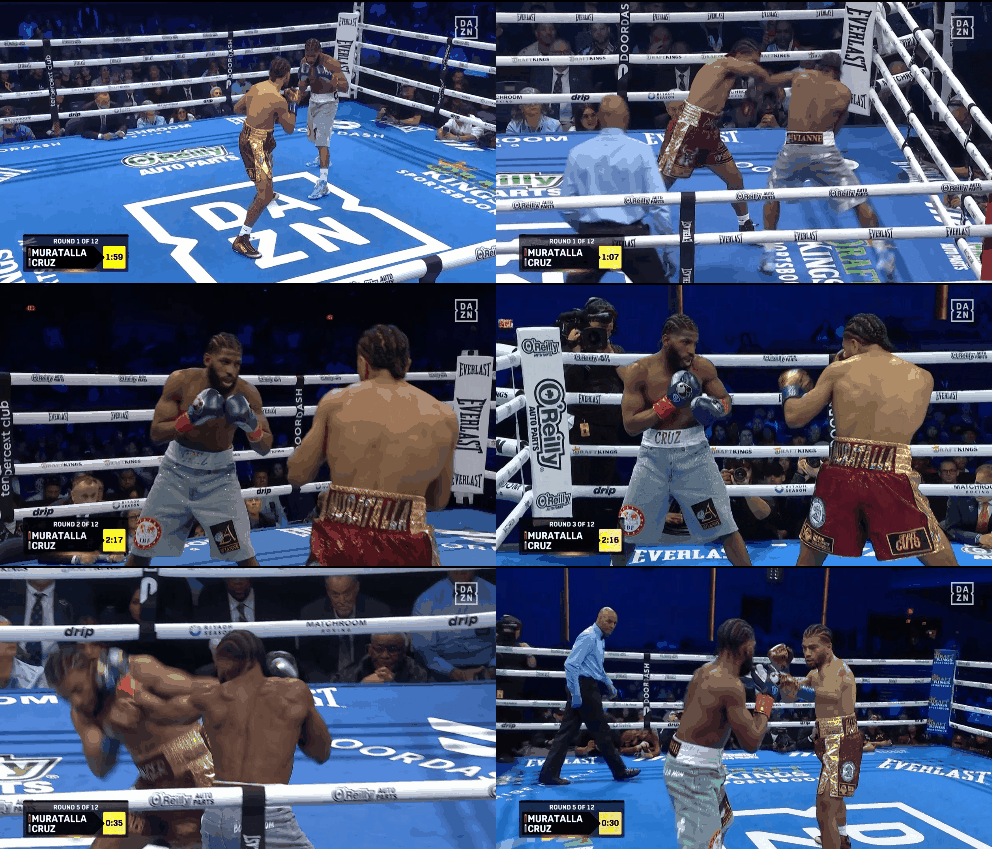
The former variation is the combination we have come to know exclusively as the one-two, and the latter variation has largely fallen out of use. This is partly because of fearmongering over leading with the right hand. One of those rules of thumb that might have stunted a great many fighters who could benefit from playing beyond the rules designed to keep novices safe. The right straight thrown long, fast, and with little intention of following through the target, is a brilliant distraction to set the range for the slightly longer jab which then extends through the target. Against an opponent who is a little too keen to retreat when it is your turn to throw, the two-one punishes him by serving up the longest strike at the end of the combo. Readers will recall that Sergey Kovalev was knocking opponents out with this little trick.
Andy Cruz’s two-one also plays part of a larger boxing concept that he beautifully embodies: closing the door. By jabbing at the end of his combinations, Cruz resets himself behind his lead shoulder and pushes the opponent out to the length of his reach. Pushing the opponent onto the end of the jab means that Cruz can either step or sway back to break off the exchange, and double up the jab or throw a right hand to stay in range. It also naturally checks him from overextending, keeping him relatively safe from Muratalla’s drop-away counters off the ropes.
Cruz’s footwork was quite interesting in this bout because he circled constantly to his lead side, but he also made use of stance switches to change direction. So when he stood orthodox he circled and pivoted to his left, and when he wanted to go to his right he switched to southpaw and circled and pivoted that way.
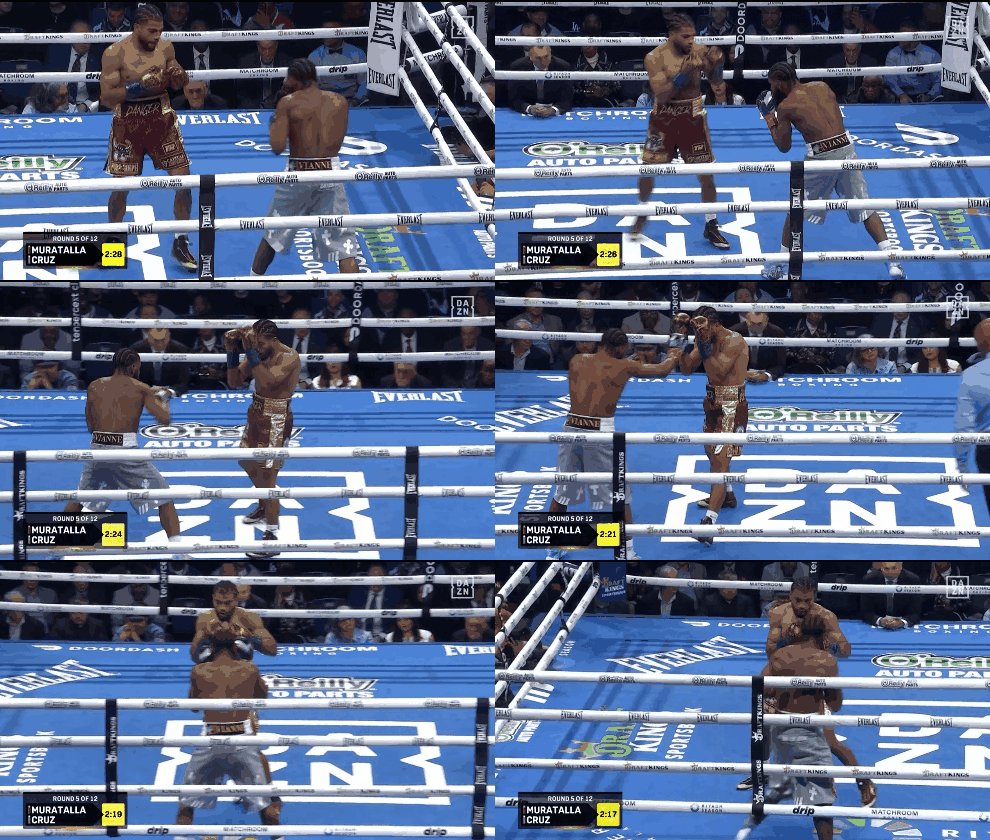
This seemed to be because his lateral movement was built around his jab and V-step. He continually bounced in with his jab or body jab, and then back to the left to form a near ninety-degree angle. Rather than flattening out his stance to create a two-directional threat—as we discussed in Willie Pep - Advanced Striking 2.0—he kept a pretty strict stance throughout.
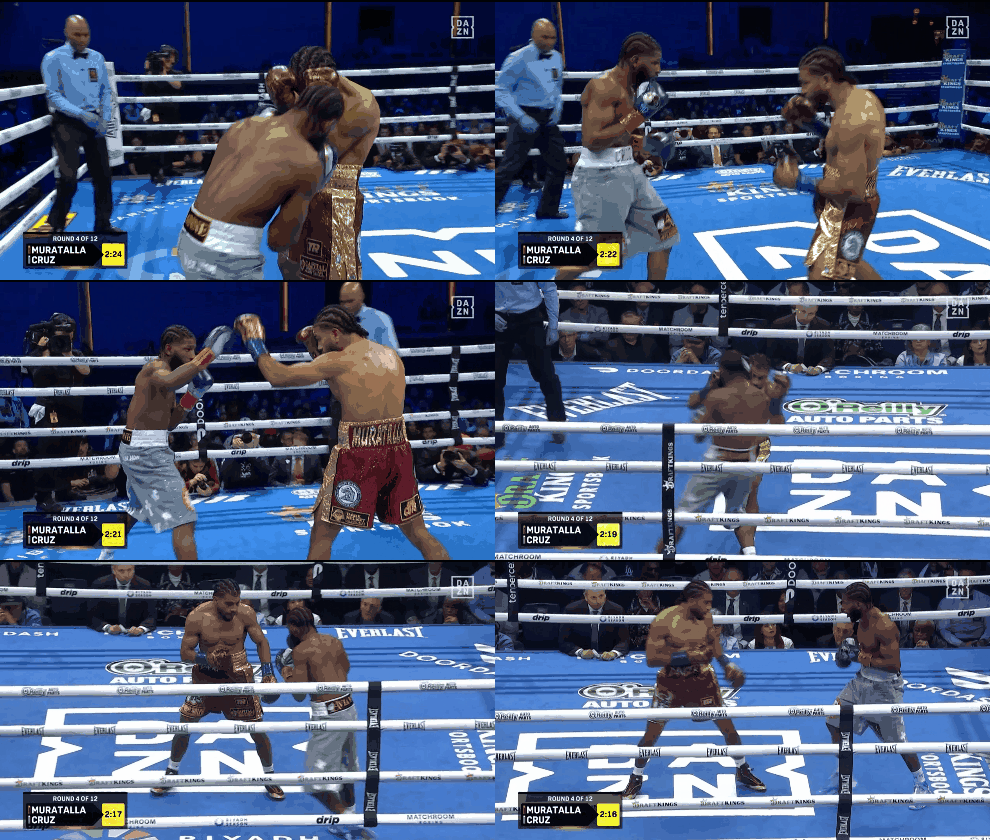
Muratalla and the Wide Right
The wide right to the body is a clumsy looking weapon. If you stood an untrained person in front of a heavy bag and told them to hit it as hard as they could, the resulting punch might look like a wide right. But in a strange way the wide right—a move that could have been invented by a caveman—counteracts some of boxing’s slickest techniques and tactics.
Andy Cruz fights from a high guard and his discipline keeping his left hand nailed to his eyebrow was remarkable. This in itself made it difficult to catch him with an overhand or a right straight.
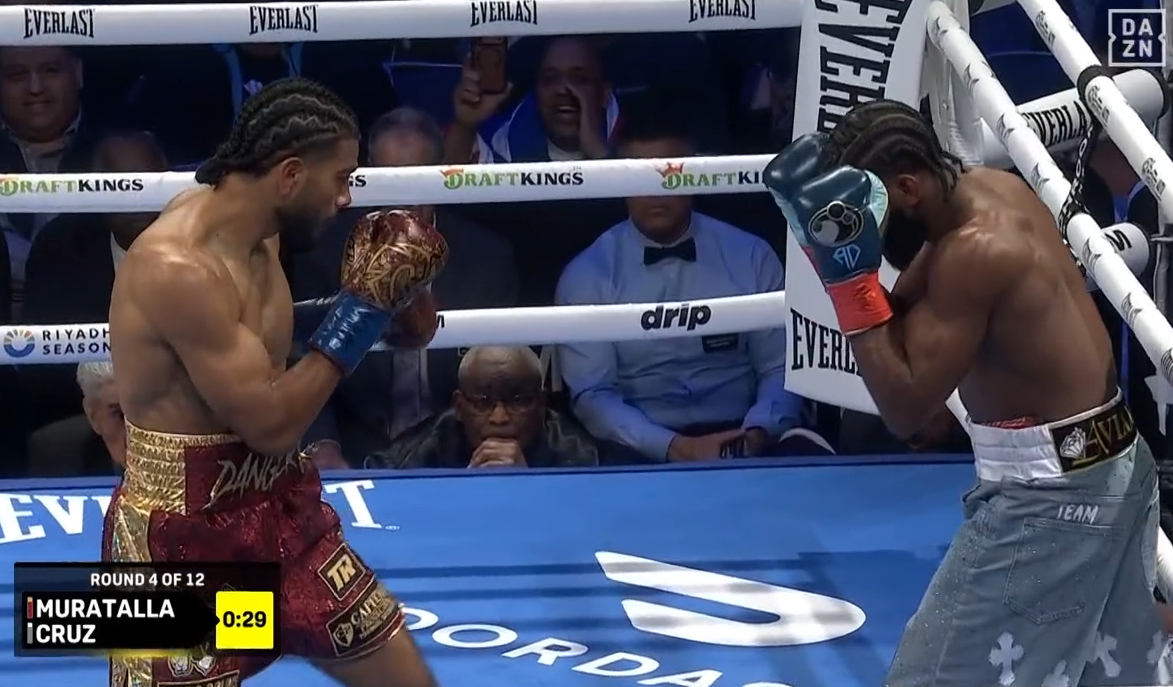
The only time Cruz’s left hand came down, was to set the trap for the shoulder roll.
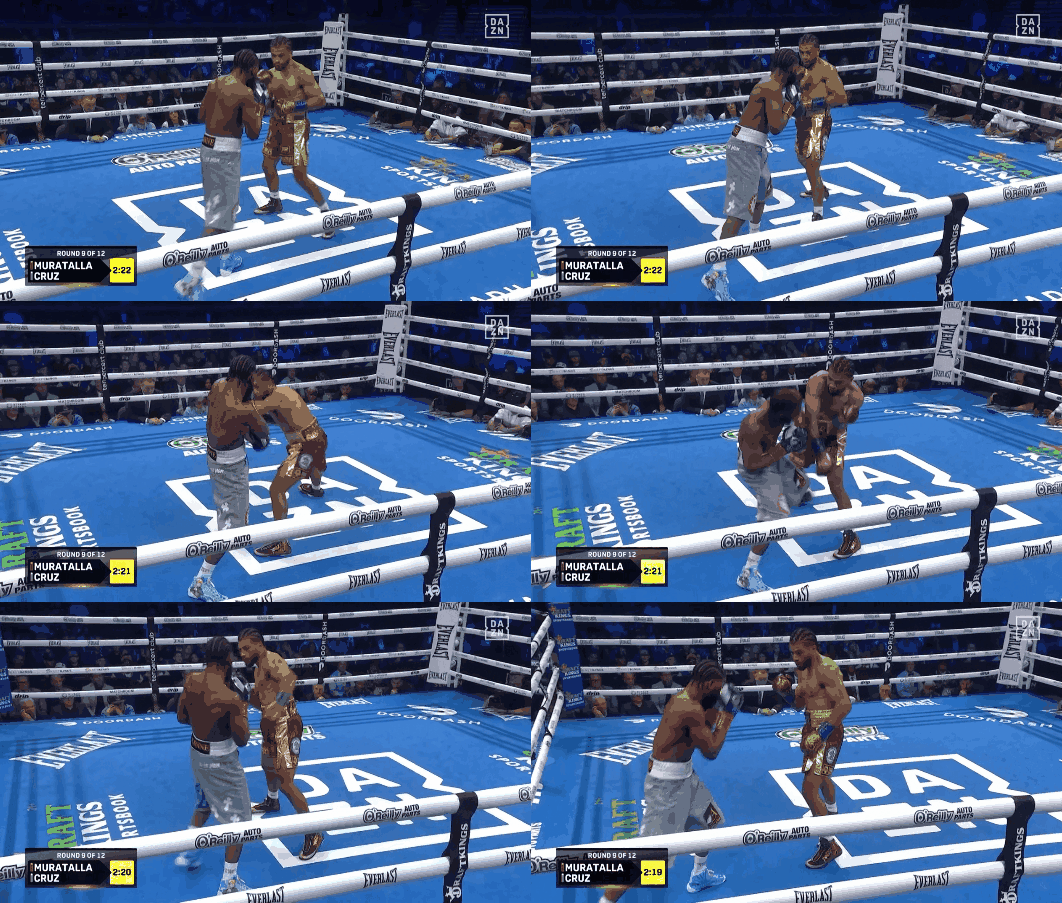
And with so much of the fight spent along the ropes, Cruz’s mastery of the shoulder roll pivot meant that any right hand to the head from Muratalla was an opportunity for Cruz to cut a tight angle and escape to centre ring. This technique was a central feature of Miguel Cotto’s late-career middleweight run. Cotto didn’t want his bigger opponents leaning on him or extending exchanges into scrums, so he timed their right hand to step off and reset.
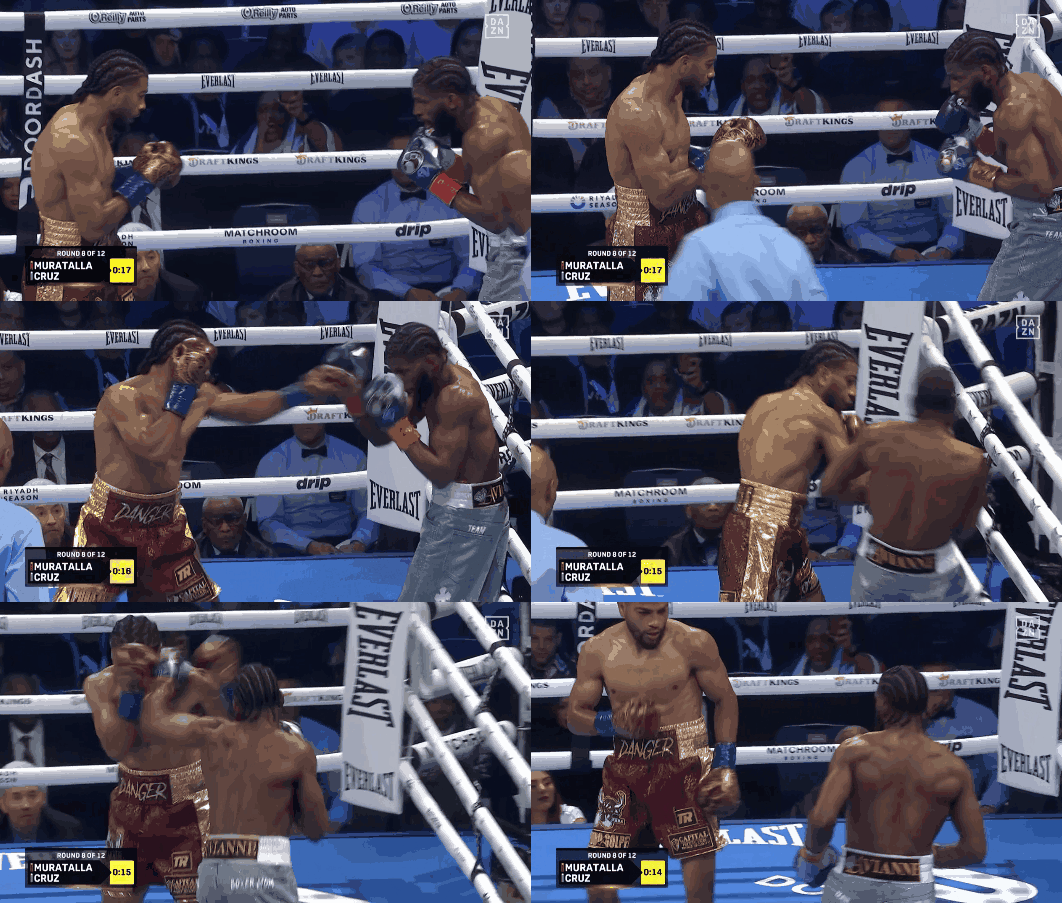
The high guard, the shoulder roll and the pivot vary in difficulty from basic boxing to tricky ringcraft, but all of them are undone by the wide right to the body. The high guard actively exposes the fighter’s ribs on that side. The shoulder roll often leads the fighter into a kidney punch that—unless the referee is very soft—comes off in a legal grey area. And the pivot cannot work through the wide right.
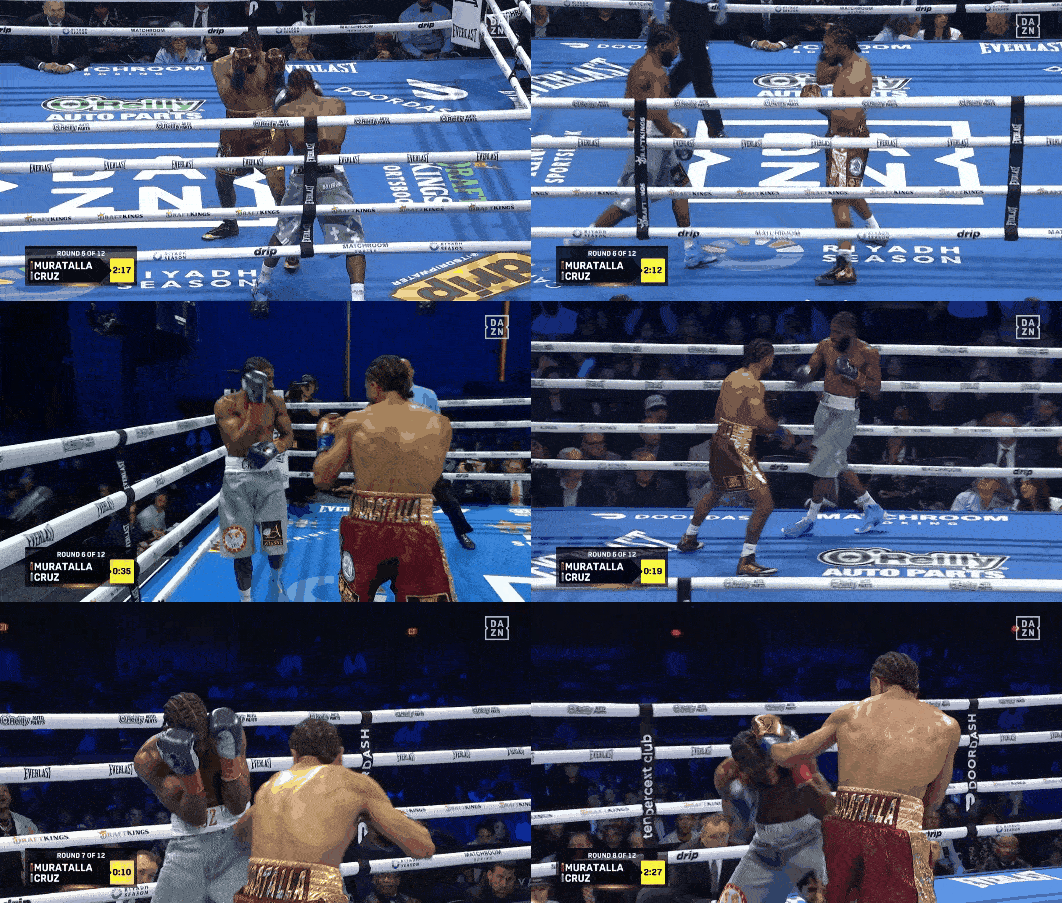
Ignore the overthinking about liver placement and the best chances of knocking someone out with a body shot, because the wide right is the greatest means of pinning down an elusive, tricky fighter, and the fact that it knocks some of the wind out of them is a bonus.
Muratalla’s best work routinely came off the wide right to the body, after which he could uncork his left hook to the body, his uppercuts, and maul Cruz in a way that he could not when there was a four foot gap between their chests.
The fight was razor close (except in the eyes of that usual one judge). Raymond Muratalla’s evident power advantage and the fact that his work came in eye-catching bursts seemed to pull him ahead and he was able to notch a successful defense of his belt. The critique of Andy Cruz before the opening bell even rang was that he lacks stopping power, and this is exaccerbated by being a little undersized for the weight. His work with Bozy Ennis has not magically converted him into a brilliant inside fighter, but in this match he was doing well enough trying to force the outfight by dancing and punching his way off the ropes in short spurts. Cruz is not as young as the great Vasiliy Lomachenko was when he got his first world title fight, but he is almost as inexperienced in the professional game and he gave a great account of himself. Were a rematch booked between these men in a year or two, it would be immediately become one of my most anticipated fights of the year.