
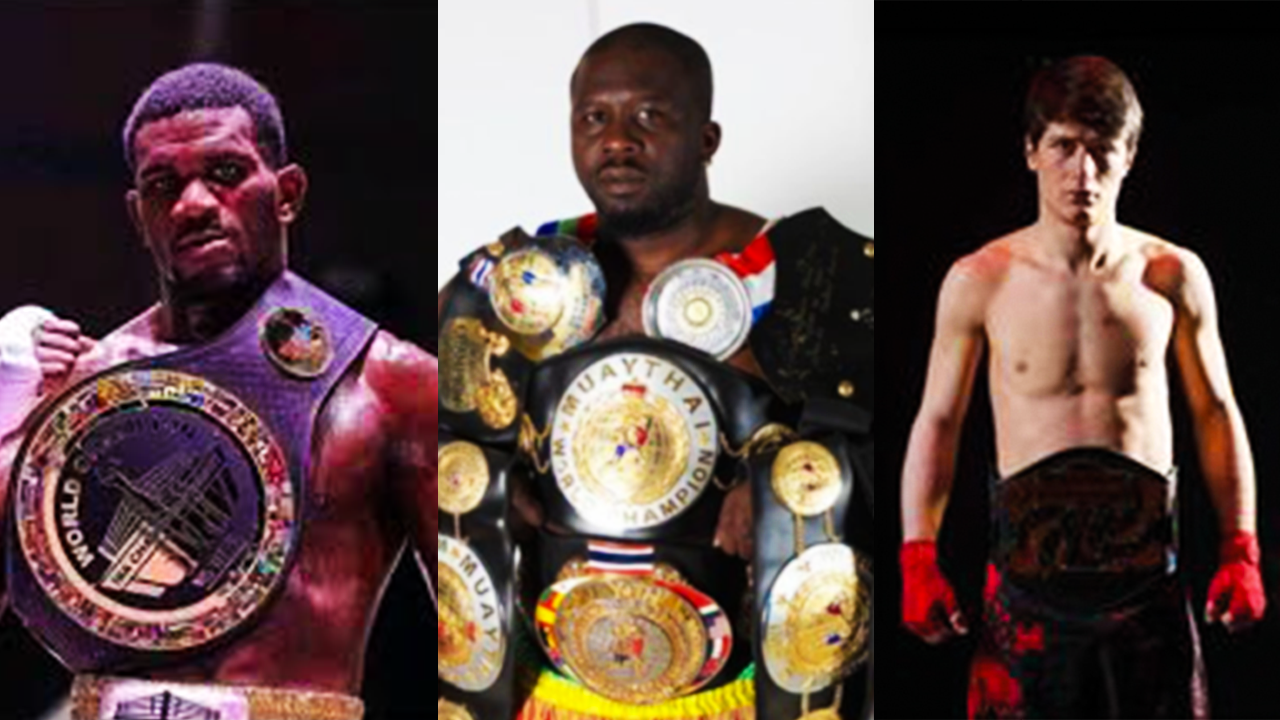
When the UFC offers us a slow week, or a slow month as has been more common in the last couple of years, it provides the chance to ramble through the wider world of combat sports and ruminate on the fighters who have been keeping this writer busy.
Today let us shine a light on three more strikers you can learn a thing or two from studying.
Giorgi Malania
It is difficult enough to keep up with the Japanese kickboxing scene and ONE Championship’s kickboxing offerings, let alone whatever GLORY has to offer. But there is yet another deep field of competitors doing battle in China. Where fifteen years ago the Chinese kickboxing scene was something of an afterthought, it now seems to be going from strength to strength.
In January of last year, a young Georgian named Giorgi Malania worked his way through two tough opponents to reach the final of the Wu Lin Feng MAX 63kg tournament. His opponent in the final was the tournament favourite, Hirotaka Asahisa. Asahisa has been featured in the rankings of Combat Press and Beyond Kickboxing for the entirety of the 2020s and was riding a six fight winning streak. Malania, a week after celebrating his twenty-first birthday, and in his second fight of the night, ran through Asahisa in under three minutes.
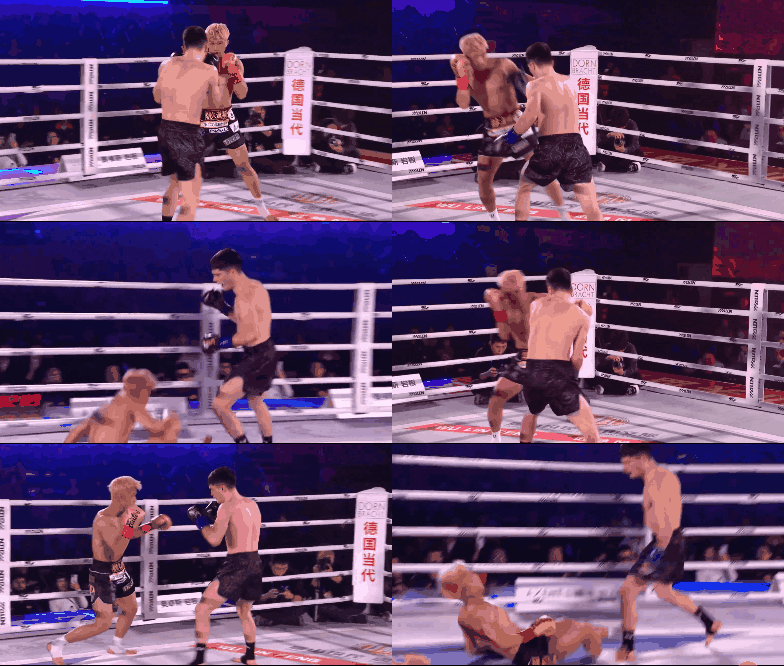
Stylistically there is a distinct flavour of Kazuki Osaki to him. He fights deliberately short: hunched over, walking into his opponent’s chest, chopping in short right low kicks, and cutting off their offense with dipping jabs to the nose and body.
The right uppercut is a staple of his offence and he is a master of that beautiful two-parter: the right uppercut to left body shot. He melted Jin Ying with this technique, and his first contact with Asahisa was to score this combination and immediately follow with a left hook to the head that knocked Asahisa to the mat.
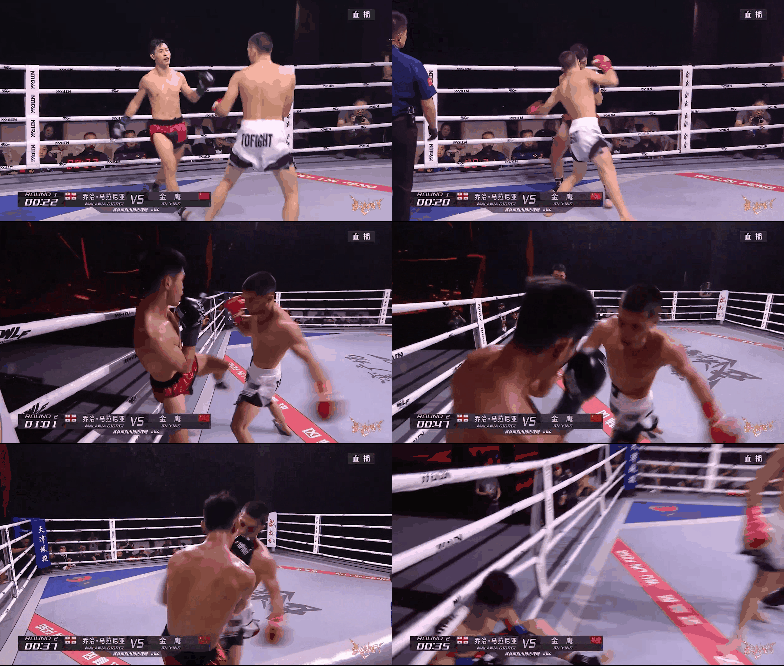
Another Malania favourite is to throw the right uppercut, and then immediately follow with the right hook behind the guard of his covering opponent. You can revisit his earliest professional career in Georgia and witness a teenage Malania using body shots to crumple grown men who tower over him.
In the last couple of years Nassourdine Imavov and Cyril Gane have had considerable success in the UFC with a technique I call the “twist kick.” The arc is similar to that of an inside-out kick / inside crescent kick / uchi mawashigeri, but it is delivered to the body, with the ball of the foot. It is essentially a front kick, angled out. Gane and Imavov score this with their lead leg from an open stance.
The angle makes it more difficult to parry from either side, and lines it up with the angle of the opponent’s body when their feet are staggered in stance. Malania regularly throws the twist kick with his rear leg, making it into a digging power shot.
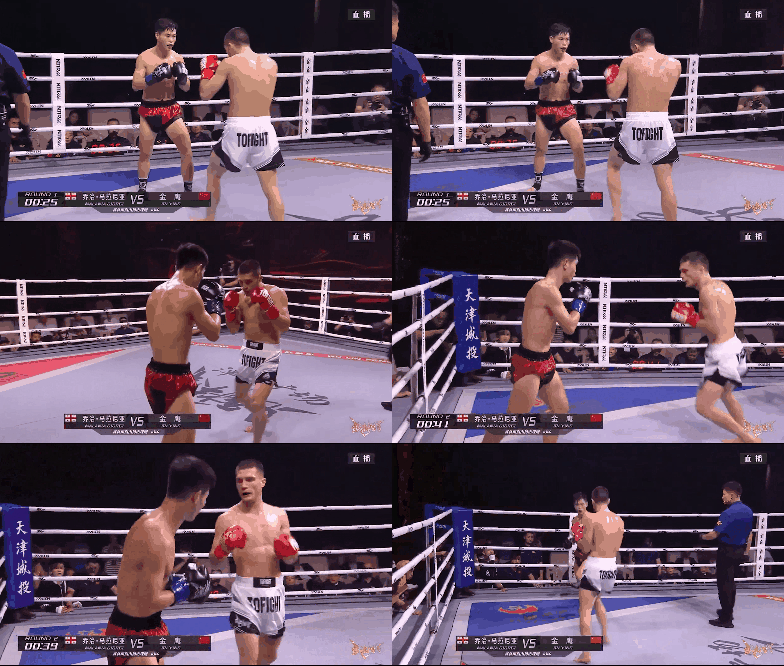
Here he winds Asahisa as he kicks him back onto the ropes.
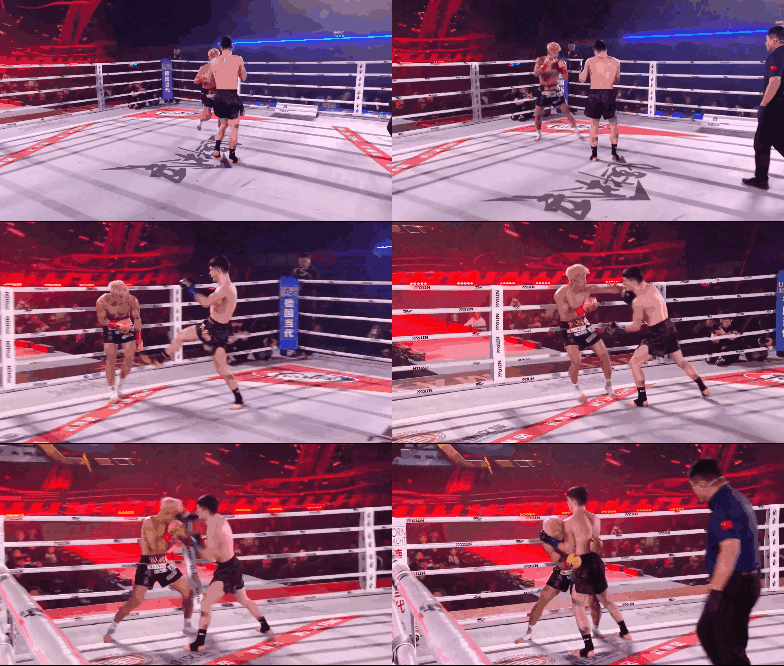
Two weeks ago, Malania stopped top five ranked Zhu Shuai in the third round. Combat Press currently has Malania as their #2 super bantamweight kickboxer in the world, behind only Yuki Yoza. Beyond Kickboxing has him in their pound-for-pound top ten, the only representative from the Wu Lin Feng promotion and the Chinese kickboxing scene. Just three years ago, Malania was a teenager competing entirely in Eastern Europe. His explosion to the top of the world’s kickboxing ranks is a stern reminder that in fighting, there are always monsters lurking out there in the unknown.
Yoenli Hernandez
As a Cuban world champion who defected to turn professional, Hernandez’s story is a familiar one. Even more familiar given that we covered Andy Cruz last week. But unlike Cruz, Hernandez is a middleweight and he can crack. With just nine professional fights under his belt, Hernandez is ranked #2 by Ring, #3 by the WBO, #4 by the WBC, and is the number one contender for his countryman, Erislandy Lara’s WBA title.
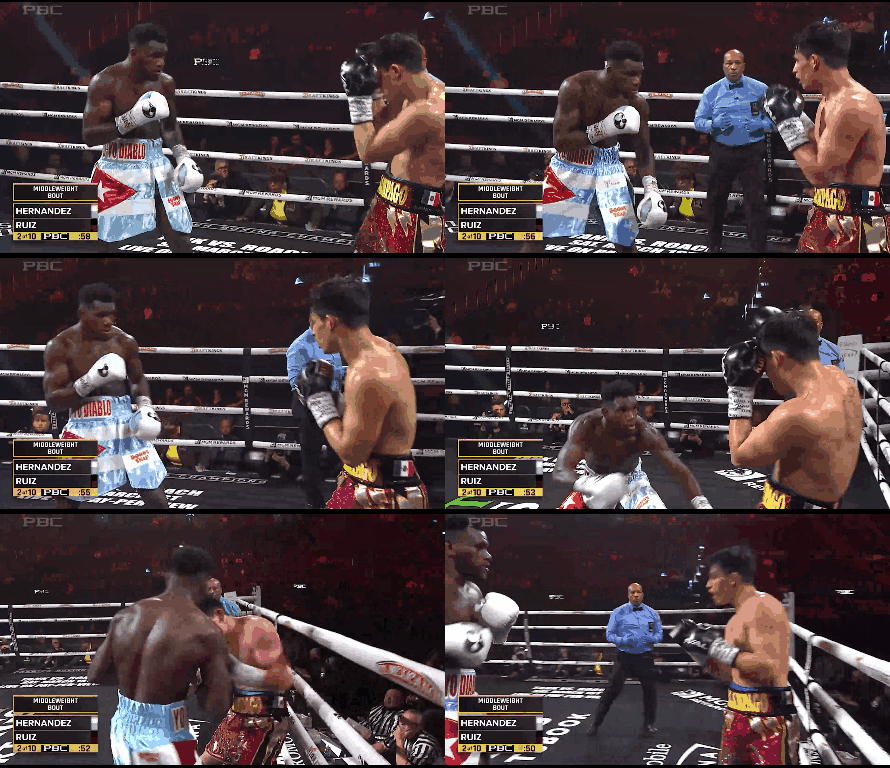
Hernandez is part of that peculiar breed: the rangy infighter. He has height and reach on many of his opponents, and he works well from the outside, and yet he comes alive when he is almost forehead-to-forehead, sneaking in uppercuts.
Head placement is a crucial part of the infight. There is a fine balance between using your head to prevent the clinch and push the opponent around, and keeping your head out of the way of punches. Yoenli Hernandez is a master of “leaning out the window” from the infight. Taking his head out past one of the opponent’s shoulders—making him hard to hit without a wind-up, well outside the line of their body—and cranking in loopy uppercuts with his long limbs.

This early knockdown from his fight with Kyrone Davis demonstrates a number of facets of Hernandez’s game. Firstly his ability to close the distance into the infight with effective jabbing. Secondly, that lean out the window to score the left uppercut. And thirdly, that habit that I am increasingly noticing in graduates of the Cuban national team: closing the combination with a jab to reset stance and catch the opponent with the longest weapon if they move back. Notice that Davis is stunned by the preceding two punches but it is the unexpected jab that puts him down.
The idea of the national style must be treated with caution because you will find infighters, outfighters, brawlers and swarmers wherever you go. But Cuban boxers who excel in the amateur system all wind up with the same coaches so there is a bit more to grasp onto regarding a “Cuban style.” We discussed Andy Cruz’s use of the jab to end combinations last week, and Hernandez does it in every fight. Even the southpaw Erislandy Lara, whom Hernandez hopes to challenge for the WBA belt, uses the jab to end or perhaps “reset” from his combinations.
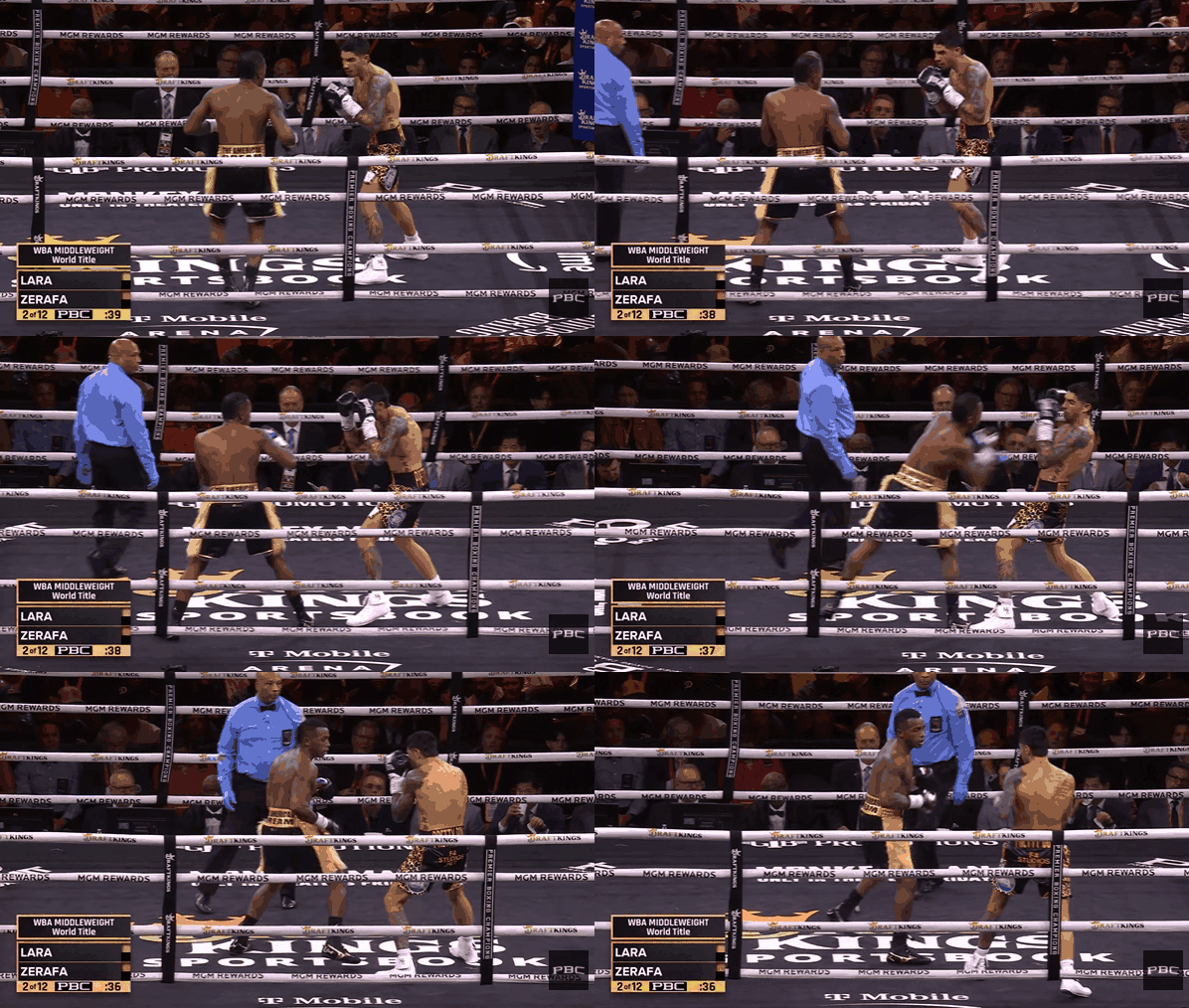
One particularly neat look of Hernandez’s is to use a slapping right hook from out in the open to force the opponent to block, then move his head outside of that glove as he steps into infighting range, setting up the uppercut. He used this a great deal in his amateur days against southpaws.
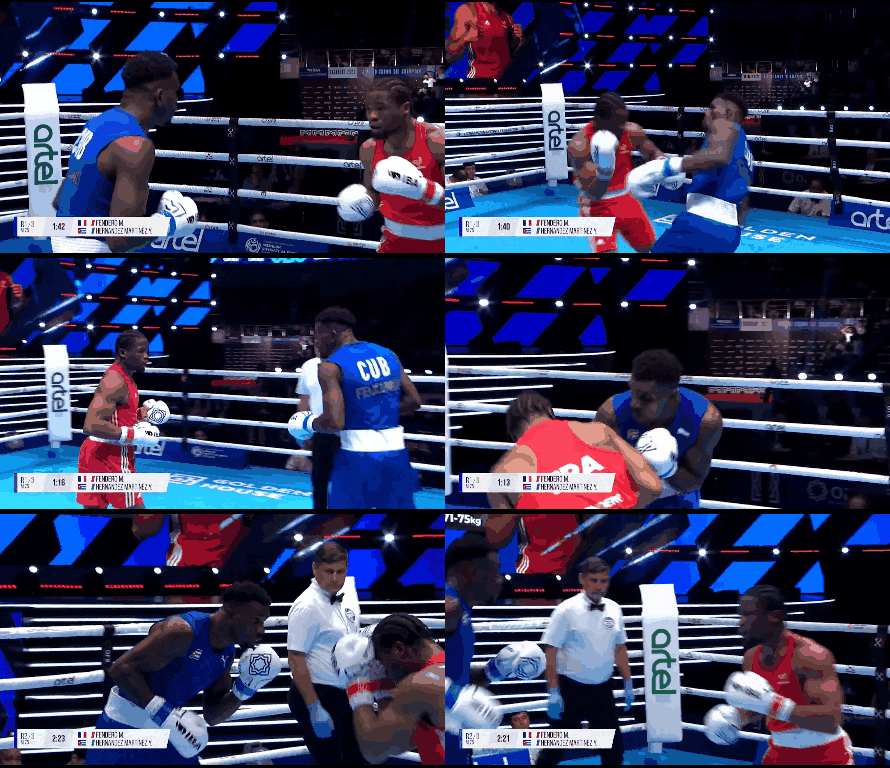
After beating Kyrone Davis in May 2025 and getting himself ranked, Hernandez effectively took the rest of the year off. He was booked to fight a 16-10 Mexican opponent in October, and ended up fighting a 24-40 Argentinian on the same day instead. But the Lara match up is surely only a matter of time, and where the forty-two year old Lara is the elder statesman of boxing, the twenty-eight year old Hernandez has all the time in the world.
Dany Bill
Much of my time in the last week has been spent studying the career of the great Dany Bill. A Cameroonian by way of France, Bill is regarded by many as the best farang to ever compete in Muay Thai. He never won a coveted stadium title from Rajadamnern or Lumpinee, but he was a seven time “world champion” and beat some great Thai fighters from and in those same stadiums.
One of the reasons Bill has been at the front of my mind for a while is the rise of Yuki Yoza. Yoza has been having astonishing success in kickboxing with his cut kicks: kicking underneath the opponent’s kick or check, and taking out their standing leg. Before Yoza, Bill might have been the most notable exponent of cut kicks and regularly sent experienced Nak Muay flying through the air with them.
A cut kick is a gamble. You see or anticipate the opponent kicking, and you turn your body and kick their standing leg while their kick flies into your back or extended arm. The payoff is a great sweep, or a free kick on a loaded leg. The risk is that you eat a hard body kick and either miss or fail to move their standing leg.
One of the reasons Bill was so effective with the cut kick was that he was an excellent “first-and-third” fighter. He would lead, anticipate the return, and cut kick.
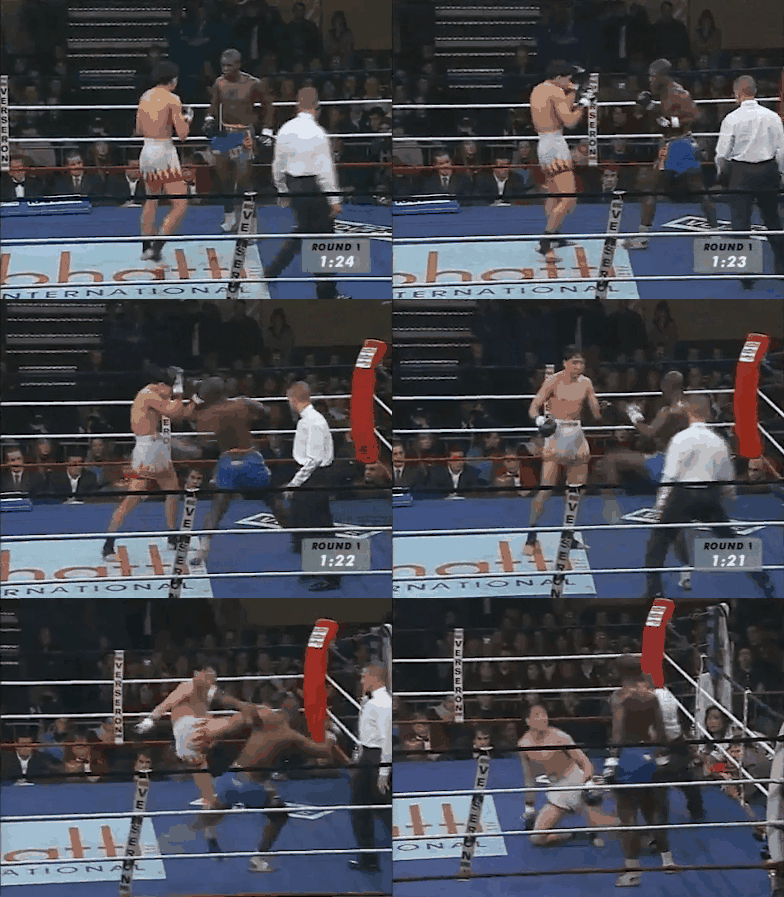
The cut kicks and sweeps scored him points and added emphasis for the judges, but most of Bill’s best work was less flashy. In watching his fights it stands out how brilliantly he uses feints.
That step-in left hook to the body was a Bill favourite, and after establishing it with a couple of committed efforts:
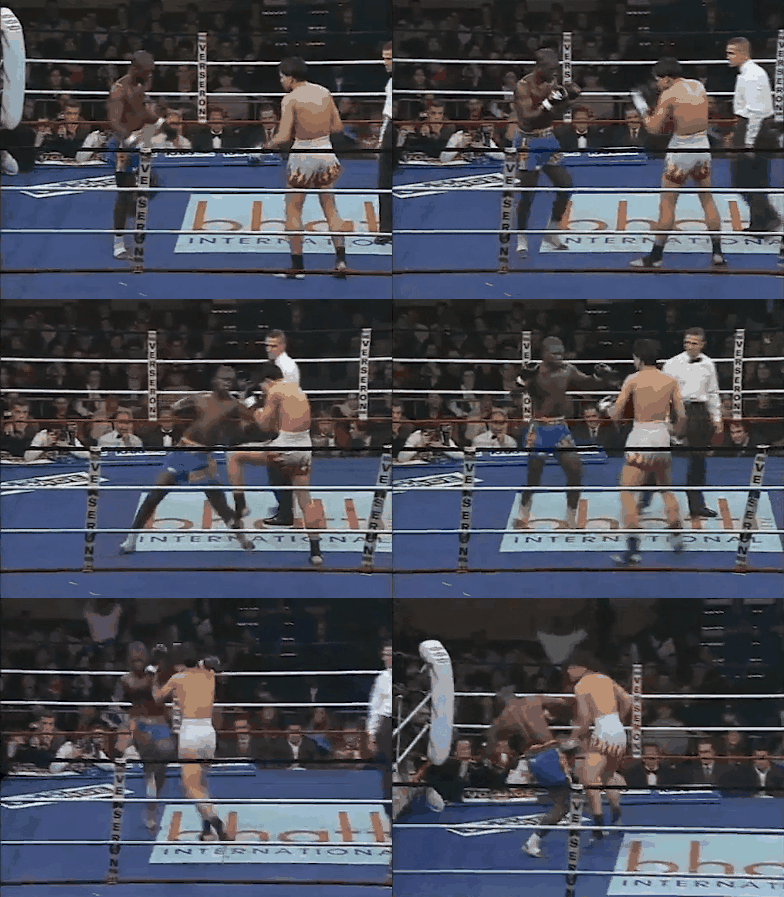
Bill would threaten it and then return to jabbing and teeping the lead leg instead.
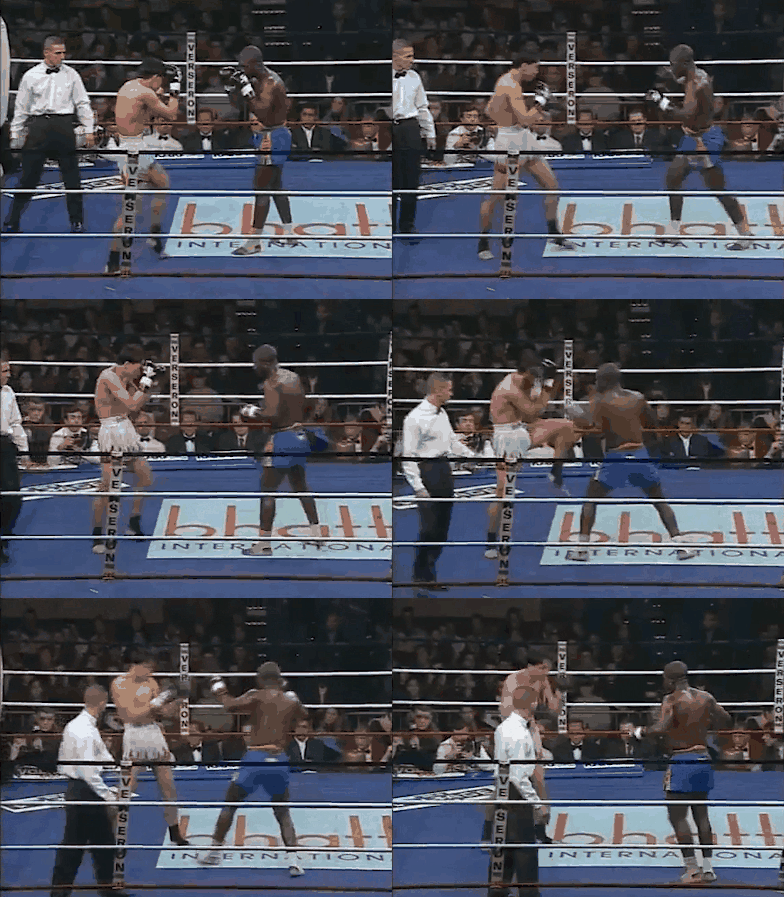
Here Bill uses the threat of his left leg and right uppercut from southpaw stance to go back-and-forth against Nokweed Davy.
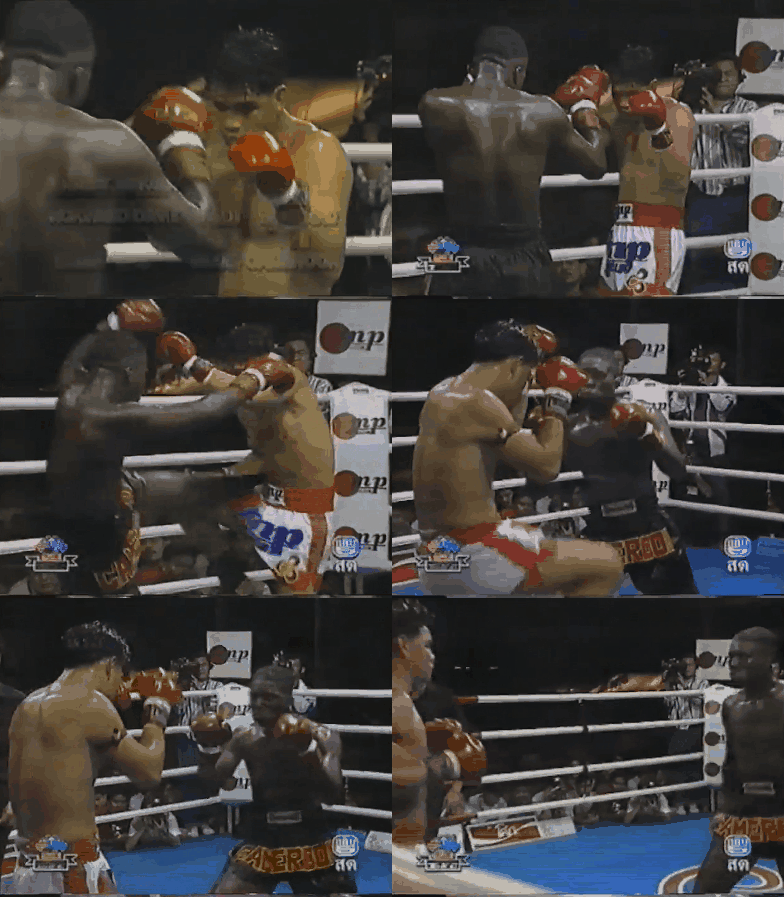
The Nokweed Davy fight intrigued me because I wanted to see how confident Bill was in going to the cut kick against Davy. Davy was returning from a three year lay-off, but he was famously one of the hardest kickers in the history of Muay Thai. How did Bill navigate cut kicking when the risk was so much higher? He didn’t.
Instead, Bill came out southpaw, immediately feinted Davy towards the ropes, and kept him there for the duration of the bout. Feints, kicks, body shots. Bill would tear into Davy in short spurts and immediately get in position to check the return. Bill used a great many “floating checks” in this fight. That is throwing the body kick with his left leg, and instead of returning it to the floor, turning the shin out into a check while remaining on one leg.
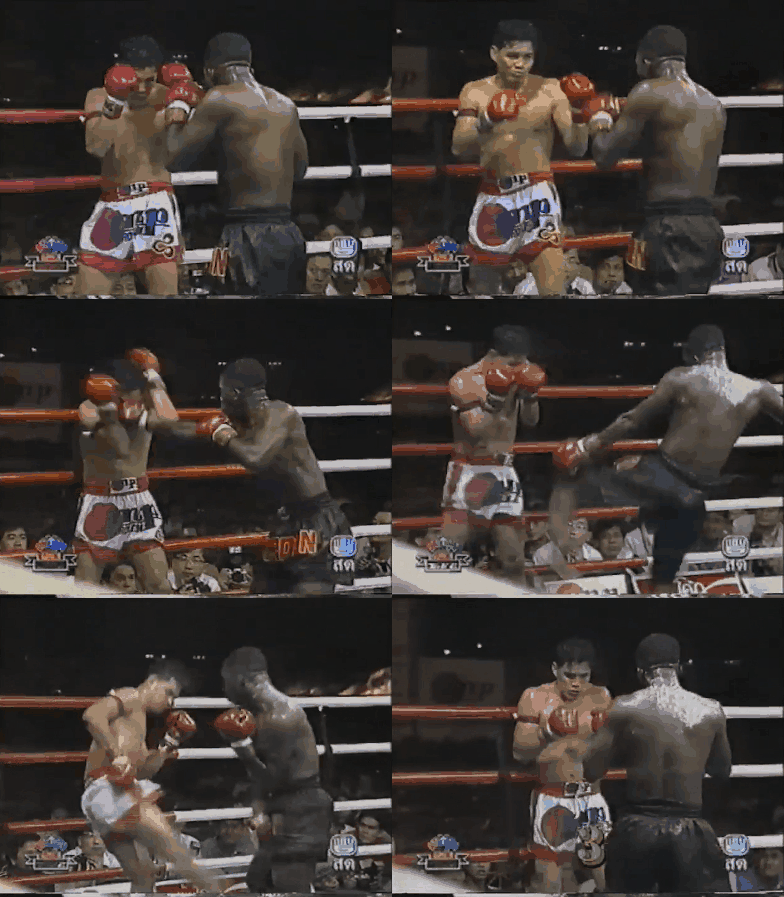
Dany Bill deserves a full study in the near future. His boxing is brilliant, he can fight out of both stances, he wins first-and-third engagements with experienced Thais who have been immediately returning kicks since they were in nappies. Bill is not just one of the best farang to ever do it, he might be one of the slickest fighters I have seen anywhere.