
Year of the Spinning Elbow
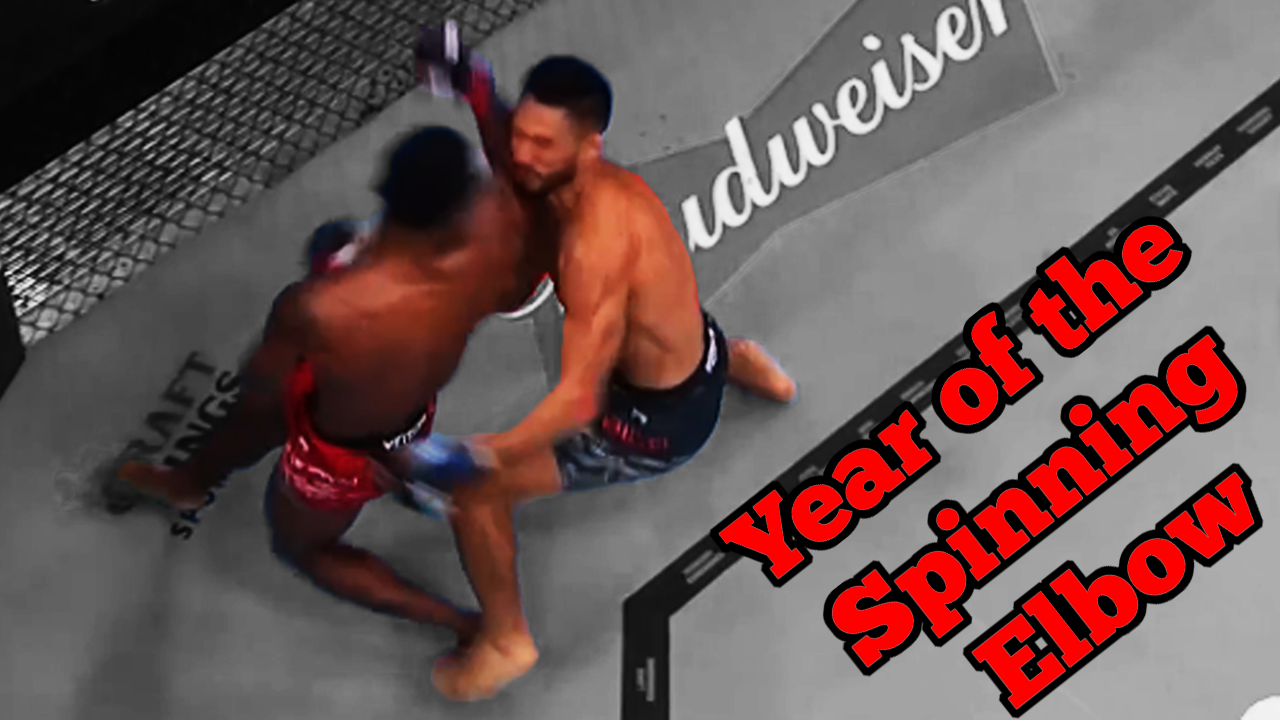
When awarding the Slacky for Breakout Technique of 2025, there was no real competition. The spinning elbow has dominated mixed martial arts this year in a way that a seldom effective, high-risk and high-reward technique probably should not.
In the UFC, three spinning back elbows decided high profile fights between ranked fighters: Lerone Murphy over Aaron Pico, Carlos Prates over Geoff Neal, and Diego Lopes over Jean Silva. Two major PFL fights were won by spinning elbows: Alfie Davis vs Clay Collard, and Sergio Pettis vs Magomed Magomedov. There were a few more on the undercards of the major shows, and the MMA portion of social media has been a constant stream of spinning elbow knockouts from regional mixed martial arts promotions all through 2025.
The Three Rules, and the One that Doesn’t Matter
This uptick in spinning elbows provides an opportune time to review the technique and the tactics that are key to landing it. It has been so long since we discussed this side of striking that we should refresh our memories on what this writer considers the three rules for landing spinning techniques. A fighter should only attempt spinning techniques:
On the Counter
Against the Boundary
When the opponent is Circling into the path
In practice, with the spinning elbow, this list could probably be cut down to just the first two rules. Wheel kicks, back kicks to the body, and spinning backfists are at their best when the opponent is trying to circle out of danger along the fence. Kevin Vallejos knocked out Giga Chikadze with a step-through spinning backfist in this fashion on the last UFC show of 2025. However, the spinning elbow is so short that it is not terribly practical in this situation.
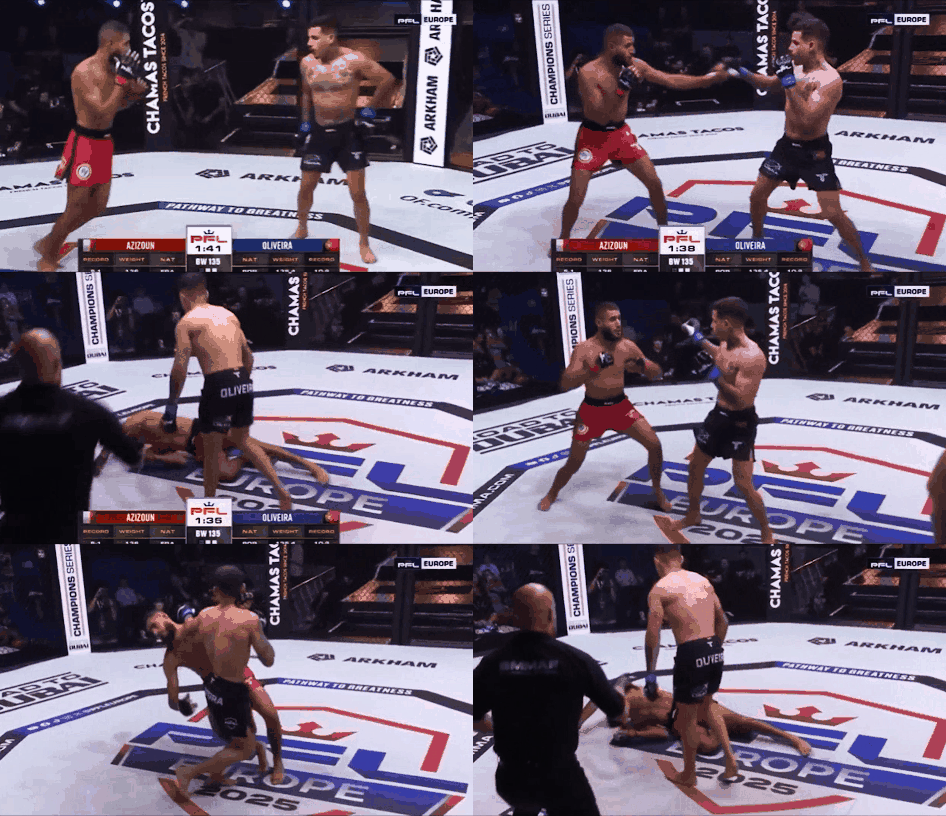
The occasions when an opponent is circling into the path of a spinning elbow almost always coincide with counters anyway. In an open stance match up, for instance, the opponent might try to slide down the outside of your lead leg and shoulder, close enough to hammer with the spinning elbow. Israel Adesanya famously caught Kelvin Gastelum in this way, but here is an especially aesthetically pleasing example from PFL in 2025.
On the Counter
Before we continue with our rules, it is important to stress that sometimes spinning strikes just work. They are often a surprise, and so even thrown at the worst time they can still have great effect. Here are a couple of rushing spinning elbows that landed to terrific results this year.
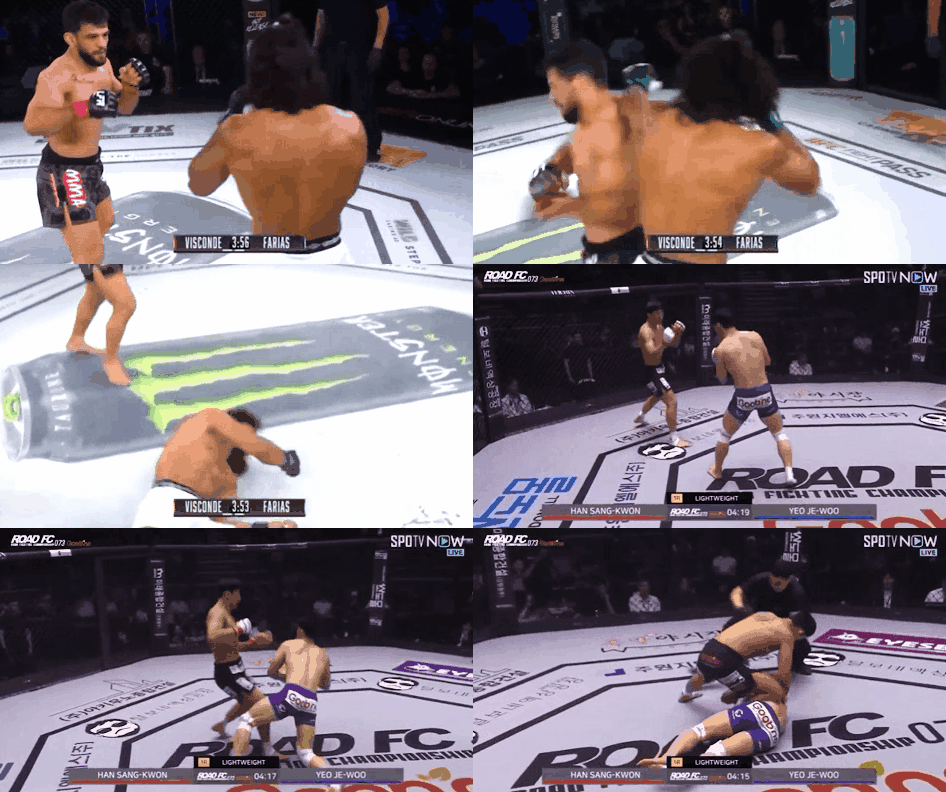
In both examples you will notice that the elbow effectively landed as a counter because as the fighter advanced, his opponent swung back. Both fighters also did their best to make up for the elbow’s lack of length by shifting through in the style that Cung Le did on his back kick: the legendary “Cung Le Express.”
Our three rules are simply how a fighter can manufacture a good chance at landing a dramatic, high reward technique, while mitigating the risk. With spinning techniques the danger is always in either smothering yourself by getting too close, or falling short and ending up horribly out of position. So limiting or having a confident read on the opponent’s movement is vital.
We all recall the spinning elbow knockout Diego Lopes achieved against Jean Silva, but it is easy to forget that Silva attempted three spinning or back elbows of his own in that short fight. One coincided with Lopes stepping in but missed and exposed Silva to a back clinch.
Two of them fell short in this way:
And shortly after this one, Silva rushed forward attempting more elbows and haymakers, and ran himself onto a spinning elbow of Lopes’ own.
To be effective with the spinning elbow, it is crucial that the opponent will not step back. The two ways to achieve that are to put him on the fence or ropes, or to throw the elbow as a counter: when you are certain he is stepping in. The spinning elbow is so limited on reach compared to other spinning techniques that the intercepting counter is where you will see the vast majority of connections. A fighter will lumber into what he thinks is a boxing exchange, his opponent will duck under, and the elbow will hit him overhead. Juan Diaz’s knockout of Wong Il Kwon on the Contender Series, three months ago, is a perfect example.
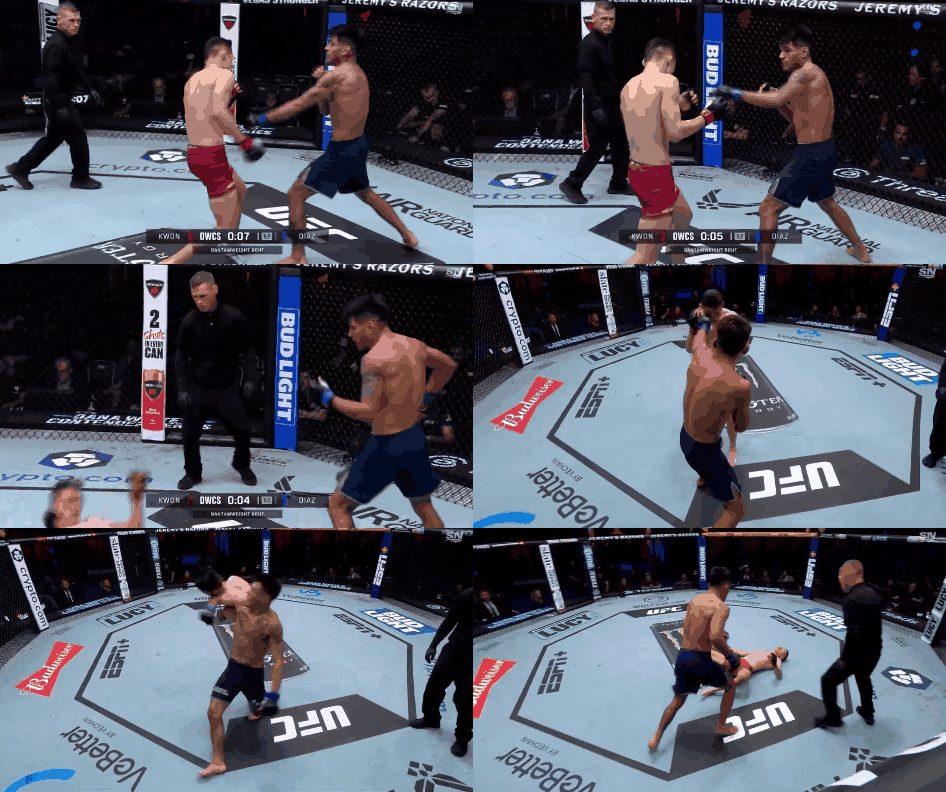
All three of the high profile UFC spinning elbows this year came as counters. Jean Silva was recklessly chasing Diego Lopes down and walked straight onto it. Aaron Pico had been driving Lerone Murphy into the fence and posting his head on him at every opportunity. And Geoff Neal automatically stepped forward to get one back at Carlos Prates just as the round was ending.
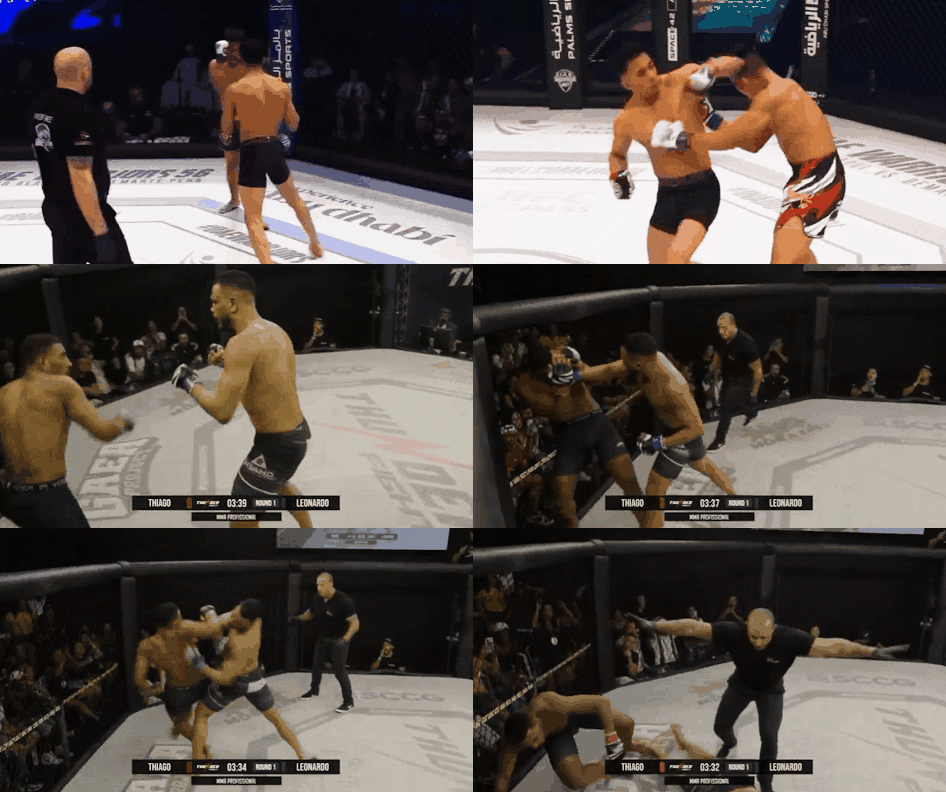
Here are two more of Caposa’s favourites from 2025 that demonstrate the spinning elbow is at its best as a counter to reckless aggression.
Against the Boundary
When attempting spinning back kicks, wheel kicks, back kicks or just about any other high risk, high reward strike, it is a good idea to have the opponent’s back to the fence. Here he has his feet to the fire and nowhere to retreat. He must either cover up, swing back, or circle. And of the two directions he can circle, one will carry him into the power of a spinning strike.
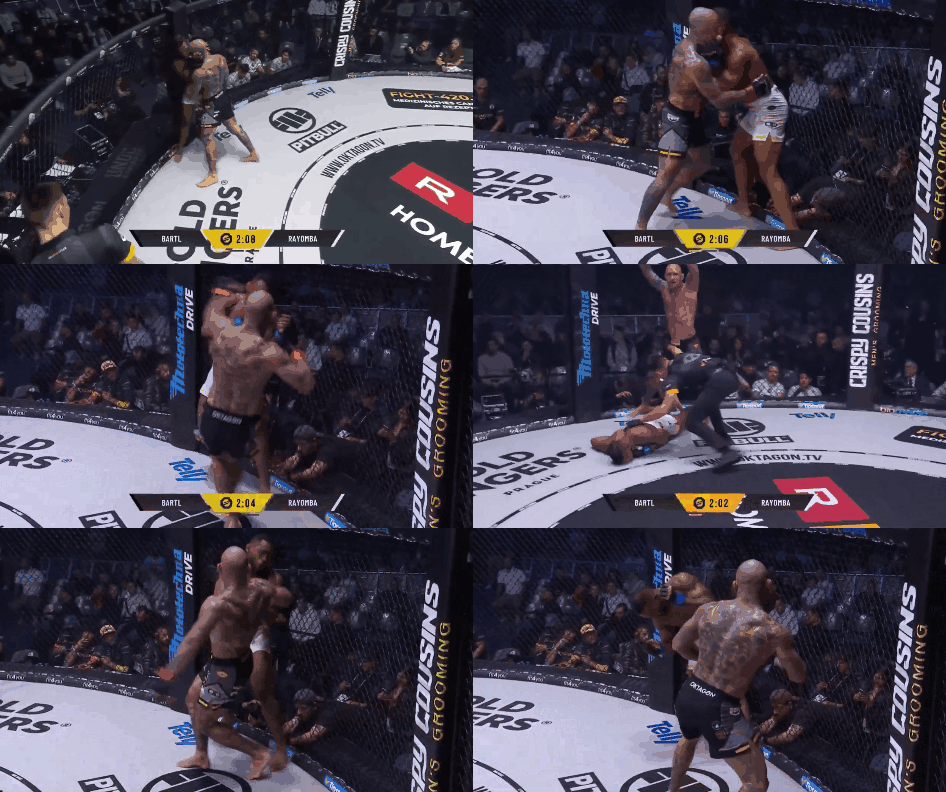
Using the fence to set up the spinning elbow is often a little different. Rather than throwing it to land as the distance closes, the best way to apply it is by physically pressing the opponent to the fence in a clinch, and then use the opening of range on the break from that clinch to land the elbow. This is done by posting the head and slipping the arms free of the clinch. Longtime Oktagon veteran, Marek Bartl used this to score a sensational knockout in October. It is particularly interesting that he adopted a two-on-one on the opposite wrist before spinning.
Jon Jones popularized this clinch-escape-elbow tactic in his early UFC run, and while it started out as a way to shoehorn in a flashy technique, it has proven remarkably sound. Alexander Volkanovski used this to beat up Mizuto Hirota and Jeremy Kennedy, and the main downside is that it involves a good amount of effort to lose a decent positional advantage in the pursuit of a Hail Mary connection. I have yet to see a really bad outcome for the man performing the elbow though.
There are of course examples of fighters moving in on the fence with the spinning elbow as well. Aboubakar Younousov scored a gorgeous knockout in his Ares FC title defence in February. Both of the examples below happen to come off palmed knees. This is quite a popular counter to attempt in stadium Muay Thai, which is of course the home of the spinning elbow.
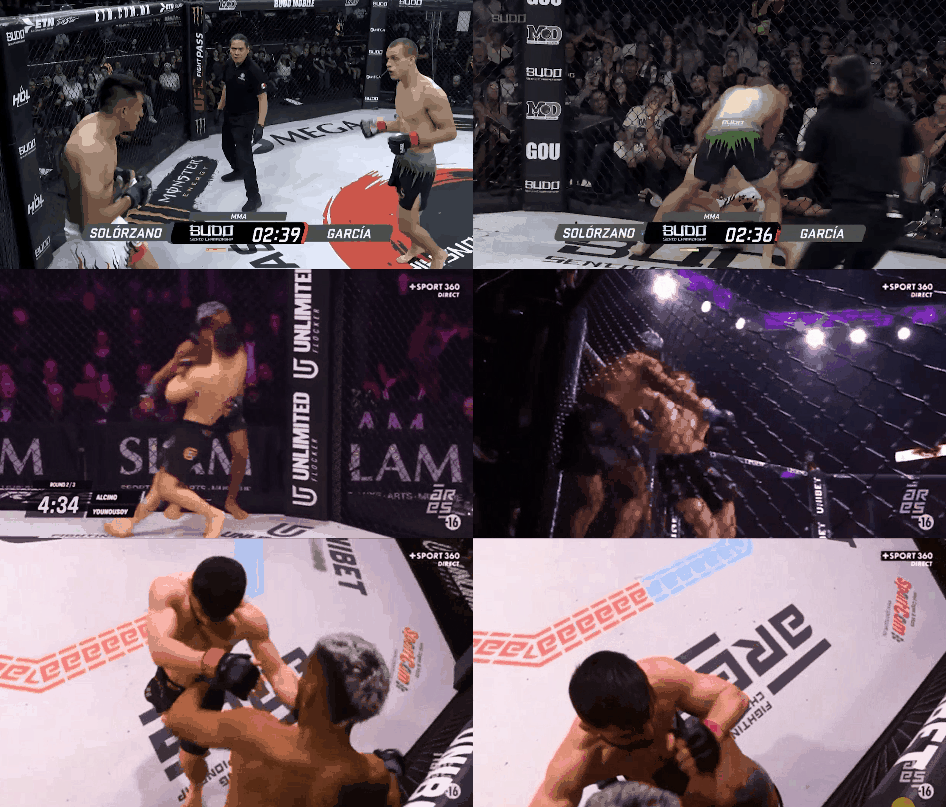
Younousov finished another fight in the same way, advancing into a spinning elbow against the cage, back in 2023.
Other Common Scenarios
This leads us onto a couple of additional circumstances that work well to set up the spinning elbow. The first is if you can get the opponent on one leg. Just as with throwing the elbow against the cage or on the counter, this takes advantage of the fact that they cannot retreat. Here is another 2025 example, where the elbow lands entirely because the opponent picks up his lead leg to check an expected kick.
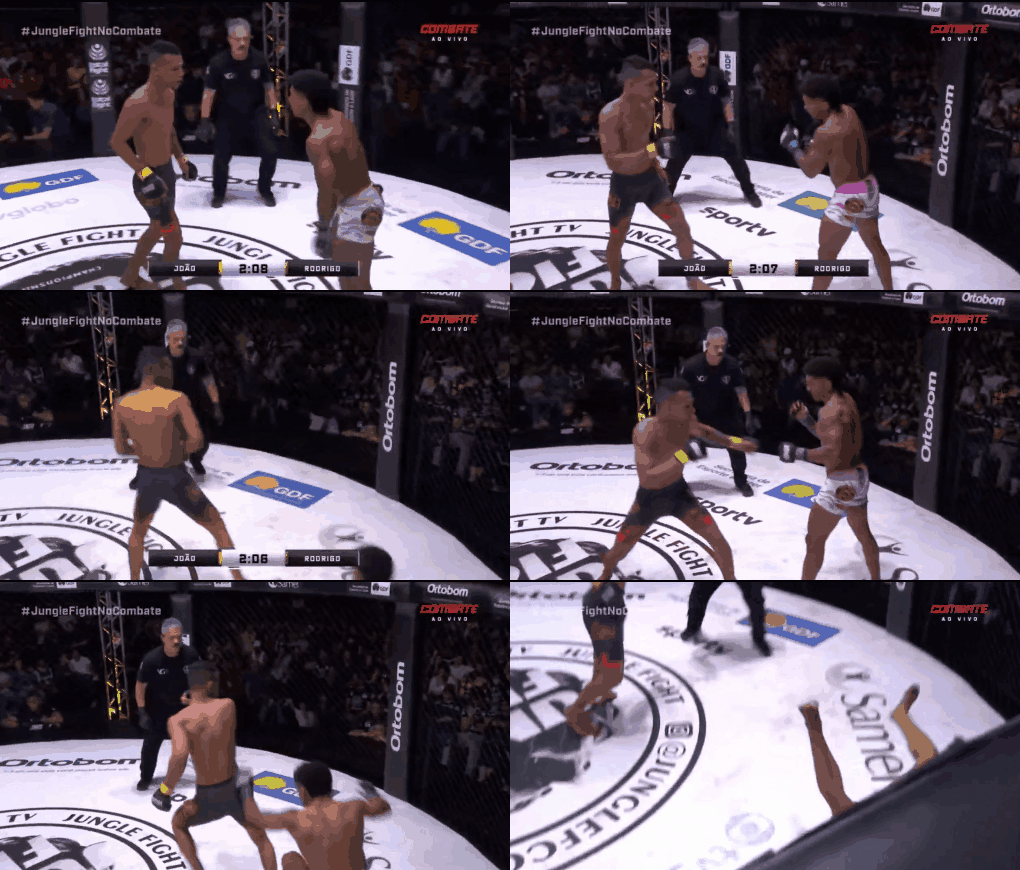
Without meaning to besmirch our beloved sport, this might be an overthought tactic for mixed martial arts. MMA fighters cannot be trusted to pick up on, respect, and check low kicks as quickly as fighters in proper kickboxing and Muay Thai matches. Christian Leroy Duncan was begging Eryk Anders to check the naked inside low kick when he spun into an elbow, and the elbow landed because Anders decided to randomly step in and reach with both hands, rather than because of the intended set up.
Perhaps the most notable addition to our rules is the spinning elbow which is thrown when out of position. A number of great spinning elbow knockouts were scored this year by fighters who seemed to be completely exposed, turned away from their opponents.
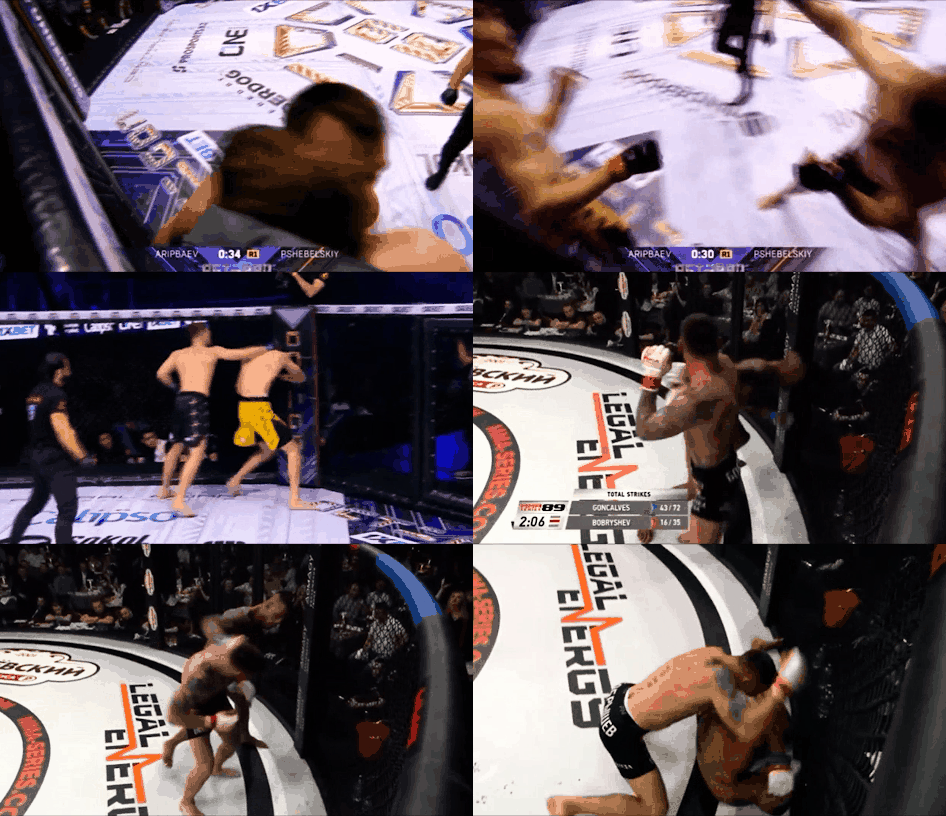
Whenever we discuss spinning backfists we remark that a missed kick is the best chance to get in with a backfist because the opponent is almost guaranteed to step in the moment he senses he has an advantage. The spinning elbow works in the same way and, in fact, this links back to rule one: throw it on the counter. Sergio Pettis’ astonishing knockout of Magomed Magomedov in October came as Pettis got crossed up after a defensive side kick glanced down the side of Magomedov.

The D-side is almost non-existent in MMA with practically the only proponents being Stephen ‘Wonderboy’ Thompson and Shauna Bannon. The sublime and the ridiculous. But the D-side to backfist or even back kick has long been a part of the long pants kickboxing and Sanda toolkits.
The idea of spinning when thrown out of position can be explored even further. In a spirited scrap with Marco Tulio, Christian Leroy Duncan found his moment off a low kick that completely knocked him off balance. Tulio handed him lemons, and Duncan spun through to make lemonade.
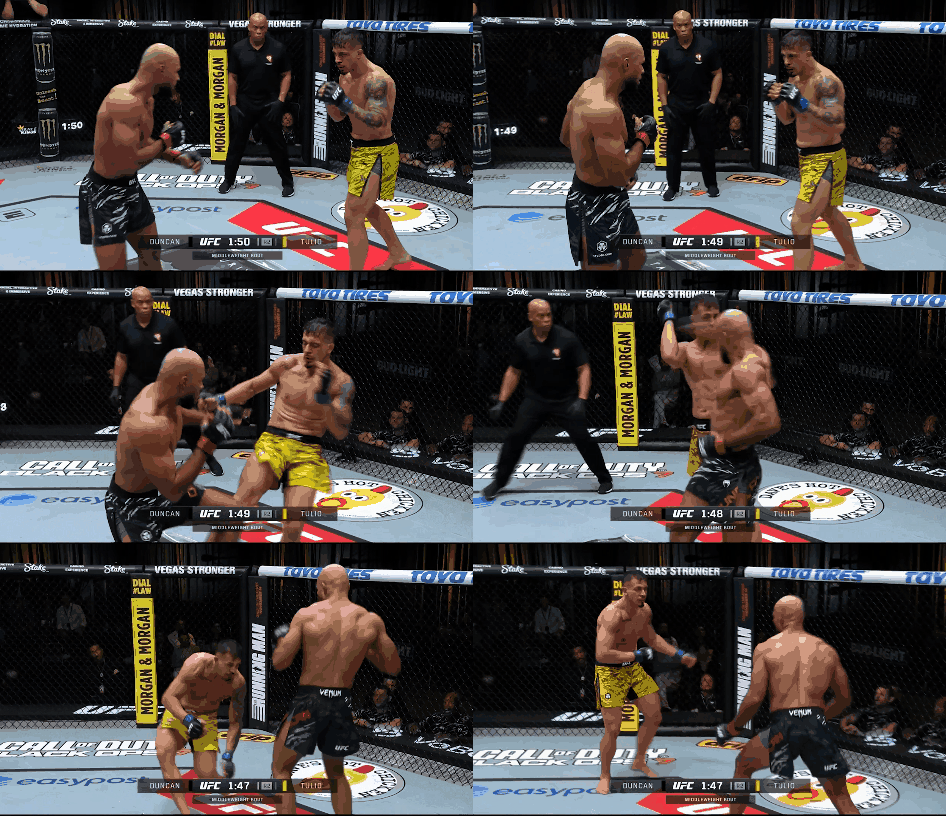
This example is another case of the backfist being longer and therefore the more pliable tool. Catching Tulio stepping back off a kick, with an off-balance back elbow, would be almost impossible.
It is tempting, when missing a kick or conceding an angle, to think “I’ll try spinning, that’s a good trick.” But a last minute spin punishes blind aggression. It does not give the fighter invincibility frames until he is back to facing the opponent.
Rodtang fought Edgar Tabares in 2023 and exploited Tabares’ overuse of spinning to a tee. Rodtang loves to catch teeps and pull himself in with a good left hook or right straight to the body.
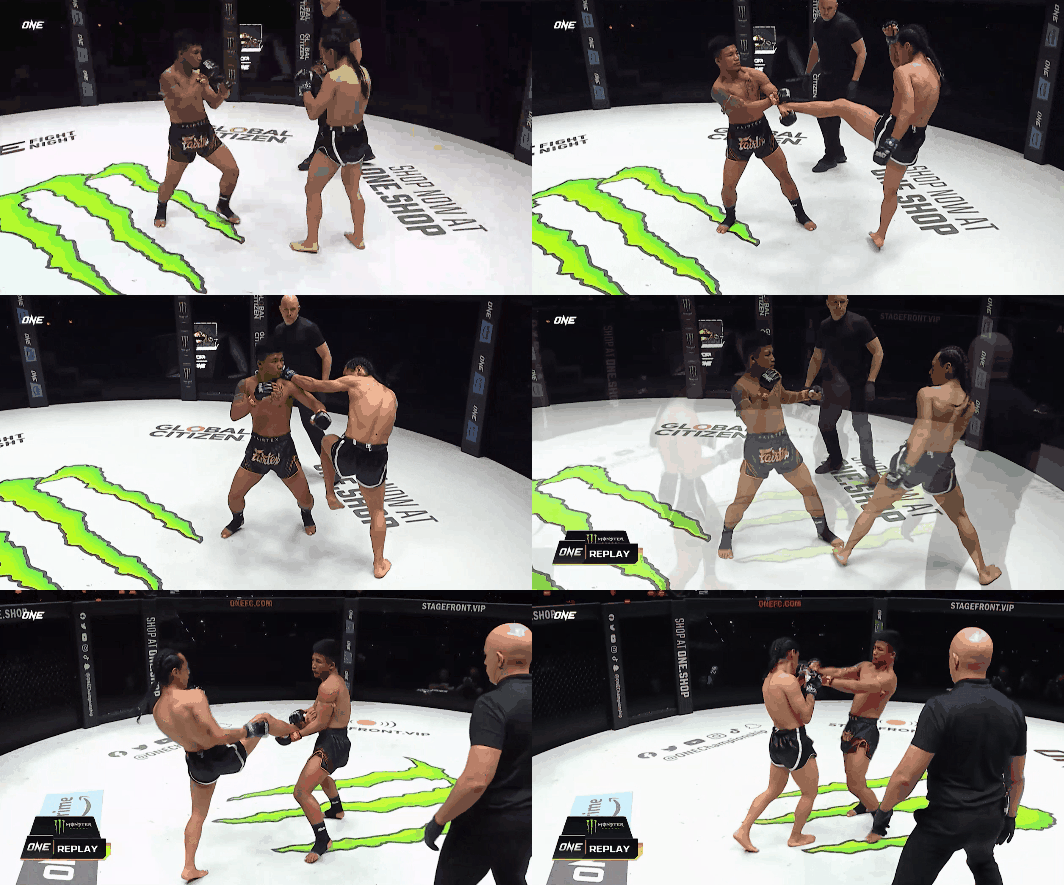
So Tabares would spin, expecting he could blast Rodtang with his head forward and his hands low.
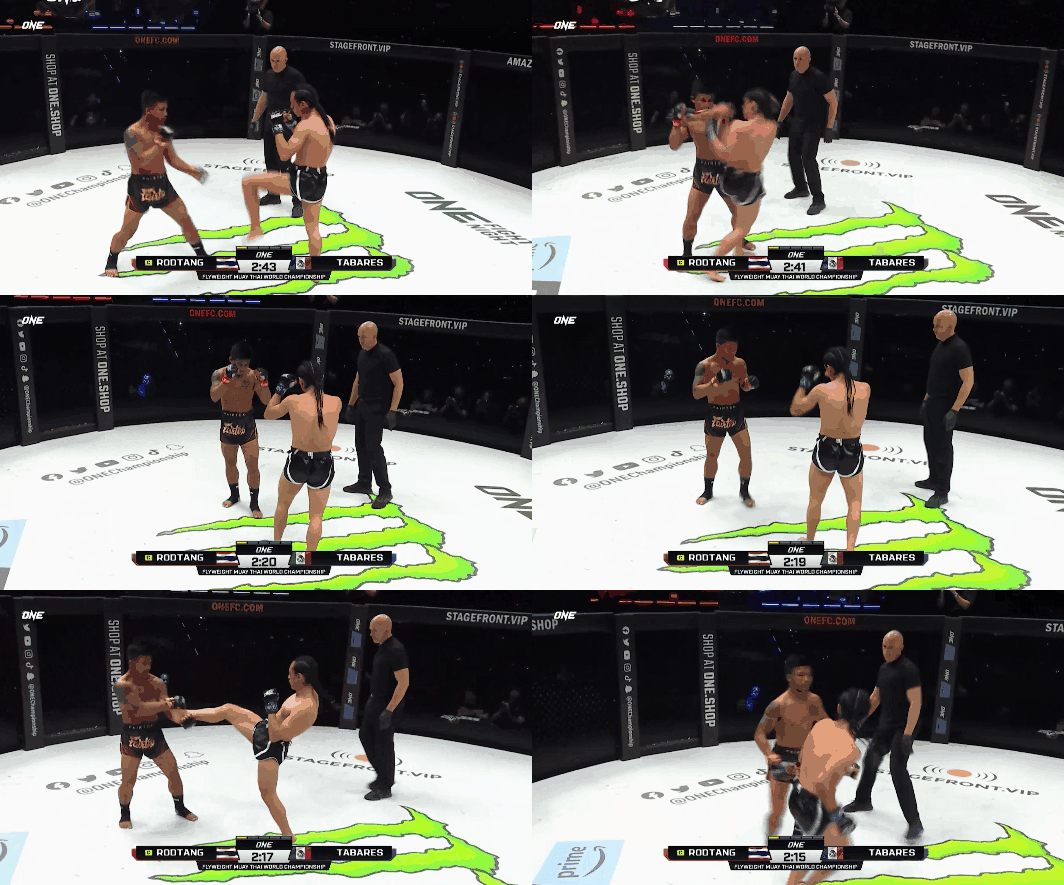
Rodtang met this by pulling himself in, raising his forearm high to block the elbow, and countering immediately with an elbow of his own as Tabares struggled to turn and face him.
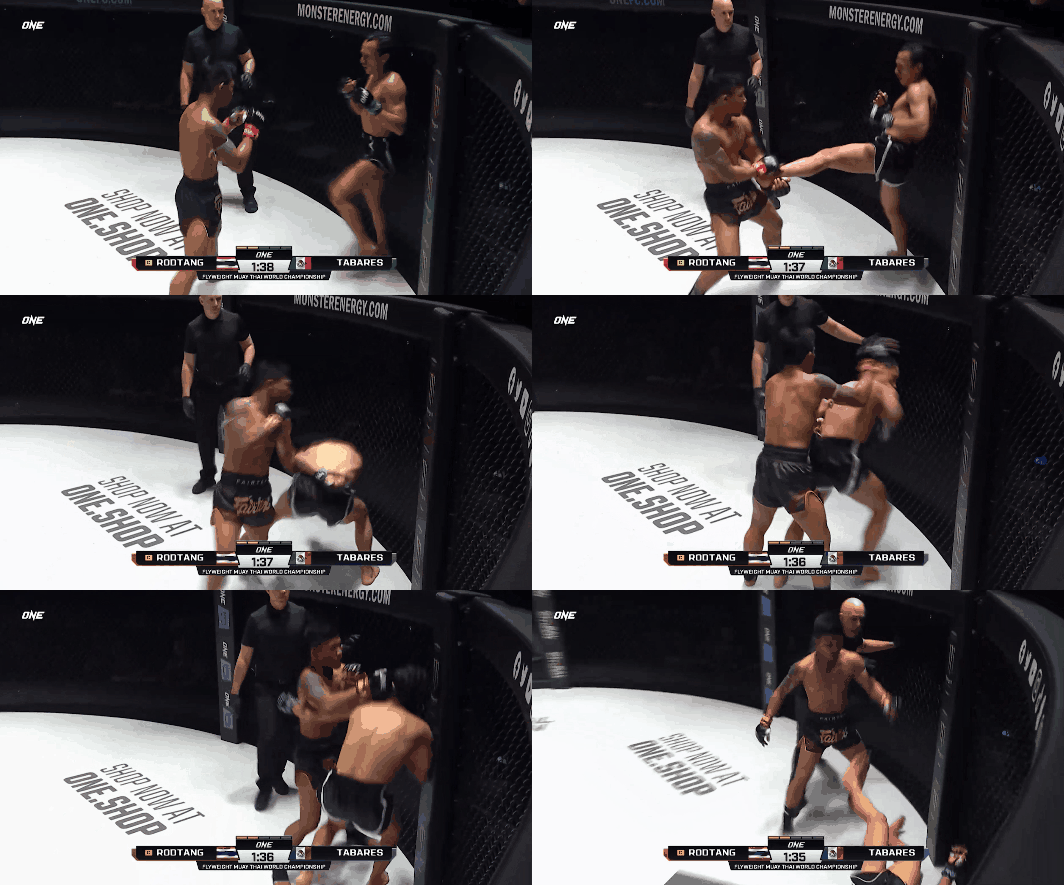
The spinning elbow is an odd case because it works best in a car crash exchange, but the effective striking area is small. If you whip in a spinning backfist, anything below the elbow is hard and moving with force. Attempting a back elbow and hitting the guy with your triceps, moving only a short distance, is not going to produce devastating results. If you know a man is looking for the spinning elbow too much—perhaps you are fighting Ricardo Ramos in one of his moods—shoving your hand into the shoulder and triceps as he ducks and spins is a completely legitimate defense.
Assessing the Arc
Something peculiar about the spinning elbow is that it really encompasses several different strikes. They are all performed while turning the back, and landing with the elbow, but the arcs are as different as an overhand, a hook and an uppercut.
The elbow can be thrown overhead—as Jean Silva threw against Diego Lopes. These are the ones that fighters tend to run onto in boxing exchanges.
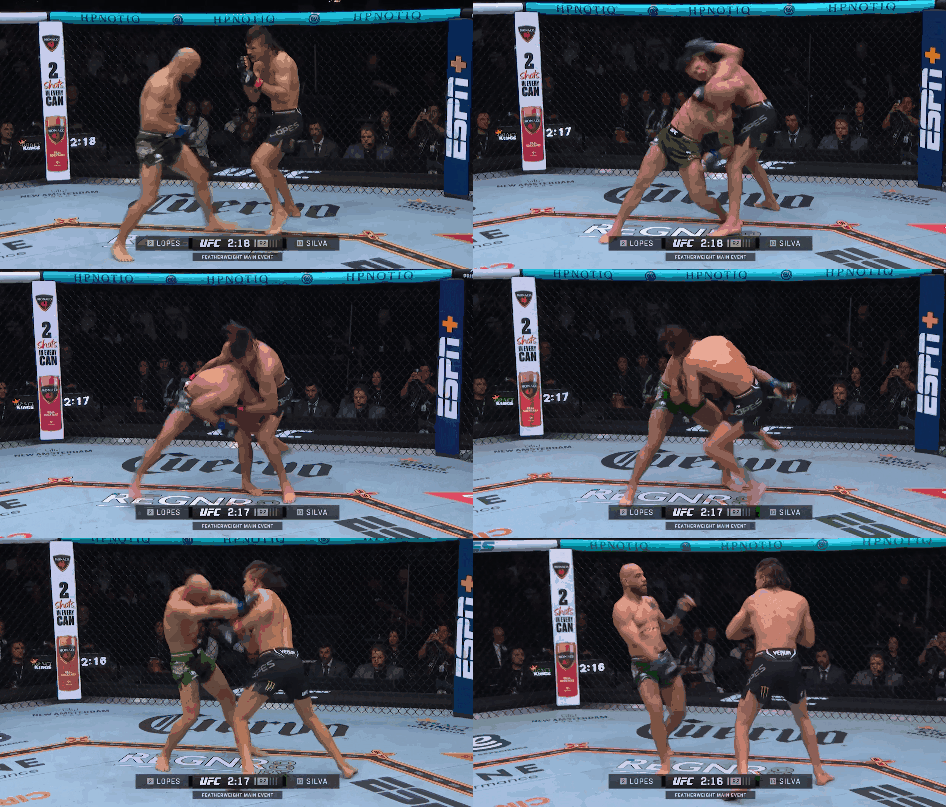
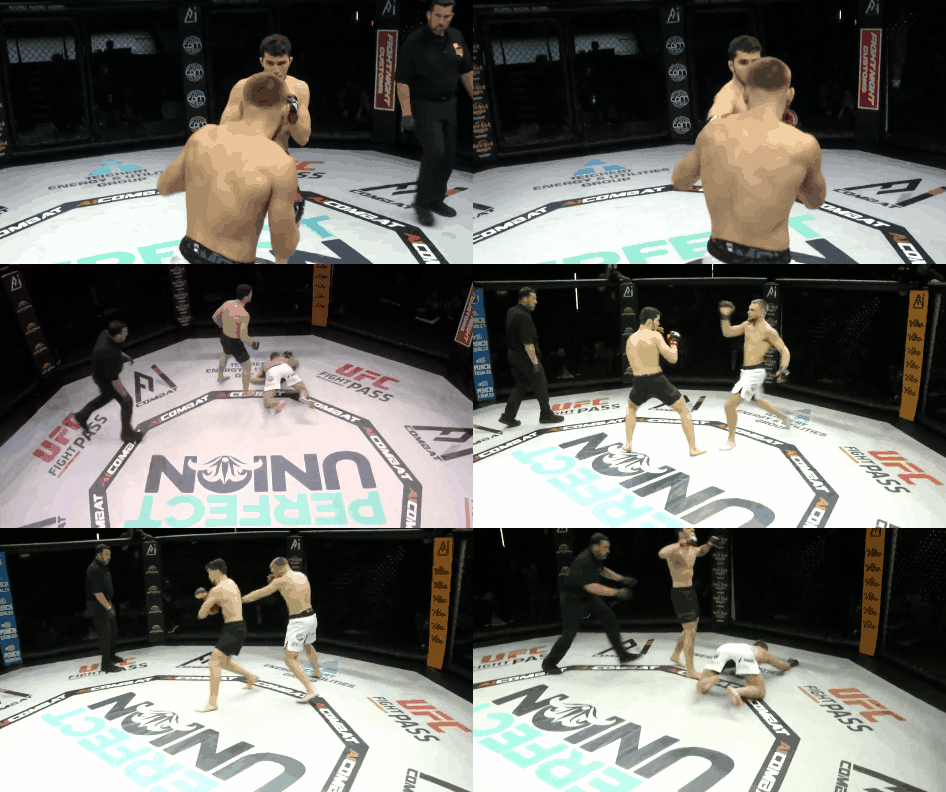
Or it can come in from the side, as Lopes’ did to knock Silva out. These often look clumsy as hell, but whip in with the full force of the body as the fighter pirouettes on spot. Here’s another regional one from 2025, notice how the fighter’s head stays perfectly upright. His elbow smashes through at a hundred miles an hour, but this is a fully offensive movement with no attempt to slip inside and land on the counter.
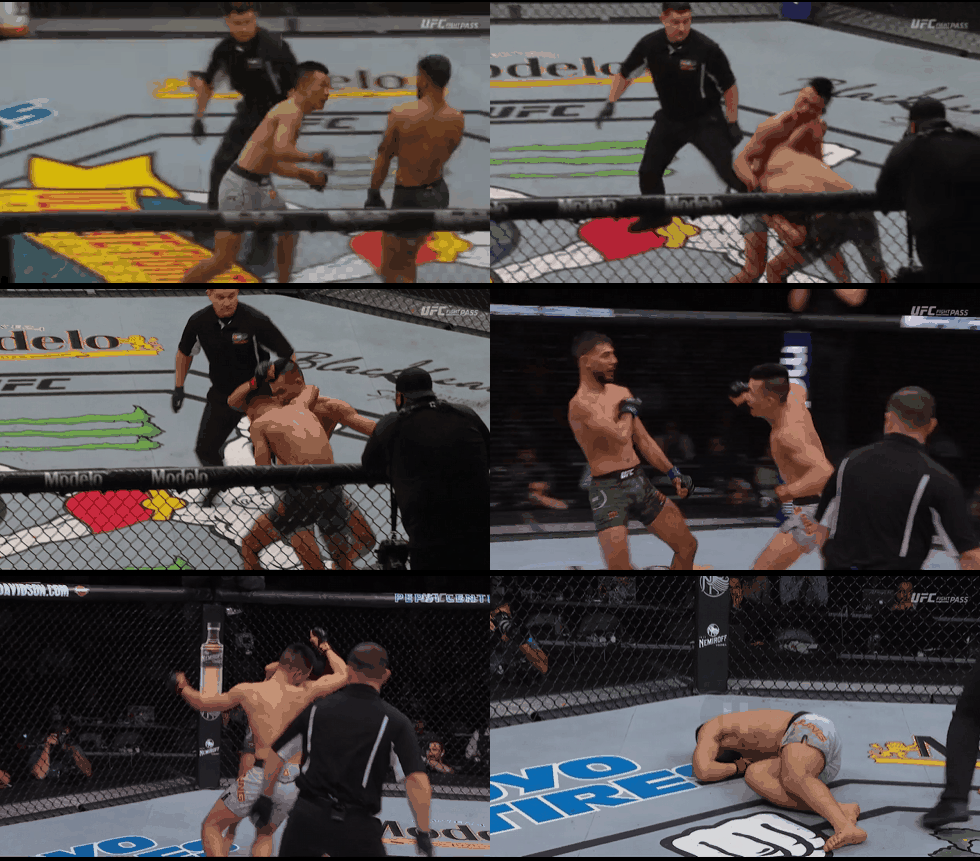
Then there are the extreme overhead ones where the fighter bends forward so far that the elbow is actually coming up his own back and he is not spinning at all. Yair Rodriguez’s knockout of The Korean Zombie will probably never been beaten as an example of this.
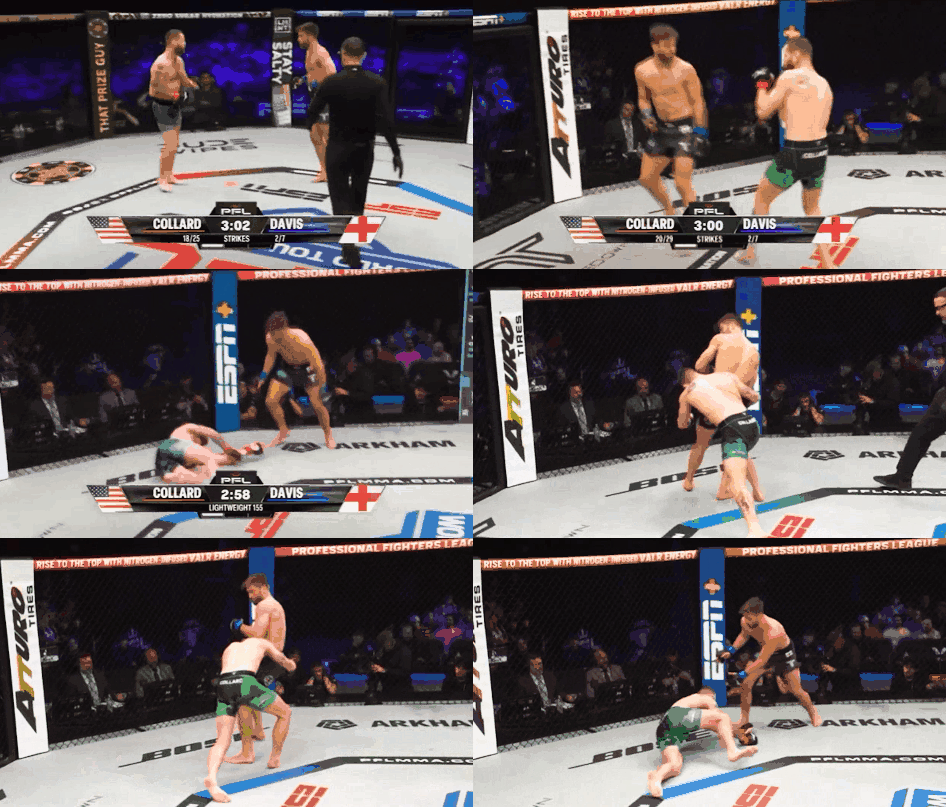
A particularly slick take on the spinning / back elbow, where the angle made all the difference, was Alfie Davis’ TKO of Clay Collard in April. Davis was looking to spin anyway, but as he stepped across himself to do so, Collard began changing levels. Davis kept his elbow along the line of his body like an old school karate hikite, and blasted Collard right in the temple.
Some techniques catch on because coaches see them winning intricate technical battles, or see middling fighters overperforming with them. Others catch on because everyone wants a big highlight for Instagram. And who can blame them? A single exciting knockout can change your career prospects. But if we are going to see a lot more spinning elbows going into 2026, we are also going to see a lot more bad spinning elbows. And you can tut, shake your head, and point back at the three golden rules of spinning shit.