
Torres vs Cotton:
Peek-a-Boo vs Shoulder Roll
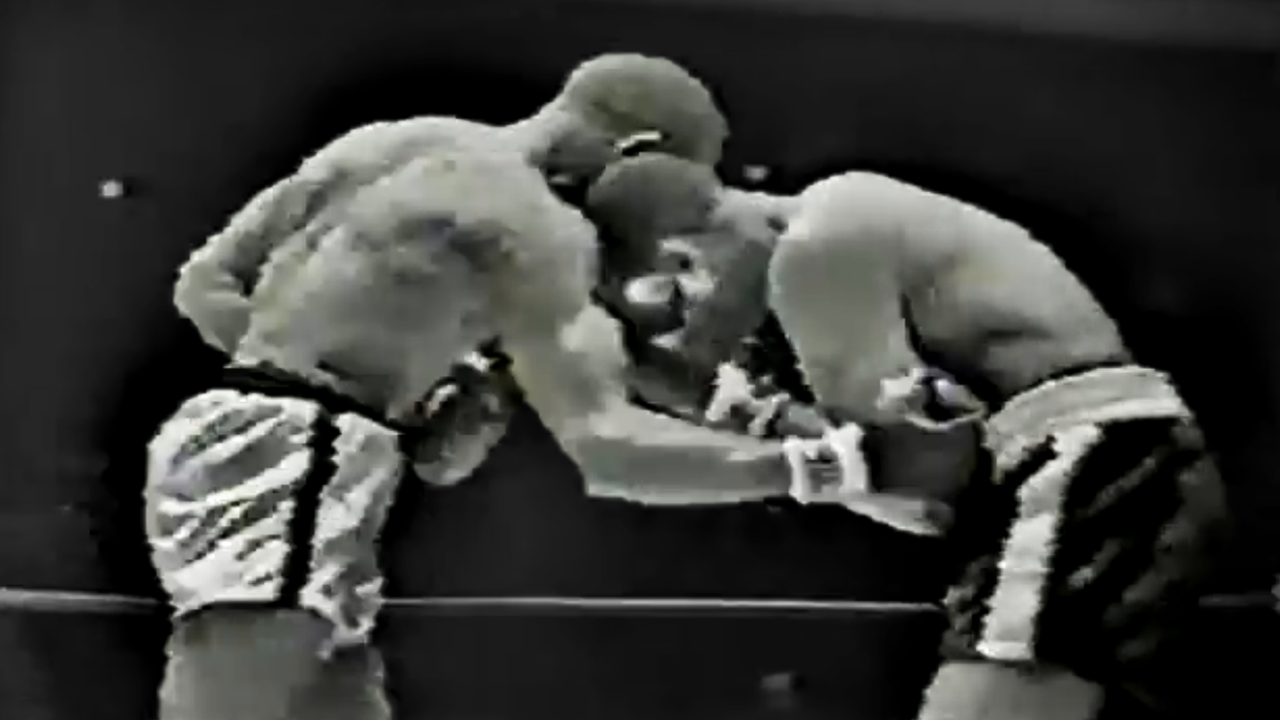
Once a young man has seen footage of Mike Tyson’s peek-a-boo style, he inevitably goes searching for any fighter who has fought in a similar manner. His curiosity is helped along by the mystique of Cus D’amato, who was mocked, vilified, and revered in repeating cycles through his fifty years influencing the boxing game. And after learning about D’amato’s number system, the Willie bag, the slip bag, Teddy Atlas leaving the camp, Kevin Rooney, and everything else, he gets down to brass tacks. The three significant fighters D’amato produced in fifty years as a trainer were Mike Tyson, Floyd Patterson, and Jose Torres.
Jose Torres was already being touted as a star a couple of years into his boxing career. It was aided by a large Puerto Rican following, and stories of him giving heavyweight champion, Floyd Patterson all he could handle in sparring. Both Torres and Patterson were devoted to D’amato through his fallings out with promoters, press and athletic commissions. These and D’amato’s stated opposition to mob dealings in boxing, led to their careers taking some bizarre twists. For Patterson it meant winning the heavyweight title and then defending it against the Olympic gold medalist making his professional debut—something which has never been done since. For Torres it meant a long and winding path to a world title, in the wrong division, avoiding Madison Square Garden.
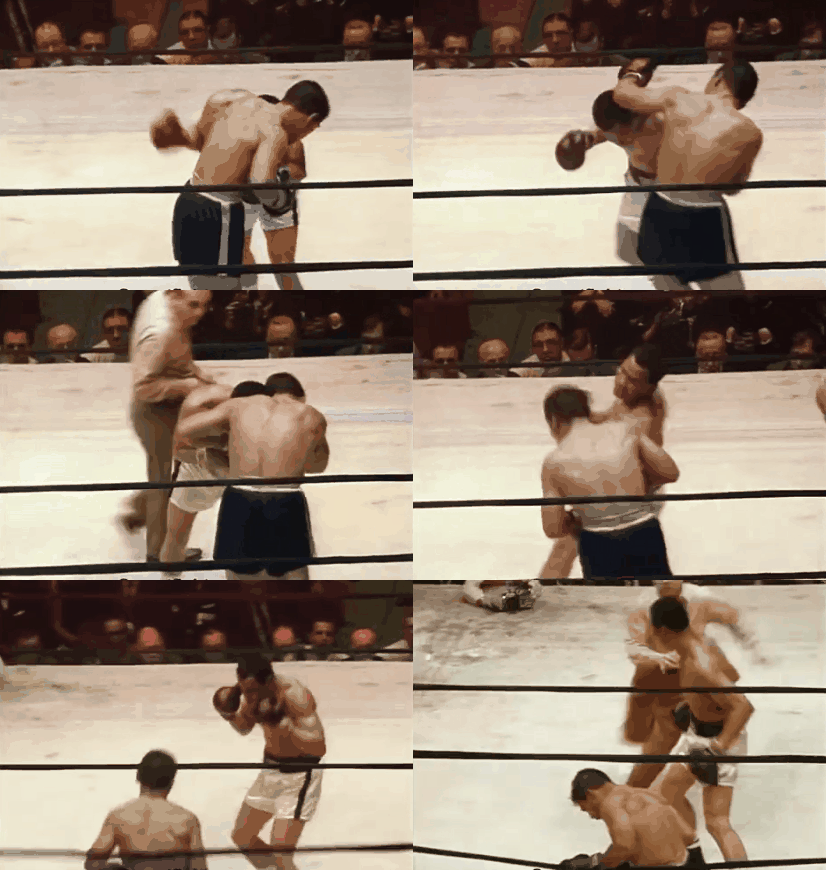
Fig. 1
When contrasting Tyson, Patterson and Torres, it is noticeable that Torres has probably the best and most reliable jab of the three. At many points in his fights, Torres is simply boxing in an ordinary fashion from range, in a peek-a-boo stance. Yet when Torres got his combinations going, he had the blistering hand speed and punching power that were the trademarks of a D’amato fighter.
Our subject today is perhaps the most controversial fight of Jose Torres’ career. When Torres met Eddie Cotton in Vegas on August 15th, 1966, it was assumed that this would be a safe defence to pad the statistics of the champion. Cotton was forty years old, laughable for an athlete in that era. He was not a devastating hitter, and he had lost to many worse fighters than Torres. What transpired that night earned the two men Ring Magazine’s Fight of the Year for 1966, and provides us with a complete style clash worthy of further study.
The Peek-a-Boo
Cus Damato’s peek-a-book style seems as much myth as reality at this point, but those who studied under D’amato make it clear that he knew exactly how the fight game worked. Boxing in the forties, fifties and sixties had plenty of smooth old veterans who had fought eighty bouts and could fight another eighty before they were done. Men who could shoulder roll and tie up, who could jab and steal rounds: what the boxing press would term “cuties.” Damato recognized that boxing is firstly entertainment and that the one truth since the beginning of the sport is that most spectators want to see someone knocked out.
Hitting hard, in machinegun flurries, was the most important skill. Head movement made it possible to find openings when the opponent punched, and allowed the fighter’s hands to be focused on the task of hitting. D’amato’s fighters punched above their weight in a very literal sense as Floyd Patterson was a middleweight that D’amato groomed into an undersized heavyweight, and Jose Torres was also a middleweight who won his belt at light heavyweight.
In Jose Torres versus Eddie Cotton we get to see the starkest style clash. Eddie Cotton was a cutie. He was 52-21-2 when Torres gave him a shot at the light heavyweight belt, and he was already forty years old. He was one of those fighters who was obviously skilled, but who was in equal parts tricky and boring. Avoiding a fighter like that is a manager’s duty, and fans will mostly forgive it.
In previous writings about Mike Tyson, I have noted that while Tyson was dangerous on the inside, he was far more dangerous when the opponent lashed out at him on the way in. A decaying Larry Holmes did alright covering up and pulling Tyson into clinches without committing much. It was when the opponent panicked and shot out a poor jab that Tyson could thread himself inside it and find their chin cleanly. Torres demonstrate this same lethality in closing many times through his career. As with Tyson it was the cross counter—an overhand across the opponent’s jab—and the inside slip to left hook. Torres’ best punch was a peculiar upjab, often delivered on the pivot, after slipping inside the opponent’s jab.
By poking the opponent on the snoot, Torres could reliably draw a stiff jab out of them in turn, and use that to enter with his up-jab. Watching Torres throw this as casually as if he were shooting his cuff, it seems strange that so many of his opponent hit the mat off it. The distinction between upjab and uppercut is often how much the arm is straightened, but another important difference is that Torres pivots his whole body onto a line behind the blow, where on a good lead hand uppercut the fighter remains more square even as he lands.
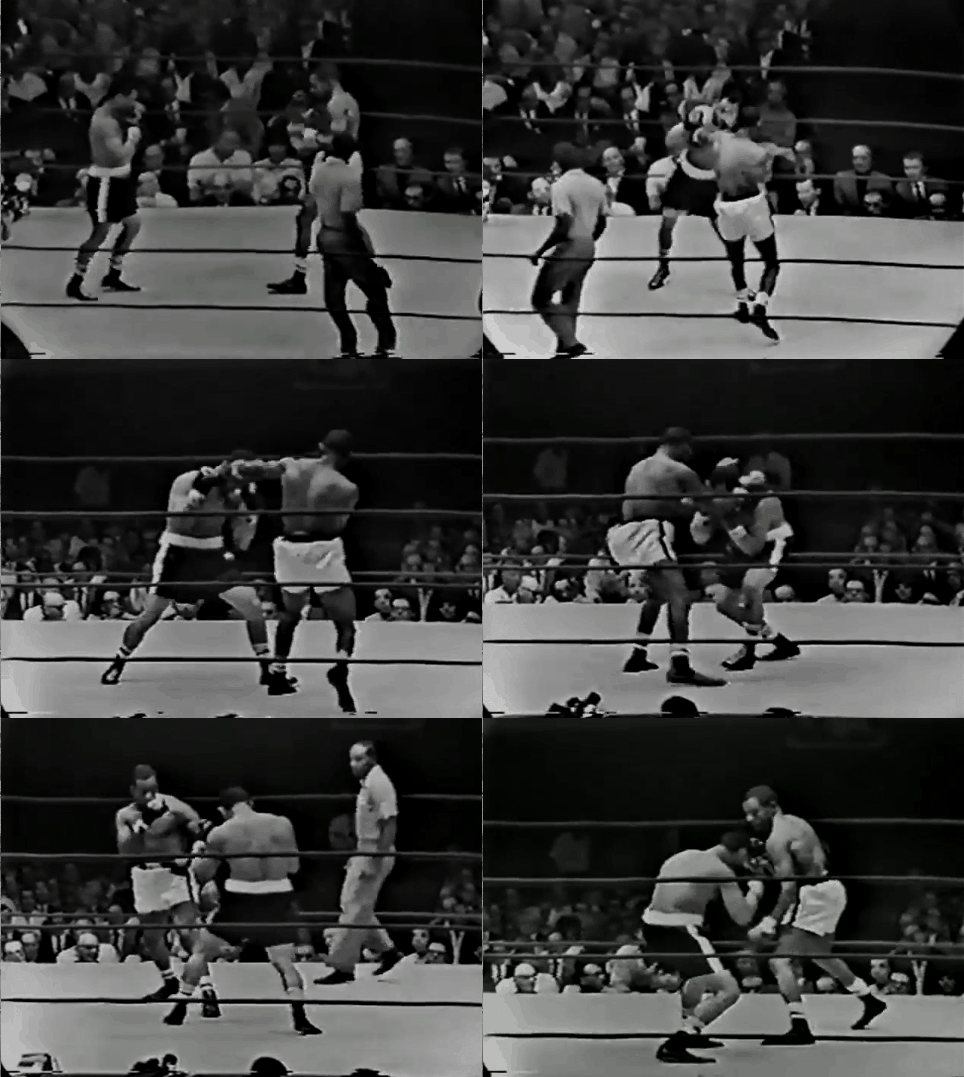
Fig. 2
Torres was also a great believer in the body jab and often used it to close. At many points in his fights he was able to stare at his opponent’s body, level change towards it, and then leap in with the left hook in the same manner that Patterson and Tyson so famously did.
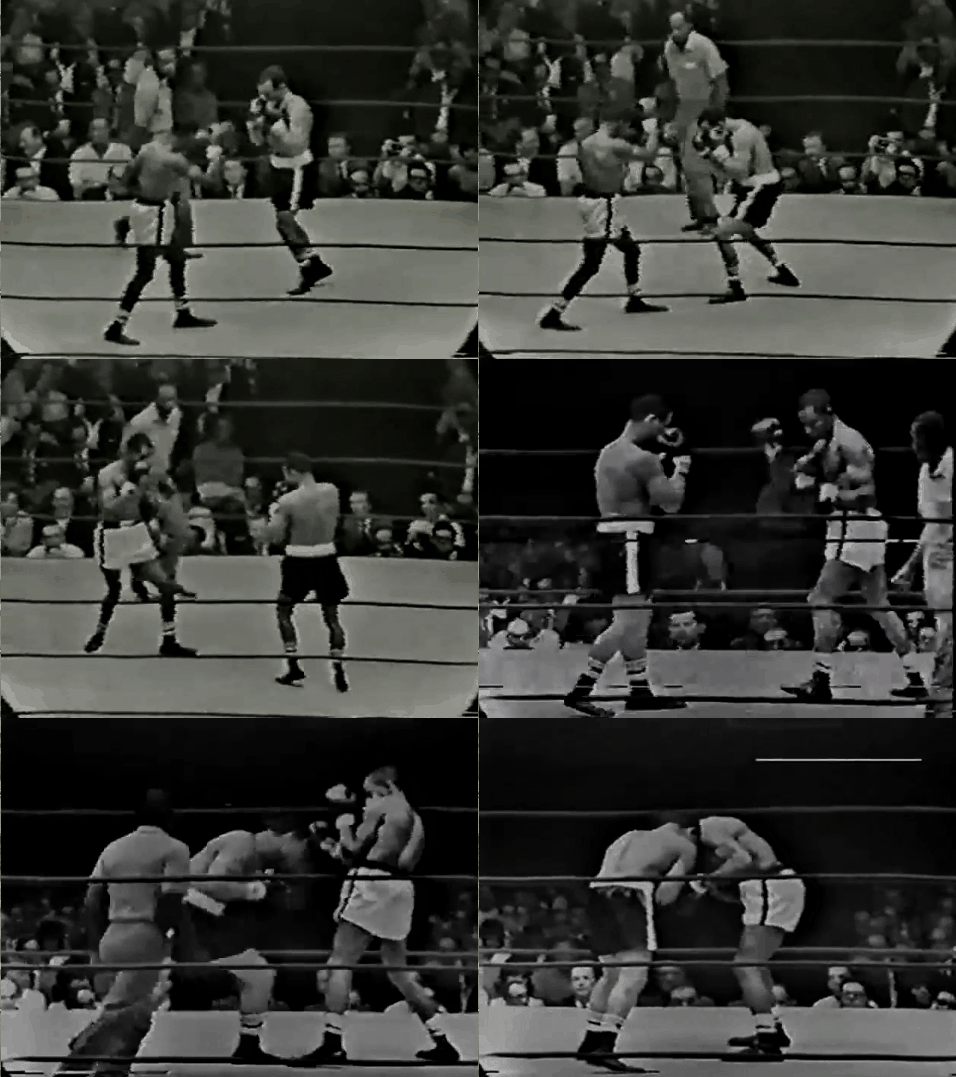
Fig. 3
This example in Figure 4 is from the Cotton fight and almost identical to the famous “Gazelle punch” that Floyd Patterson landed on so many opponents. It also shows an important point about the peek-a-boo style: that it was as much about vertical movement as it was about horizontal movement. We can all recall Tyson practicing his deep leans to left and right while holding a weight plate, but Torres, Tyson and Patterson all routinely slipped straight punches and jabs by dropping underneath them. The left hook was of course given the honor of being “1” in D’amato’s numbering system, and it was the reason that Eddie Cotton fought the majority of the fight with his right hand high and out, ready to get his right wrist inside the forearm or biceps.
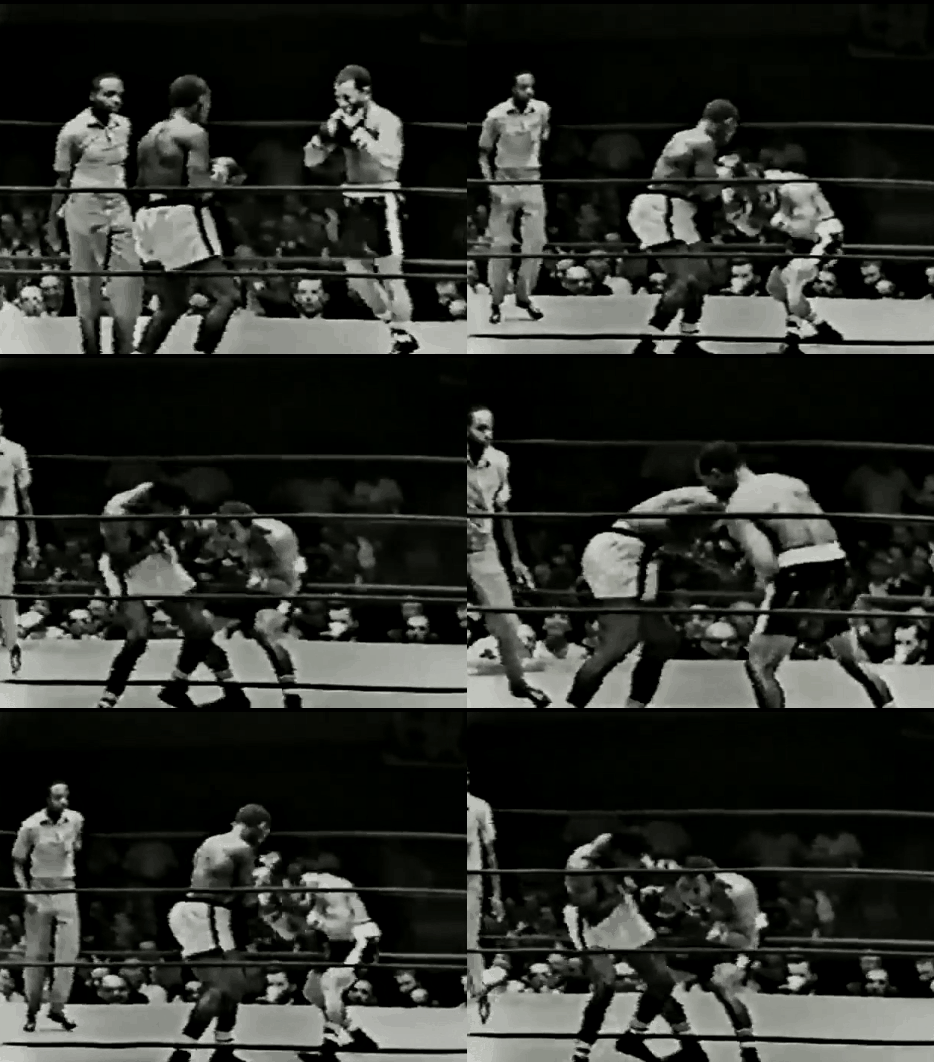
Fig. 4
Like Patterson vs Ali and Tyson vs Lewis or Douglas, much of Torres vs Cotton played out as the battle between jab and slip. Cotton attempted to flick his lead hand out with as little commitment as possible, doubling and tripling just to keep his hand between Torres’ head and the inside space. Throughout the fight, many of the best connections came when Cotton could get a read on Torres’ constant head movement and score a right hand mid-slip.
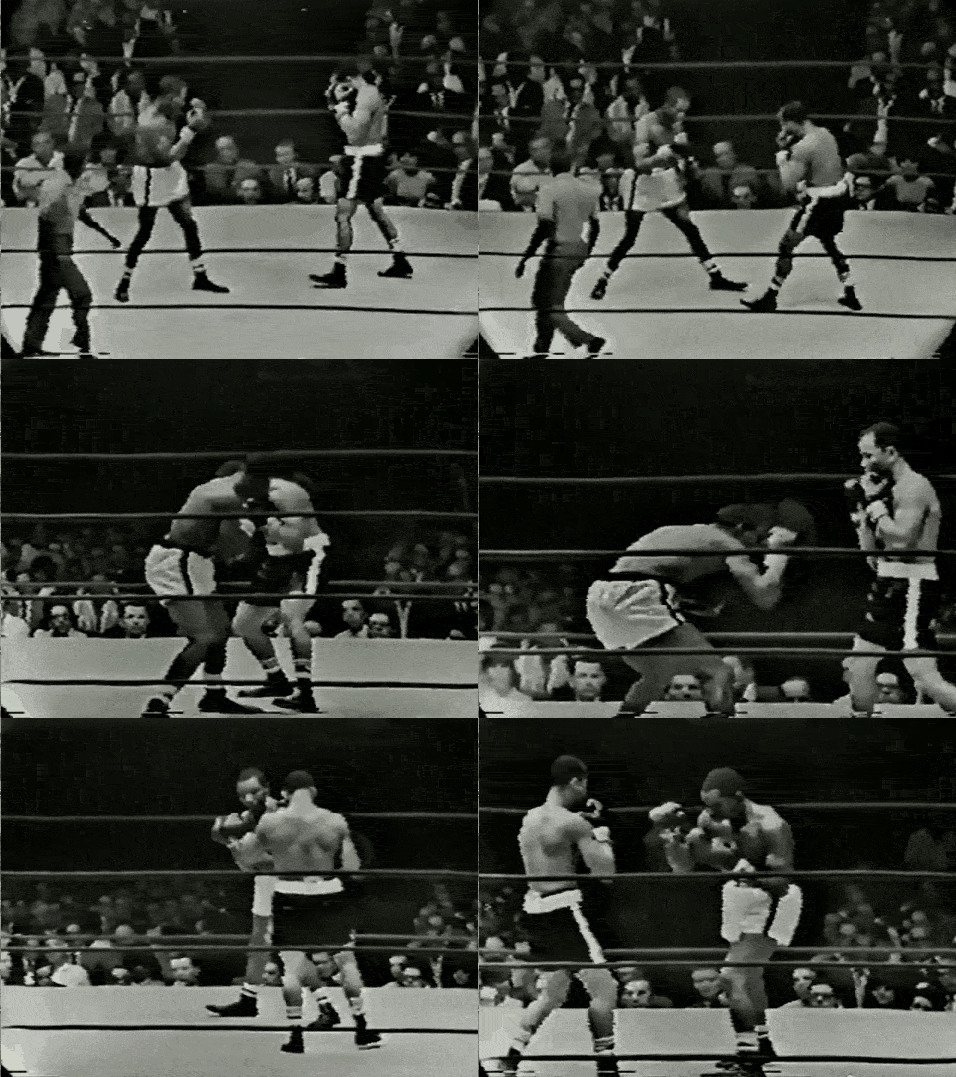
Fig. 5
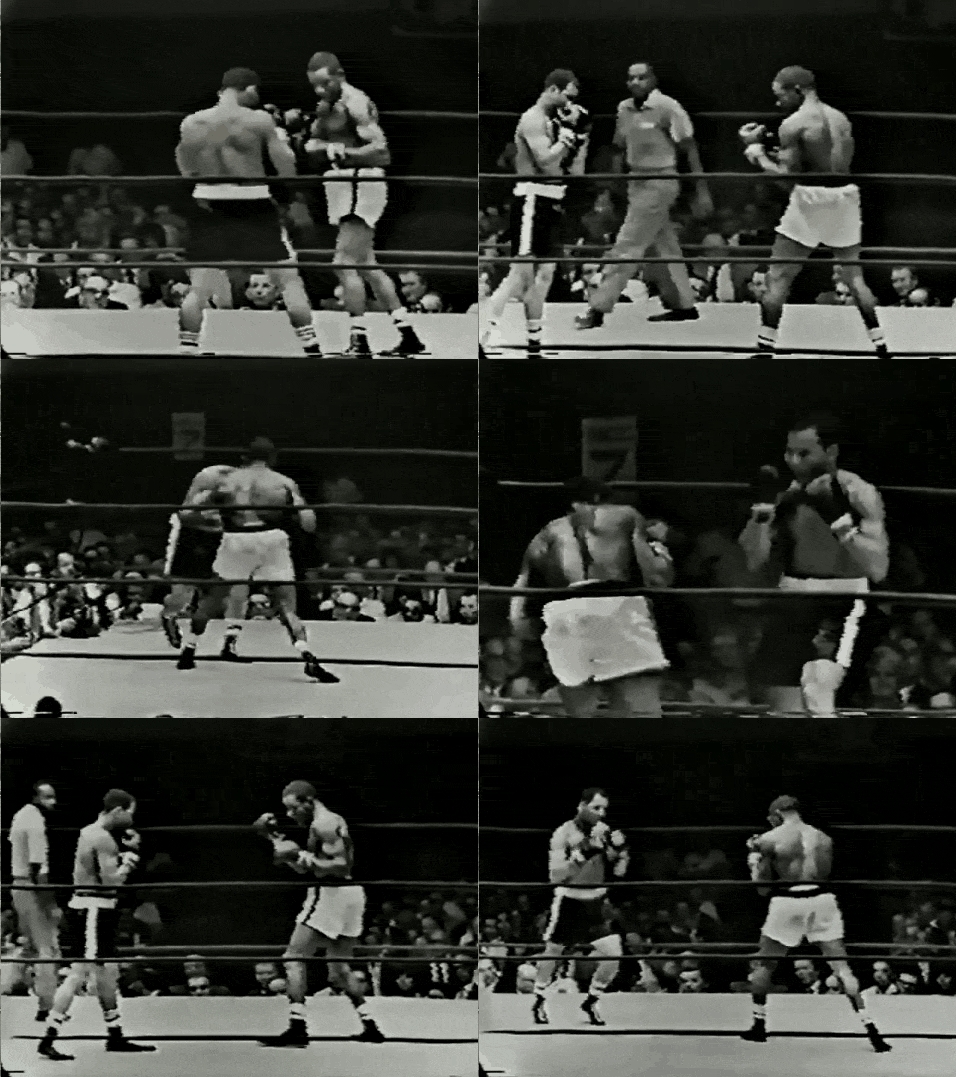
Fig. 6
In the Trenches
Aside from Floyd Patterson taking out an ancient Archie Moore, the Torres vs Cotton fight might be the best example of the peek-a-boo style up against a smooth, shoulder rolling master boxer. And that clash of styles is at its best once the match hits trading range and the infight.
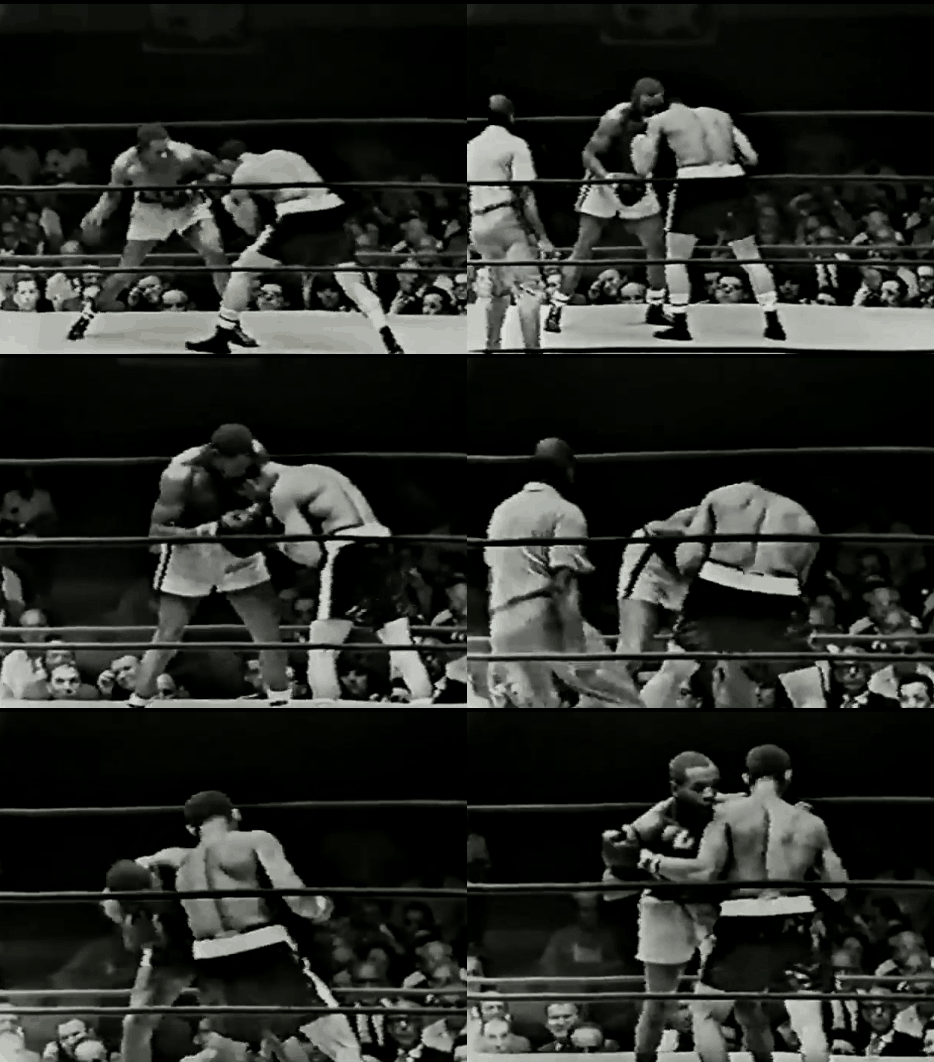
Fig. 7
Torres was a two-handed hitter, who came in behind the top of his head. There is some wonderful footage of D’amato drilling Torres on the Willie Bag ahead of his title fight with Willie Pastrano. In fact the bag was named for Pastrano. In that footage, D’amato expounds on his belief that the knockout comes from the brain being overwhelmed, often by multiple punches in rapid succession. He explains that he has Torres working up to six punch combinations and fields questions from cheeky journalists who ask if he has ever thrown seven. Crucially, D’amato states that the difficulty will be in cutting Pastrano off, but stresses that if Torres can fire six punches in two fifths of a second, there will at some point be two fifths of a second when Pastrano is not moving.
The traditional, physical infight often involves a shortening and squaring of stances. You can watch any number of fights from the forties to the seventies where both fighters post their head against their opponent and get to work digging short shots to make space for bigger ones. Good outfighters were often forced to square up and meet the infight by good infighters—Barney Ross versus Henry Armstrong is a terrific example of this. The outfighter is not supposed to square up and abandon the protections of his stance, but he is often physically forced to through pushing towards the ropes.
Eddie Cotton maintained his stance well when Torres pushed to inside position. Where the leading edge of Torres on the inside was the top of his head, Cotton mostly took Torres’ weight directly against his lead shoulder. Some of the advantages of the stonewall / Philly shell position holds up on the inside, provided you can hold your stance. The opponent is restricted by most of the legal targets being available to only their left hand.
Cotton reinforced the strength of this position by using his right hand to check Torres’ left, which was always next to Torres’ head unless he was throwing it.
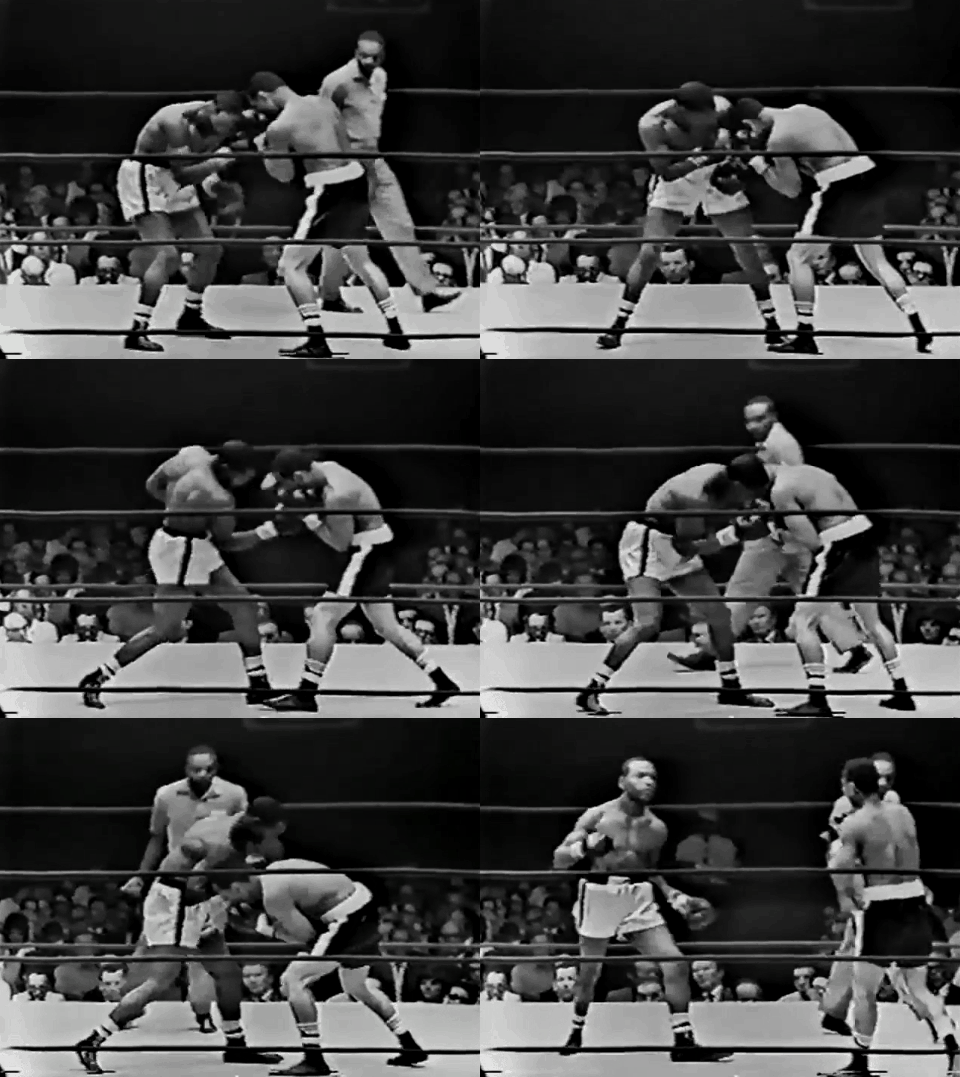
Fig. 8
While Torres’ squared position gave him access to powerful blows from both hands, Cotton’s bladed position, with his left shoulder bearing Torres’ weight, only gave him access to power punches from one side. Cotton would check or strip Torres’ left hand to momentarily kill the left hook, and then dig a long right uppercut to the pit of the stomach, as in Figure 8.
When Cotton wanted to throw his left hand, he had first to unweight it. The simplest way to do this was with a shove from the right glove and a lift with the left elbow. Figure 9 shows Cotton lifting and shoving Torres back, in order to drop him back onto the left hook or left uppercut. With Torres constantly driving his head forward and into Cotton, Cotton’s left uppercut was a short blow that was given more power by Torres himself.
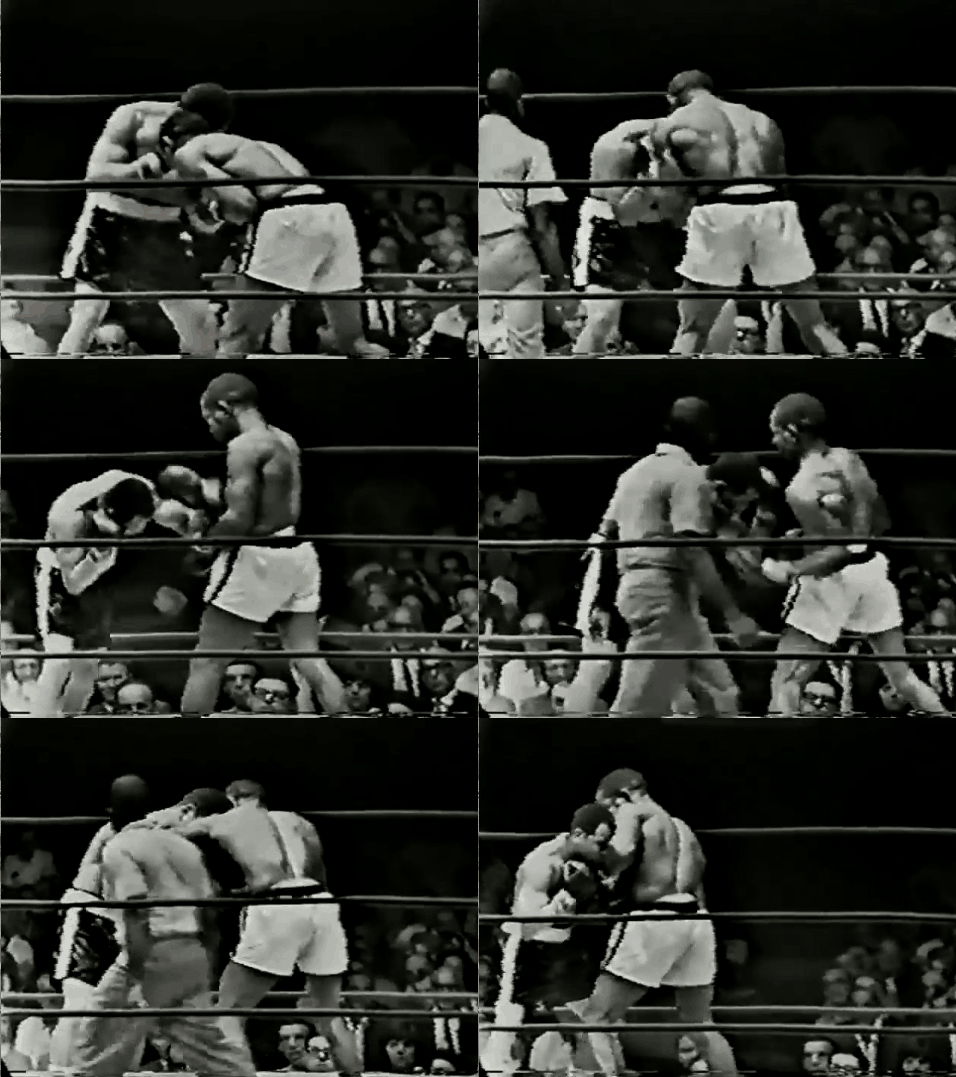
Fig. 9
If Cotton desired to stay bladed, Torres wanted to square him up. By driving the top of his head into Cotton, Torres could occasionally force his stance to break and make Cotton square into a more traditional infight. But even when Cotton held firm in his bladed stance, Torres was able to have success with his terrific overhand right.
Out in the open, the overhand was a great gap closer for Torres. It flew over the top of the opponent’s jab as he surged to inside position.
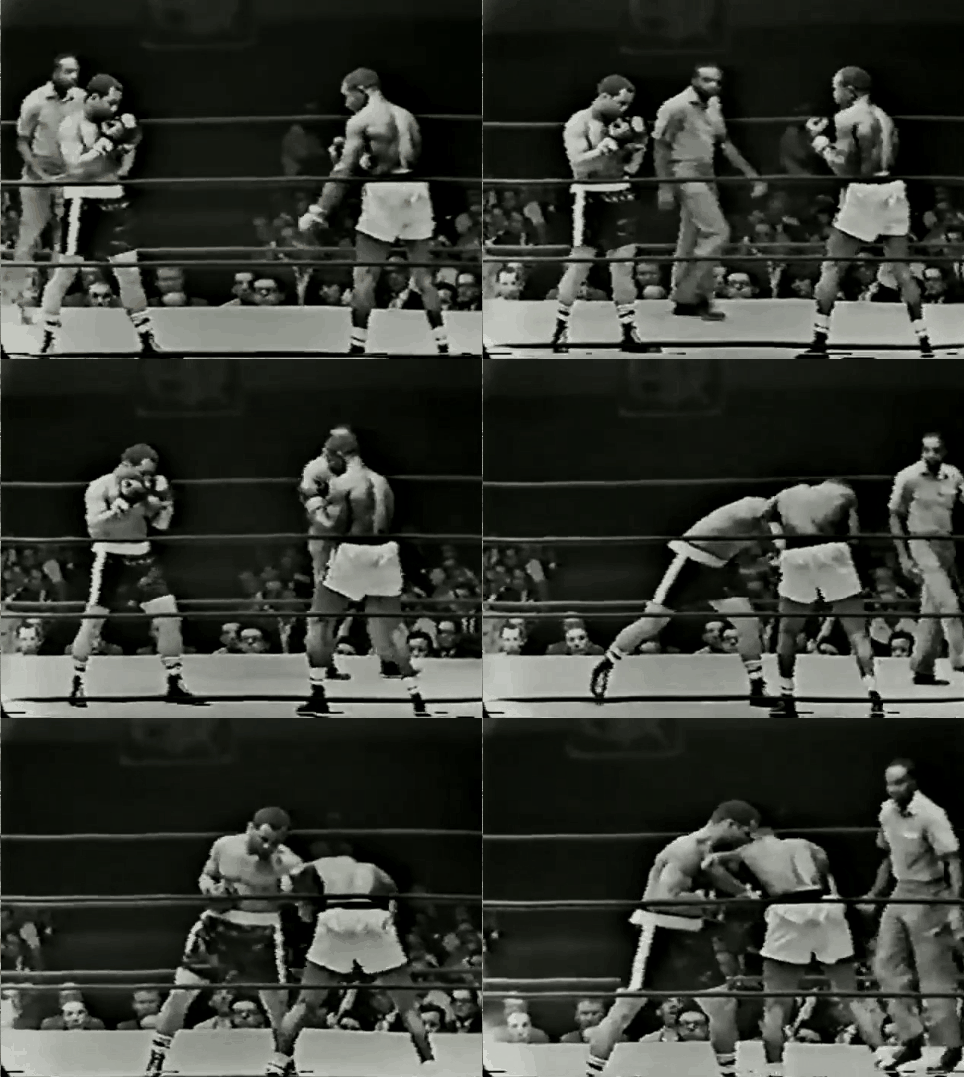
Fig. 10
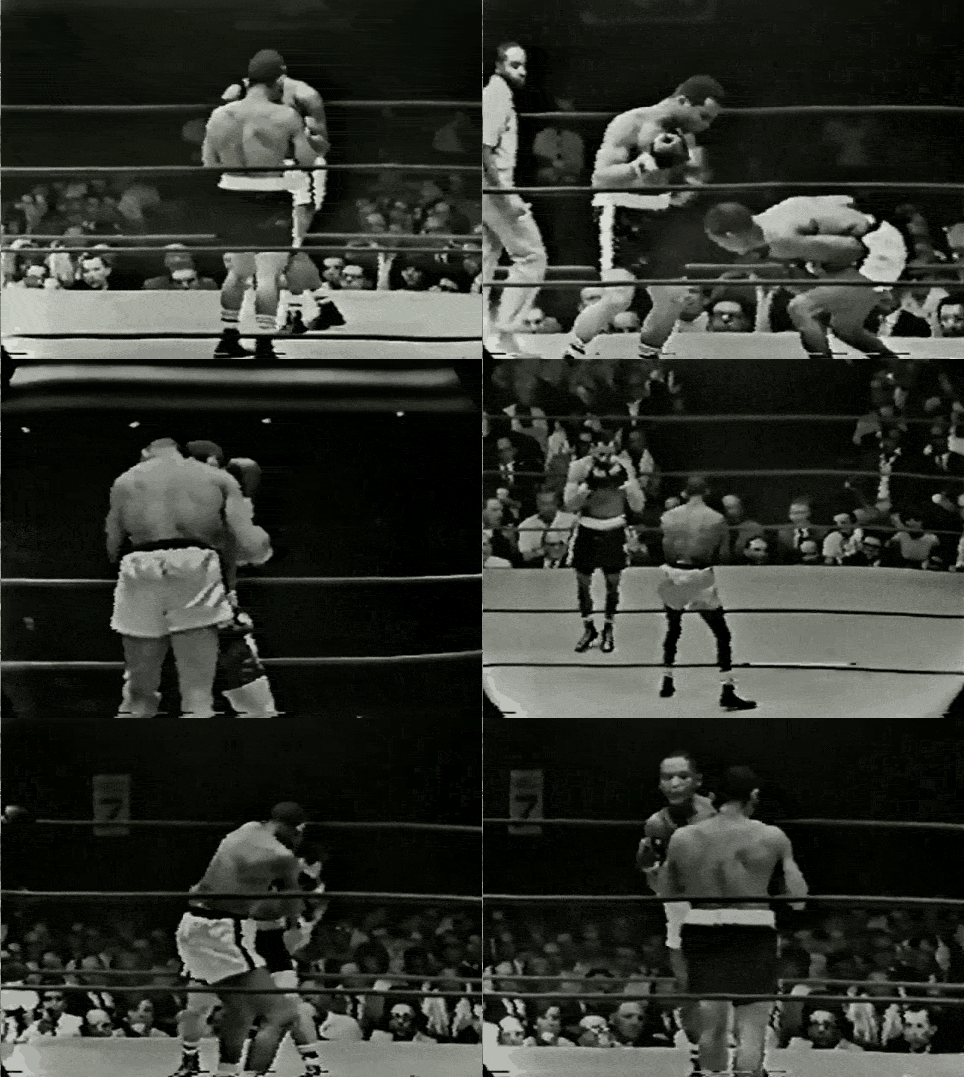
Fig. 11
However, it was as an inside punch that the overhand took pride of place in this fight.
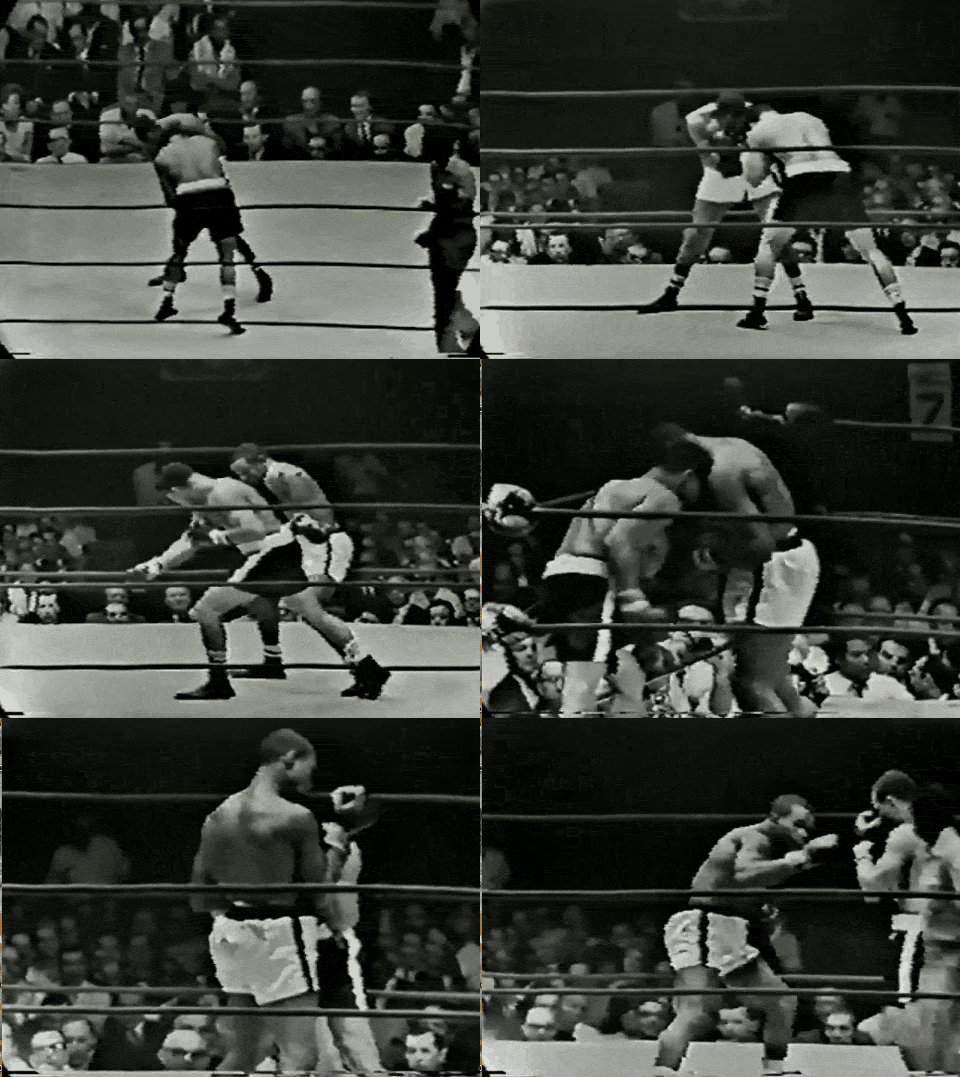
Fig. 12
The shoulder roll position at distance and in close look almost identical, yet when the two men were pressed together, Cotton’s lead arm and shoulder were bearing Torres’ weight. This made it so that to shoulder roll, Cotton often had to bring his head down rather than bring his shoulder up. When Torres pressed his forehead into Cotton’s temple, he jammed a wedge into the gap between jawline and shoulder. When Torres threw his head off to the left and punched directly at where he had just been, his right hand would almost always find Cotton’s temple or the back of his head. If Cotton defended these punches it was by rolling in time with them, not by absorbing them on shoulder.
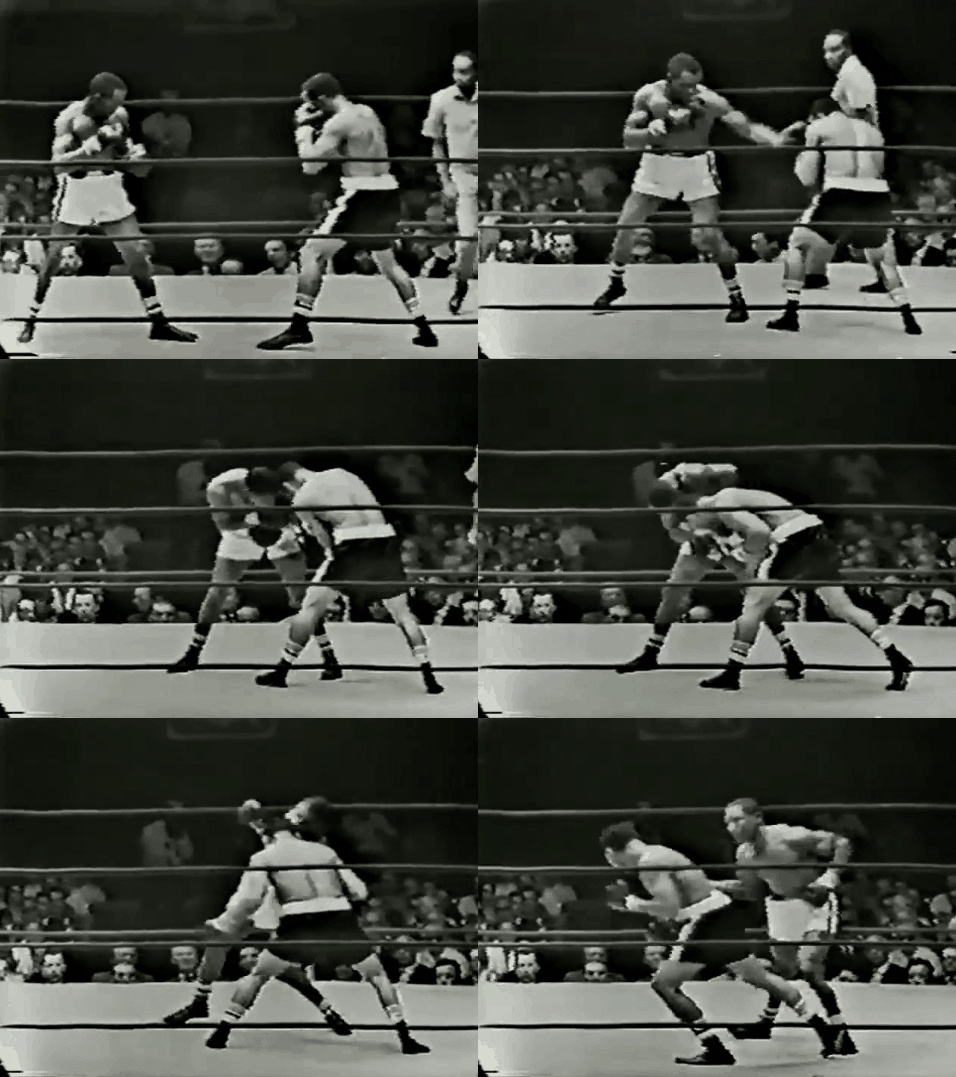
Fig. 13
Skull Jousting
A tactic that Cotton adopted to prevent this overhand was passing his head off to the other side of Torres’. When the two men came together to infight, each had his head on the opponent’s left shoulder. Periodically throughout the fight, Cotton would weave his head onto Torres’ right and flip the position for Torres as well.
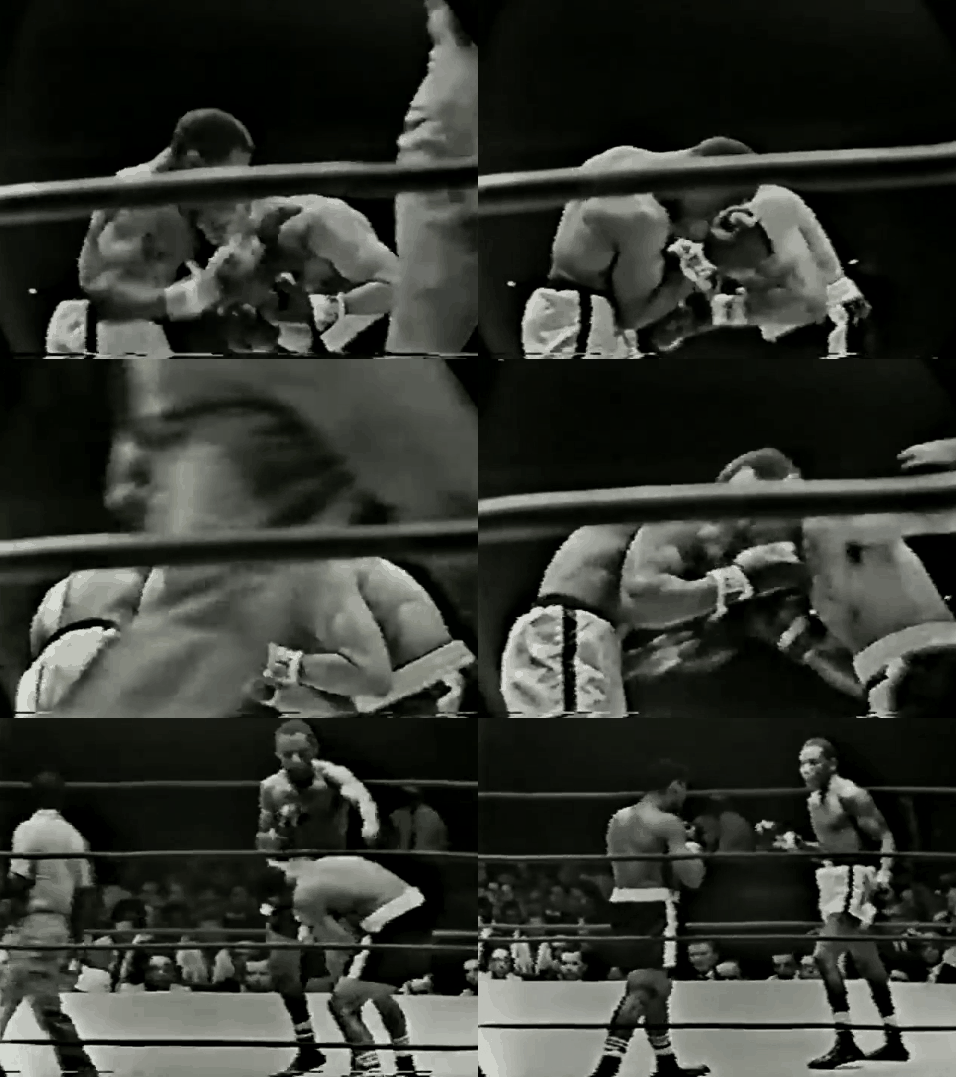
Fig. 14
This cut off the danger of that brow-grinding overhand, but still left Cotton open to Torres’ left hook. It also put Cotton square, where previously he had been holding his bladed position. One advantage of this was that Cotton could bring both his hands in tight and simply push Torres away. Changing head position also unweighted Cotton’s left arm, setting up the short left uppercut as Torres pushed into him.
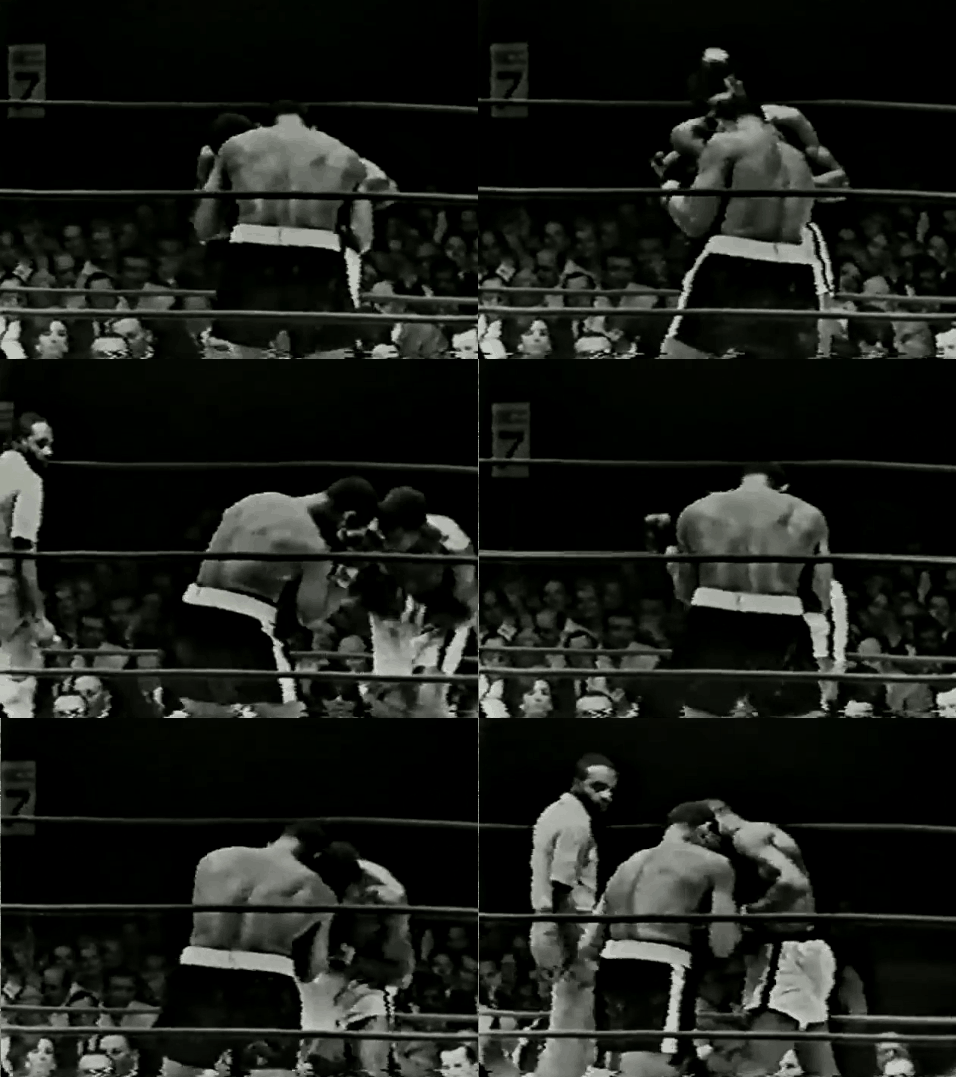
Fig. 16
The head switch created a funnel, because it took away the overhand that was often bothering Cotton, but it encouraged Torres to throw his excellent left hook. Throughout his career Torres would double the left hook, head then body, and pivot out of the exchange off the body hook. He dropped Willie Pastrano in this way when he won the light heavyweight crown.
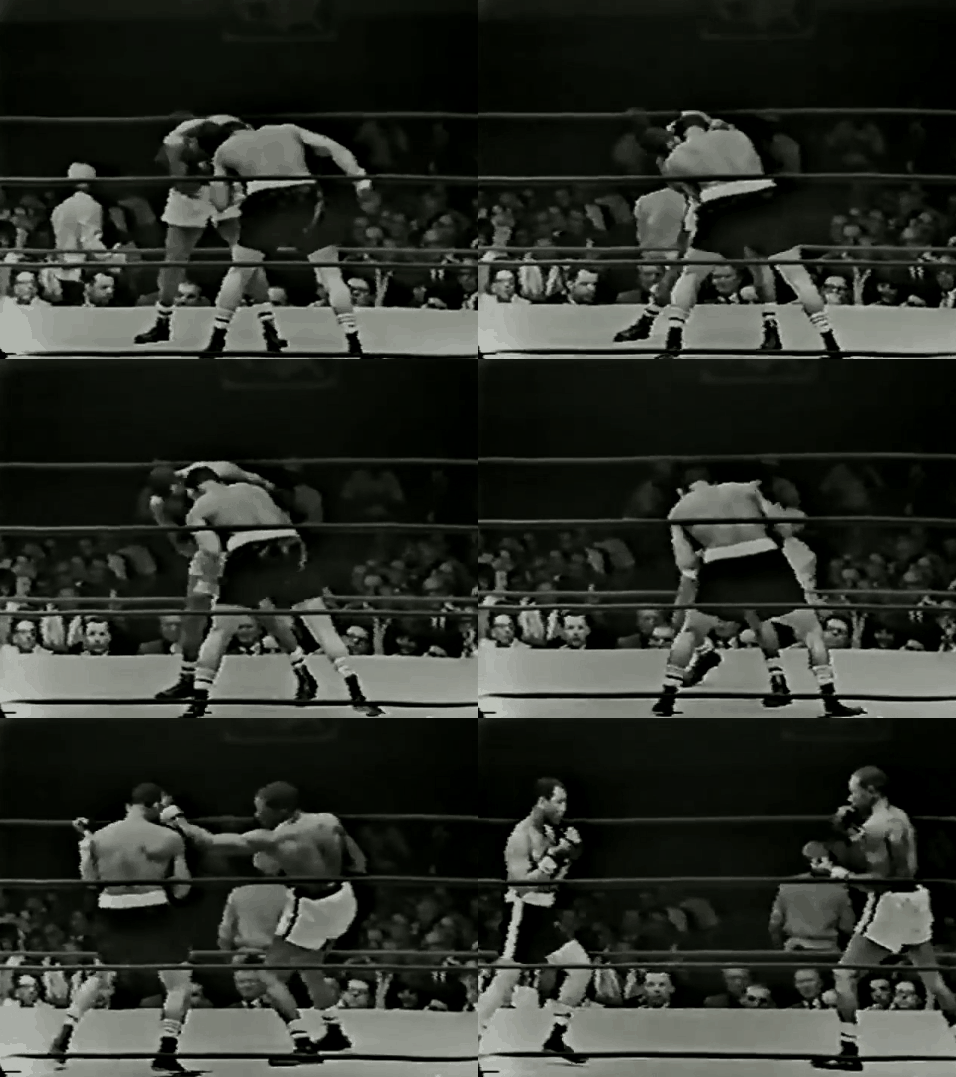
Fig. 17
This sequence played out a dozen times in the fight. Cotton performed the head switch, Torres would hit the left hook and begin to pivot out, and Cotton would try to chase him and catch him out of position.
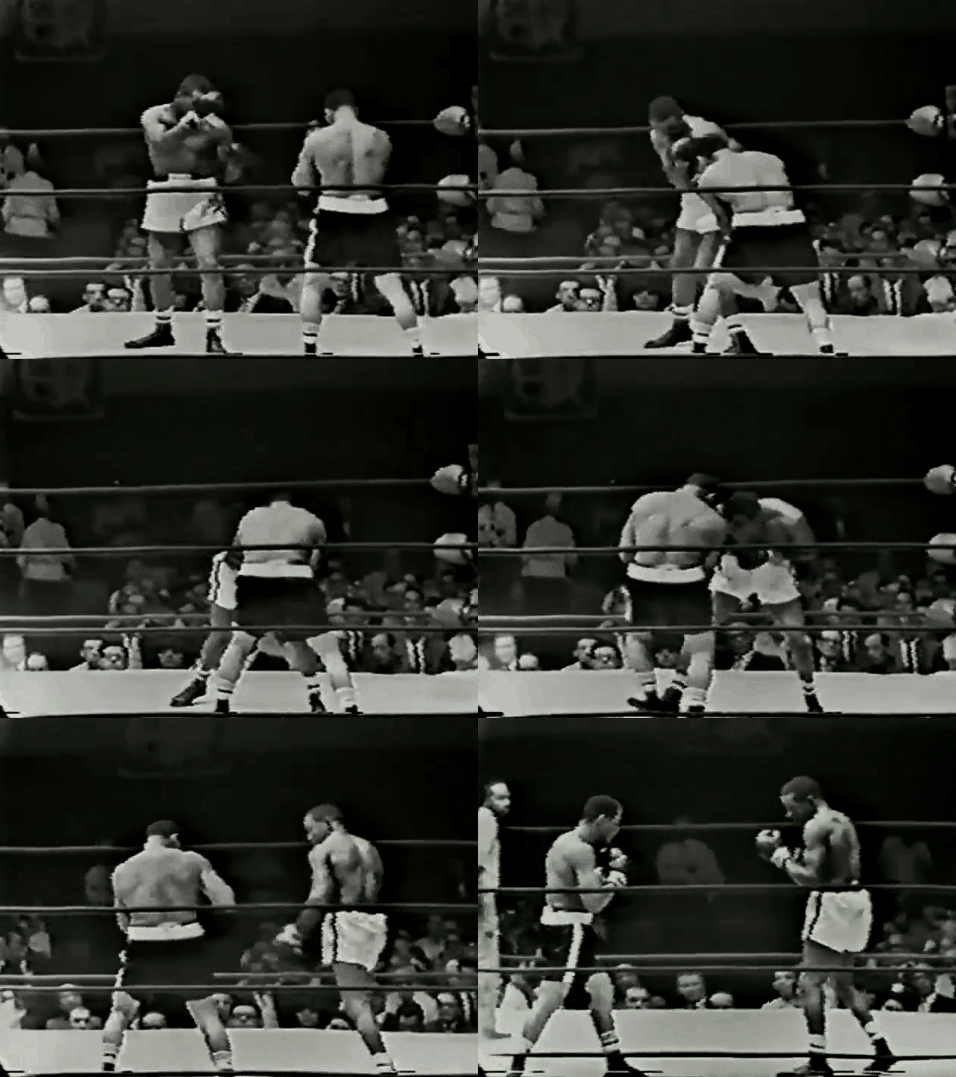
Fig. 18
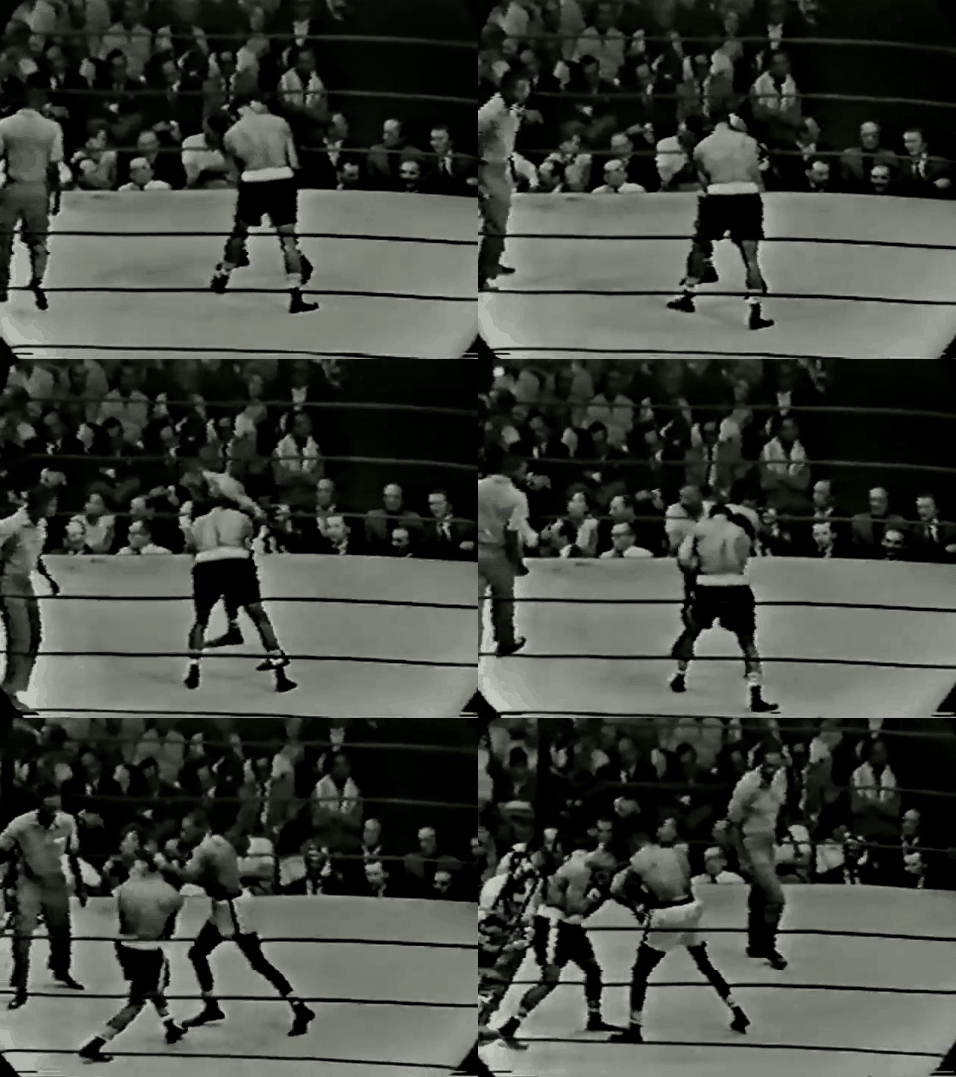
Fig. 19
Figure 20 shows one of the most significant exchanges of the fight. Torres rattles off a rapid combination, lands the left hook to the body, and begins to pivot out. Cotton fully commits to chasing him, even stepping into southpaw, and hits him with a left straight up the centre that stuns Torres. A couple more right hands and Torres’ legs wobble under the assault from an older, softer hitting fighter.
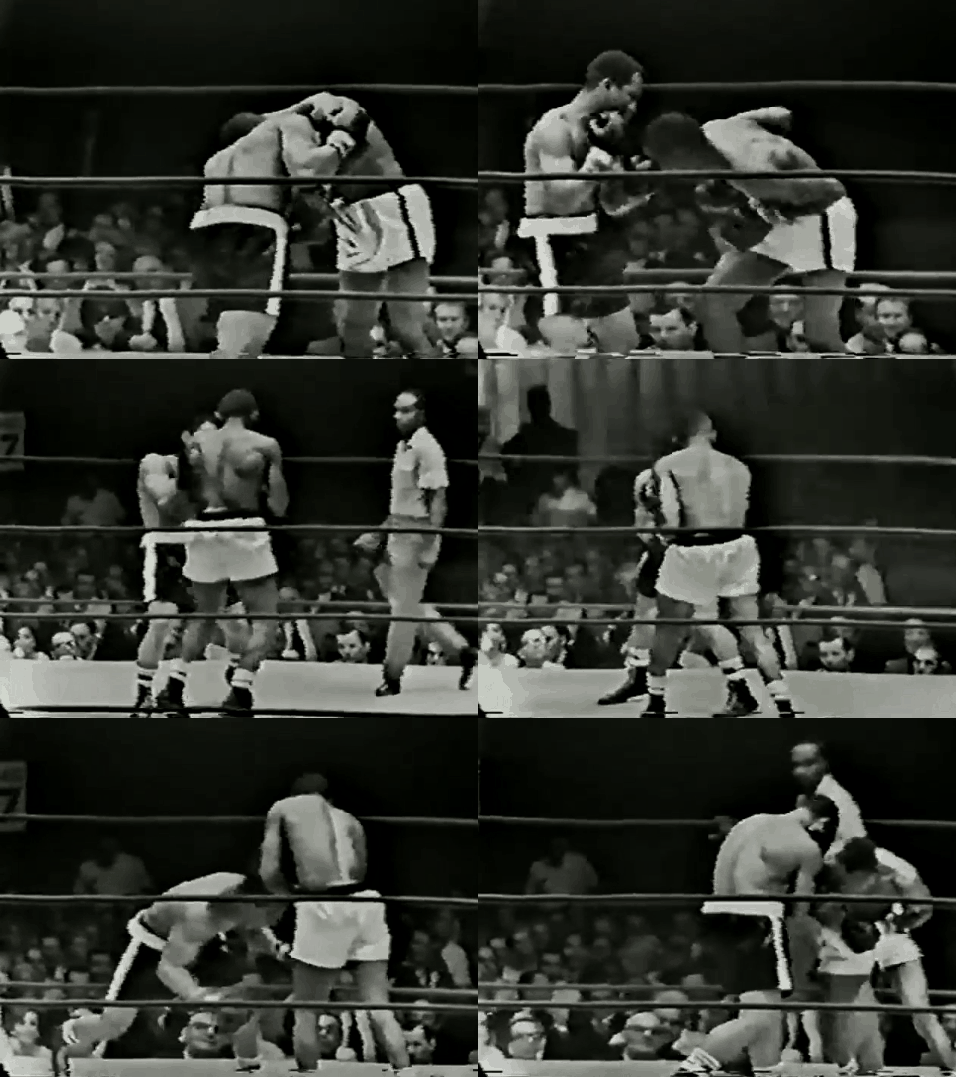
Fig. 20
Jose Torres trained with Cus D’amato a solid twenty to thirty years before Mike Tyson, and it is understandable that D’amato should have changed his methods a little. For instance, Torres jabbed and body jabbed frequently, but never with the side-on dipping jab that Tyson used all the time. We have footage of D’amato demonstrating this to Muhammad Ali ahead of the first Frazier fight in 1971, so this might have just been a technique Torres did not gel with, or it might have found a more pronounced place in D’amato’s teachings in the following years.
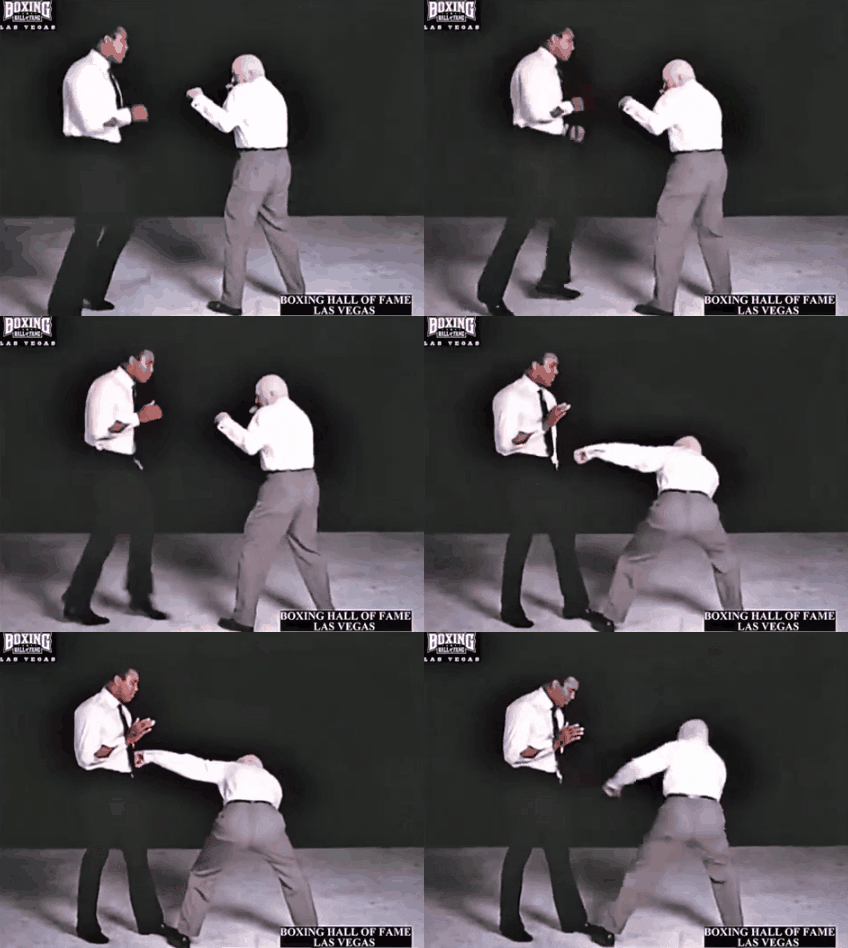
Fig. 21
Footage of Kevin Rooney coaching shows the very short stance that Tyson, Patterson and Torres all employed, but with much more jumping, sliding and shifting about than Torres used.
You will have seen Tyson performing side steps and full 180s in his training footage. Late in the Cotton fight you can see some glimpses of Torres performing the famous “D’amato shift,” but this reads as him trying something tricky late in the fight rather than a key part of his game.
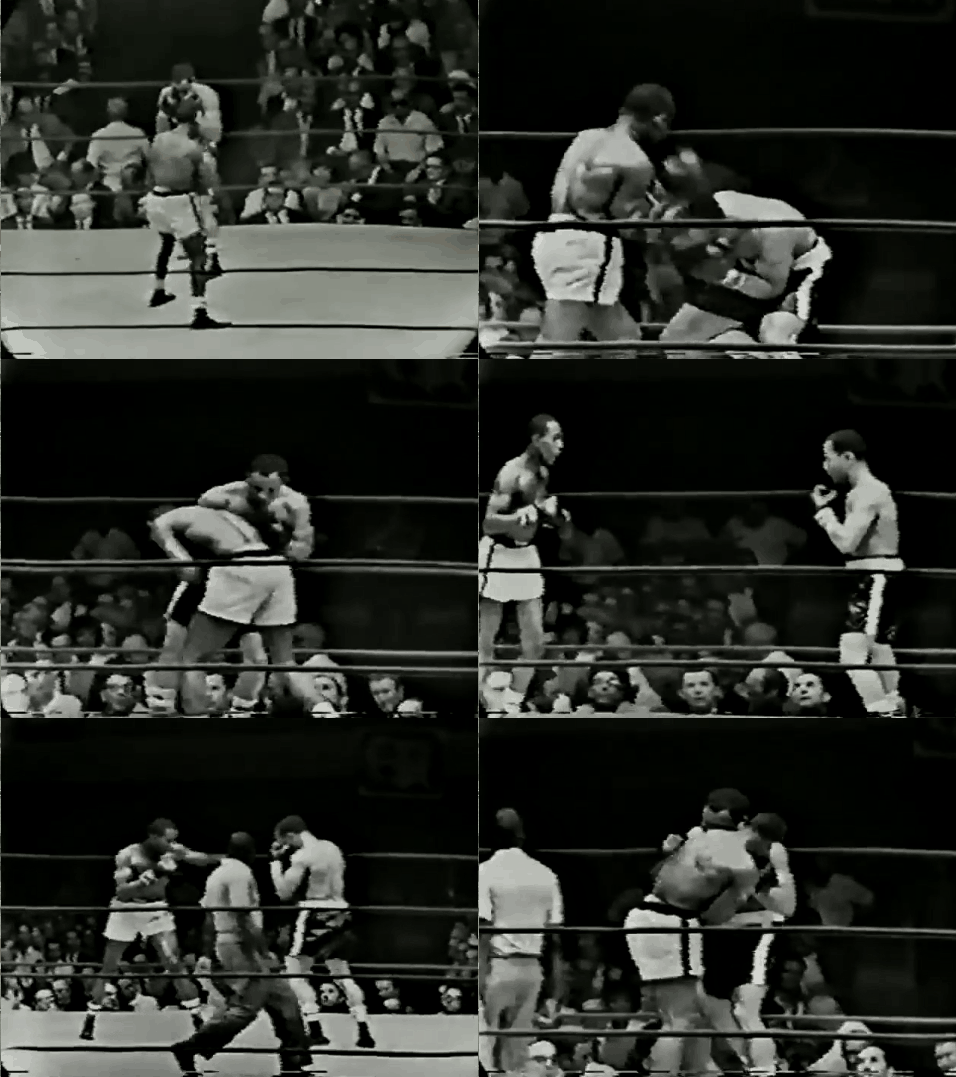
Fig. 22
After the Bell
When the subject turns to golden era boxers versus modern boxers, sports science is the great divider. Nutrition, strength and conditioning, and rehab work have all synergized to give fighters greater longevity, coupled with the fact that their fighting frequency is not as high. There were plenty of smooth technicians in the 1950s and 1960s, but Jersey Joe Walcott winning the world heavyweight title at thirty-seven was seen as a miracle. Just last year, Manny Pacquiao returned to the ring on a few weeks notice, at almost forty-seven, and fought twelve fantastic rounds.
With that being said, Eddie Cotton was almost the anomaly. Jose Torres was a fighter in his prime, he had just turned thirty and won the world title. At age forty, Eddie Cotton took Torres for fifteen hard rounds and left half of the spectators and press convinced that he had won. Instead, Cotton goes down in history as another maybe man, an also-ran. A fighter who didn’t quite get a fair shake, and even when he got the chance, he could not force the judges to love him.
Despite being only thirty, Torres did not box for much longer after the Cotton fight. He lost two hard fights to Dick Tiger in late 1966 and early 1967, then he fought once in 1968, and a final time in 1969. He retired to become every boxer’s favourite writer and every writer’s favourite boxer. Torres was able to interview and write about fighters in a unique way, being a young man still not much removed from world title fights.
Torres’ life was strangely linked to that of Muhammad Ali. Ali became world heavyweight champion in 1964, Torres became light heavyweight champion in 1965. The light heavyweight champion is always eyeing the big prize at heavyweight because it promises the biggest paydays on a single fight a year. After Ali beat Torres’ stablemate Floyd Patterson, Torres announced his desire for a heavyweight title shot. Ali countered that Torres should give Jimmy Ellis—Ali’s stablemate—a light heavyweight title fight and then come up to heavyweight. After Torres retired the two remained on good terms. In 1970, Jose Torres was sparring with Ali in camp. In 1971, Torres released Sting Like a Bee, a biography of the former heavyweight champ.
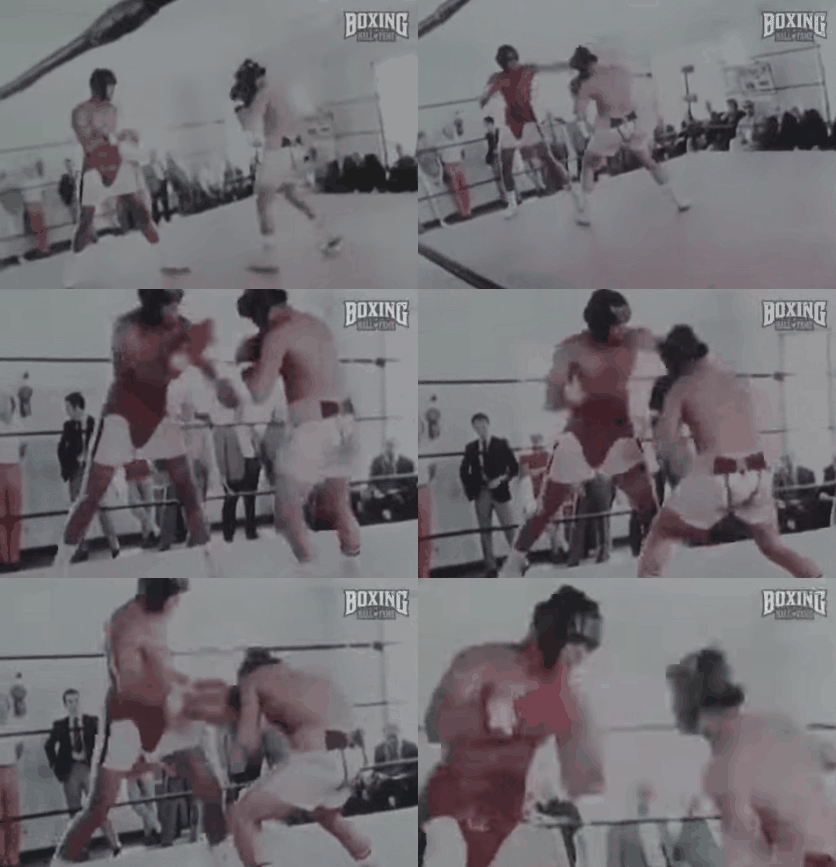
Fig. 23
Jose Torres versus Eddie Cotton is a match up that hints at the possibility more. It is a vertical slice into two deeper worlds. There is relatively limited footage of Jose Torres, despite the fact that he was a star in his day and the light heavyweight champion of the world. Then there is the unappreciated Eddie Cotton, of whom footage is scarce, and almost non-existent from his prime. As is the case with Charley Burley and the Black Murderer’s row, my beloved Jersey Joe Walcott, and just about anyone who competed before the 1980s. Sugar Ray Robinson was recognized to be maybe the best welterweight ever, while he was actively competing at that weight, and we still have just a few seconds of footage someone thought to record of him at that time.
Eddie Cotton is one of those boxers who could have been better if the stars had just lined up for him once. Unlike the aforementioned Walcott, this razor close decision did not lead to him getting the rematch by popular demand. A few months later, Cotton would get laid out by the ascendent Bob Foster and retire a short while after.
When watching Jose Torres, you cannot help but wish we had more fighters being schooled in that style. Even the notable charges of Teddy Atlas and Kevin Rooney—Cus D’amato’s closest living associates—fight nothing like D’amato’s trinity of champions. You will see the rare fighter like Isaac Cruz playing with the peek-a-boo guard and squatting underneath his opponent’s straights and uppercuts, but there are not many more like him. Perhaps this is on coaches: Cus D’amato was a trained boxer but as a coach he was making it up as he went along. Many boxers turned coaches now are concerned with handing down what they have been taught, rather than trying to build. But if boxing’s infatuation with Dmitry Bivol’s pendulum step has taught us anything, it just takes one guy to open the floodgates.