
It was on the eve of his biggest fight that Dmitry Pirog’s body betrayed him. Pirog had already sacrificed his WBO middleweight title to contract squabbles in his pursuit of greatness, but in preparing to fight the WBC and IBF’s champion, Gennady Golovkin, Pirog suffered a back injury from which he could not fully recover. At thirty-two years old, two years into his WBO title reign, Pirog was a mature athlete but still brimming with potential The middleweight scene that unfolded over the next decade contained some great fighters and the brilliant rivalry between Golovkin and Canelo Alvarez, but it was poorer for losing him.
Pirog has become a subject of fascination and frustration in boxing circles for the same reason people love to ruminate on James Deen, Bruce Lee, and Marilyn Monroe: the unknowable potential. In our sport of mixed martial arts, Zabit Magomedsharipov’s name comes up every year or two because he was another such story of obvious potential. As an avid Magomedsharipov critic, even I must admit we cannot know how he would have developed. A fighter showing weaknesses or an incomplete skill set does not mean they will always be that way, after all they are in the gym every day, month after month trying to change that.
Diverse Influences
In that middleweight rivalry between Golovkin and Alvarez, you have two of the more extreme paths in boxing. Gennady Golovkin fought three hundred and fifty amateur fights and secured medals in the Olympics, World Championships and Asian Games. Canelo boxed as an amateur from his youth, just as Golovkin did, but went professional the moment he turned fifteen, and even that is more amateur experience than most young Mexican fighters get. Young Dmitry Pirog sat comfortably—perhaps even mediocrely—in the middle: he had a couple of hundred amateur fights and won little of note.
During Pirog’s fight with Daniel Jacobs, as Pirog outclassed the tricky American, the great coach Emanuel Steward mused on whether Pirog had simply not been the type of fighter the national team were looking for. He was clearly an extremely skilled and adaptable fighter, but he also looked nothing like any classically trained amateur fighter from the Eastern or Western hemispheres. When watching Pirog it was clear that the style he was using was entirely personal.
The story goes that Pirog was self trained for a good portion of his amateur career and in that time studied footage of Floyd Mayweather and Sugar Ray Leonard among others. He did not have access to a Roger Mayweather type as a coach, so his style was always going to be either an imperfect impersonation, or a hodgepodge created through his own interpretation. What resulted was one of the most unusual fighters I have studied in years and something altogether unique.
Philly Shell / Leaning Deep
Every Pirog fight takes place in swings between an upright, bladed posture and a squared, bent-forward posture. The Mayweather influence is blindingly obvious as Pirog extends to his full height and carries his lead shoulder high, deflecting the opponent’s rights and returning with a chopping right hand of his own. There is even a little Jack Johnson in there as Pirog often seems to his the opponent with the bottom of his fist instead of the legal striking area on these chopping right hands.
When we have previously discussed the shoulder roll we have mentioned that a great many fighters who use it are purists. That is to say the shoulder roll position is their stance; it is not a tactic they are using in conjunction with many others. It puts them in position to jab and to throw the counter right hand, but does not do much for them if they want to left hook or throw a blow that would require squaring of the body. They will square and throw the left hook and uppercut, but it is a departure from their standard position and only momentary.
The famous exception to that rule was Archie Moore, who played between the shoulder roll and the cross guard. The shoulder roll is a side on position that allows the fighter to absorb or block blows and return with a loaded up right hand. The cross guard is a squared up position that allows the fighter to block his opponent’s blows and return with a loaded up left hook. The two synergize beautifully because the fighter only needs to raise his right elbow as he squares up from the shoulder roll to make the cross guard, and drop the elbow and turn away again to get back to the shoulder roll. But generally the shoulder roll is the tool of slicksters and cuties, and the cross guard is mostly popular among clumsy offensive fighters looking to mitigate the damage they take getting in.
Pirog was notable for his shifting and while he shifted constantly throughout his fights, it was the shifting in his breakout performance against Danny Jacobs that the boxing world remembers. As if to throw off any scouting Jacobs’ team might have done, Pirog opened the fight by pressure fighting Jacobs to the ropes and getting to work fast. A minute into round five, Pirog pumped a series of jabs, shifted forward twice, and knocked Jacobs out with a right straight along the ropes.
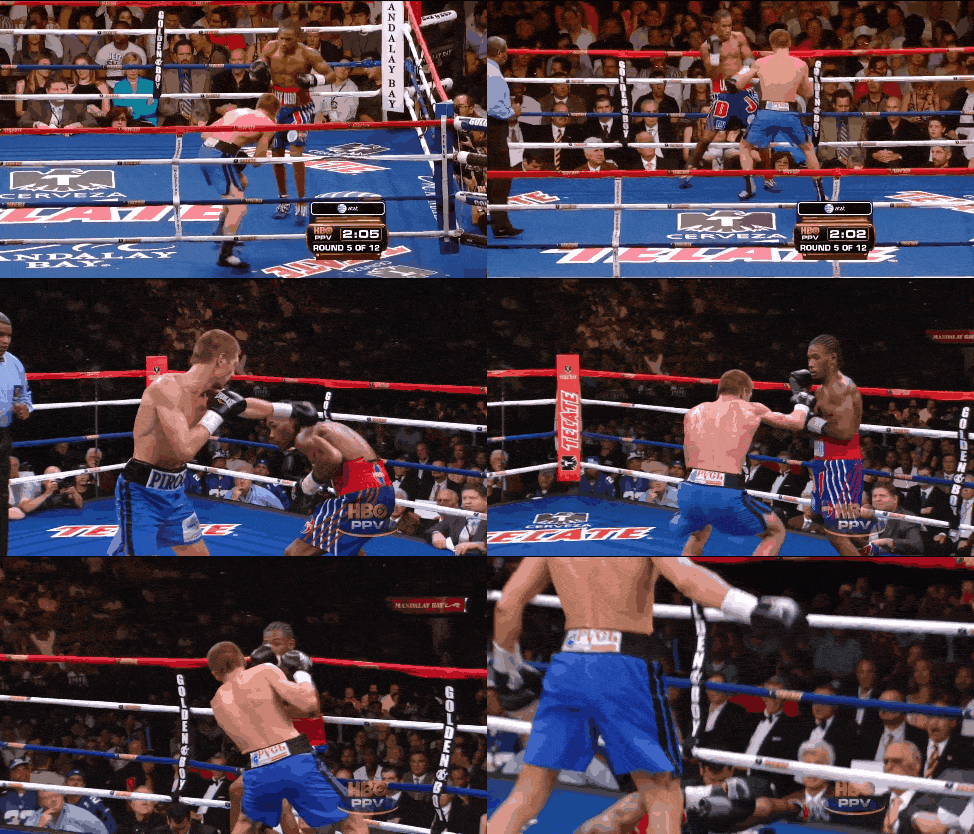
When we examine shifting, it is usually done with an emphasis on power. The most basic form of shifting is to march up and down the gym throwing your left straight as you switch to southpaw, and your right straight as you step through to orthodox again. This feels good mechanically and when you start hitting things it proves strong. The cheat punch, the drop shift, Shogun Rua’s famous shifting left hook, these are all punches that link the power to the step. Pirog’s forward shifts often seem to detach the hands from the feet and his feet are simply finding the angle or chewing up the distance as his hands are flicked out to distract.
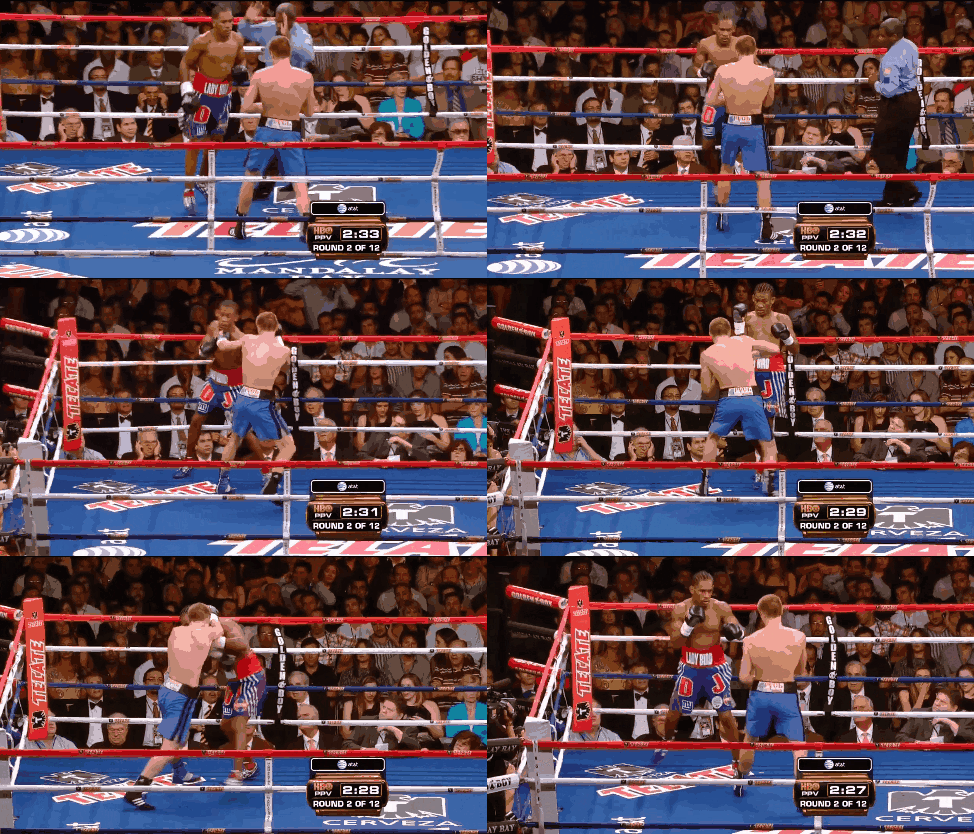
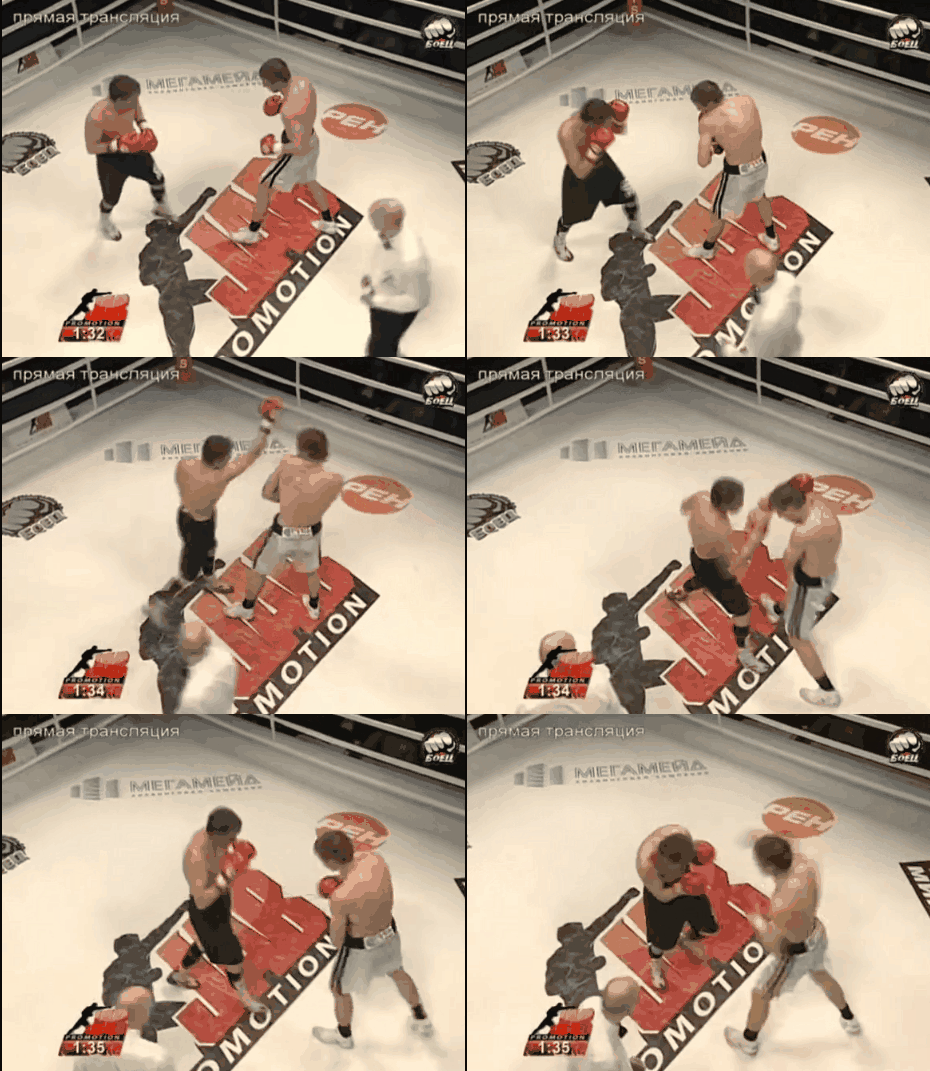
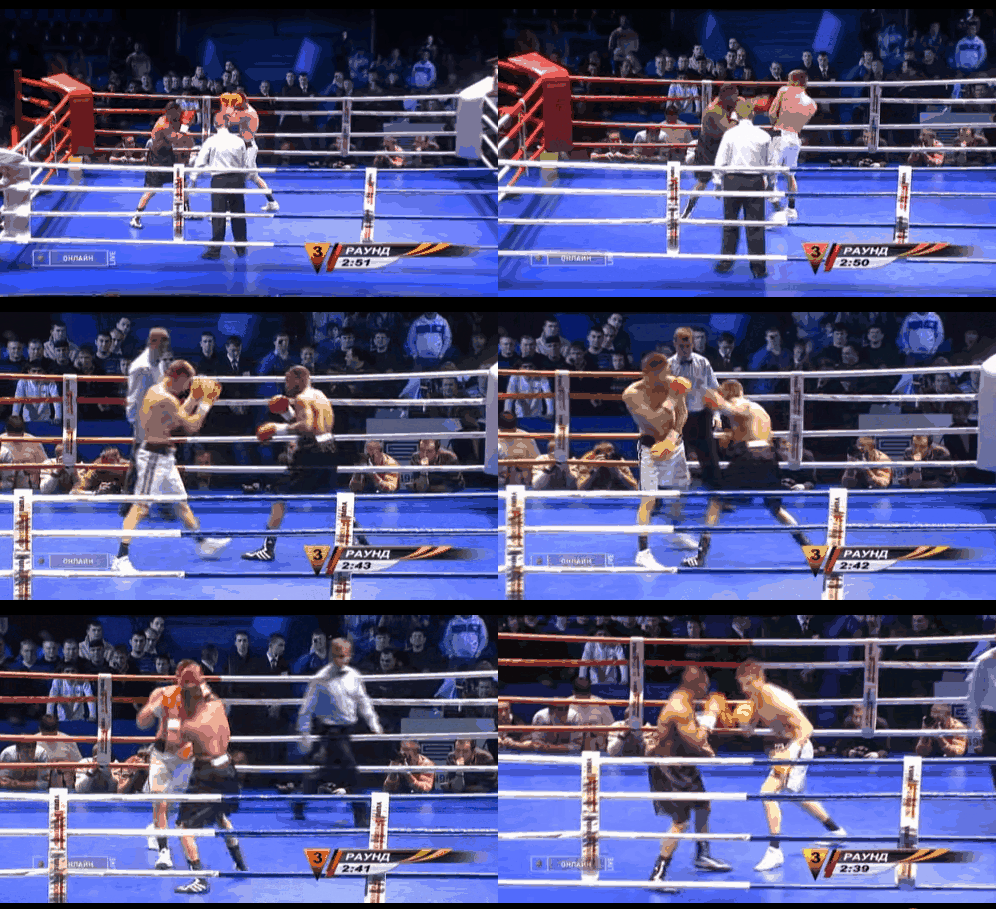
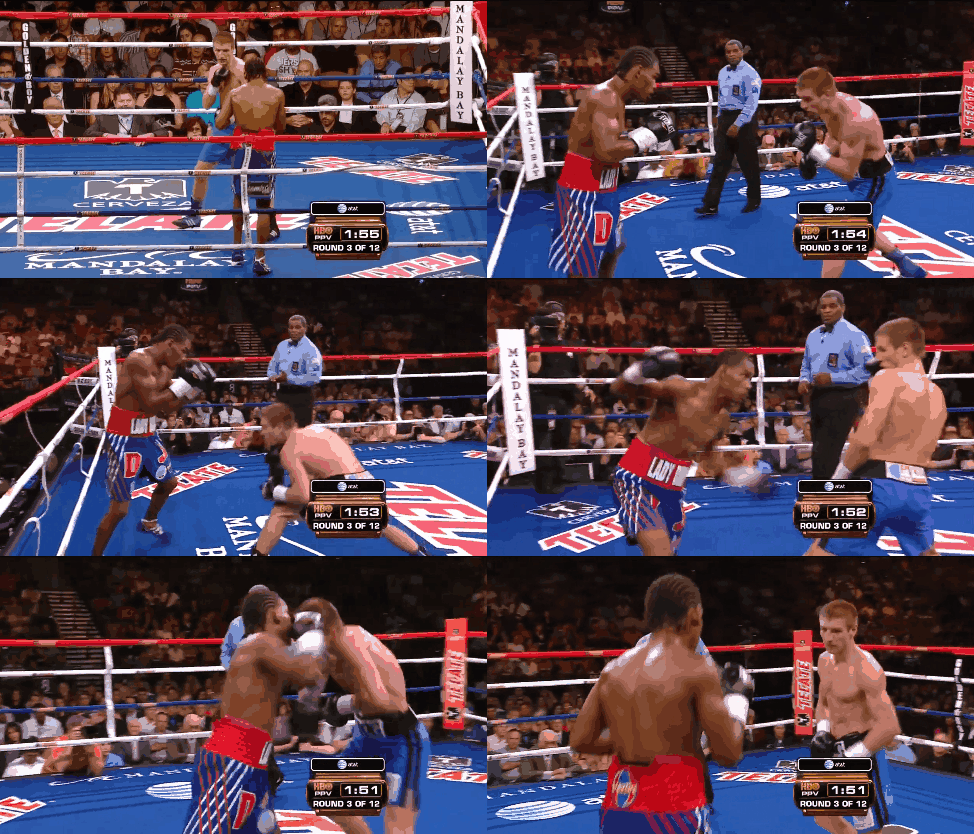
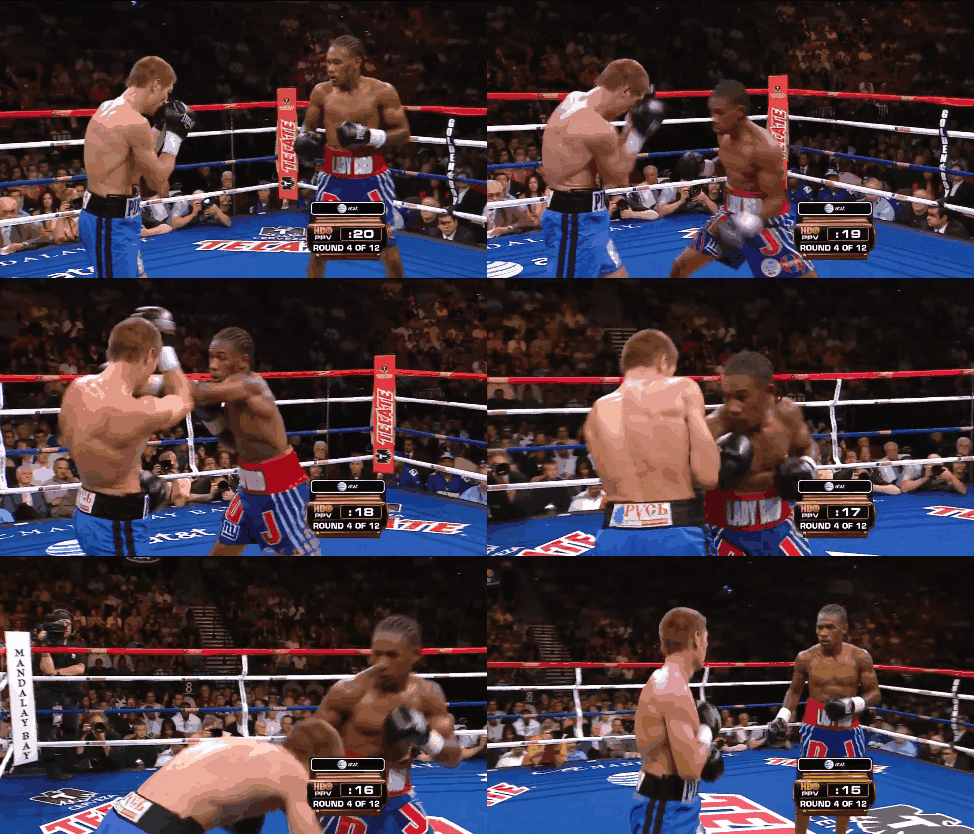
Figure x shows a shift in which Pirog throws his right hand as both feet leave the floor to skip him into outside foot position as he assumes a southpaw stance and swings in a big left hand.
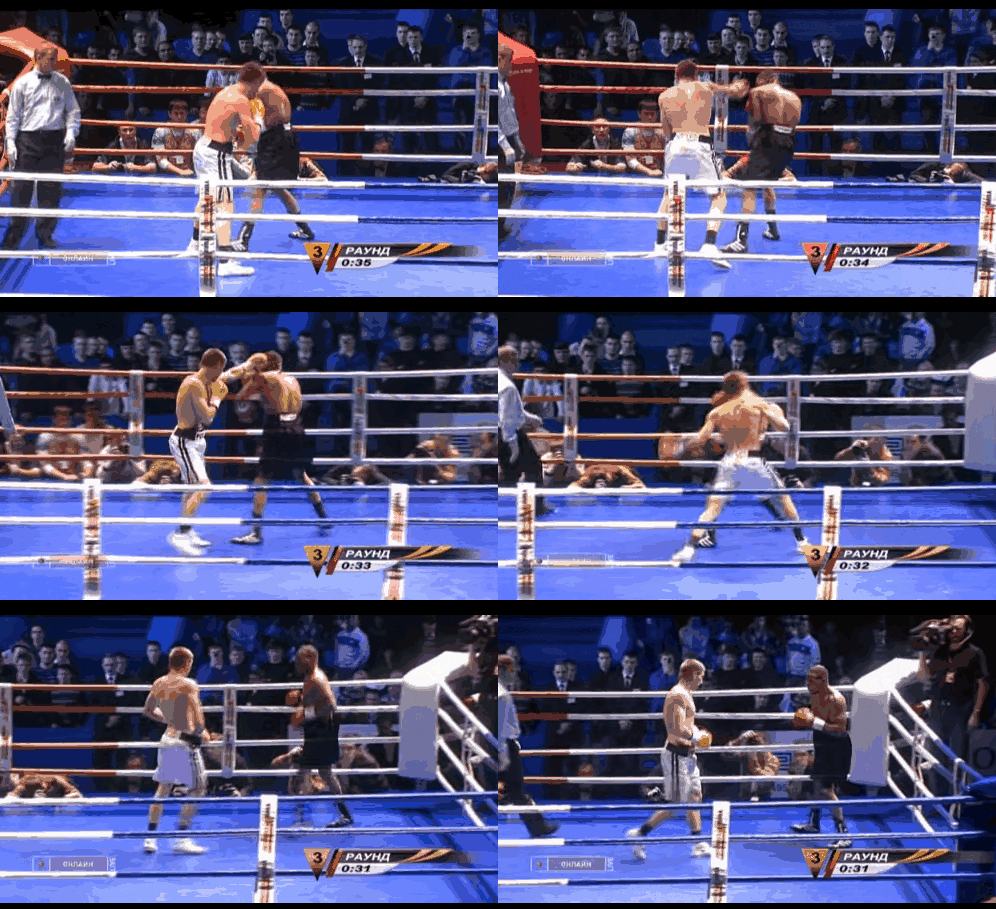
Similarly, Figure x shows Pirog pitch a one-two from orthodox at the ropes, then poke out a right handed arm punch as he switches his feet, before hammering in another left swing to the head.
In mixed martial arts we are used to fighters throwing and then falling forward into their shift, or marching with their punches. A great deal of Pirog’s skill with the offensive shift seemed to be in his ability to unweight his feet while they moved. There was seldom a time where his feet were clumsily catching him after he had committed his weight to a big punch, instead he shifted because he wanted to try to sneak in a shot on the change in stance dynamic.
On the subject of sneakiness, you will notice the word “offensive” snuck in there as a qualifier: “Pirog’s skill with the offensive shift.” When I called Dmitry Pirog unique earlier, it was no exaggeration because he might be the only fighter I have seen in modern boxing having consistent success with a retreating shift.
In the history of the prize ring, the shift was originally a defensive tactic. To shift from one’s stance in the London Prize Ring days was to take a big step back out of your stance and let the opponent fall short. Like most defensive actions, it was seen as an act of cowardice until fighters like Daniel Mendoza made it acceptable and even praiseworthy to use evasions.
Jump forward a couple of hundred years and you will see the retreating shift used well in mixed martial arts. Anderson Silva used backward shifting punches to flatten Chris Leben, and very early in my writing career I shared my thoughts on Igor Vovchanchyn using the same back-stepping punches in their fights. Those back-stepping punches packed a lot more power than most fans thought possible, but if the opponent did not run his own face onto them, they were left flaccid in the breeze.
In the world of boxing, particularly once you get to the world championship level, fighters are not going to drive their face forward on a straight line and provide you all the power you need to knock them out with back-stepping punches. When we talk about Pirog’s retreating shift, we are discussing a step backwards out of his orthodox stance. The tricky part is that he often does not even fully shift back to southpaw, but rather to a feet level position.
This shift sets up different offensive looks depending on how the opponent is moving. If the opponent is physically pushing into Pirog, for instance, he can take big steps and pivot around the opponent, letting them fall forward onto his punches.
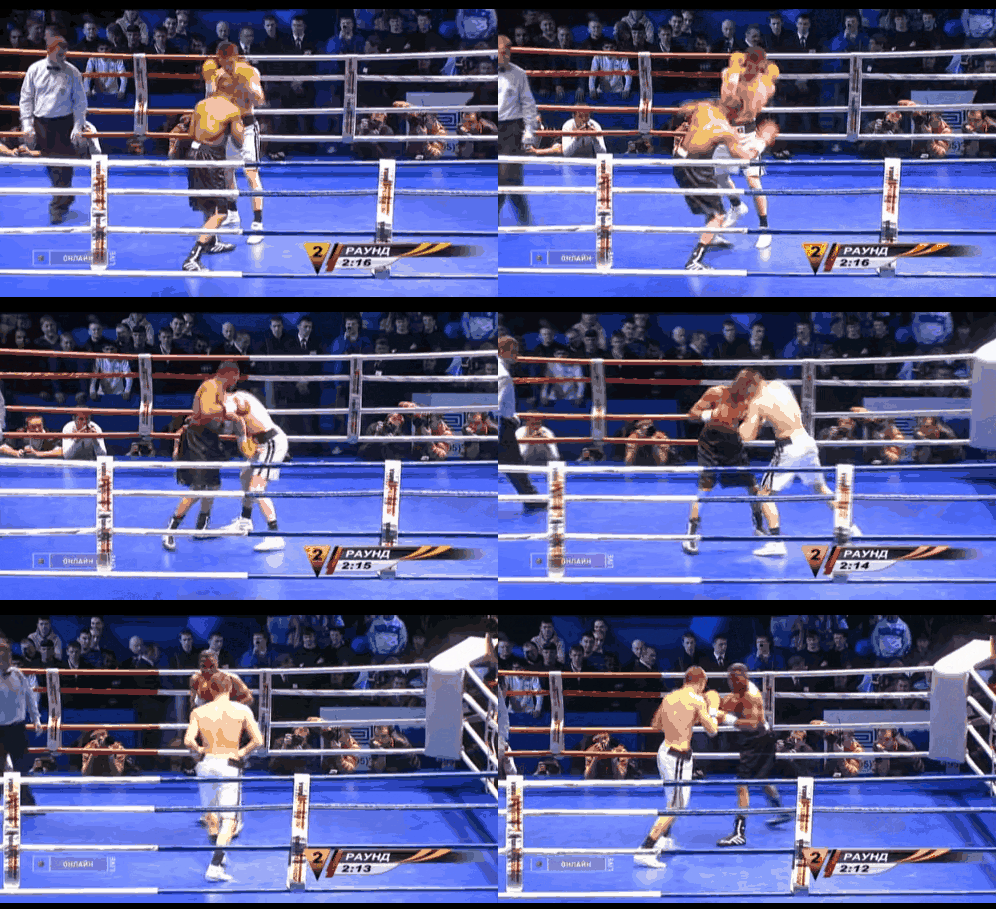
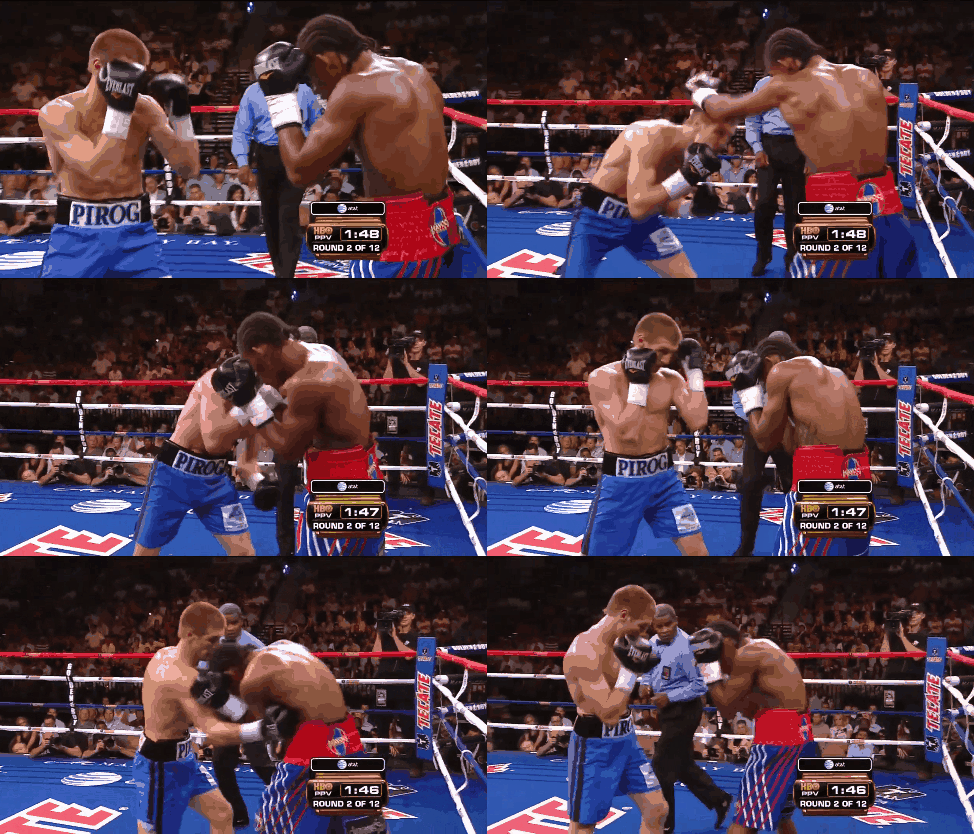
Here he attempts to set up a looping left uppercut on Jacobs as Jacobs pushes his way off the ropes.
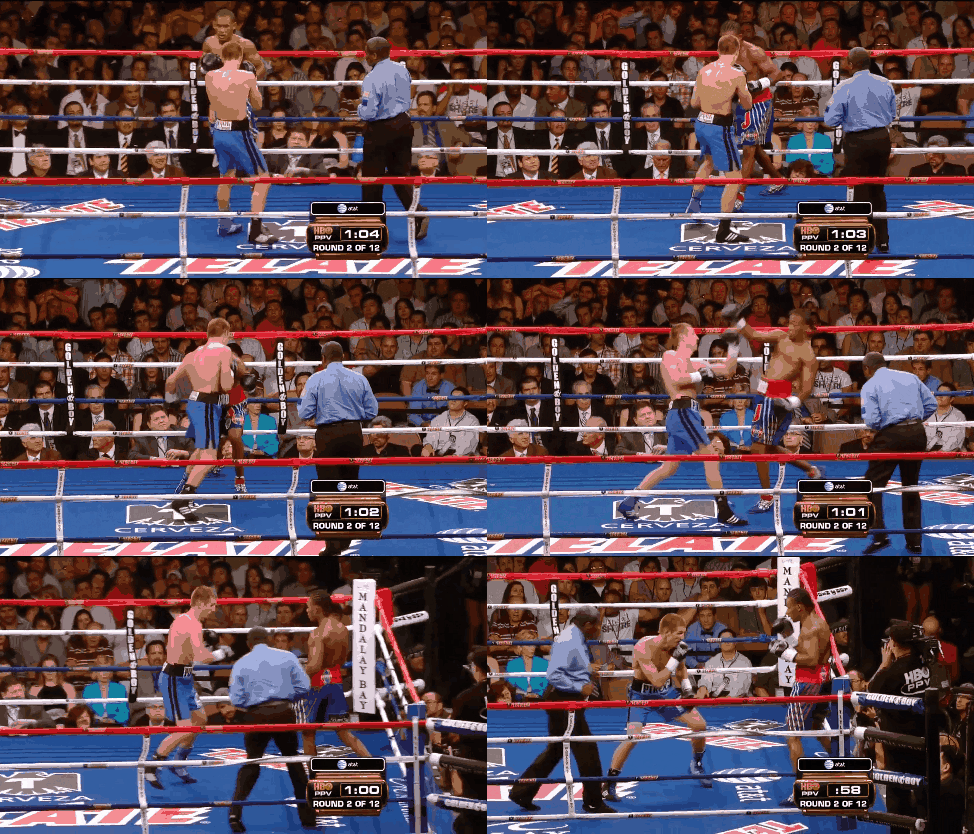
With a bit more range between Pirog and his man, Pirog would square his feet and shoot straight punches from either hand. This was reminiscent of the completely square on stances that Brendan Ingle’s fights used to adopt at points in their fights. Naseem Hamed famously did it against Steve Collins, and Herol Graham used it in many of his fights.
Here Pirog shoulder rolls a right hand, shifts back to feet level as Jacobs tries to get off the left hook, and then lands a left straight from feet-level as Jacobs pivots off.
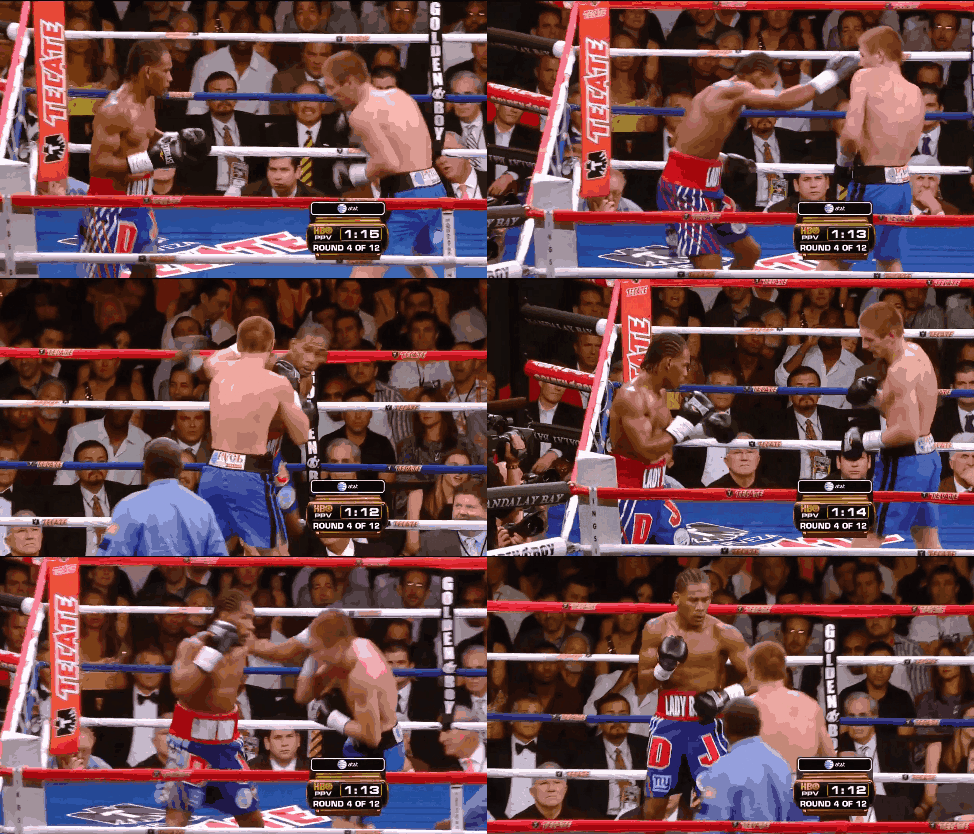
Just as often, Pirog’s would shift his lead foot back to level, and then pop out a right jab. Stepping back to square swung Pirog’s stance open as if he were a door and his right foot was the hinge. From the squared position he could sneak his right shoulder inside of his opponent’s left to find his right jab more easily.
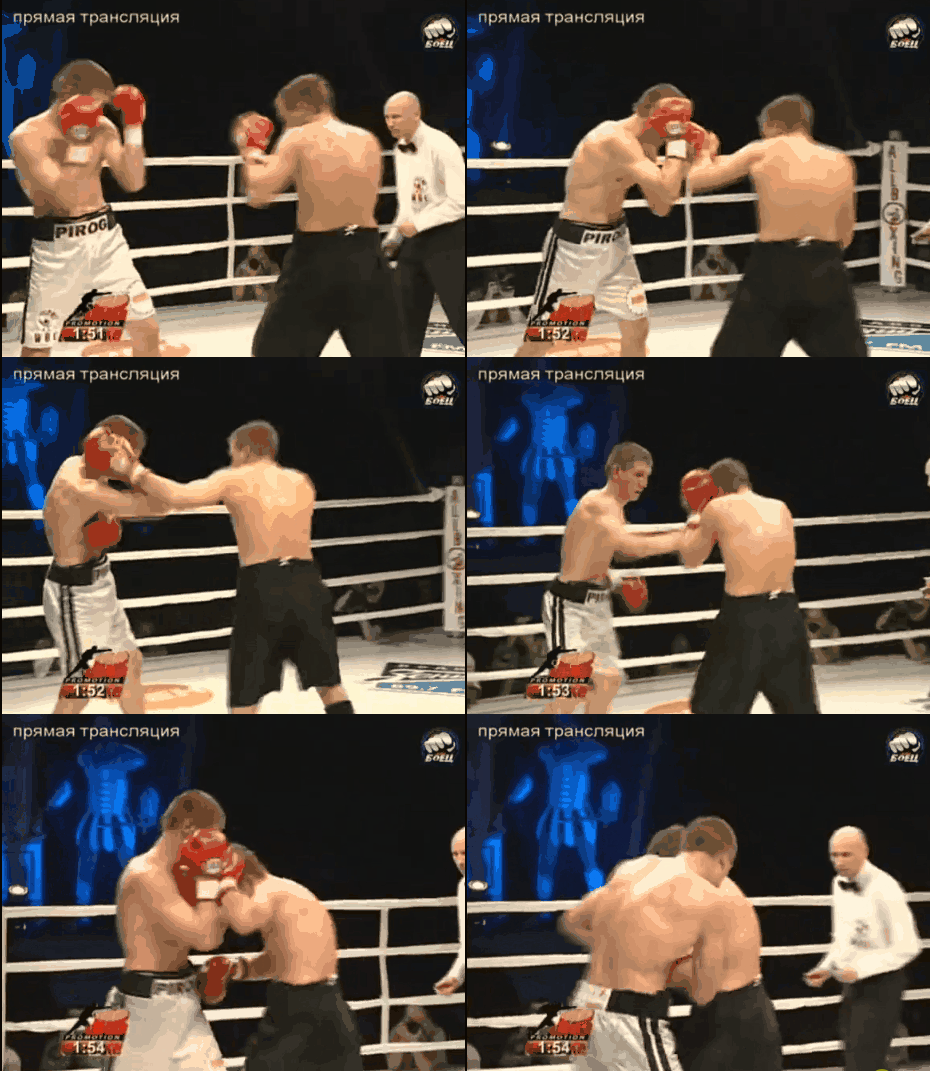
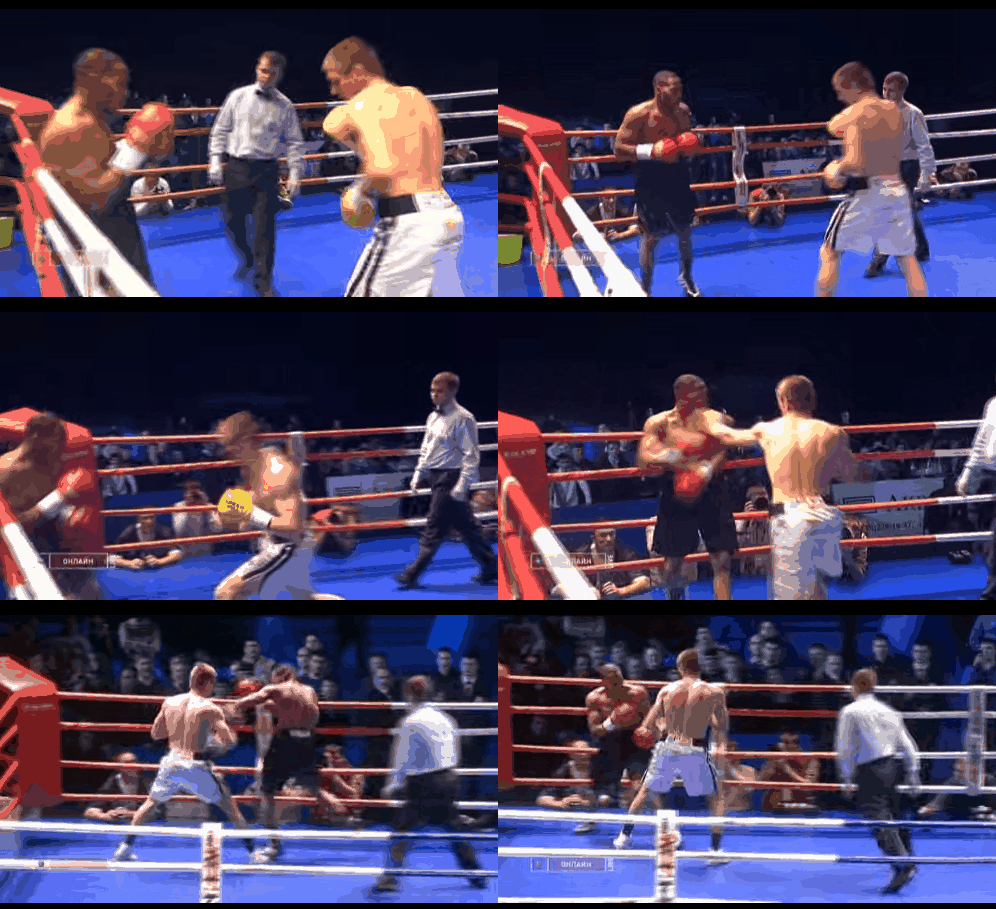
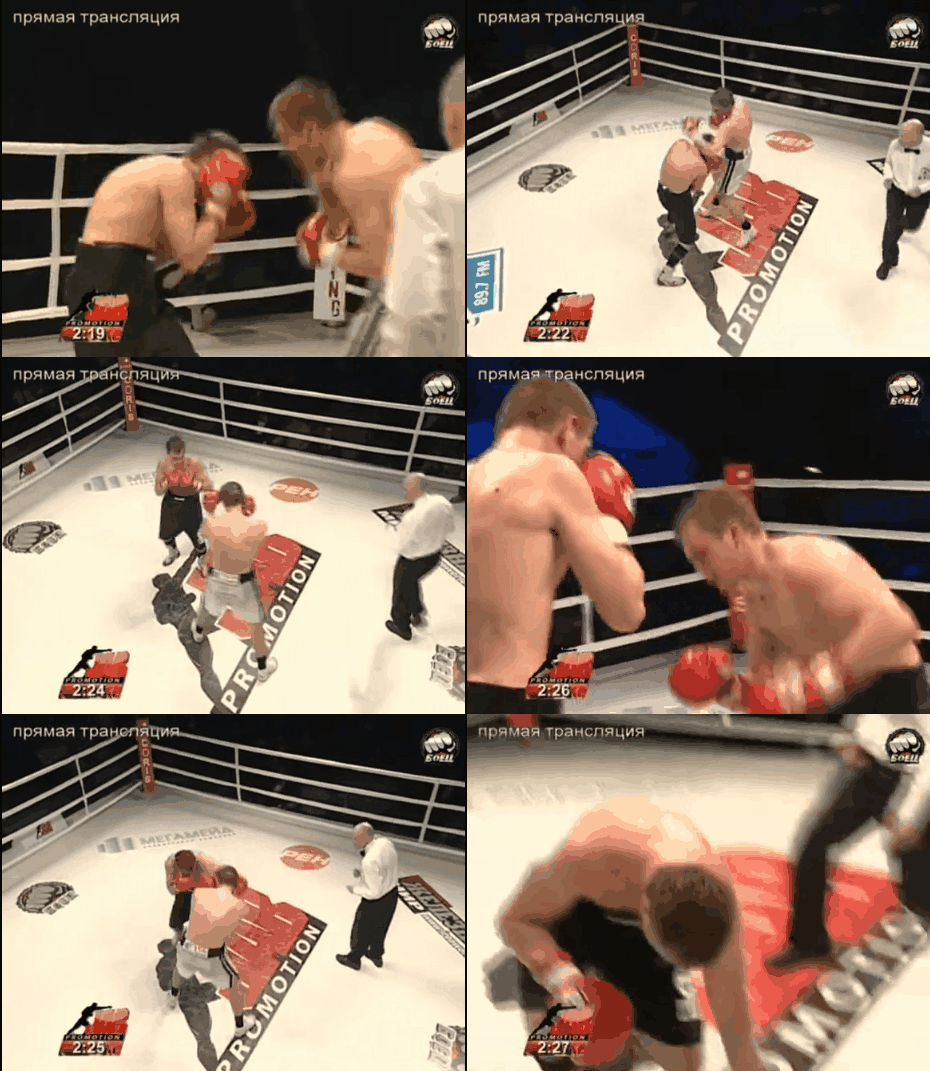
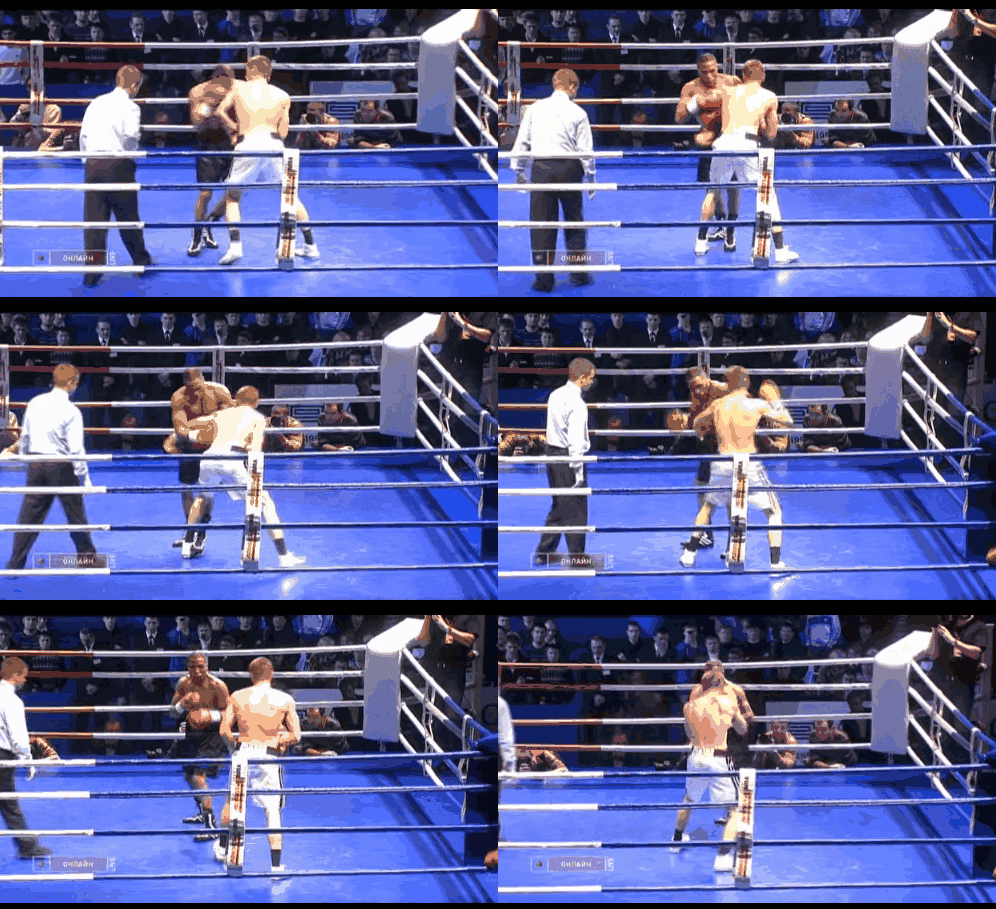
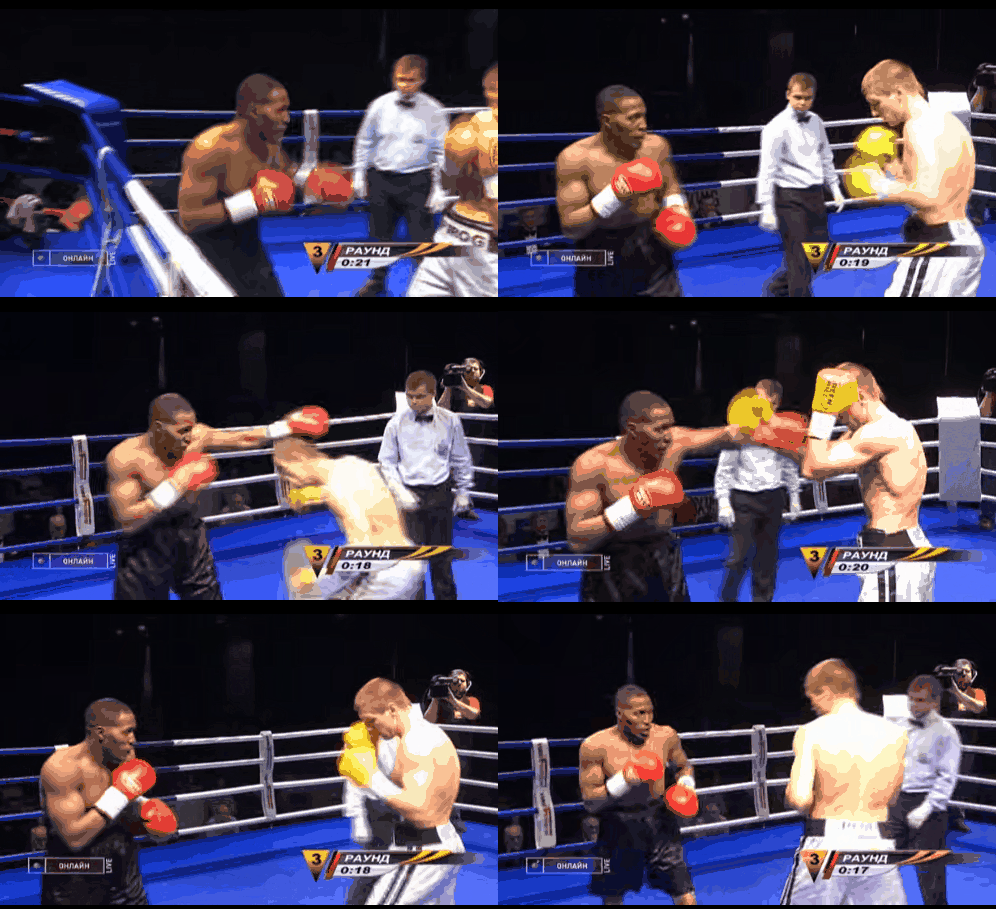
Pirog’s retreating shift was a constant through his bouts, but the most beautiful use of it I have found was in his knockout of Sergei Melis to win the WBC Baltic middleweight title. Here the retreating step to almost square sets up a punch that cannot exist without the shift. By stepping his left foot back to level with his right, and out to the side of Melis, Pirog can throw his left hand around the back of Melis’ right elbow. One of our lasting principles of striking from angles is that when you step to the direction the strike is going, you can shorten it, and when you step to the direction the strike is coming from, you lengthen it. Shorter strikes get to the target quicker and can be harder to see, but stepping out to the left as you swing a big left hook or left high kick also gives them a great chance of looping around behind the guard.
Vertical Fist Punches
Forward Shifts
Backward Shift