
Mason Jones -
Exile and Renewal
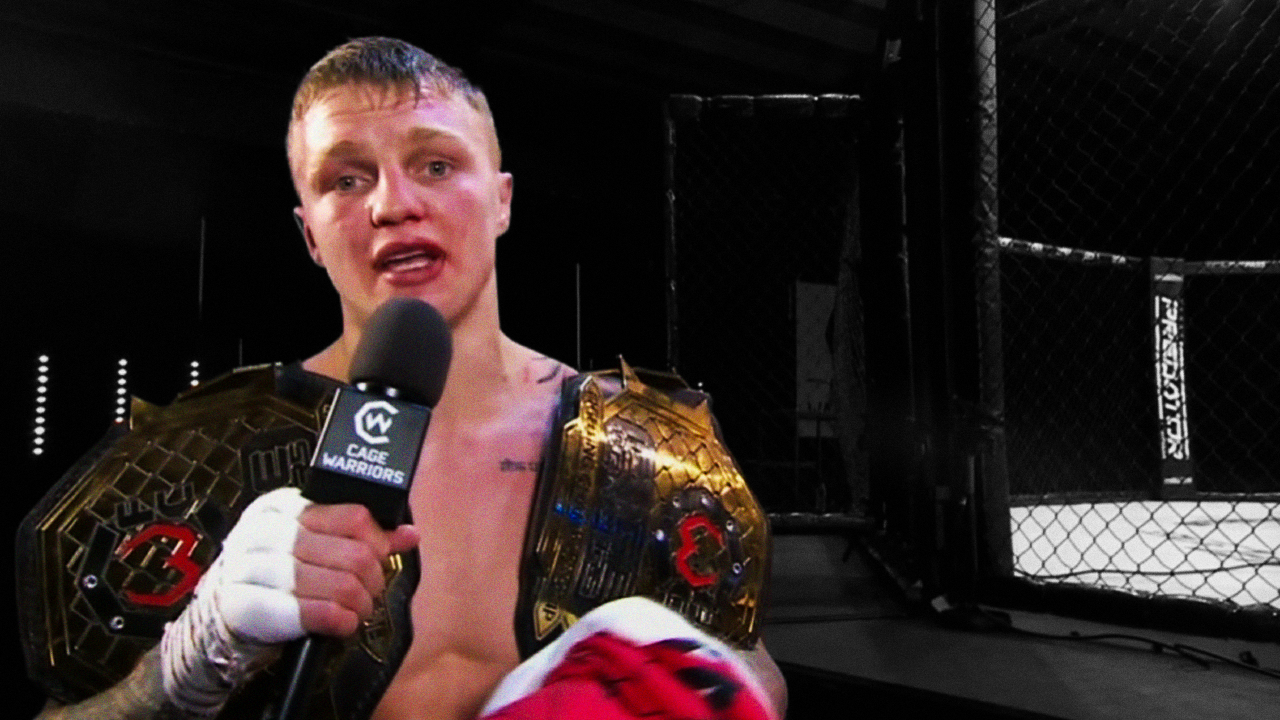
Mason Jones bought his ticket to the UFC by becoming the second man to win belts at two weights in Cage Warriors. The first, of course, was Conor McGregor. It was as strong an advertisement as you could make, but it did somewhat overlook the fact that as Cage Warriors is an unofficial feeder league to the UFC, the world titles are often vacant and then slapped onto a fight of the promoter’s choosing. Of the four belts Conor McGregor and Mason Jones won in Cage Warriors, not one was taken from a defending champion, and not one was defended.
Jones did not so much burn out of the UFC as simply not make much of an impact. He went 1-2-0 with one No Contest, and the UFC elected not to re-sign him. He was not “found out” or “exposed.” He had exciting, competitive fights with other good fighters. In a real meritocracy, Mason Jones would probably not have been allowed to return to free agency, because that is a good chance of career death in mixed martial arts. Fighting through regional MMA promotions is gruelling and earns you almost no money. It is a task undertaken with the understanding that it gives you a once-in-a-lifetime shot at something greater. When a fighter has made it to the UFC, a return the regionals can be an acceptance that he does not have a future. A great many promising young fighters have simply retired at this point.
After an experience that would have rattled or completely shattered the confidence of most fighters, Mason Jones pressed his nose back to the grindstone. He must have recalled his UFC fights better than the suits responsible for letting him go. Jones licked his wounds for a few months and then he did the thing that every young upstart with a heap of ambition dreads: he made the walk of shame back to his old job after having told everyone he was on to bigger and better things. And to his credit, he made every Cage Warriors viewer fall in love with him all over again. Jones had four great fights and three early finishes in the space of a year, and suddenly when the UFC needed a quick turnaround on a bizarre last-minute Jeremy Stephens fight, Mason Jones was there to answer the call.
The Jones Jab
It just so happens that we have done a lot of work on the jab as an initiator lately, chiefly with Roberto Duran – Advanced Striking 2.0. But Mason Jones’ jab is almost unique in the UFC. From the first bell he advances on his man and uses the jab to force the action. He doesn’t potshot, but rather uses the jab to draw out responses. The two movements that are present in every modern Mason Jones fight are the jab-and-dip and the jab-and-pull.
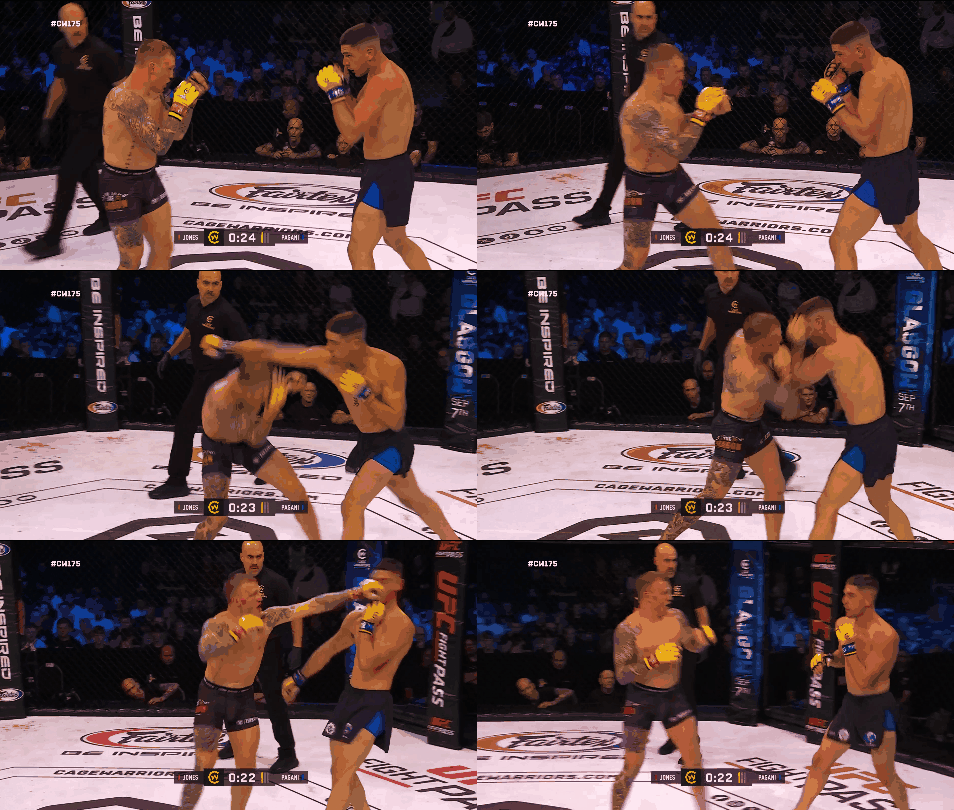
Jab and Dip has long been a favourite of this writer. Whether the opponent is going to return with a jab, or a big overhand swing, the jab and dip slides the fighter into the opening and puts him in position to open up with power punches or, in MMA, enter a clinch.
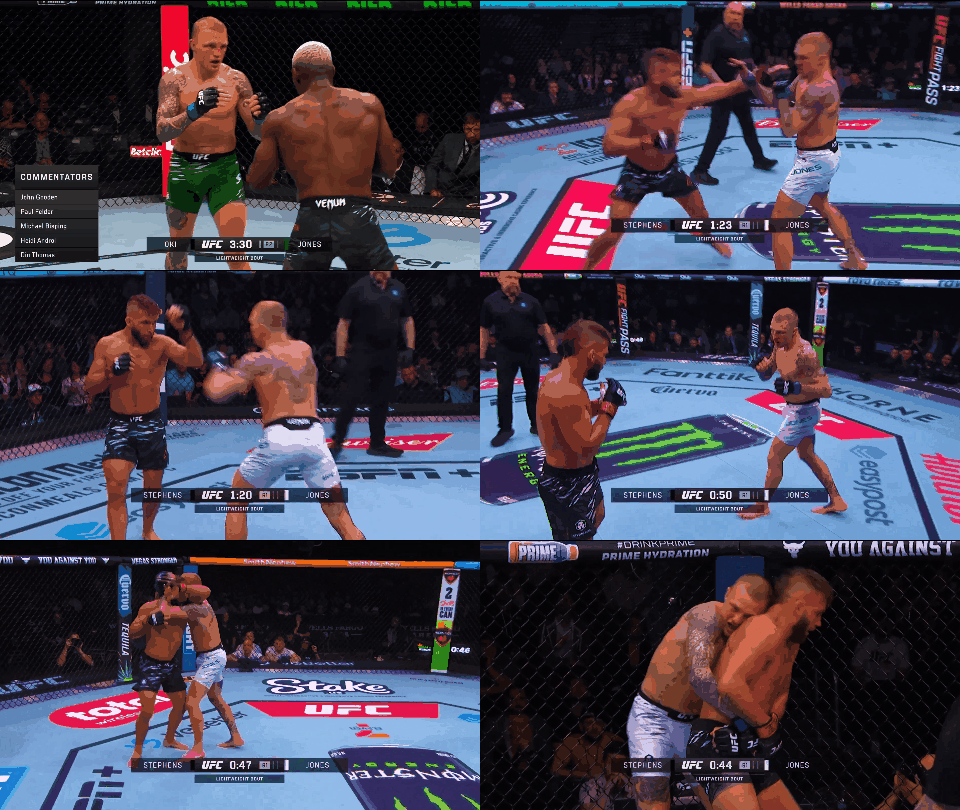
Staring at an opponent in his guard, it is hard to get to him. The moment he opens up after your jab, all your offensive options open up too. Jones uses the jab and dip to land good counter punches, to follow with a second more meaningful jab, or to enter easy takedown attempts if the opponent’s attention slips.
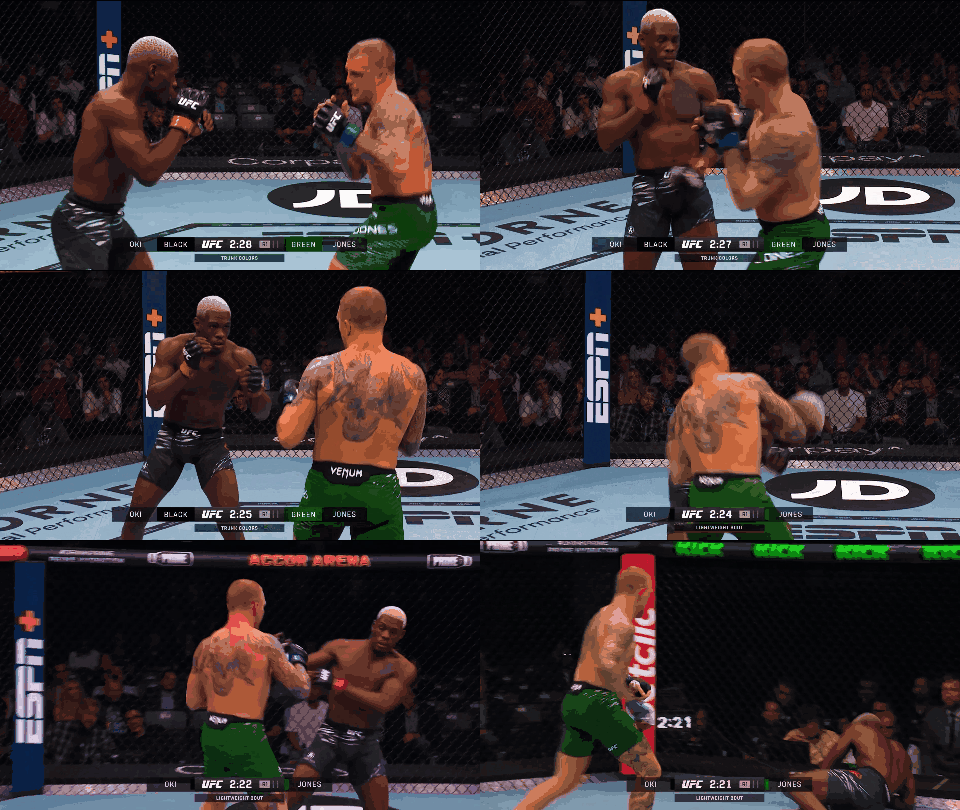
The jab and pull is a similar idea. You flick out your jab to touch the end of the opponent’s nose, and then you drive off your front foot and step back onto your rear foot to sway away from the opponent. The attack is performed with the intention of pulling back from the start: like the jab-and-dip it is a set piece, not a lead followed by a reaction.
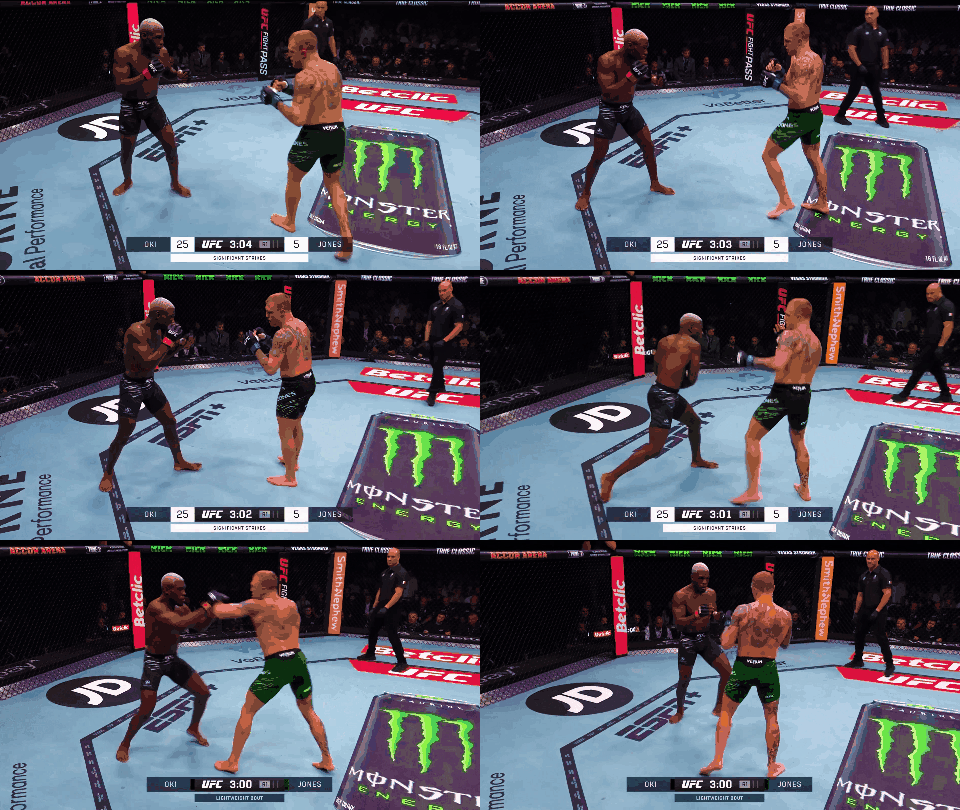
If the opponent has really put weight into his counter, he often cannot help falling onto a return. A jab-and-pull opens up the opportunity for power punching counters, but the jab-pull-jab is a safe way to start bruising an opponent up without exposing them much to counter.
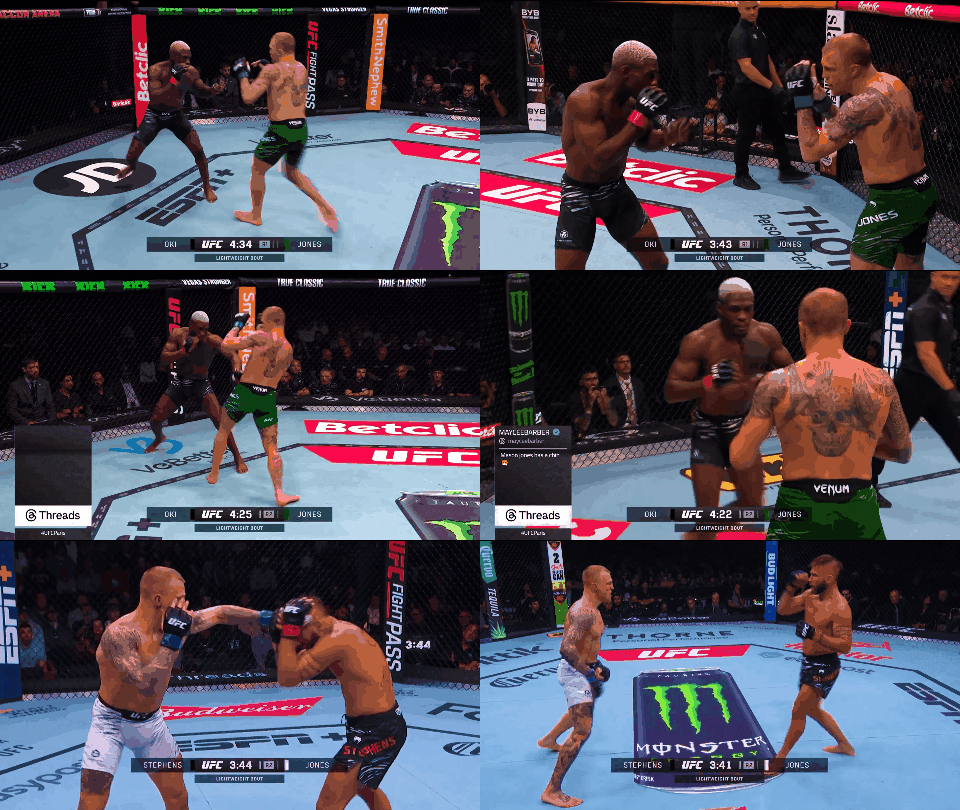
The jab-and-dip and jab-and-pull work on the assumption that a trained opponent is going to punch back when they get a whiff of your jab. A trained opponent is also going to stop doing a thing if he is getting hit hard as a result of it. So when the opponent begins to sit on his hands, it is the perfect time to commit beyond the jab. Duran would use his jab and dip until his opponent began hesitating and would unflinchingly commit to the one-two. But a double jab works just as well for Mason Jones.
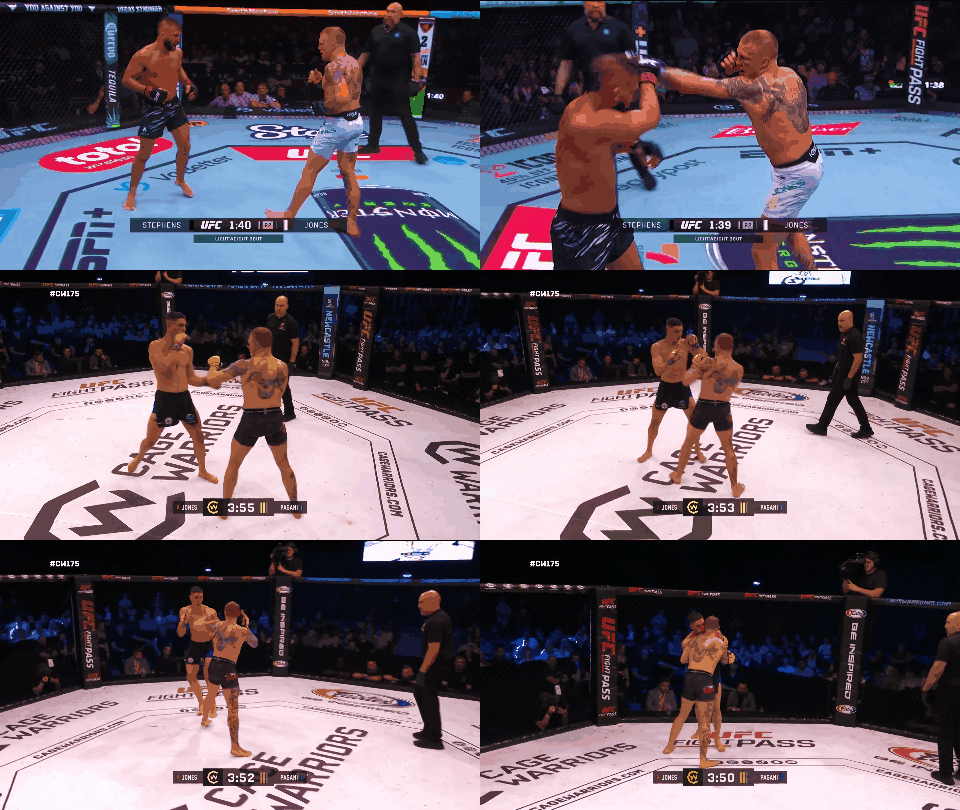
We often discuss the double jab in the context of covering distance against a skittish, evasive opponent. But the double just can simply be a jab and another jab behind it that the opponent isn’t expecting. Evander Holyfield was very good at pumping the jab twice in the same space. Dmitry Bivol will treble and quadruple the jab directly in front of the opponent.
And any time you throw a jab, you are in position to throw the right hand. So Jones regularly uses the double jab to right hand to punish opponents for not trying to hit him back enough.
Jabbing Forwards
Jones’ constant advance is not done by shuffling himself forward in a boxing stance. He tends to march after the opponent, often bringing his back foot up to shorten his stance, and then step his lead foot out to advance. This is bad boxing but not uncommon in Muay Thai, for the reason that can be seen whenever Jones fights a southpaw: you can pick up your lead leg to check much more easily.
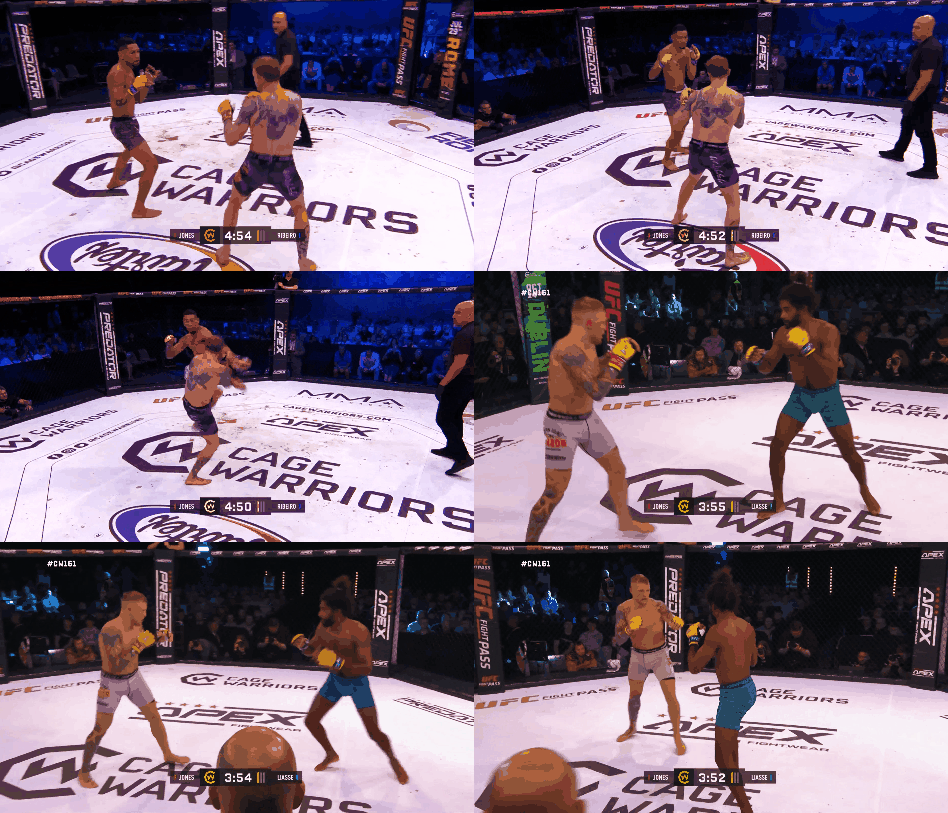
Jones’ advancing jabs are aesthetically pleasing, and he uses both a traditional “springing” jab, and our beloved galloping jab. A springing jab is marked by stepping the lead foot forward in time with the lead hand. That is how Jack Dempsey, Jim Driscoll and Champ Thomas all agree you can get power into your jab.
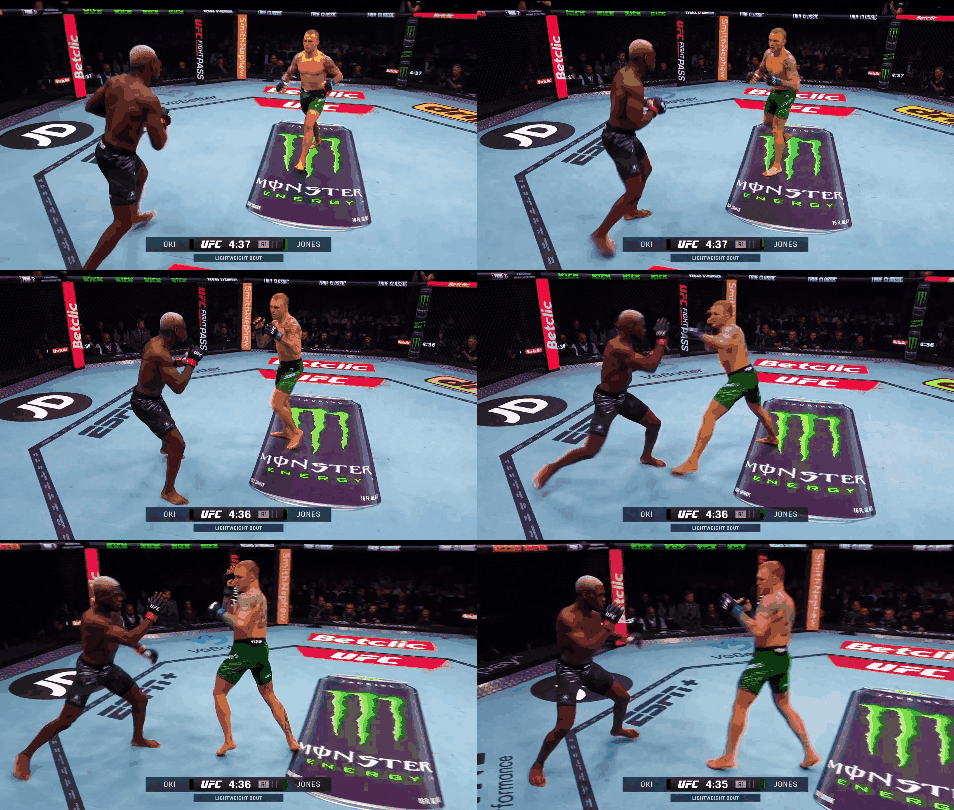
The galloping jab is the one that Jose ‘Mantequilla’ Napoles mastered. You lean onto your front foot, flick the jab that little bit further than if you were standing in a evenly weighted stance, and jump your back foot up to skip a full step forward. In a springing jab the stance extends with the jab, in a galloping jab the stance begins extended, and the back foot moves first in the advance.
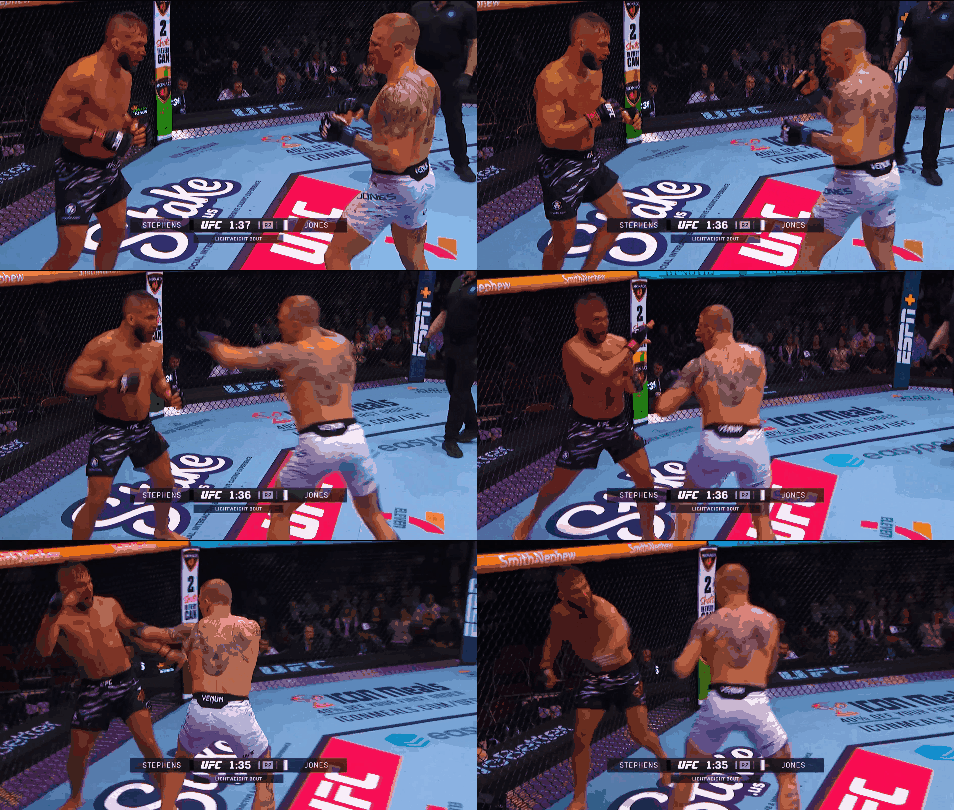
It is tremendously useful for advancing you into a second attack or a level change.
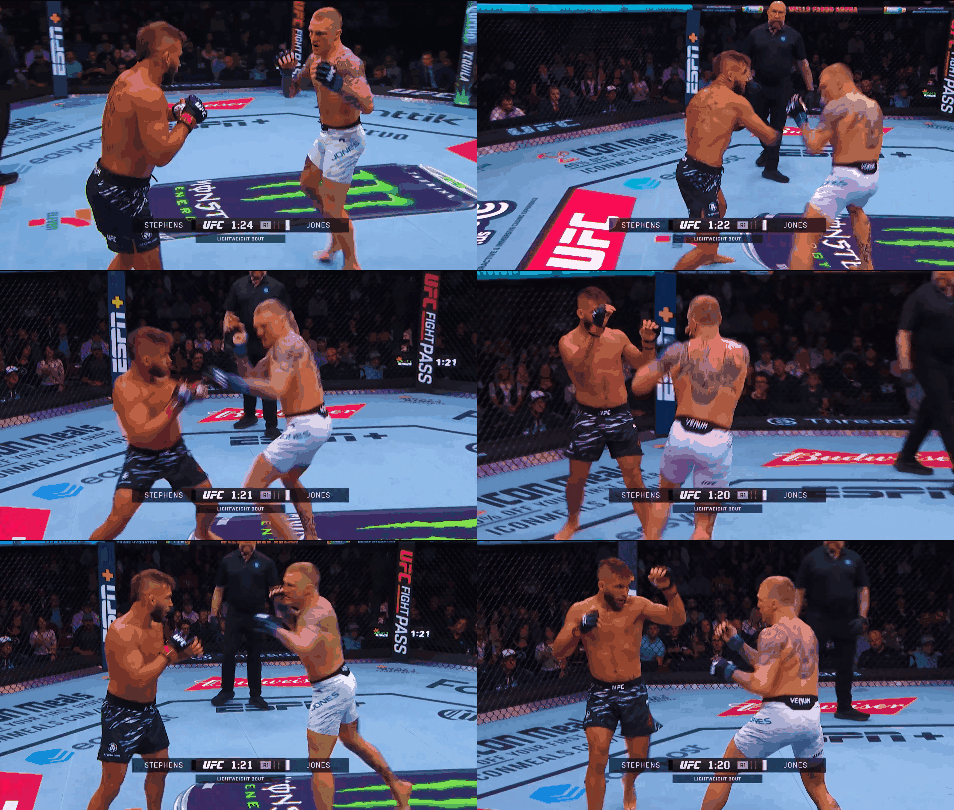
This galloping jab also builds into the feinting game. If you lean heavy on your lead leg to jab—as in the galloping jab—shoulder feints become a far more legitimate threat.
The noticeable trend in Jones’ career is that these aggressive first-and-third tactics only became a major part of his game on the tail end of his first UFC run. He honed them during his exile in Cage Warriors, and they carried him to impressive victories against Jeremy Stephens and Bolaji Oki in his return.
Gems from the Sola Fight
Mason Jones’ fight with Axel Sola is already being praised as the Fight of the Year. Fortunately my objective today has not been to convince you Mason Jones is defensively slick, because the Sola fight undermines that completely. But Jones does create constant pressure and openings for his power punches and brutal clinch striking, and the Sola fight displayed that in spades.
I love a record with a strange quirk: men who have somehow stumbled into a specialty, like Chris Weidman’s near decade-long run of only fighting southpaws, or Christian Rodriguez’s habit of hunting undefeated prospects. Mason Jones has fought an inordinate number of southpaws and they have, to a man, been taller than him. Much of what makes Axel Sola a nightmare at lightweight was a familiar experience for Jones.
Against all of these southpaws, Jones has largely eschewed the jab and dip—because of the danger of rear leg kicks and knees—and focused on sliding down the outside of their lead foot and drawing out kicks in order to jump in with counter punches down the pipe. Sola exploited that first habit early by timing a beautiful back elbow.
Jones’ own kicking game played a huge role. The jab-and-dip and galloping jab are techniques that use the jab to bridge the gap, and get you through jabbing range. Low kicking can be done in a similar way, using the low kick to enter punching range or even the clinch.
Against southpaws, Jones has always liked the low shin / ankle kick. Yothin made extensive use of this in his RWS title defense against Chaila, and Liu Mengyang recently pulled a massive upset against the great Tawanchai by breaking his shin with a similar kick.
Mason Jones mainly uses this ankle kick to break his opponent’s balance and then immediately burst in with a one-two afterwards.
It also opens the opportunity to hip feint, and then leap in with punches.
Jones often demonstrates slick striking, which is then offset by his love of a brawl. Fittingly, his grappling is surprisingly slick, but again only comes out when the mood strikes him or his opponent forces him to the mat. His escapes from beneath Sola were extremely solid, particularly the way that he turtled from side control.
Using the biceps against the head, Jones hits a big bridge, while blocking the near leg with his other arm. This is such an old school technique that Bas Rutten was doing it back in Pancrase.
The truth is that turning someone over with it is tricky, especially if they have seen you do it once before. But Jones used it as an off balance to complete a turn to his knees and built up to the feet. Dominique Bell is a big believer in this technique and has several videos and highlights of himself hitting it.
Is Mason Jones going to fulfill the prophecy and become the second coming of Conor McGregor? Looks unlikely. Are his fights a non-stop stream of offence punctuated by slick grappling that he should really rely on more? Unquestionably. As bad as 2026 has been for the UFC, Mason Jones will do his best to fix it.