
Jonathan Haggerty: How Losing Elbows Taught The General to Crack Chins
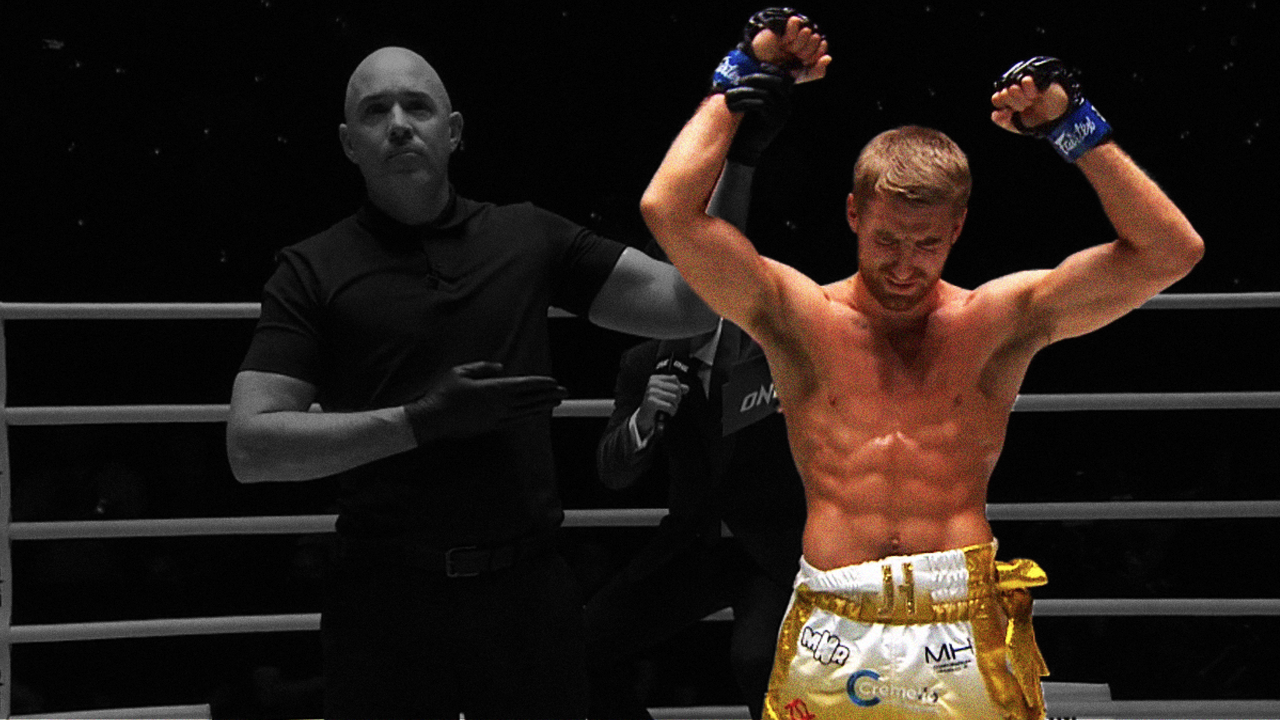
Elite kickers fall broadly into one of two categories. The first type batters the opponent into submission or scores fight changing single connections by means of raw attributes—speed and power. Some of the greatest kickers in combat sports history have fallen into this category. Enormous power kickers like Yodsanklai and Nokweed Devy in Muay Thai. Speed kickers like Buakaw in Muay Thai and kickboxing, or Rafael Fiziev and Edson Barboza in mixed martial arts. Cro Cop’s kicking success was built entirely on the speed and power of his back leg and the constant threat of the double attack with his left straight. The common theme of these kickers was that their physical attributes allowed them to slam basic techniques in and fill gaps in the opponent’s defence much quicker than anticipated, or blast that defence and not care.
Then there is a second type of kicker whose success does not rely solely being too powerful or too fast. These are fighters who accept that you might see the kick coming, and use that to build into more varied offence. Think of Alexander Volkanovski and Israel Adesanya using the step up inside low kick to get the opponent to react to the preliminary step, or our beloved Yothin obviously stepping into his right low kick, to make the opponent check each time they see the step and not when they see the kick.
Jonathan Haggerty and Yuki Yoza are both kickers who use their kicks to set traps and build their offence as the fight progresses. Neither is lacking for speed or power, but their styles do not stop at the opponent’s defence, they contort themselves around it.
King of the Teep
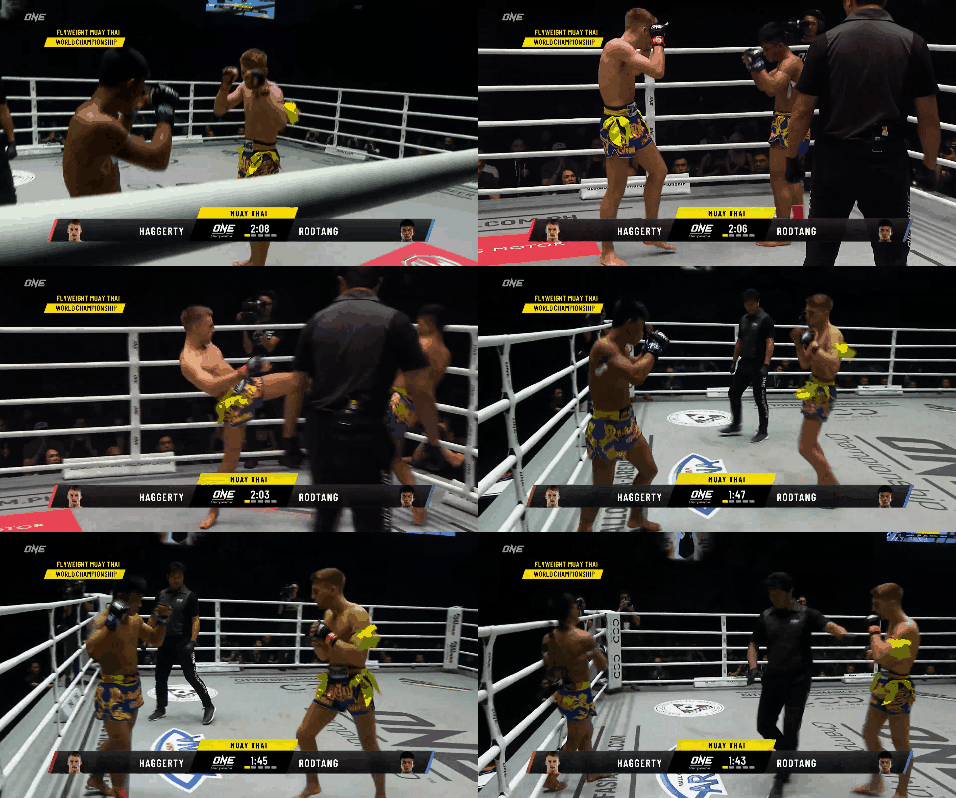
Jonathan Haggerty stood out from the crowd because he was the opposite of what is ordinary in a farang competing in Muay Thai. The stereotypical farang is all combination punching and kickboxing. Haggerty built his style around the teep. His teep is so good that it stands out even when he fights elite Thai fighters. To have success with his teep he will often stand in a stance that is very biased towards his rear leg. You could drop a plumb line from Haggerty’s head and it will line up with his right hip, right knee and right foot. Fighting heavy on the back foot in this way is antithetical to opening up in combination with your hands and so a weight transfer must be made at some point.
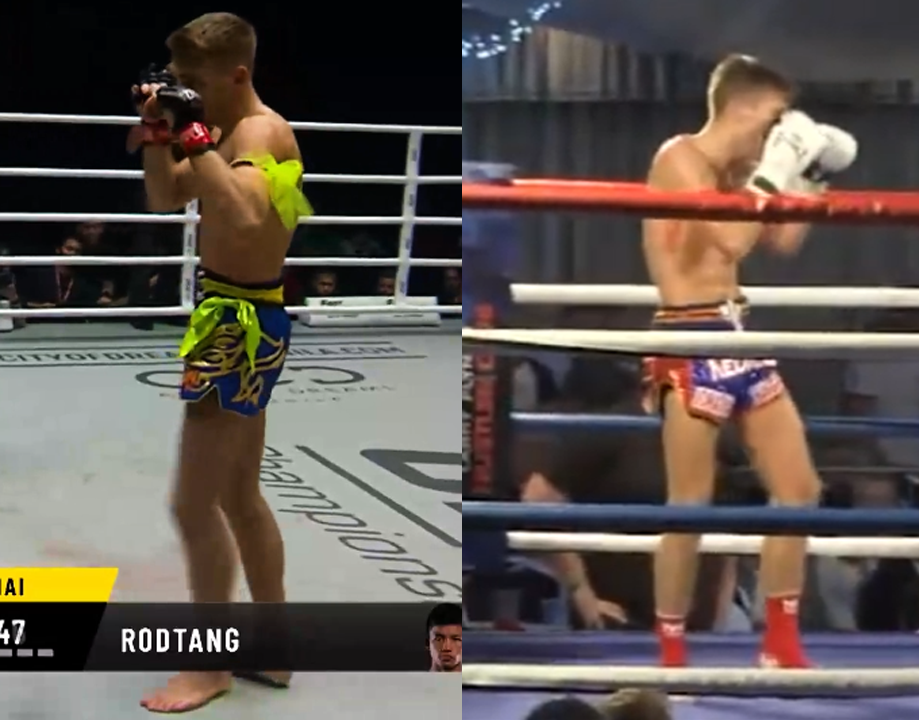
Haggerty has always excelled with an intercepting teep, but also with an offensive teep that could send the opponent stumbling back across the ring. Traditional teep targets are the hip crease and solar plexus. Haggerty like to throw his teep high on the chest specifically to force his opponent backwards in a spectacular way. His second favourite target seems to be the front of the thigh which is more effective as an intercepting strike to break the opponent off.
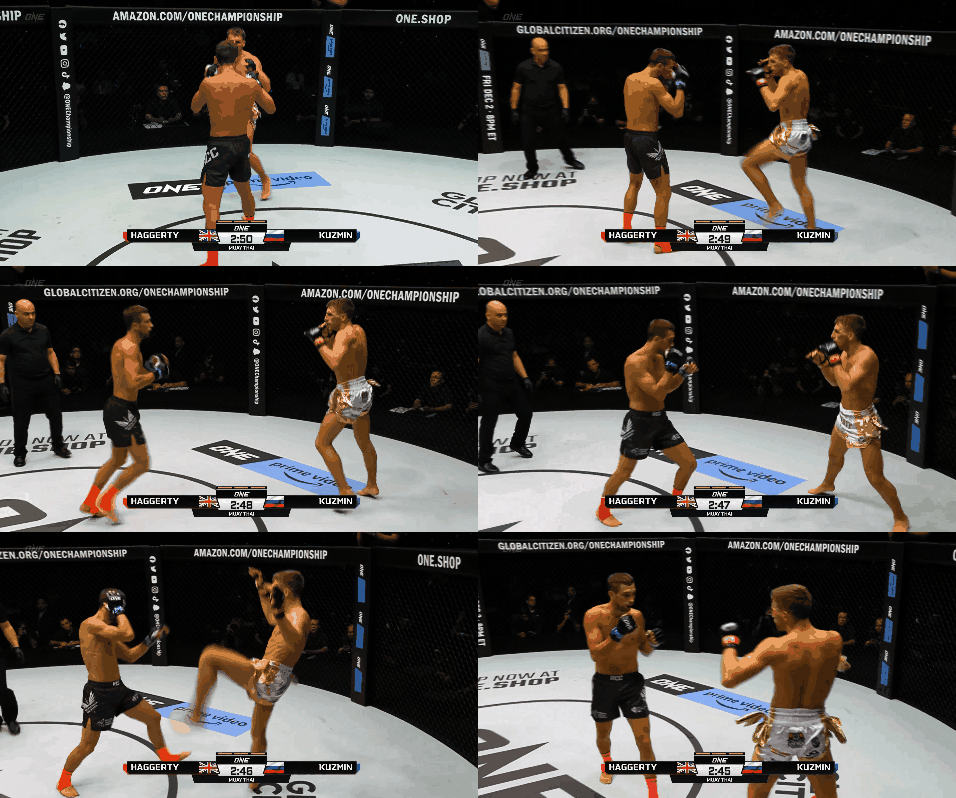
A teep on its own is not much of a game, so Haggerty rounds it out with the switch kick. Standing light on the lead leg enables him to perform the very short “switch” that is more just bringing the lead foot back to level with the rear one. Just about every fast switch kicker out there from Buakaw to Nattawut makes use of this. One of Haggerty’s great skills is in hitting a very short switch or even no-switch into a high kick, while almost gliding backwards on his standing leg. This retreating high kick has stunned a number of his opponents as they have begun to steal the initiative.
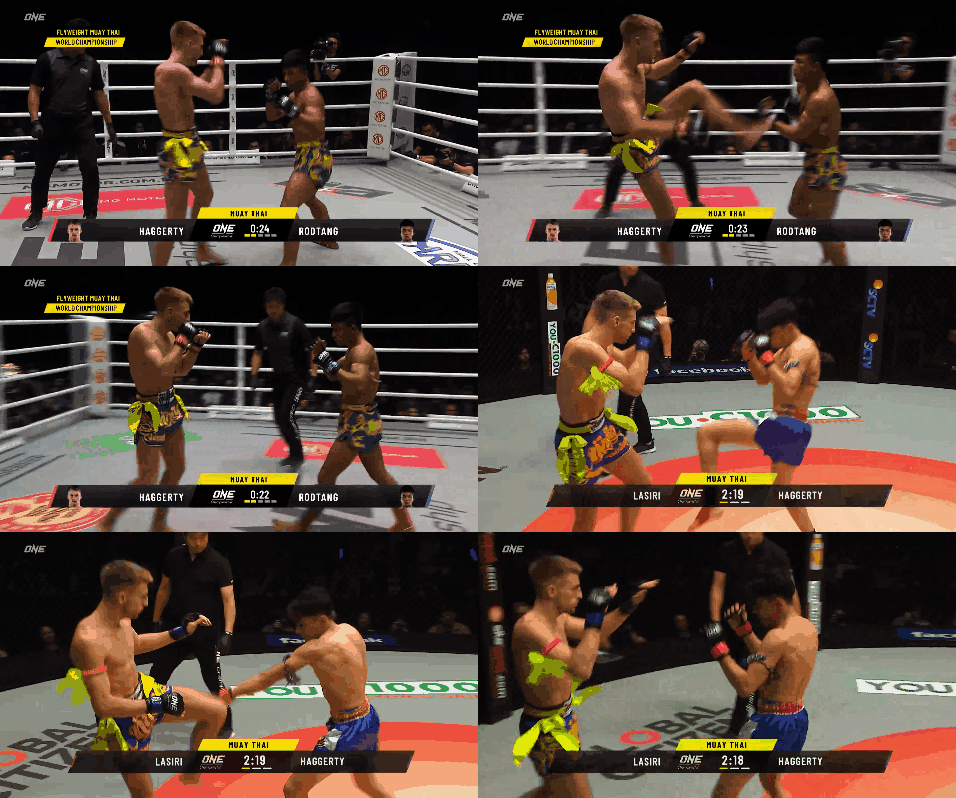
Haggery will also perform a much larger switch step to truly change stances and lead with his right foot, and he will also back step off kicks into this southpaw position. The obvious follow up is a powerful left round kick on the open side, but Haggerty was a menace with a long, rear leg teep from this stance change.
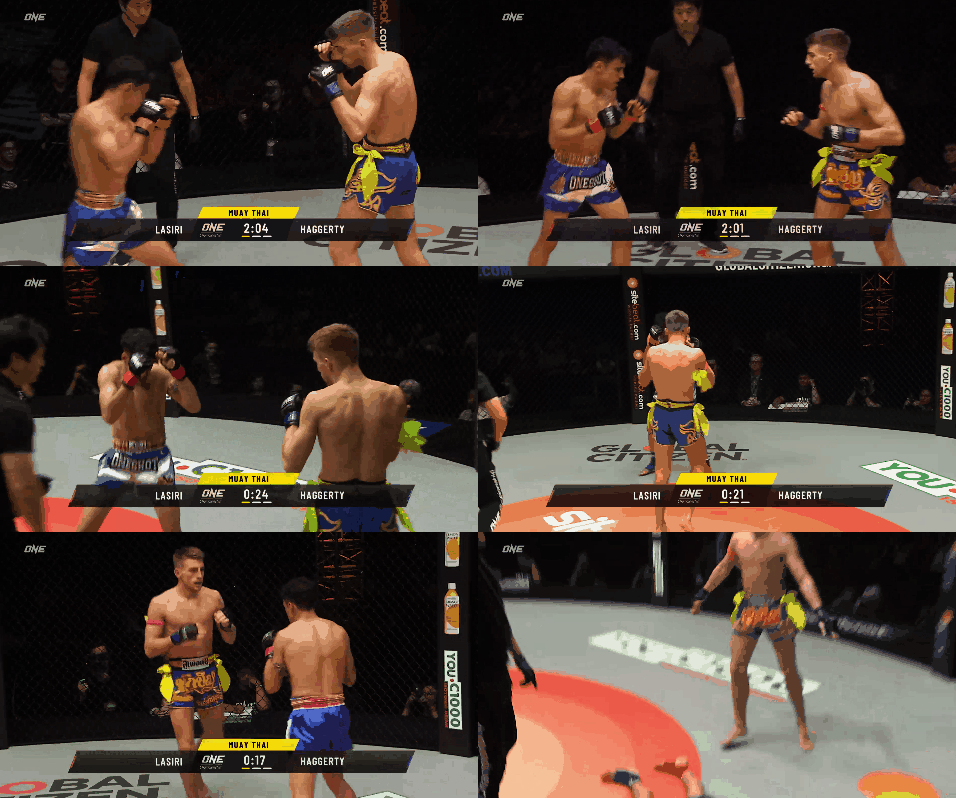
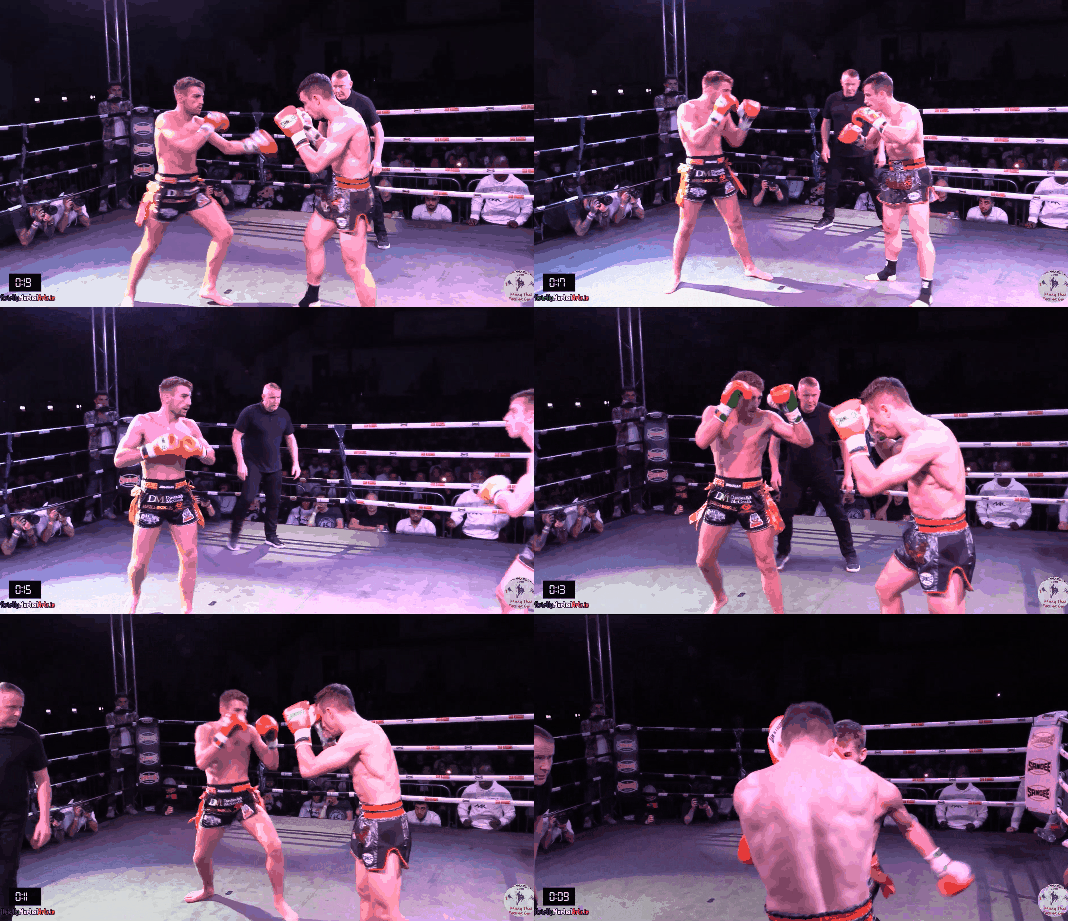
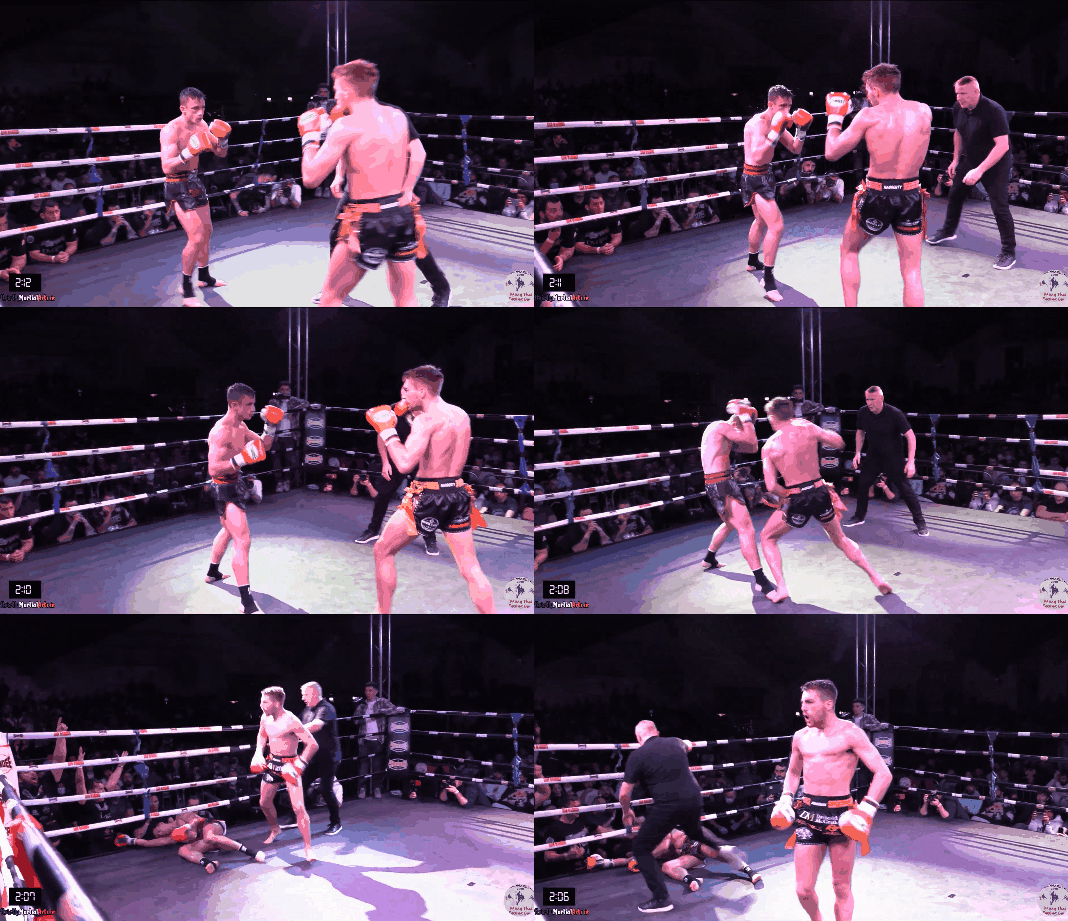
This kicking game provided cover for Haggerty to enter with elbows from an unexpectedly long range. In raising their leg to check a kick, or in standing firm and reaching down to catch or parry the teep, the opponent roots themself to the floor as Haggerty closes the distance. The tomahawk elbow he used to drop Joseph Lasiri immediately increased Haggerty’s popularity as the clip went viral across social media. A knee raise to fake the teep, leaping in over the distance, and landing almost on top of Lasiri with the elbow.
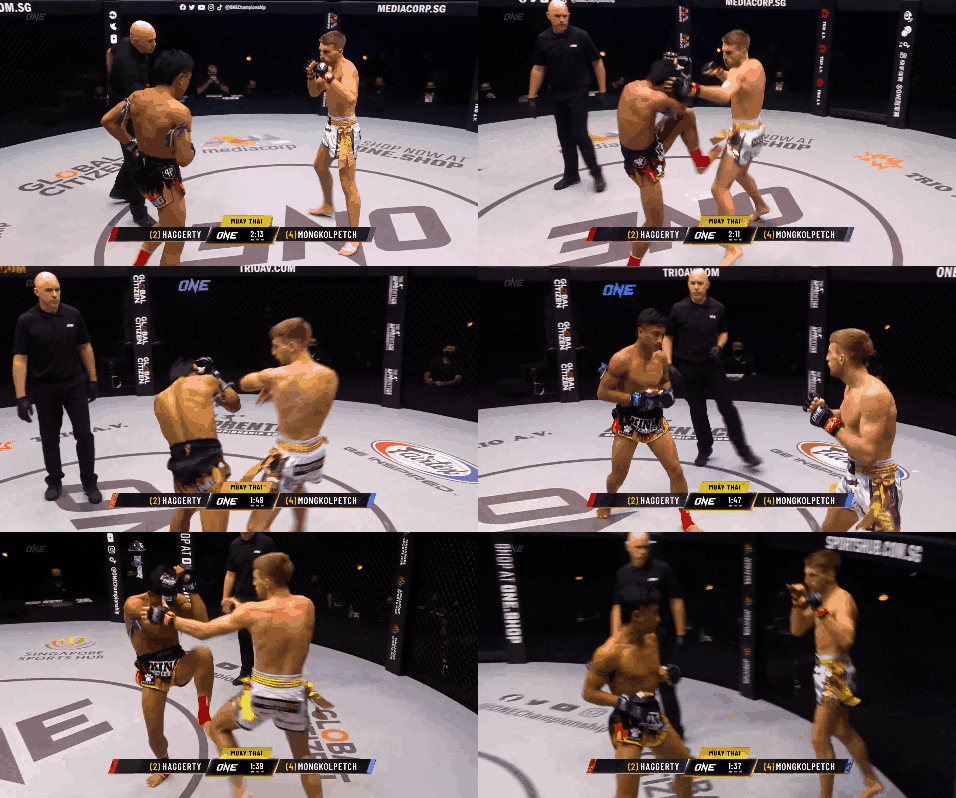
The fake teep to elbow has given Haggerty some of the best connections of his career. Haggerty has had just as much success showing the stance switch, threatening the powerful southpaw left kick, and then stepping through with the elbow instead.
This was the state of Jonathan Haggerty’s game when he won and lost the ONE Championship Bantamweight Muay Thai title.
Relearning the Punch
The curious thing about Jonathan Haggerty is that he excelled in Muay Thai because of his skill with traditional Muay Thai weapons: the teep, the switch kick and the elbow. Many foreign fighters partake in Muay Thai by carrying a kickboxing game into it, rather than adapting to what is valued by judges and what is unique about the ruleset. Haggerty’s hands were the least notable part of his game and certainly nothing to write home about. The moment that Haggerty commits to punching in his early fights, he throws himself off balance and starts flailing.
After Haggerty lost his pair of fights with Rodtang, he rebounded with a win over Taiki Naito where he demonstrated that the overhand could be used off his fake teep and his switch in just the same way as his elbows, albeit with a bit more length.
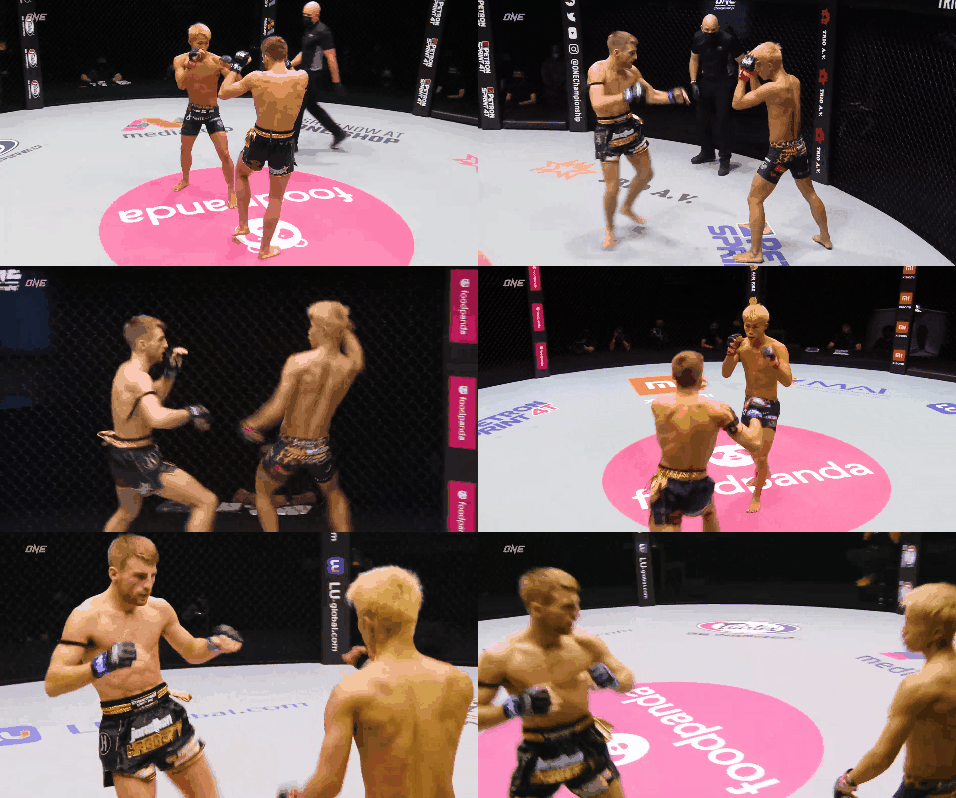
Success builds confidence, and confidence is vital for a fighter to attempt to apply new things in the middle of a fist fight with money on the line. Haggerty took a big gloves Muay Thai match outside of ONE Championship for his next fight, dropping and finishing Arthur Meyer with his hands.
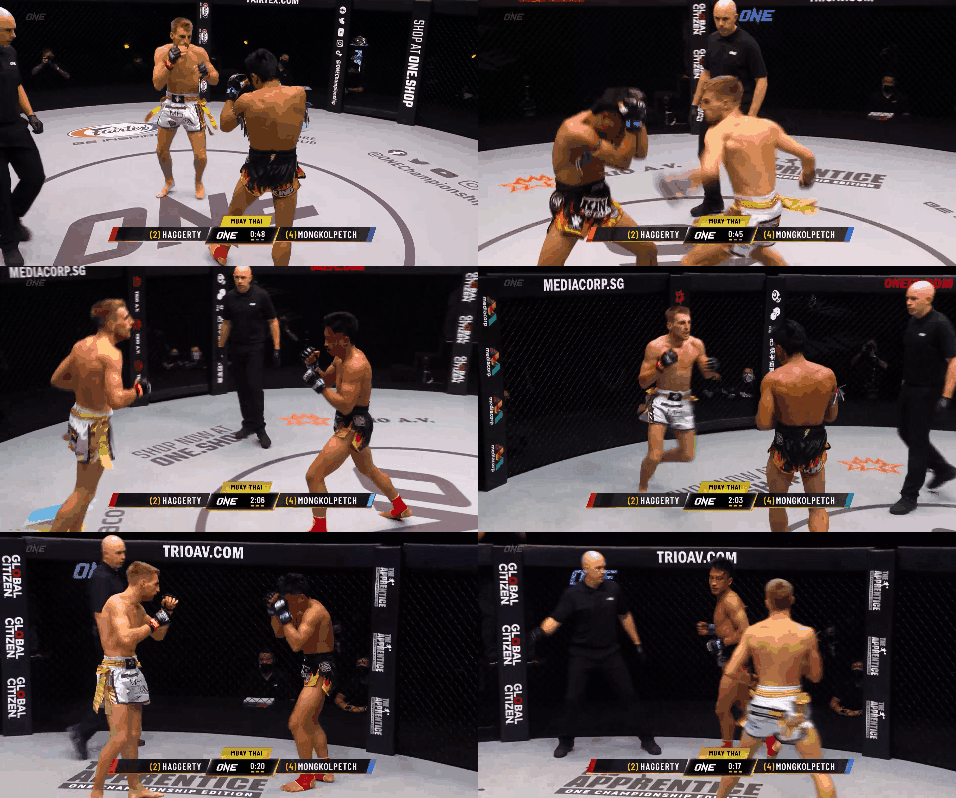
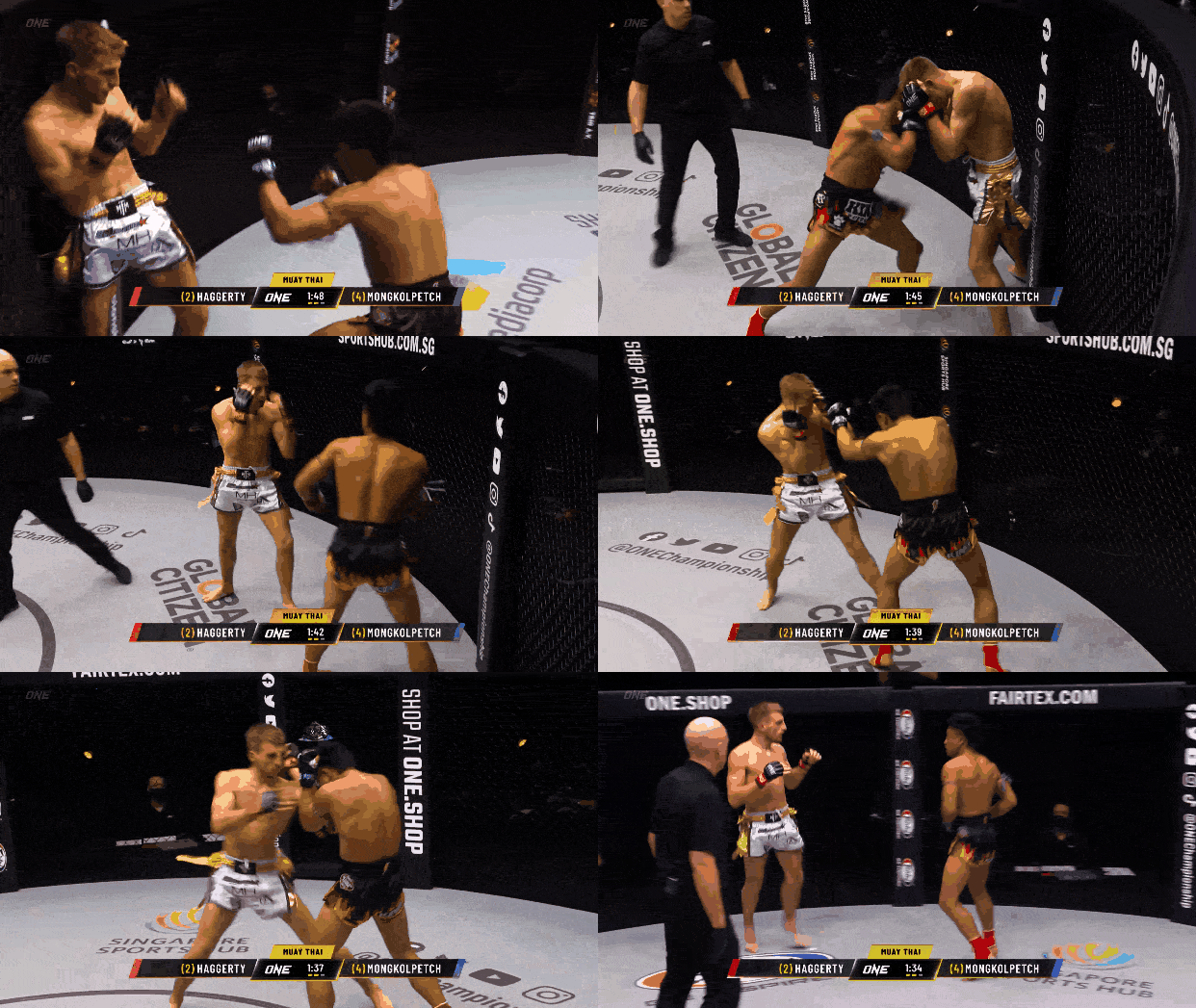
From the Naito fight in 2020 until his most recent bout, against Wei Rui in February 2025, Haggerty continued to develop his hands and brought them to the fore. The easiest way for him to do this was to build on what he already had: using the telegraph of the switch step to instead enter with his hands. Haggerty’s fight with Mongkolpetch was almost entirely a stream of fake switch kicks into punching salvoes.
Haggerty’s work to sharpen his hands was timely because ONE Championship wanted to get him some kickboxing matches to set up another one of their “two sport world champion” gimmicks. If your whole game is teeps, kicks and elbows, you suddenly lose a range when those elbows are taken away.
The fights with Mongkolpetch and Naito demonstrated that Jonathan Haggerty could have success slotting some effective punching into his game where the leaping elbows had been. He could still be all about establishing his kicks, then showing either the knee raise or the switch to fake left kick, and leaping in with punches instead of elbows. But Haggerty went a step further than that, and this is where we begin to question whether it was a step forward or a step back that has not cost him significantly yet.
Haggerty’s offence had been characterized by fighting off the back foot, and leaping in under cover of a faked kick in order to get into hitting position. To simply step forward and throw punches without the big set-up, you need to have your feet spread and be standing in much more of a 50/50 stance than Haggerty’s usual one, where 80% of his weight is on the back leg. To drive off the back leg effectively, you need it planted on the floor behind your centre of gravity, not underneath it.
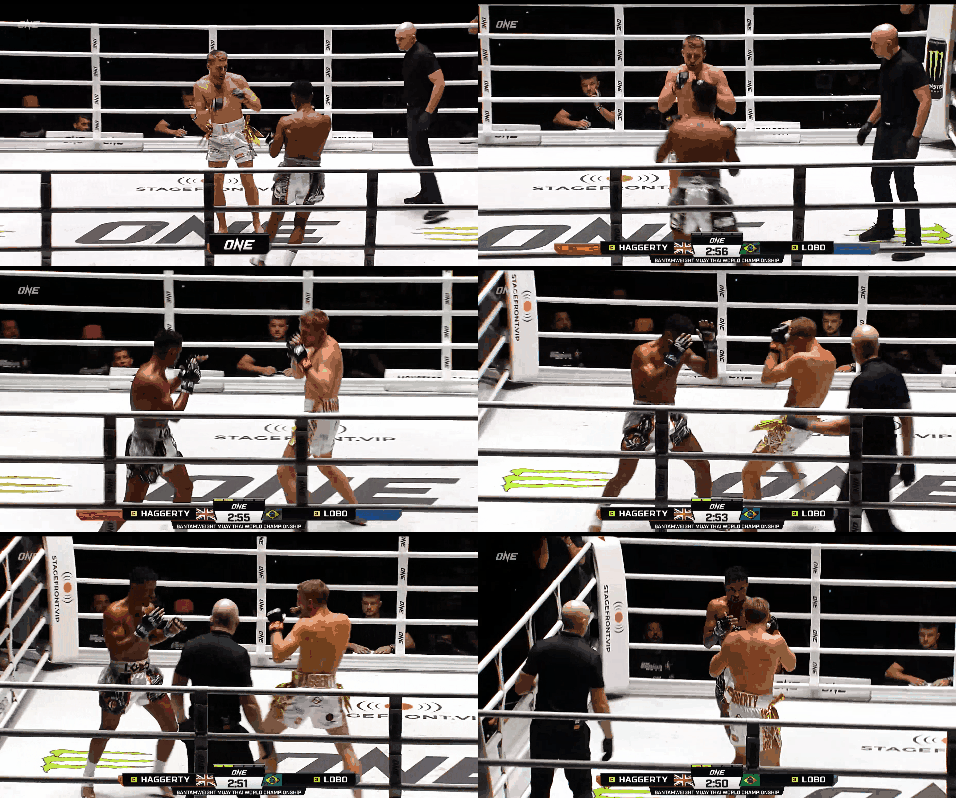
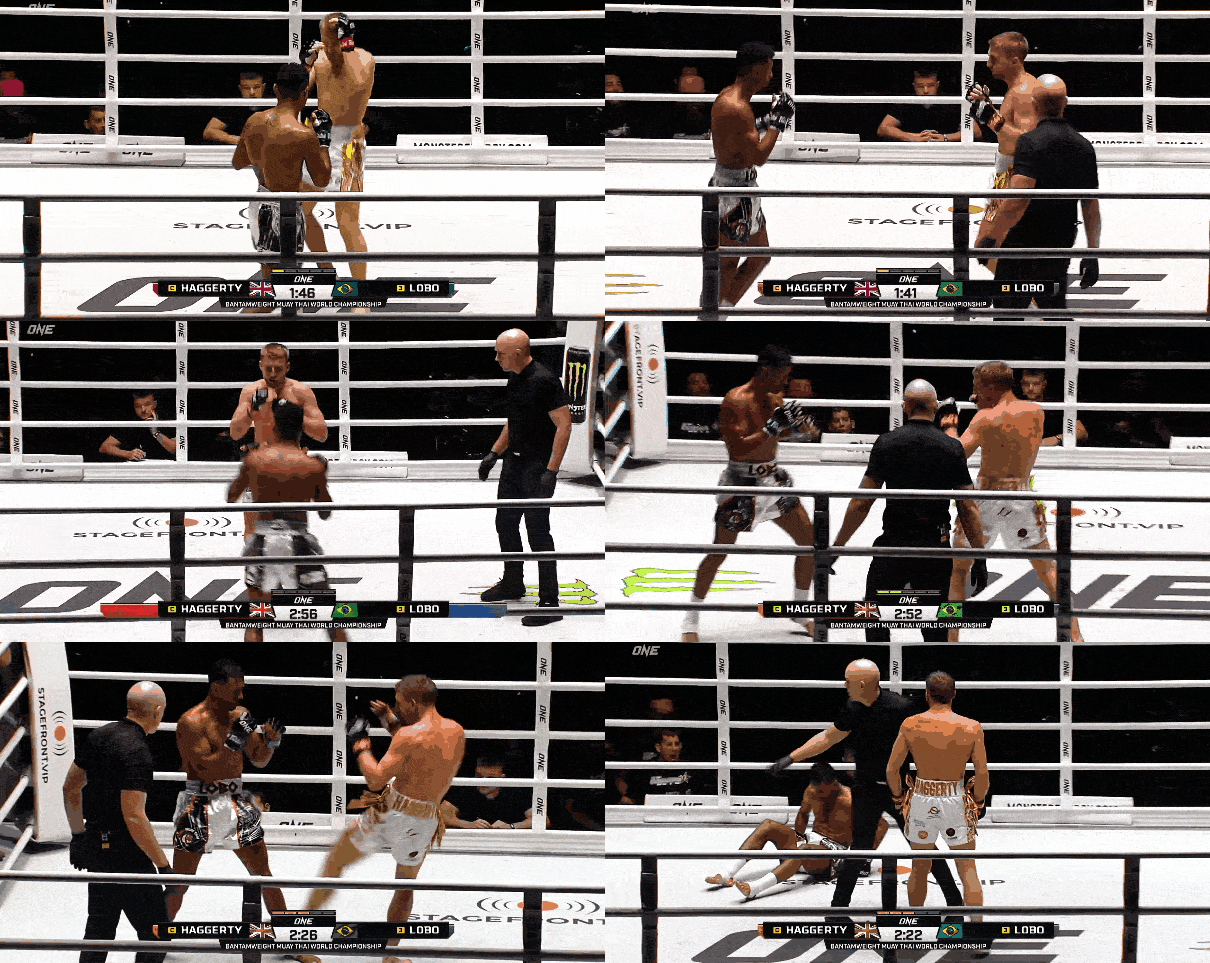
Through his kickboxing match with Fabricio Andrade and his Muay Thai match with Felipe Lobo, Haggerty can be seen using a more evenly weighted stance, bouncing his lead foot in and out. This gives him the option to retreat into his ideal teeping / switch stepping stance, and going forward onto the front foot to jab and enter with traditional boxing techniques.
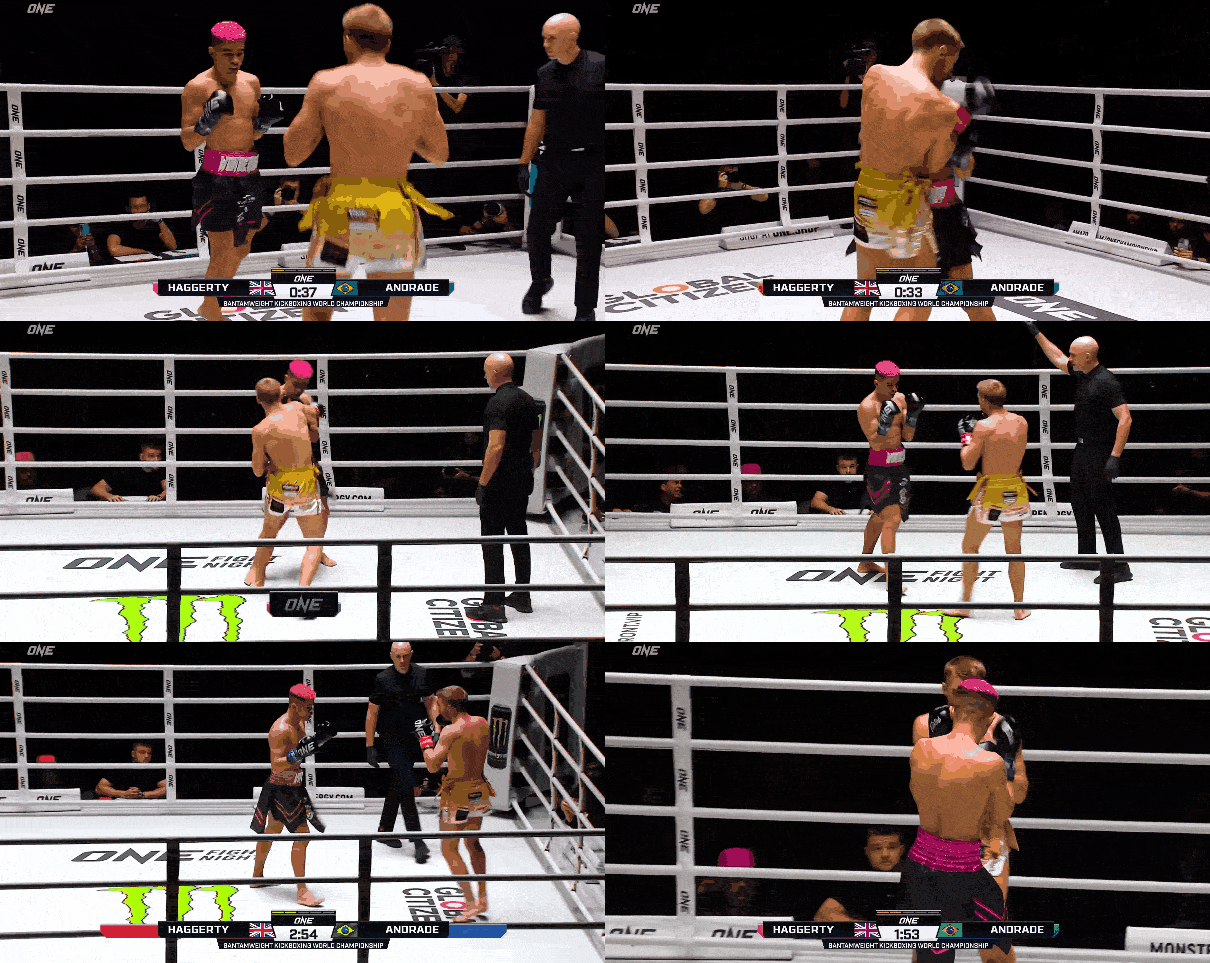
Haggerty’s most recent fight was also his first real test as an elite kickboxer. His previous kickboxing match had been against full-time MMA fighter and former kickboxer, Fabricio Andrade. In his last fight, Haggerty met the respectable and tricky Wei Rui. Combat Press had Wei as #4 in the world at the time, and Haggerty looked smooth as butter taking him apart for five rounds. It seemed as though Haggerty had found the perfect balance between stance and movement, and between back-foot kicking and front-foot boxing.
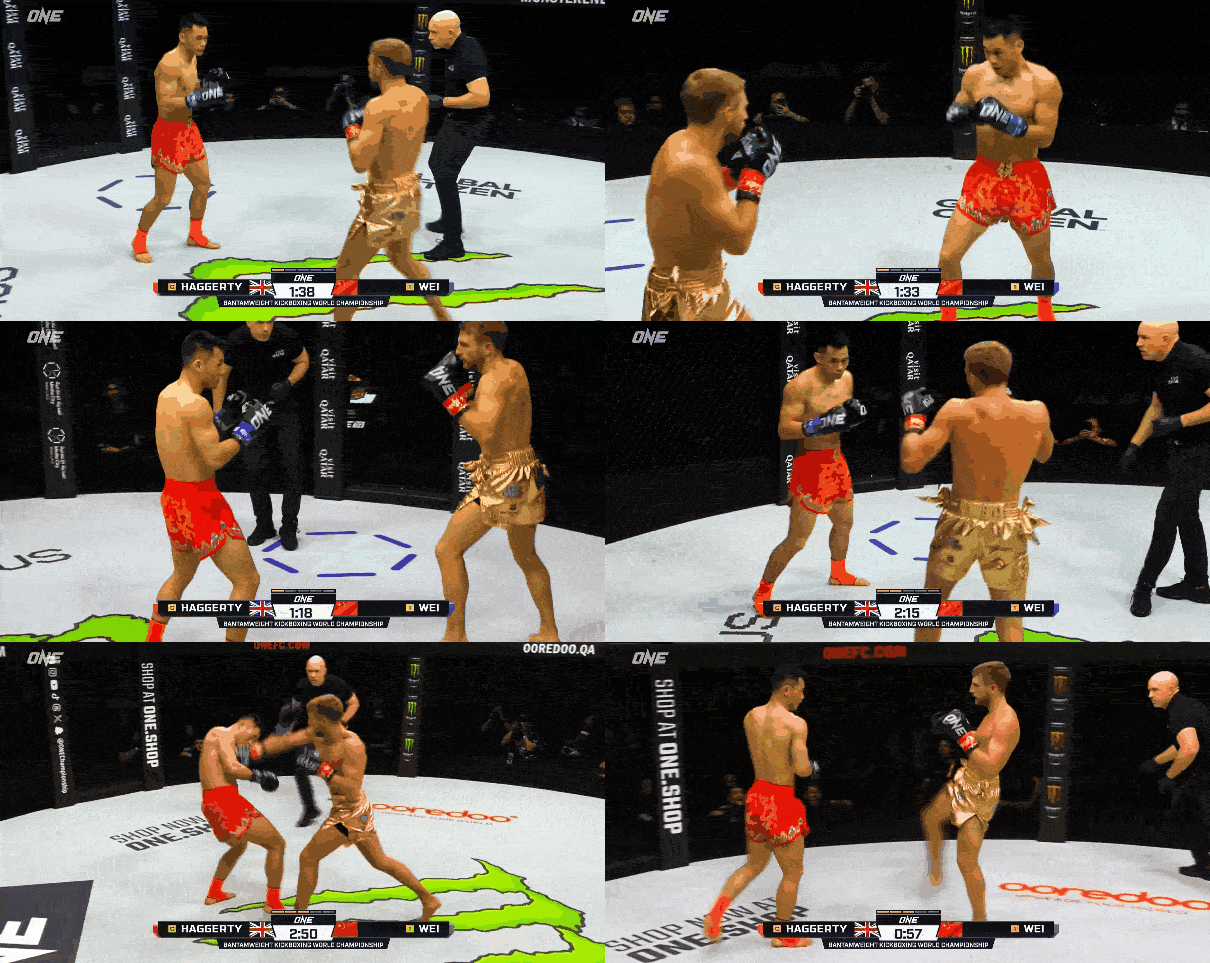
There is the slight concern that in fighting on the front foot and leading with jabs and one-twos, Haggerty might lose what made him special in the first place. He always fought aggressively, but from that stance that was heavy on the back foot. The Wei Rui fight was encouraging in that he still dominated the kicking game, and his punching was limited to crisp one-twos, avoiding extended firefights.
The area of kickboxing that does seem to be dangerous for Haggerty is when he is put on the back-foot figuratively. When his opponent gets going and he cannot interrupt them with a teep or a counter switch kick, Haggerty has a habit of falling into a high forearms cover-up and trying to blast his way out of trouble. This was risky in Muay Thai, but when Rodtang and Mongkolpetch tried to overwhelm him with punching flurries, they did run the risk of getting split open with a single good elbow.
This isn’t so much “catch-and-pitch” as trying to time one shot through the breathing space in a beatdown. In the following example, Haggerty tries to time his counter left hook on Felipe Lobo. It is tough to criticize this because his counter left hook wobbled Lobo and turned the fight around later on, but moments after this clip Lobo dropped him with body shots in the same way Rodtang did when Haggerty simply stood and absorbed them like a heavy bag.
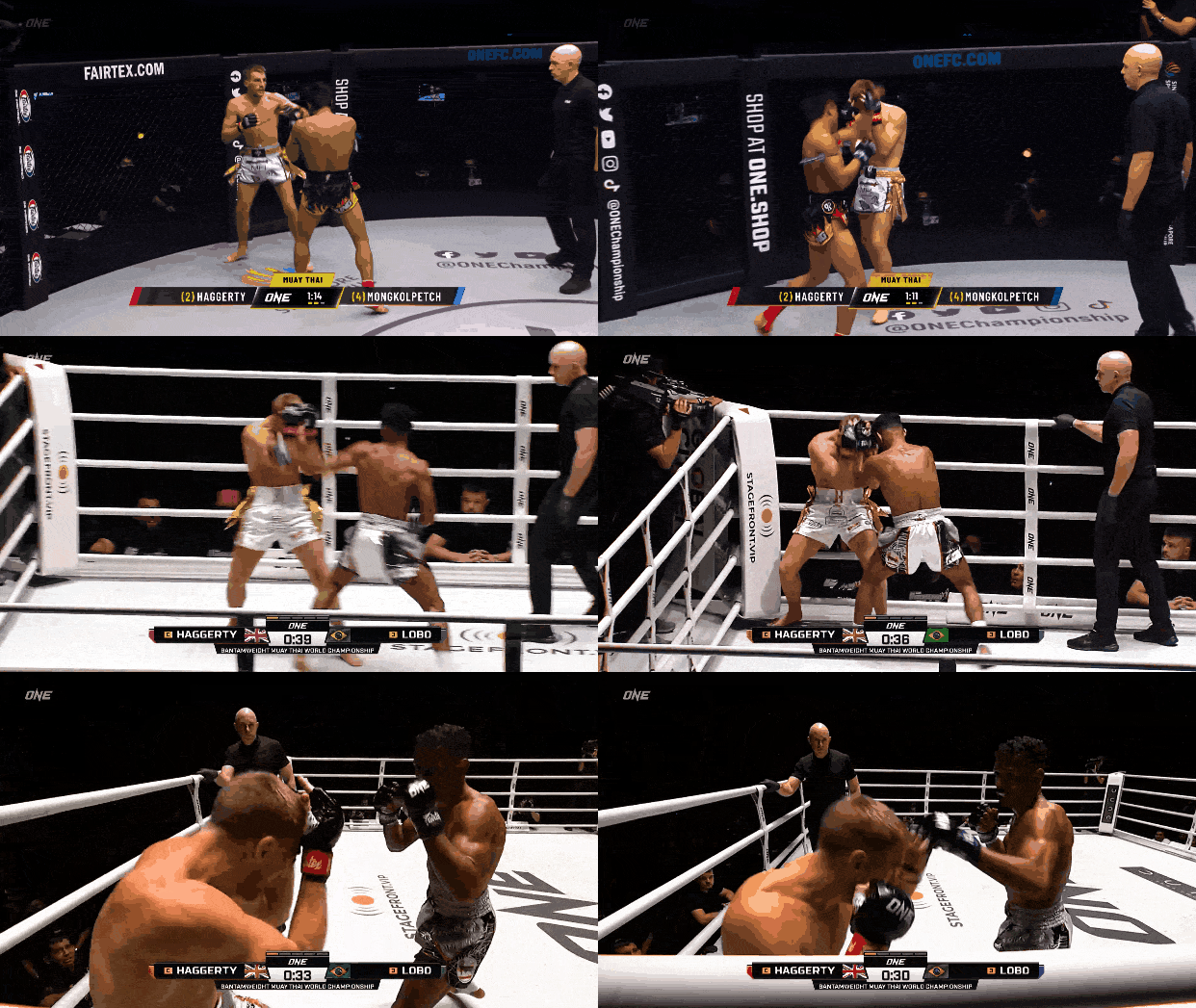
It was noticeable that with even a little pressure, Mongkolpetch and Wei Rui were able to get Haggerty to the boundary even in the colossal, circular cage. Lobo and Rodtang had great success forcing him to the ropes in the ring.
On Wednesday, Jonathan Haggerty is set to defend his ONE Championship featherweight kickboxing title against the Japanese sensation, Yuki Yoza. Yoza is ranked in kickboxing’s pound-for-pound top ten by Beyond Kickboxing and Combat Press, and unlike Haggerty he has spent the past seven years devoted only to the ruleset of kickboxing. Most concerningly for Jonathan Haggerty, Superlek bested Haggerty inside the distance twice and Yoza just took Superlek to school in a dominant three round decision. This is one of those fights where the champion comes in as the underdog, not due to a lack of respect but just an understanding of the caliber of his opponent.
When he handled the crafty Wei Rui, Jonathan Haggerty proved that his kickboxing title, which was previously vacant and which he won from an MMA fighter, did mean something. Or rather that Jonathan Haggerty holding it, made it mean something. Here he has the chance to prove that he is not just legitimate, but the governor. For this writer it is safe to say that no other match up in the last couple of years has caused more hypothetical counter gameplanning and daydreaming than this one.