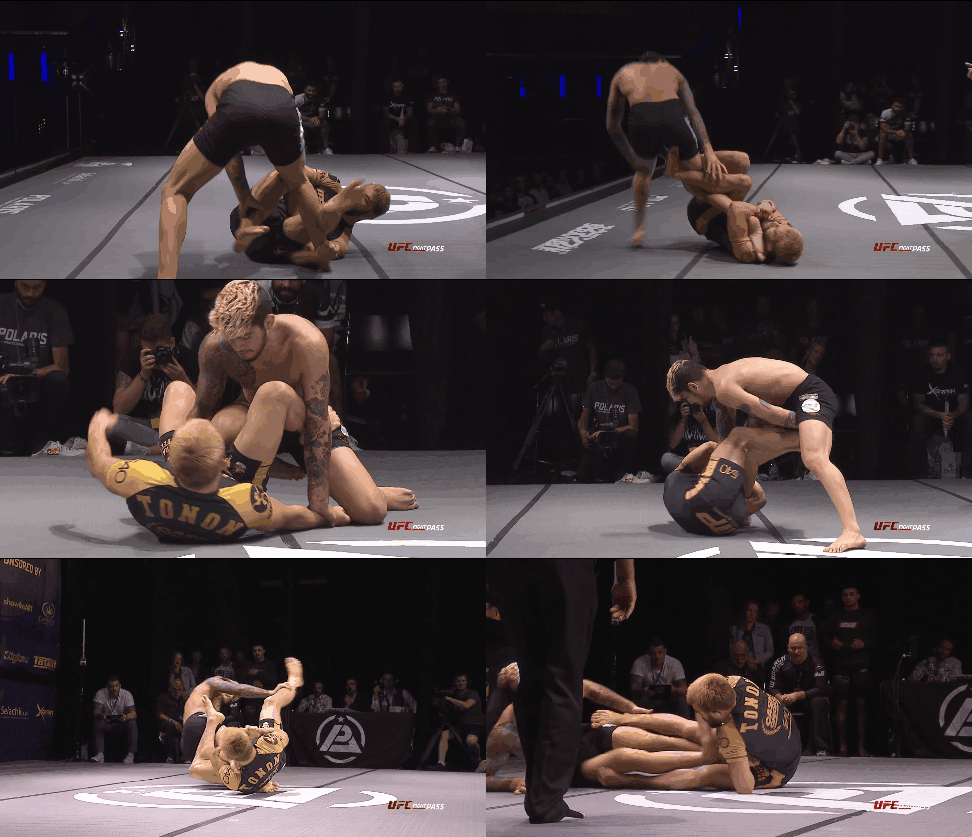
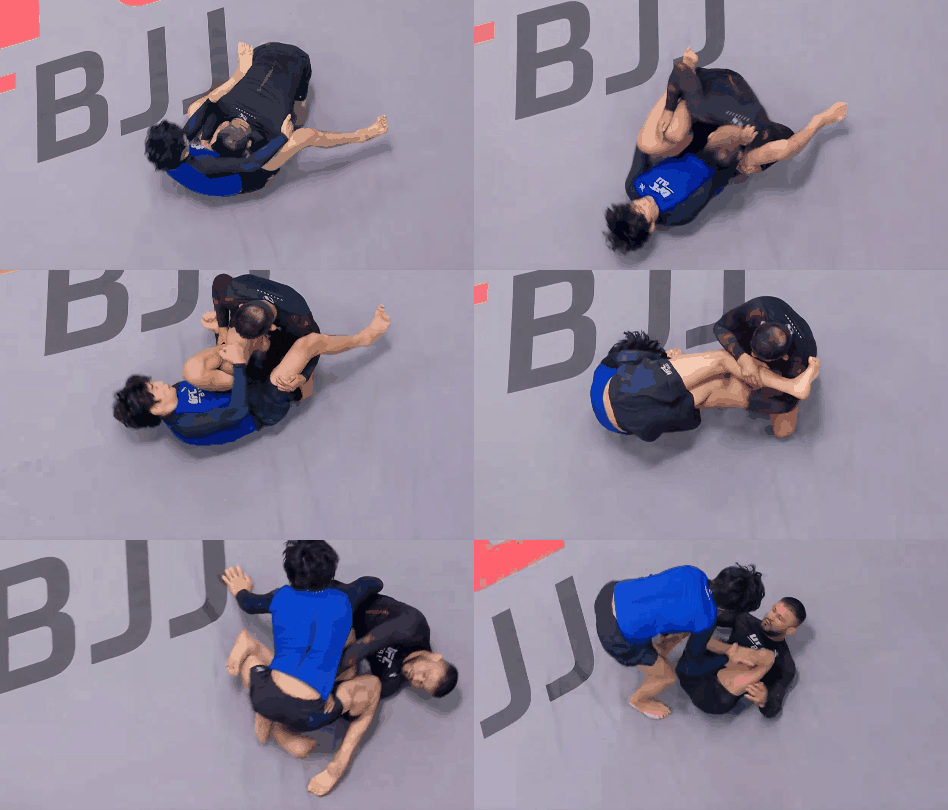
The greatest threat Joao Miyao faced at UFC BJJ 6 was getting down into the bowl shaped grappling pit without further injuring his knees and ankles. Those joints have been pulled on and torqued by the best grapplers in the world for more than fifteen years. There are whole highlight reels of both Miyao brothers refusing to submit to fully extended kneebars, or a toe hold where their foot is doubled back on itself. When Muhammad Ali said “Suffer now and live the rest of your life as a champion,” he was talking about the training. The Miyao brothers extended that attitude to fighting through submission attempts that were not really “attempts” because they were succeeding in their goal of doing irreparable damage to the recipient’s joints.
As one observer put it, rather unkindly, Joao Miyao looks both thirteen and fifty-nine years old. His slight frame, the child-like mobility he has developed in his hips and spine, offset by his stiff, limping gait and the wrinkled face of a man who has spent decades on the mat getting minor niggles, serious injuries, and a constant stream of skin infections.
The Miyao brothers were a subject of fascination when they began to breakthrough in the Jiu Jitsu world. Twin brothers: the true best starting point for combat sports success. They were both constantly accompanied by a world class sparring partner the same height, weight and shape. And they both excelled with the berimbolo, an inverted back take from the bottom that was as good as witchcraft in the early 2010s.
Their careers diverged at several points—first Joao competed in more no-gi, and then Paulo. Paulo became fluent in English while Joao can only teach in Portuguese or through an interpreter. At one point Paulo failed a rare Jiu Jitsu drug test and graciously took the suspension with a statement that almost spelled out “sorry I was the one that got caught.” Curiously, despite both being known as gi specialists, Paulo’s won the gi worlds or “Mundials” several times while Joao greatest successes came in the IBJJF no gi worlds.
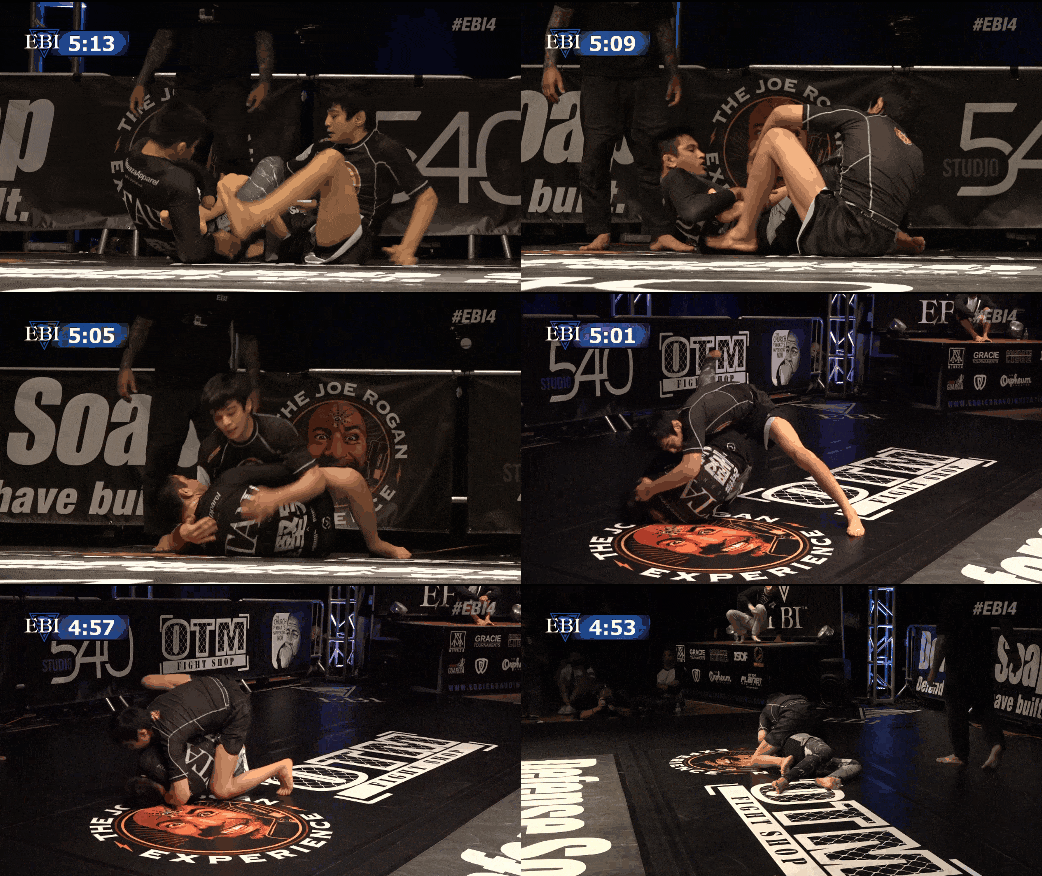
While no gi grappling is now an established sport of its own, this has been a recent development. Eddie Bravo began his Eddie Bravo Invitational in 2014, and at that time there was still difficulty booking top Brazilians for matches because gi and no gi tournaments and training at the top gyms were still seasonal. Joao Miyao was one of the first elite Brazilian grapplers to buck that trend when he entered EBI 4 back in 2015.
In the 2010s, at the height of their powers, I felt like I had little to say about the Miyao brothers because of their gi centric, impractical-for-fighting styles. In the years since I have come to realize that both brothers—and especially Joao—were pioneers in a number of methods that are commonplace in both no gi and mixed martial arts today. Joao Miyao’s successful debut in UFC BJJ, where he bested longtime UFC flyweight Jussier Formiga, is a great chance to give the man his dues.
K-Guard
While the Miyaos were known for their De La Riva guard and particularly the berimbolo, Joao quickly developed an affinity for the K-guard in no gi competition. This was when so few people were playing the K-guard that it didn’t have a name. On the forums people used to call it the “shin hook” or “kneebar guard.” Mikey Musumeci was occasionally playing it in the gi around this time and calling it the “leg hug.”
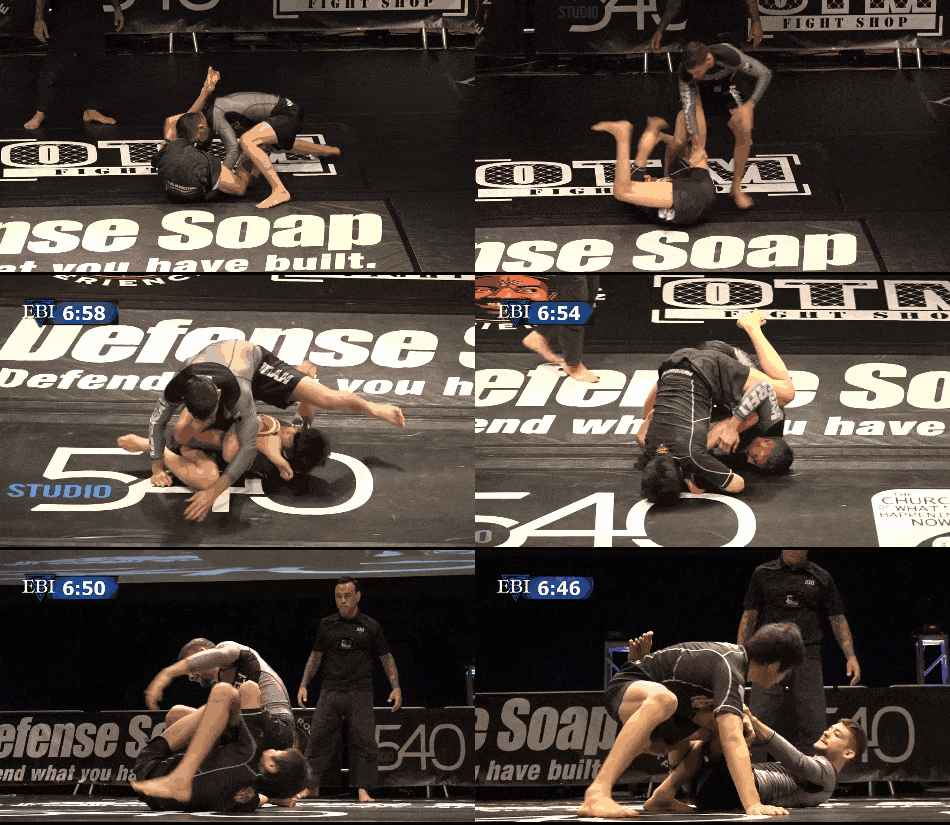
That was Joao’s first EBI match, in 2015. Lachlan Giles would make the K guard famous in his ADCC absolute division run, four years later. Now, K guard is near ubiquitous.
It was John Danaher’s philosophy on leg entanglements that broke through first—heavily influenced by Marcelo Garcia’s method of guard play. Danaher’s team focused on inside position with their legs: butterfly guard and butterfly half guard. They elevated their opponent and kicked through to entangle legs. The K guard is about outside position, spinning out and around the opponent. In that way it is similar to the De La Riva / berimbolo game with which the Miyao brothers already excelled.
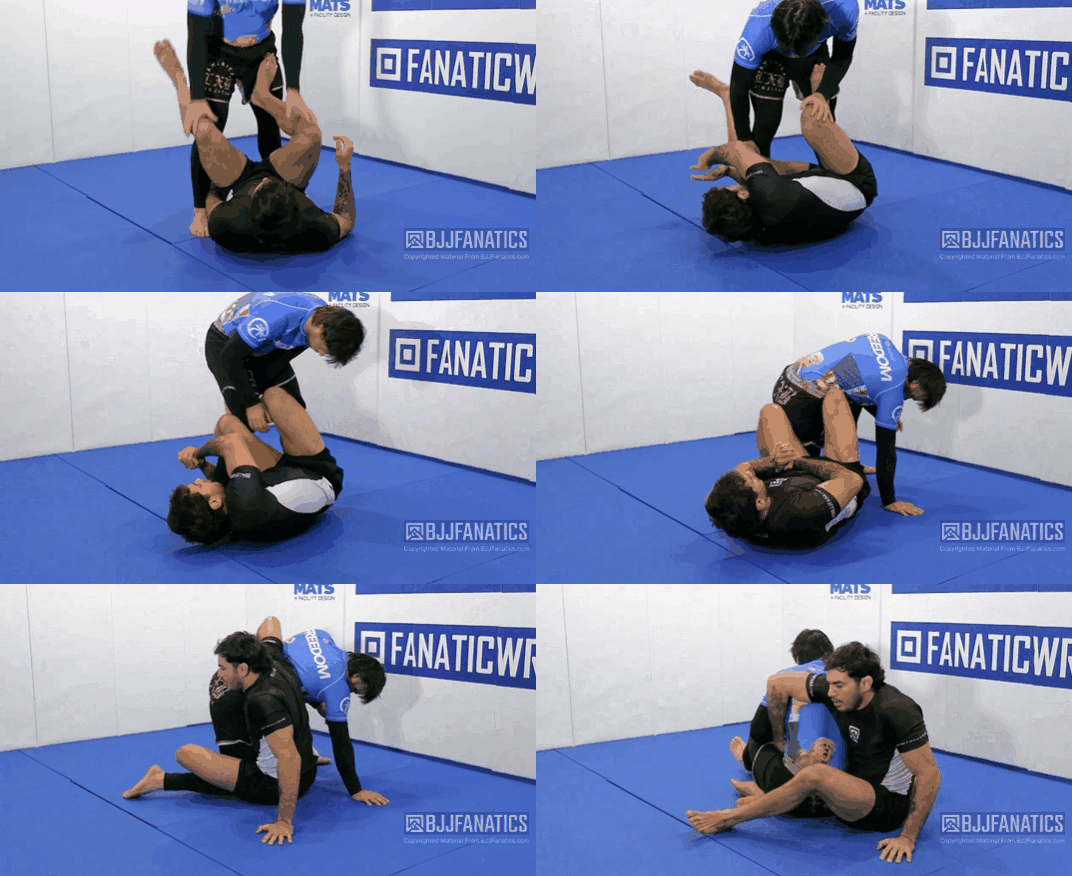
If K guard were just a powerful attacking position, that would be a good argument for its use. A factor that makes K guard even stronger is its accessibility. If you can get the opponent between your feet, you can immediately attack with K guard.
Mikey Musumeci uses K guard to enormous effect in no gi competition, where almost no one allows him to use his world class De La Riva guard effectively. Often he will use a no gi lasso, looping his leg over the opponent’s biceps as they try to pass his guard, and use that to get his feet around them. From there he will scoop inside their thigh and immediately enter K guard.
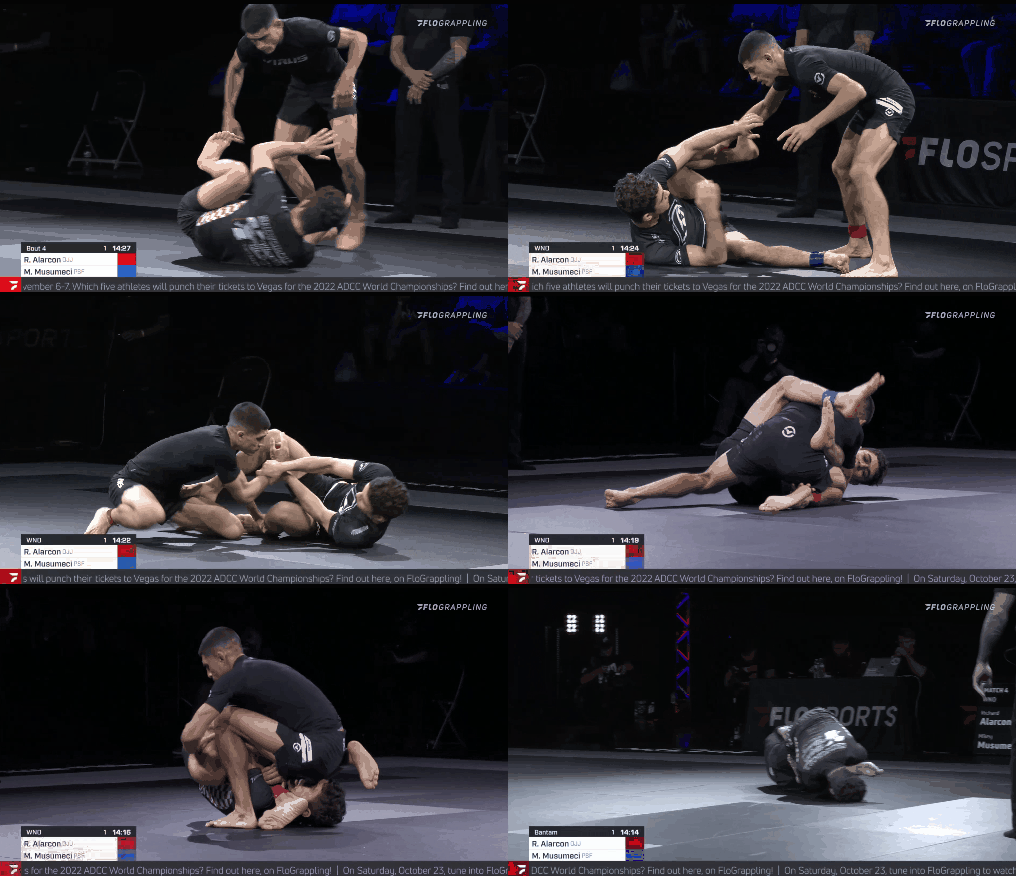
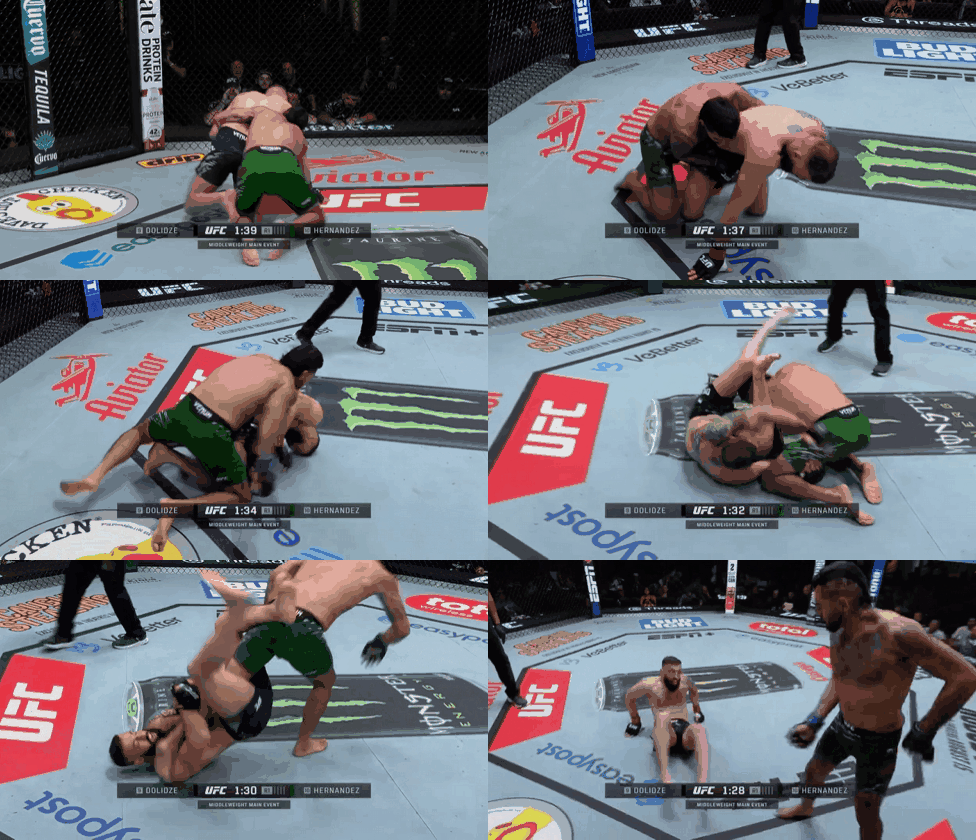
Roman Dolidze uses the K guard to great success in MMA. While he spent most of his fight with Anthony Hernandez getting battered, he did demonstrate that when he got to the turtle, he could roll through to the K guard and threaten Hernandez’s legs.
This pairs with Ryan Hall’s idea of the Outside Funk. For more on that check out Carlos Vera’s fights in the UFC, particularly against Rinya Nakamura.
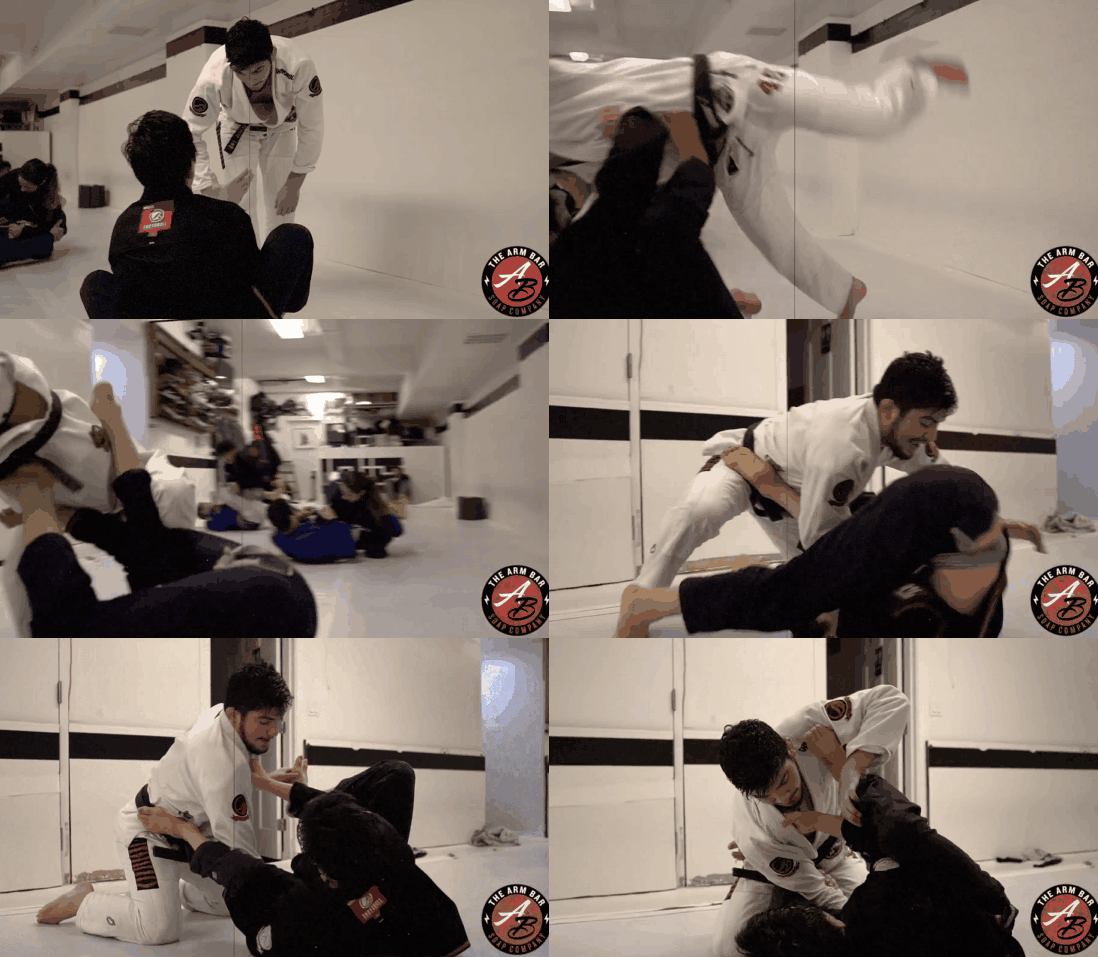
Here is a beautiful clip of Miyao following legendary combat sports grifter and former elite grappler, Dilon Danis, through a cartwheel and rolling back to put Danis between his legs.
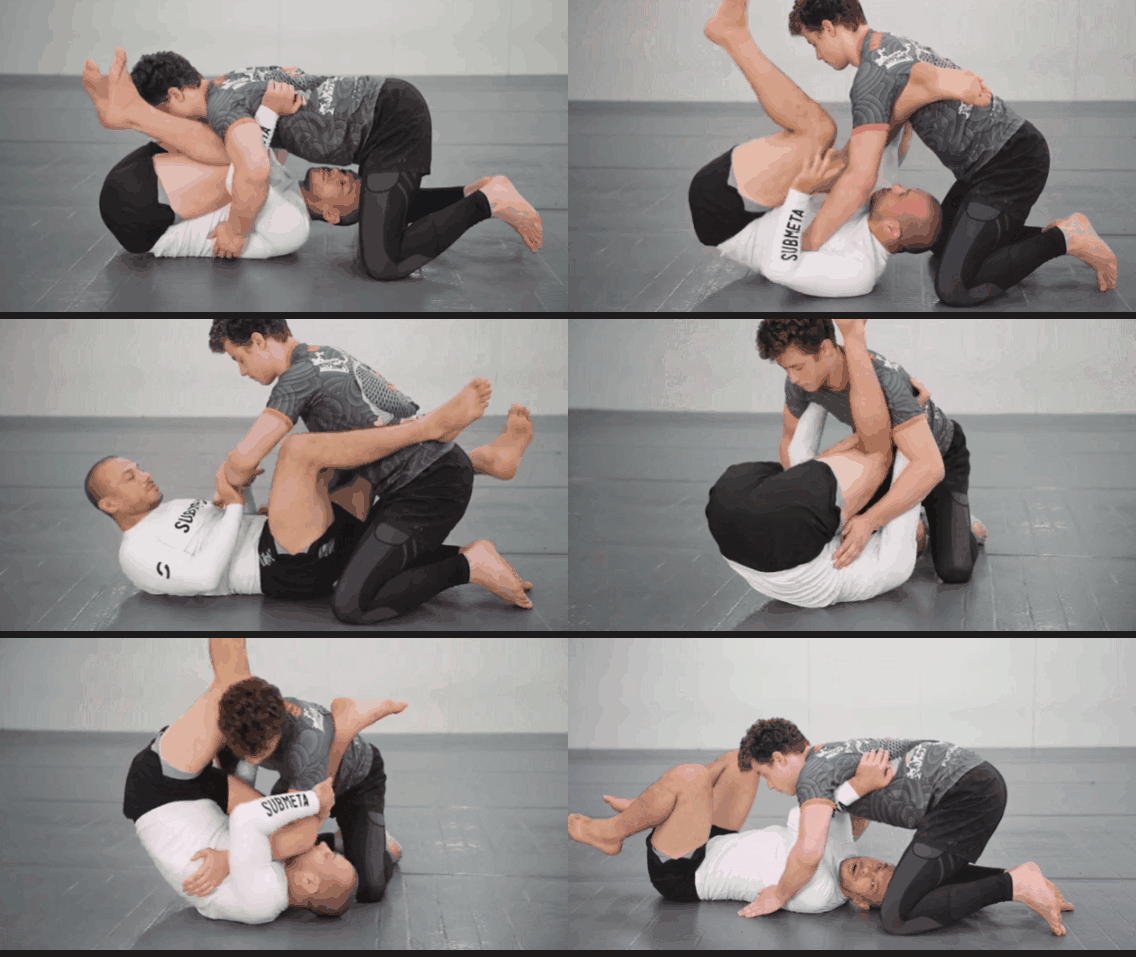
The aforementioned Lachlan Giles began experimenting with allowing the opponent to pass his guard all the way to north south, and then attacking the K guard from there. Giles has a brilliant, two hour long course called “North South Retention” on his Submeta platform, but one of the keys is this idea of the cross foot hook into the armpit. In the example below it is Giles’ right leg performing the cross pummel.
Against Jussier Formiga, Miyao repeatedly used his astonishing flexibility and leg dexterity to return from an almost-pin to a K-guard attack on Formiga’s leg. It was this cross pummel with the foot that enabled him to get on offence from seemingly disadvantaged positions.
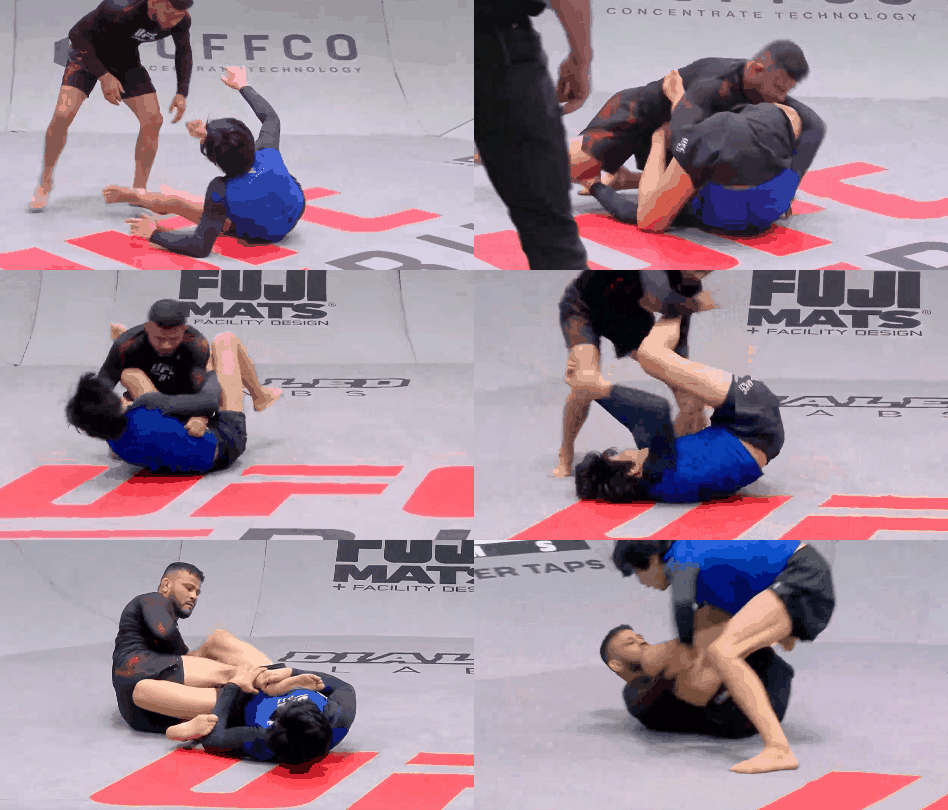
Formiga adopted the usual MMA fighter vs professional grappler strategy of staying low and attempting to fight Miyao from his knees. It was as he attempted to pass that his legs became more available.
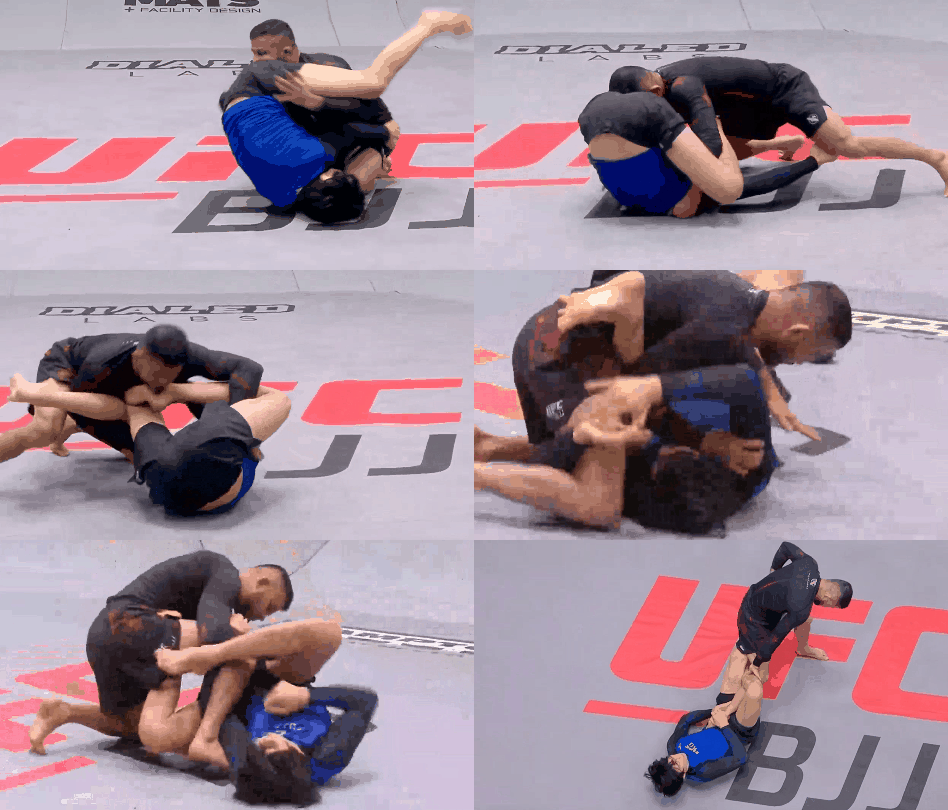
Another example of the same principle can be seen when Miyao inverts from half guard, then frees his trapped leg to place it on the outside of his opponent’s body while he is upside down. This allows him to turn his hips back into the opponent and attack from K guard again.
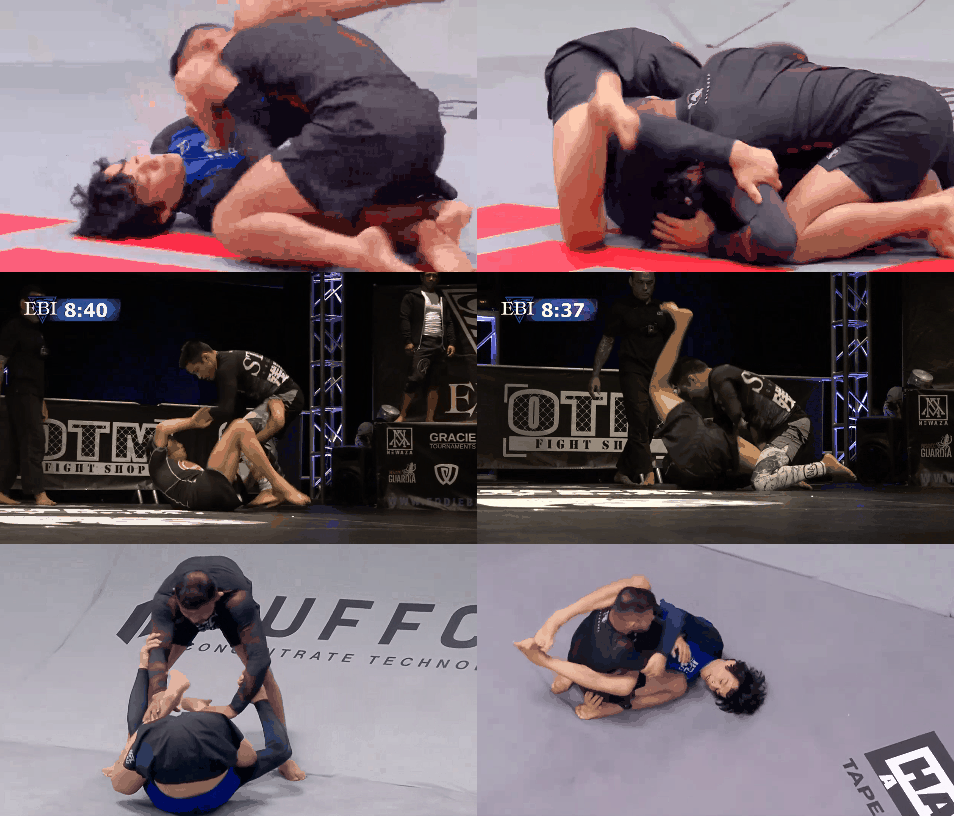
Here is an entire sequence as he inverts from half guard, frees his leg, returns to K guard, and Formiga sits to concede top position.
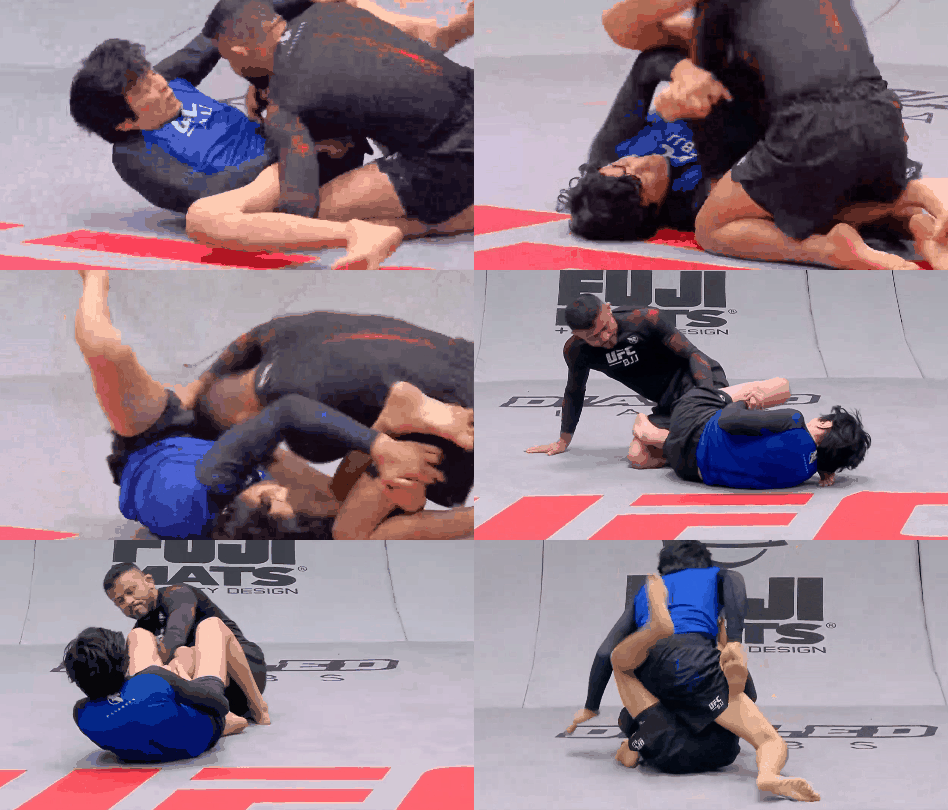
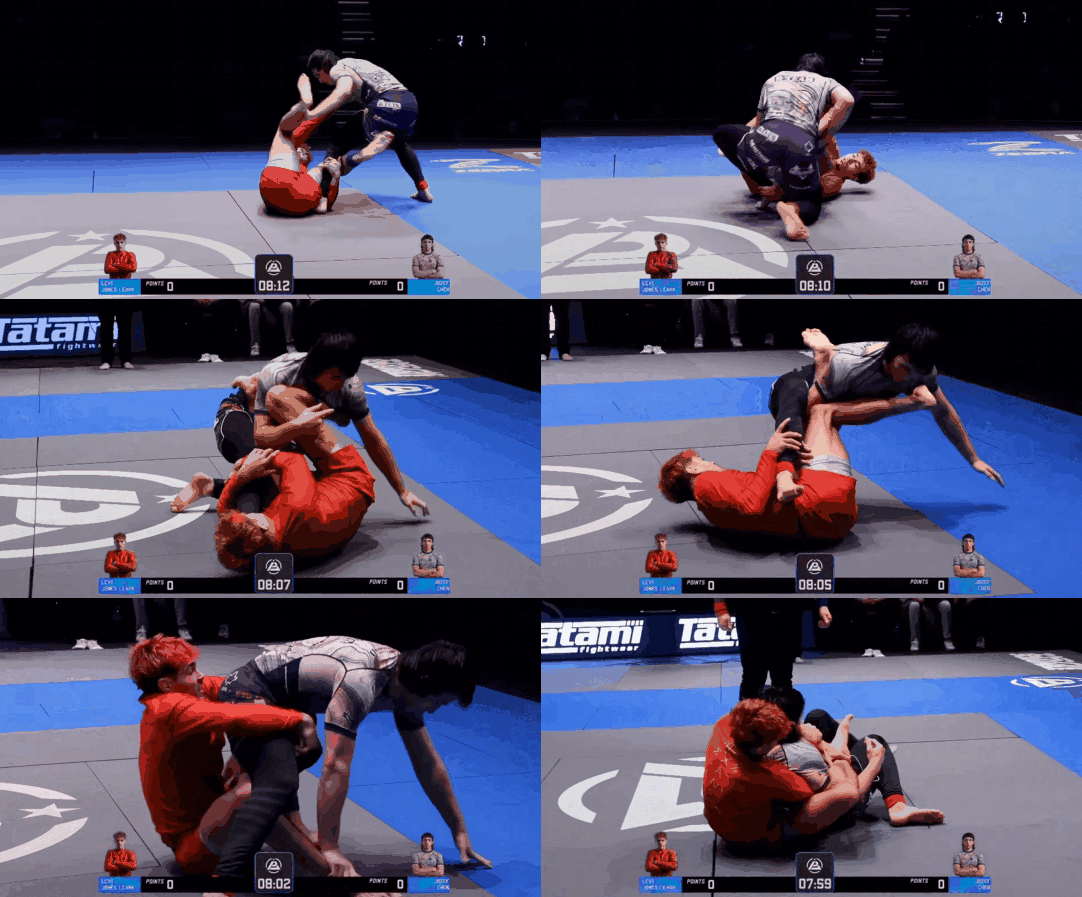
There are a number of finishing points after entering the K guard. Levi Jones Leary believes in getting the opponent’s foot across the body to create what he calls “the strongest back take.”
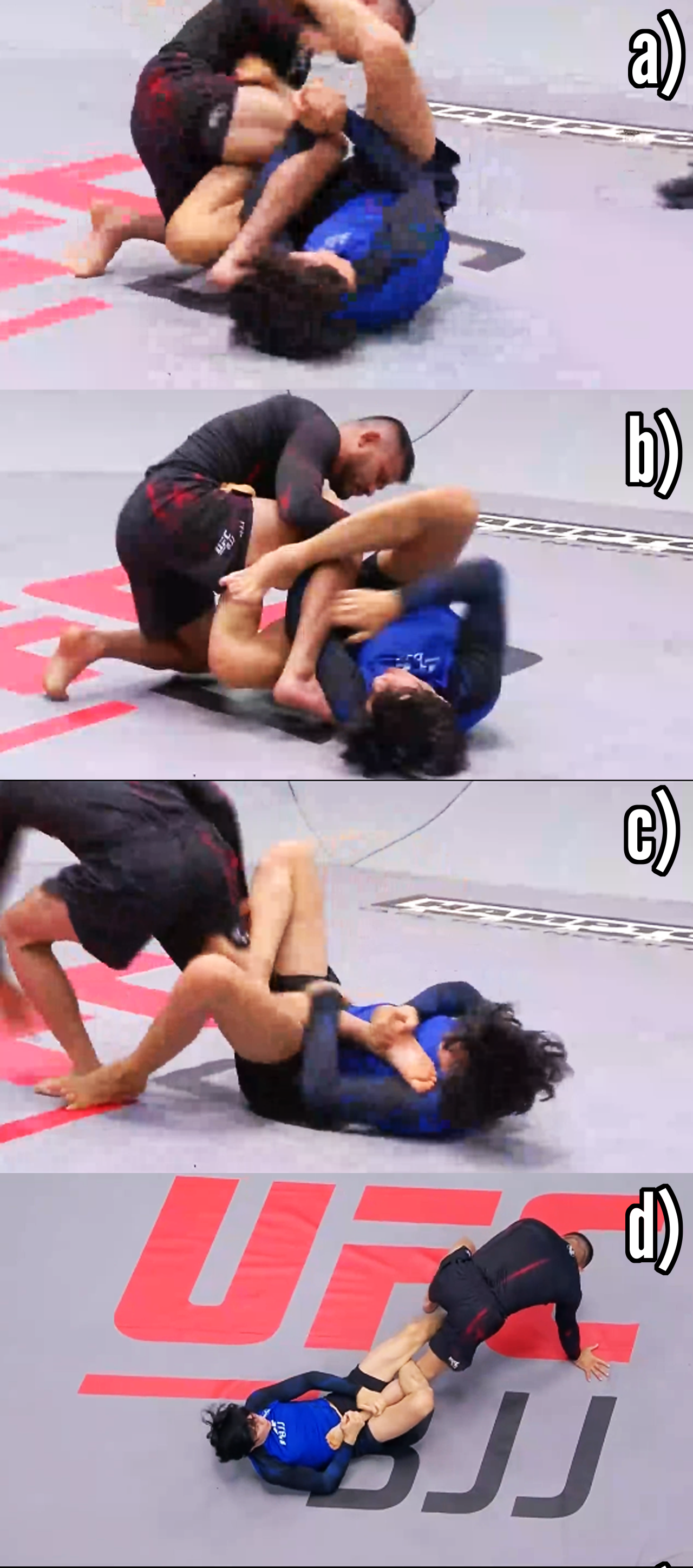
But more commonly the match will end up in a “chop down” position. Fig x illustrates how this happens. Miyao has entered the K guard and pulled Formiga’s knee to his stomach (a). Miyao’s right leg can now swing over the top and chop down behind Formiga’s knee (b). Miyao reaches over with his right hand and pulls Formiga’s foot out in line with his knee, forcing Formiga to turn away (c) and placing Miyao into the calf slicer position (d). While it is rare to see a calf slicer finished as a submission at the highest levels, this position provides a straight shot at Formiga’s back which is, after all, what the Miyao brothers are all about.
More commonly, the opponent will sit to a hip, or backstep into 50/50. This brings us to a technique that the Miyaos were using to mess up the world’s best black belts in the early 2010s.
The Miyao Drag
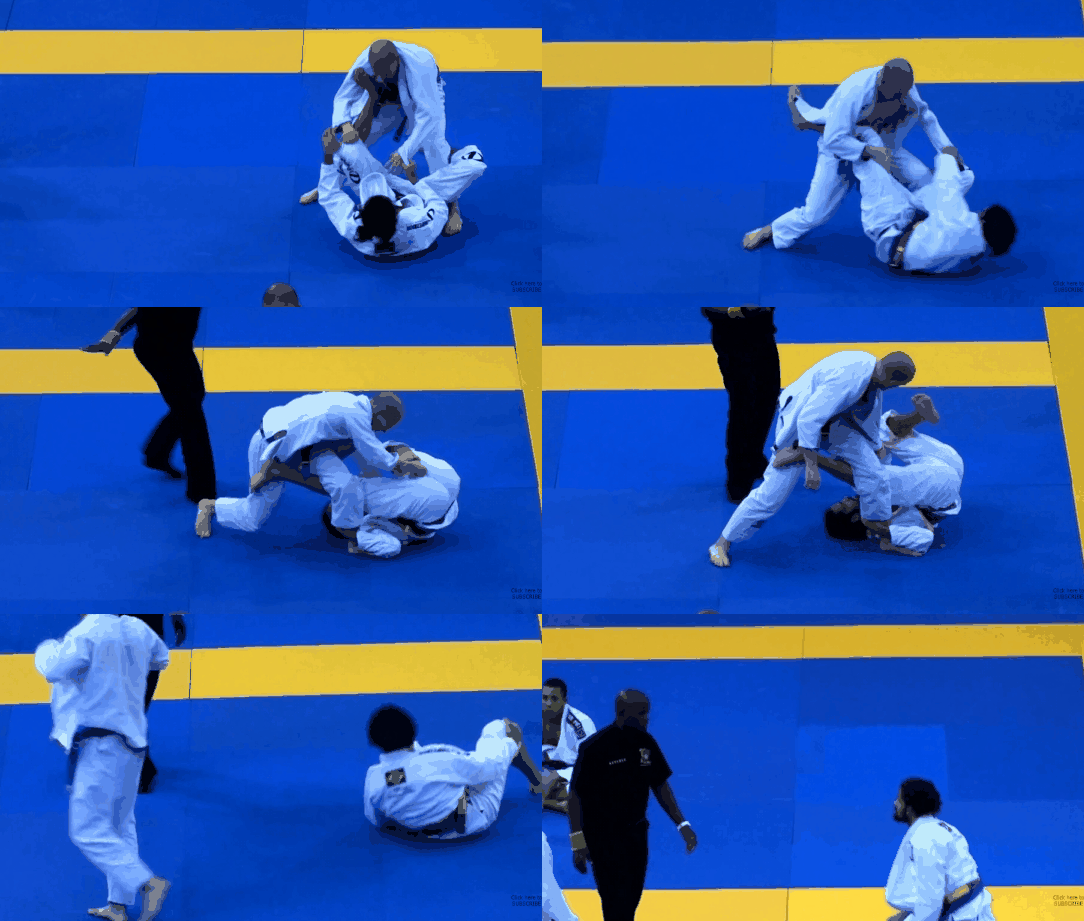
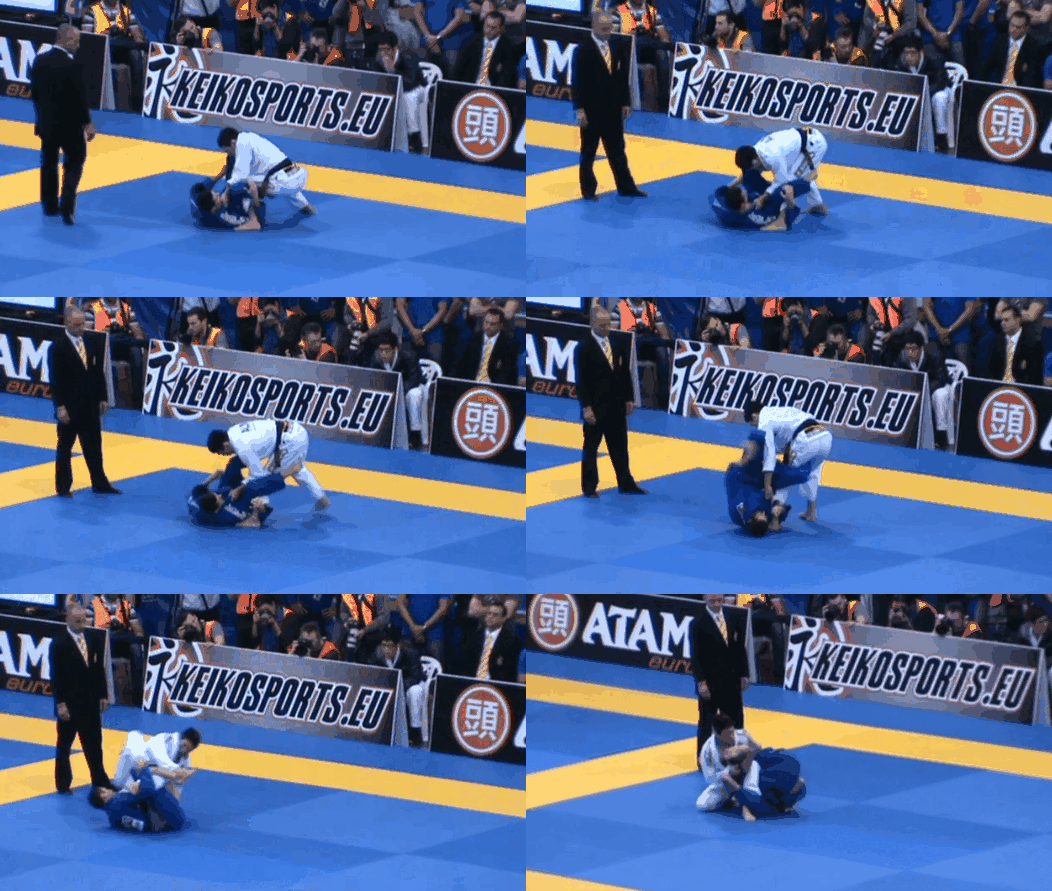
The Miyao drag is a trick that I expected to stop working for the brothers as the world became enamored with leg locks. For a good while the Miyao brothers’ no-gi strategy was to force the 50/50 entanglement, pass their own leg to the other side, and crawl up on top of the opponent. The landing position is similar to a leg drag.
In a true leg drag, you are shin stapling the opponent’s bottom leg to the mat. Notice in Fig. x, Gianni Grippo’s foot is pressed into the floor, backstopping his opponent’s hamstring. His knee is between the opponent’s legs, but the rest of his leg and, in fact, his entire body is behind the opponent.
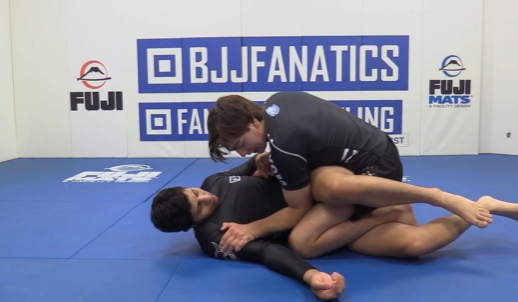
In the Miyao drag, your knee is deep through their legs, on the mat.
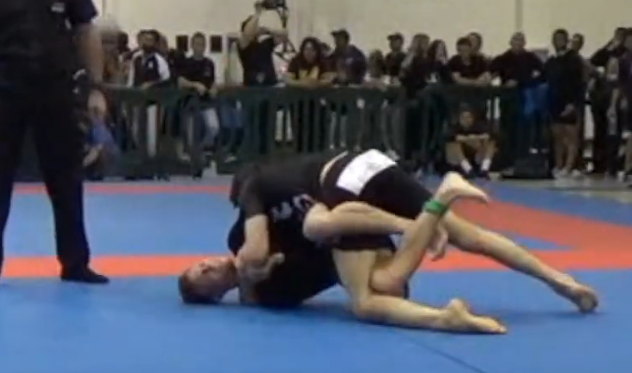
It brings you hip to hip with the opponent and allows you to pull yourself into their upper body before you disentangle your legs and fall straight into side control.
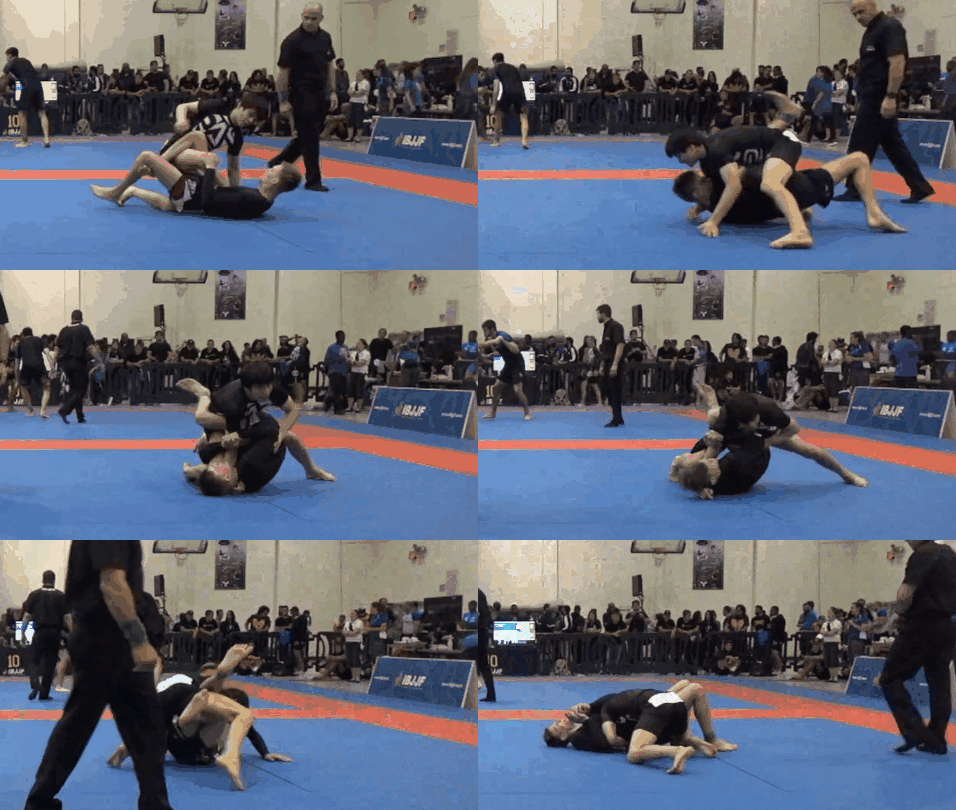
Against Jussier Formiga, the Miyao drag was on full display and as powerful as ever. Fig. x shows an example.
To avoid a back take from the K-guard / calf slicer, Formiga would sit to a knee or hip (a), and leave his leg unweighted, on top of Miyao. Miyao would pass the leg across his body (b) and come up on top (c).
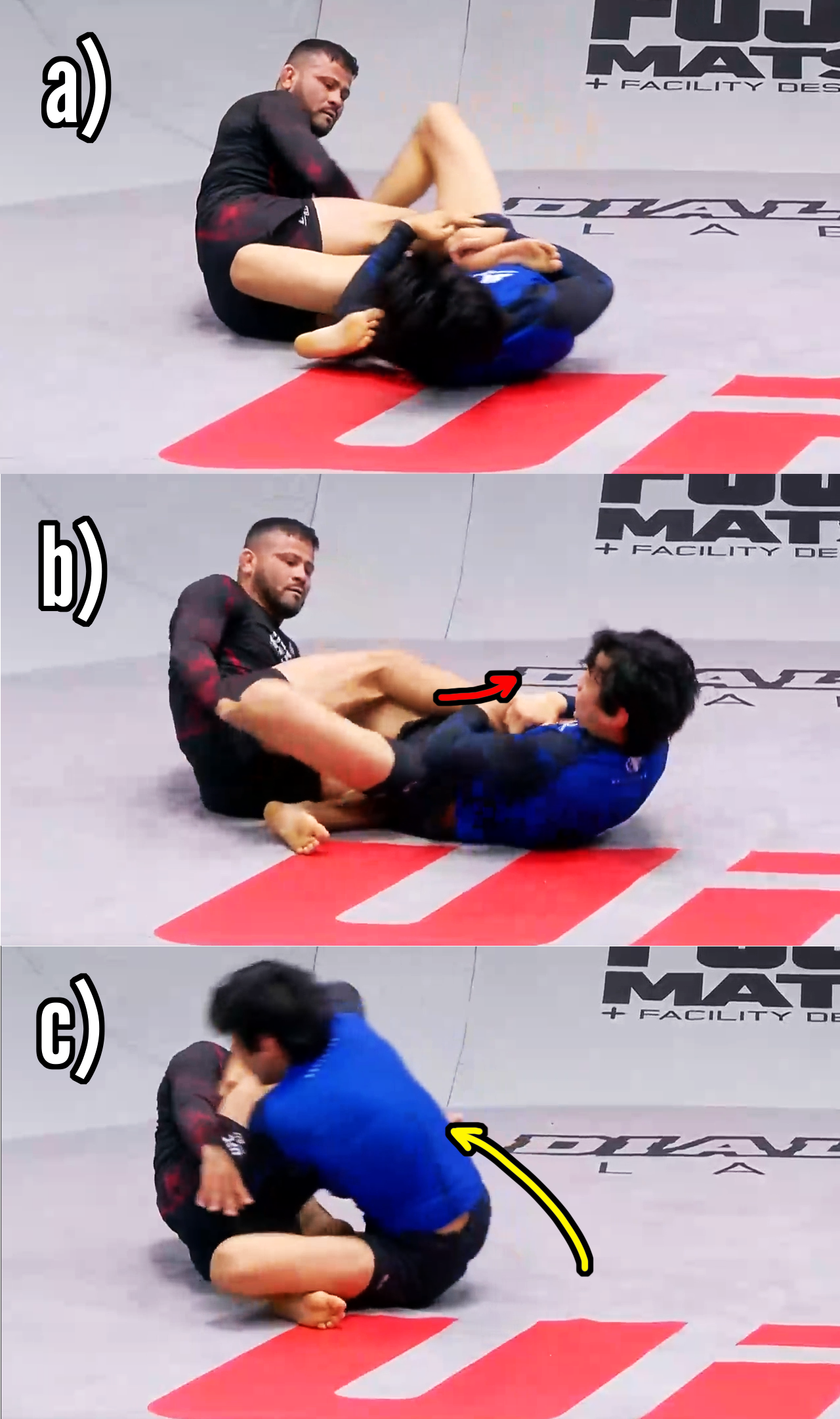
Fig. x continues the action. Formiga is able to keep his right foot on Miyao (d). Miyao drags the leg across and falls on top of the shoelaces of his right foot at the same time (e). Miyao drops his weight on Formiga and his knee goes from on top of Formiga’s biceps (f), to flat on the mat (g).
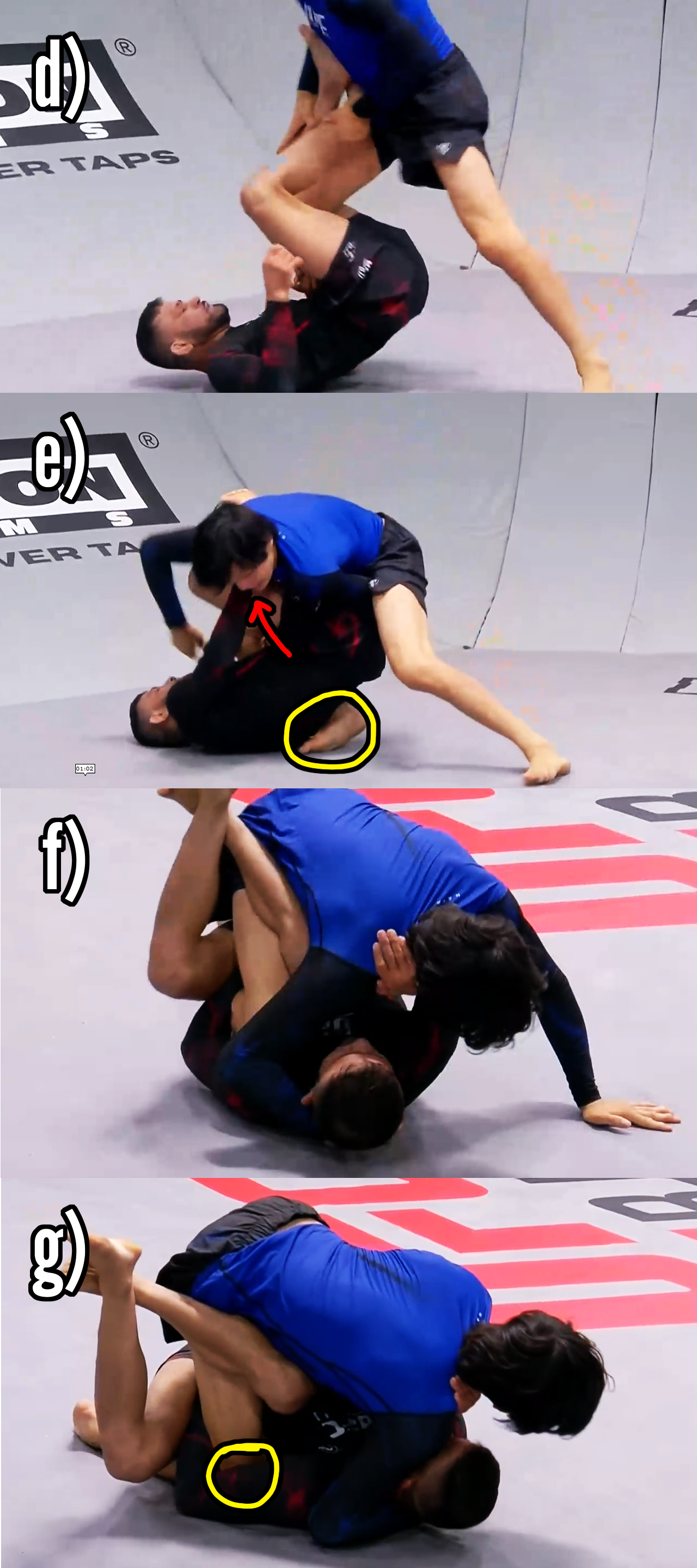
Fig x shows a different instance from the same match. Notice that Miyao is passing to the other side. Opponents will often cross their ankles and keep Miyao’s leg as they try to work out where to go (f). Miyao windshield wipers his free leg on top (g), and kicks down to the mat (h).
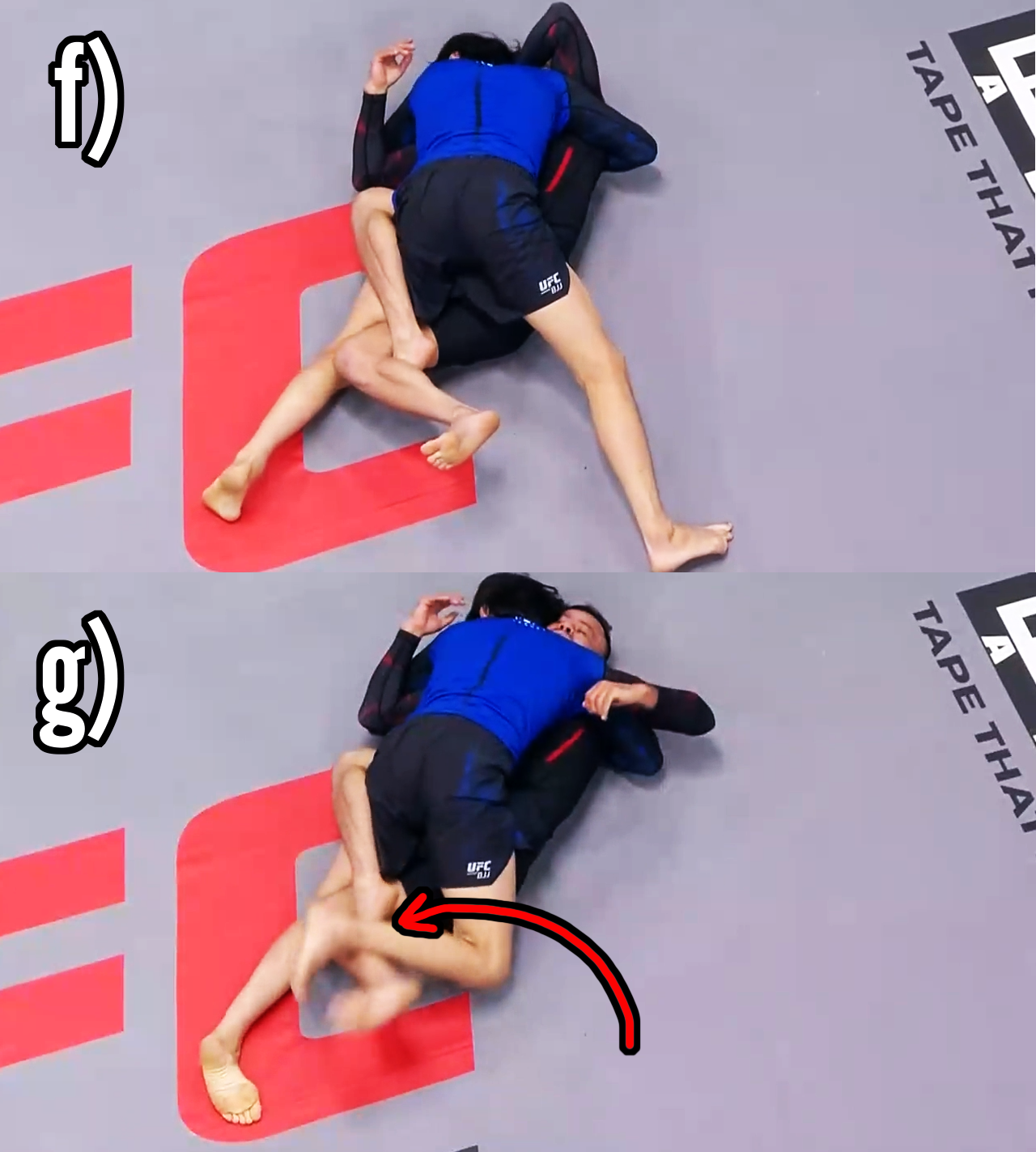
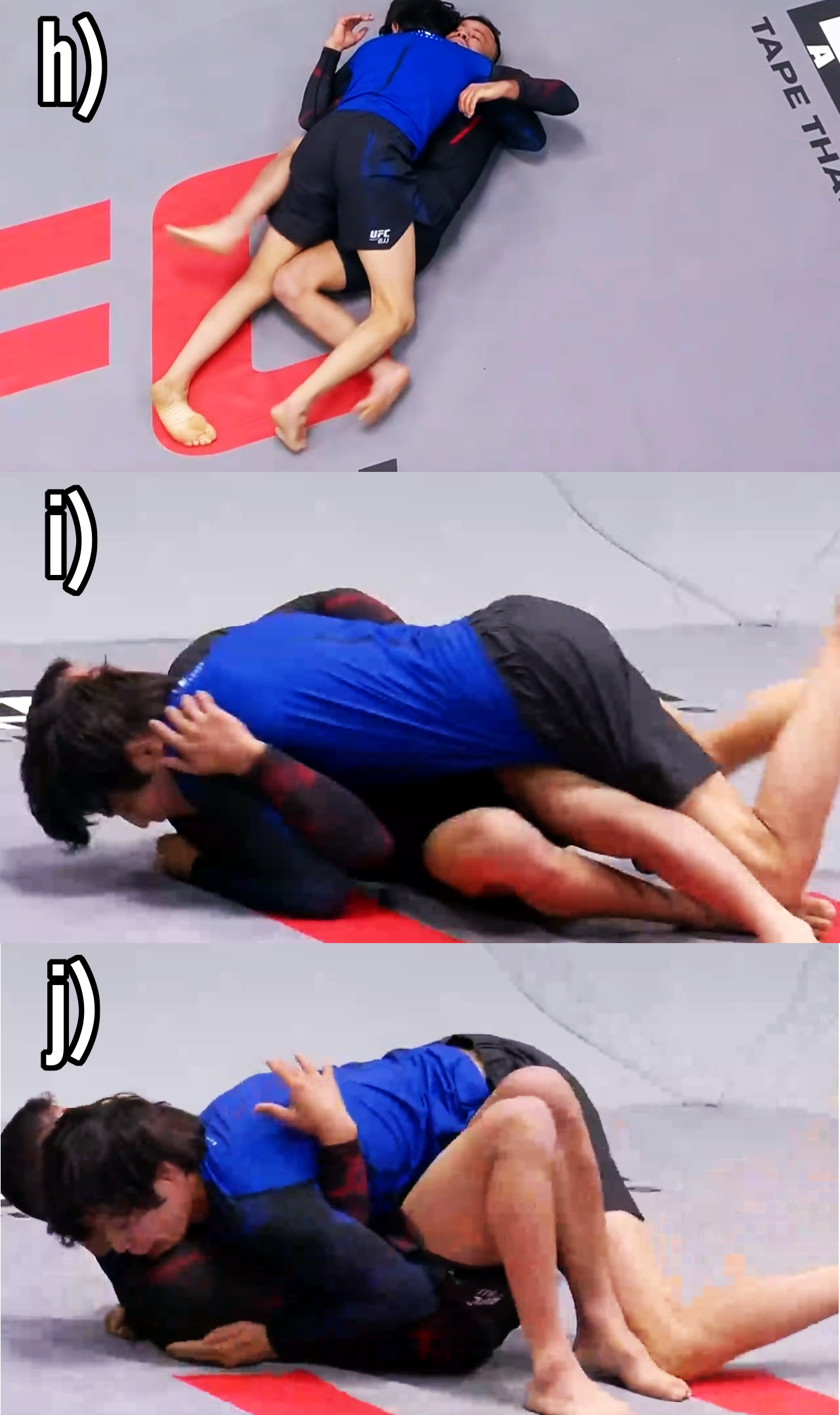
Miyao cements the pass in Fig. x. With Formiga’s legs unlocked (h), Miyao is already chest-to-chest, and hip-to-hip. As Miyao brings his left knee out from between Formiga’s thighs (i), Formiga turns flat to the mat (j) and Miyao has landed in a strong side control.
Reverse Reap