
In 2021, Hiroki Akimoto was a decent but not highly regarded kickboxer working in ONE Championship’s 65kg bantamweight division. In December of that year he was chosen by ONE as the first opponent for the newly signed Qiu Jingliang, widely regarded as the best 68kg kickboxer in the world. Akimoto put in his usual high effort, high volume performance and broke Jingliang’s five year and eighteen fight winning streak. The performance legitimized Akimoto overnight and four months later he took the ONE Championship bantamweight title from Capitan.
Akimoto’s reign was a footnote. He lost his belt in his very first defence as the smooth Petchtanong circled around him, kicking his arm to smithereens. After that fight Akimoto would go winless for almost three years. Now, on a streak of three good victories, Akimoto gets a shot against Jonathan Haggerty for that same bantamweight belt and has the chance to set things right.
Hiroki Akimoto is a baffling fighter to study because half the trouble is working out where he is going wrong. He marches forwards and throws everything with one hundred percent intensity, for the full duration of the fight. He appears to throw hard and yet he has not stopped an opponent since 2012, a full fourteen years ago! Every loss is a close and questionable decision, but so are a great many of his wins. How does a man so consistently fight to the level of his opposition when that opposition is so varying in quality?
I have seen many of Akiomoto’s woes put down to bad gameplanning and a lack of adaptability, and yet some of my favourite Akimoto moments have been tools he has brought to the forefront for just one fight. To my eye, the main problem of Akimoto’s career has been nothing to do with his offence but that he has almost no defensive awareness whatsoever. It is not as though he cannot avoid punches, but that he does not even consider it. In his last couple of good wins, Akimoto’s performance has been marked out by first shutting down his opponent’s offence and then applying his own, rather than trying to overwhelm them or out volume them while taking turns to throw combinations.
The Comeback
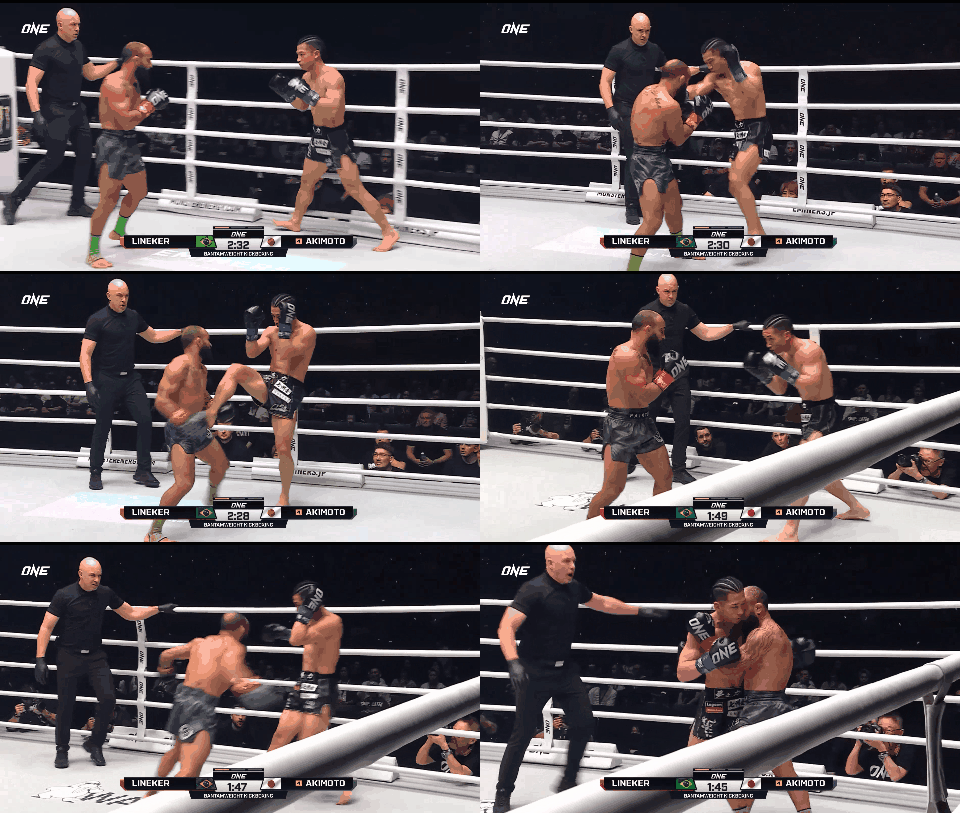
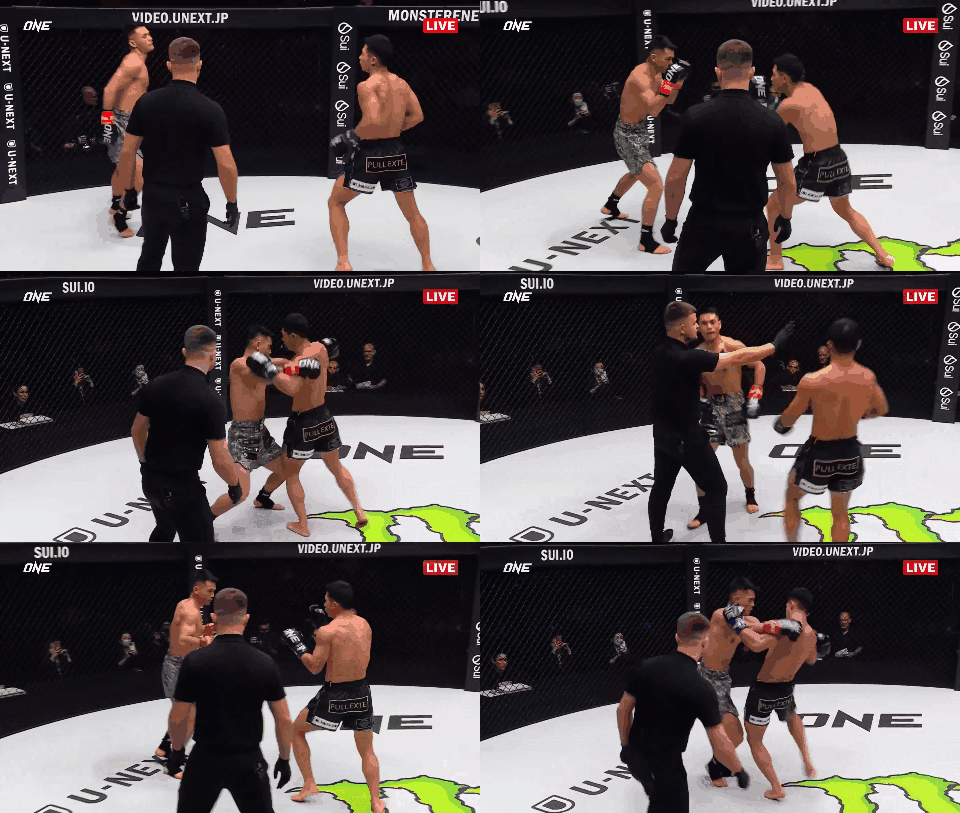
John Lineker is an MMA fighter and not really a kickboxer, but he is tough as nails and hits so hard that when he began taking Muay Thai fights a couple of years ago, veterans like Kulabdam seemed awed by his power. For once, Akimoto started the fight on defence and worked on cutting Lineker off and making him regret his offensive commitments.
First Akimoto used his pounding inside low kick on the counter to break off Lineker’s salvoes as he spread his feet to start swinging.
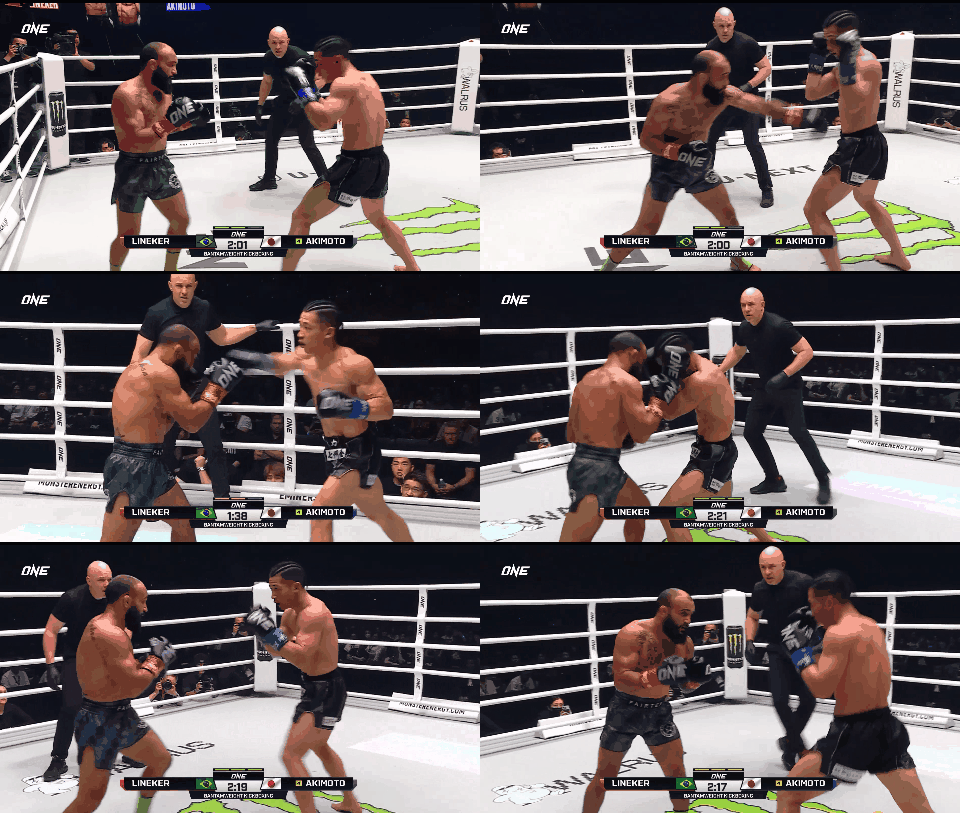
Then Akimoto used a high guard and stiff right straight to break Lineker off mid combination and mid advance. This pool cue right straight has always been a great way to beat the opponent’s quantity with quality. Evander Holyfield landed a few of these against Mike Tyson, and in MMA, Martin Kampman excelled with this. For Akimoto—whose whole boxing game is usually just throwing back a slapping left hook on auto-pilot to set up a hard right kick—this was truly notable.
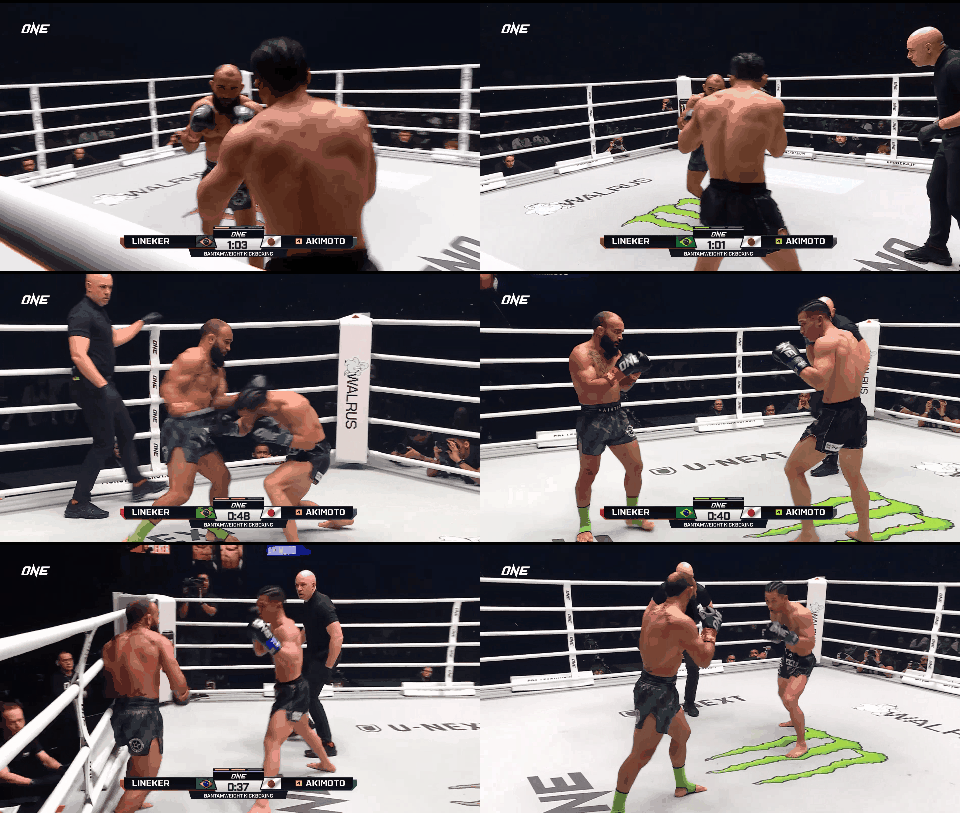
Then Akimoto began chewing Lineker up with knees, both as he stepped in and as he covered up.
John Lineker is a recreational kickboxer though, he does this because ONE ran out of MMA fights to give him. Wei Rui is legitimately world class as a kickboxer and his rematch with Hiroki Akimoto in November 2025 might be Akimoto’s best performance. Their first fight, in 2024, was marked by Akimoto putting the pace on Wei, landing a ton of offence, ignoring Wei’s counters, and losing a close decision that many thought he won. Vintage Akimoto really.
The one notable look that Akimoto used in the first fight was landing a ton of rear leg high kicks on the southpaw Wei, then scoring the cut kick on Wei’s standing leg if he tried to come back with a high kick of his own.
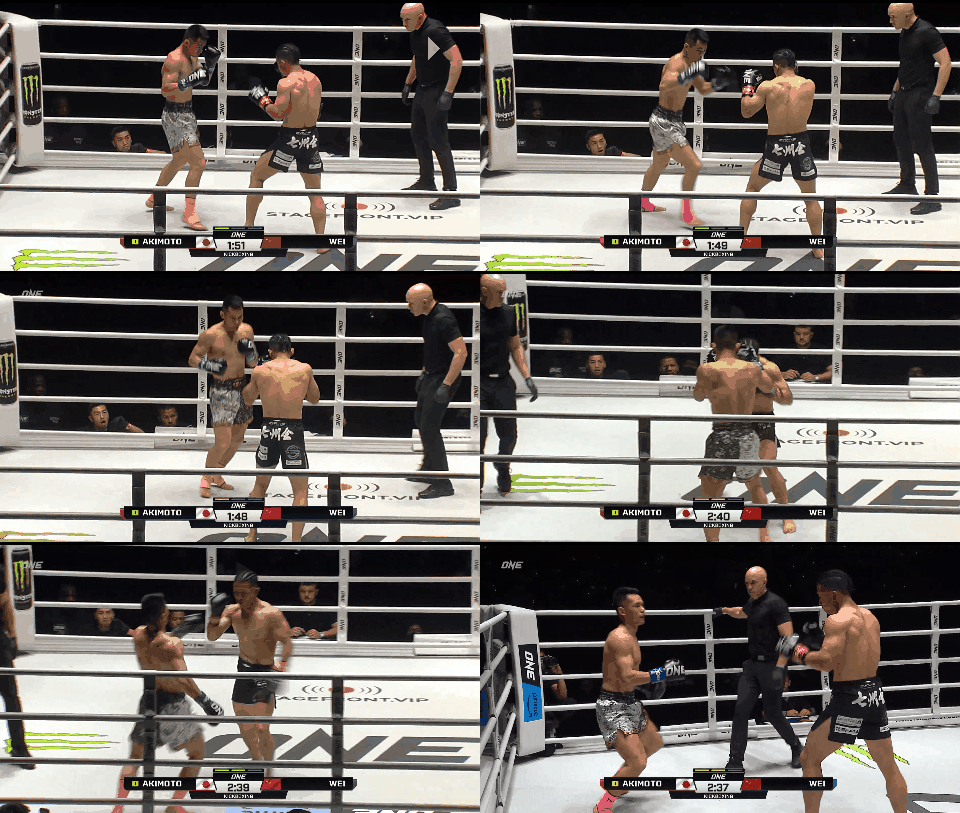
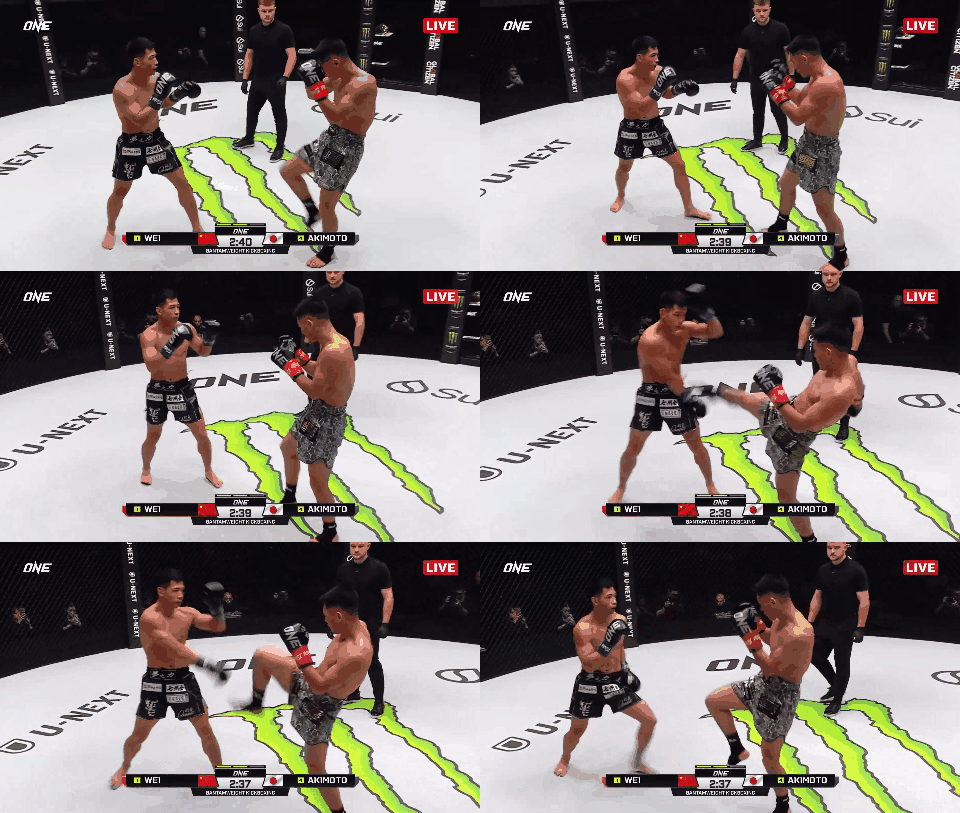
In the rematch, Akimoto showed real growth. We often discuss the idea that a fight is a relationship between two people, and only by considering the opponent’s movements can a fighter really excel. This time, rather than going in hard and trying to outwork Wei, Akimoto set to work drawing out Wei’s teep and using it to get the upper hand as he entered. Using a rear hand parry to knock Wei’s teep outwards, Akimoto was able to enter with the left hook and begin combination punching.
This parry might give you pause because it looks so exposed. In a closed stance you would be begging to get question mark kicked if you began parrying the opponent’s lead leg teep with your rear hand.
But if the southpaw Wei turned his teep over into a question mark kick, it would come up on the other side of Akimoto’s body, which is still covered with a traditional guard. Wei did attempt to fake the teep and then high kick off the other leg, but that is a much slower movement—even if you jump into it—and Akimoto easily picked it off.
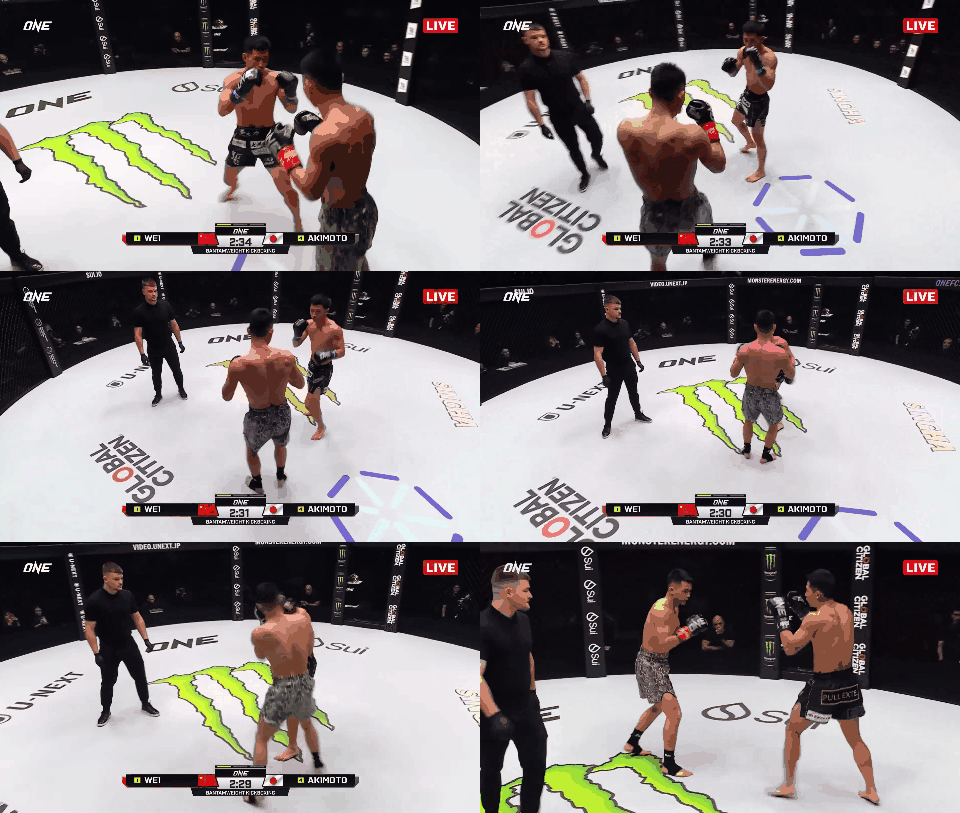
Alternatively, Akimoto would use a fake entry and bounce to the right before entering again. This is a technique his old foe Ilias Ennahachi often uses on stunned opponents, but Akimoto was using it to side step the teep and get to the inside angle.
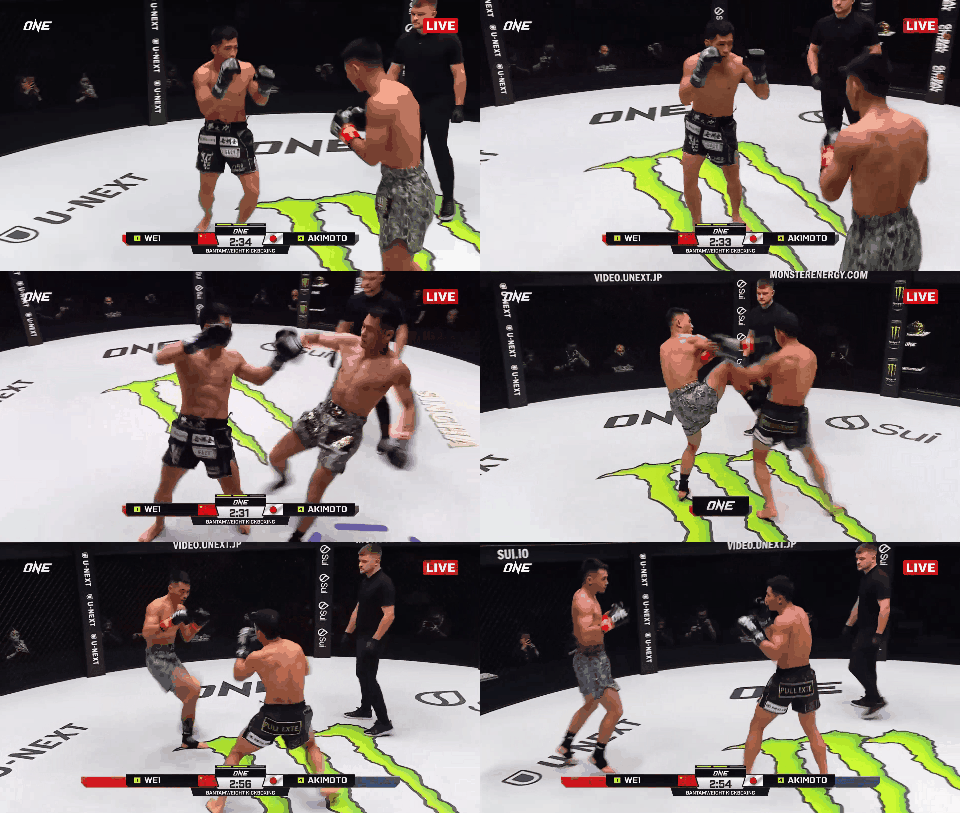
Where Akimoto’s fights are usually about getting in the opponent’s face and forcing them to fight back, this was an instance where he slowed the fight down and in turn his actions became more effective and notable than his opponent’s. By giving Wei space to think and look, Akimoto was able to use feints to draw misses out of Wei and get in with clean counters.
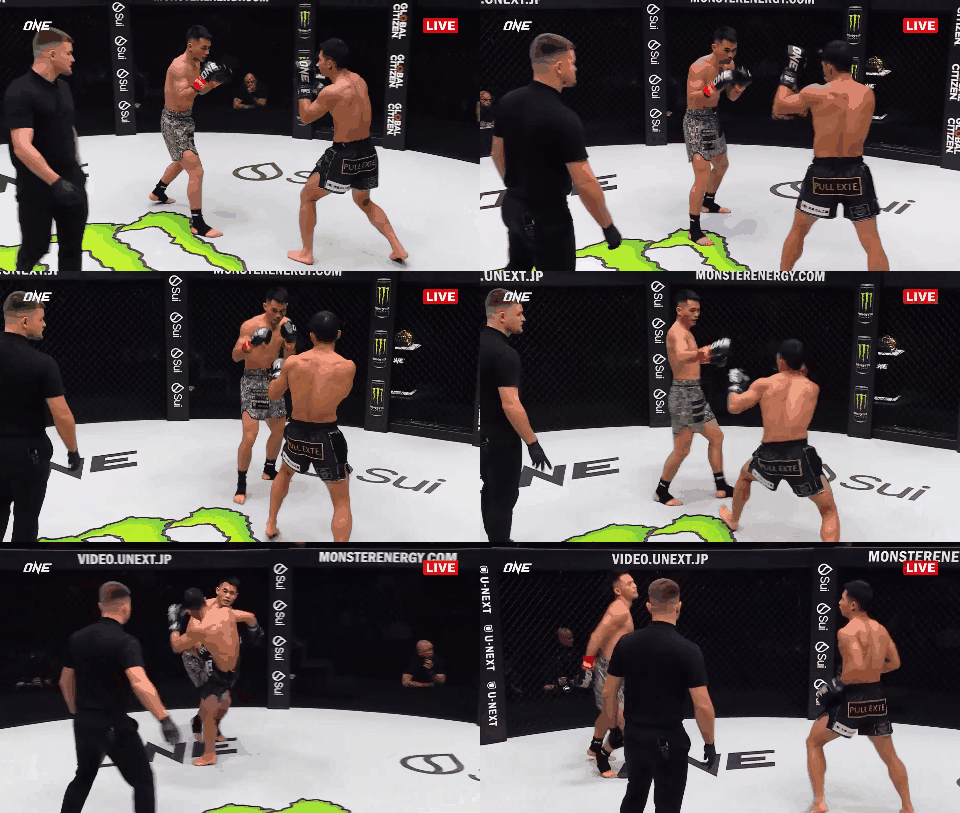
The final fight of Akimoto’s small comeback shows the difficulty in Akimoto re-evaluating his style. Akimoto was extremely fortunate to get the decision over Taimu Hisai at ONE Samurai 1, because he sat back and watched Hisai for most of the fight and did little effective offence. He had a few moments, like kneeing Hisai in the head as he ducked in the third round, but it was a fight where far too little happened. This is the thing with fighters trying to improve themselves though: they are going to have worse showings in the course of learning to do new things and fight in different ways.
Akimoto’s ability to adapt to opponents and find the right tool offensively has never been an issue. One brilliant example would be his breakout showing against Qiu Jiangliang. In that fight, Akimoto attacked Jingliang’s wide stance, rooted stance but not in the usual way. Instead he did what is sometimes called a “pendulum step” to kick the back leg with his lead leg.
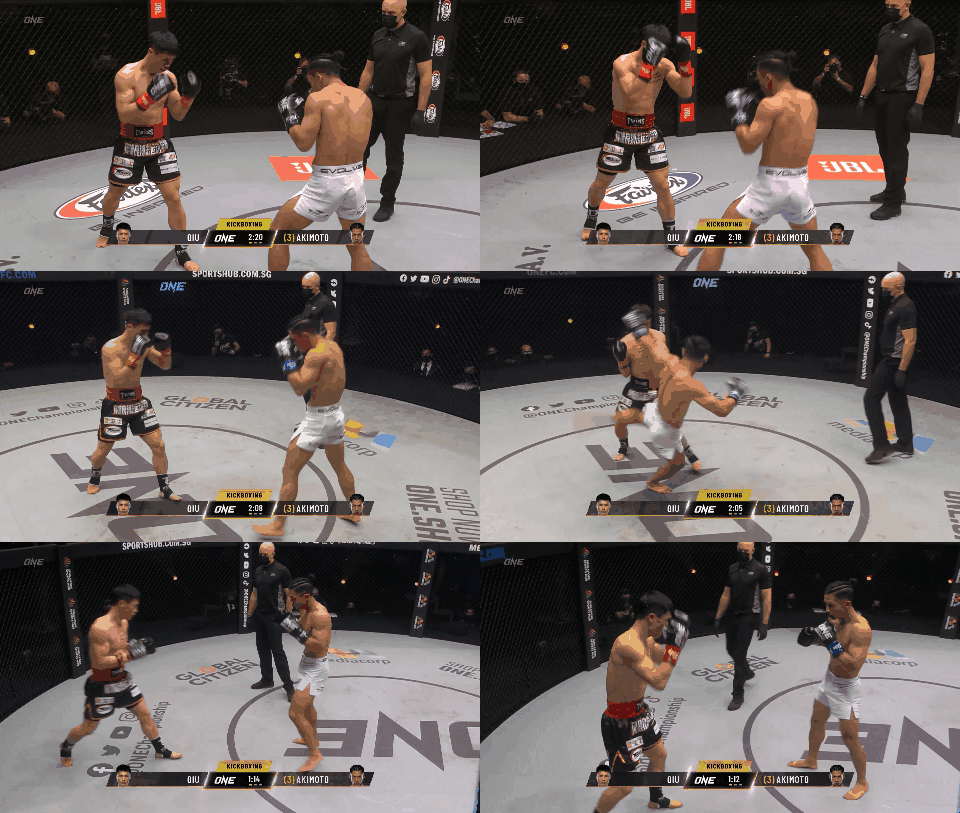
When Jingliang began to pick up the rear leg, or tried to slide back, Akimoto would return the kick to the more available lead leg.
In his championship winning performance against Capitan, Akimoto found tremendous success using the overhand against Capitan’s guard to root him in place as Akimoto stepped through on the left knee to the body.
Even in his losing efforts, Akimoto has moments of real clarity. Against Petchtanong and other opponents who have moved on him and cut off his combinations, he has attacked and thrown his high kicks and body kicks to “ten and two,” in order to catch the opponent circling.
This brings us to Jonathan Haggerty, who Akimoto will be challenging for the title this weekend. Had this fight happened a few years ago, I would love to see Akimoto try to use similar parries and side steps from the Wei fight to get inside of Haggerty’s tremendous teep. Sadly, since transferring his focus from Muay Thai to kickboxing, Haggerty has learned to box and found confidence in his hands. Against Yuki Yoza, Haggerty looked majestic moving around the ring, boxing Yoza’s ears off, and somehow never being in position to eat a low kick despite constantly pivoting and sidestepping.
Akimoto has had a lot of problems with movement. Petchtanong turned and kicked him for five rounds to an easy decision. Akimoto’s boxing is also just there to facilitate his kicking game. It isn’t even really “boxing,” it is just a left hook and the odd alternating hand flurry to continue into a kick. With his beautiful jab, and the way that he incorporates lateral movement and level changes to punch the body, Jonathan Haggery is actually operating a “boxing” game in kickboxing. As Giorgio Petrosyan showed through his sensational career, this often elevates a fighter above the standard drone of tit-for-tat exchanges that characterize so much of kickboxing. Akimoto 1.0 was the stereotypical tit-for-tat kickboxer, and Akimoto 2.0 has still in Early Access through his last few fights. Perhaps a return to the old ways would allow Akimoto to outhustle Haggerty, or drop a close decision, but to genuinely figure Haggerty out will take something special.
Wei Rui
- Cut Kicks
- Teep Parries
John Lineker
- Inside low kick
- Counter straights
- Knees
Capitan
- Overhand to knee
Qiu
- Pendulum kick / inside low kick dilemma