
Cub Swanson and the Art of Hitting Harder than you Should
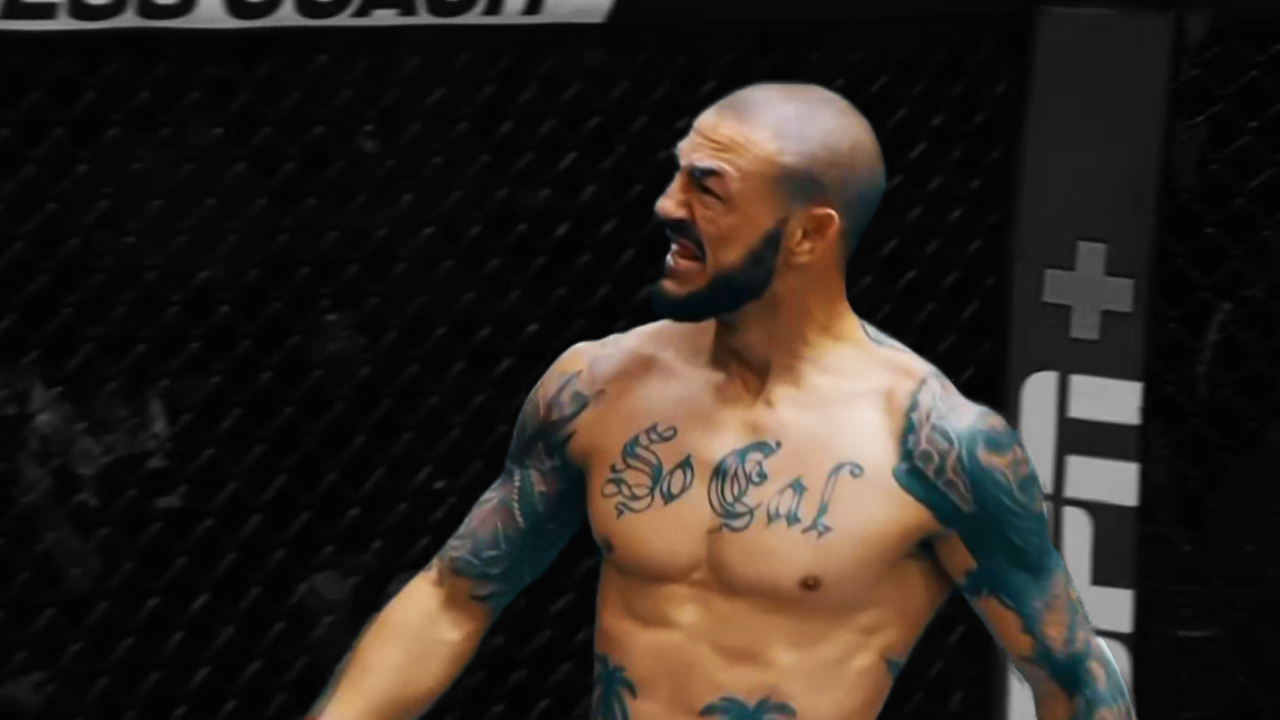
Barring “one last run” when he gets bored of family life and gym ownership, it looks as though Cub Swanson has hung up his gloves for good. While he never achieved a world title, Swanson’s longevity has been astounding, and he was one of the last remaining veterans of the WEC fighting at the highest levels of mixed martial arts. He was even briefly part of the “guillotine revolution” among the lower weightclasses in WEC, before establishing himself as a sensational knockout puncher and never looking back.
That knockout power, and the ways in which Cub Swanson set it up, will be our subject today.
Shooting from the Hip
Swanson is one of the featherweight division’s more effective hitters, and in some ways his style reminds me of the great flyweight boxer, Jimmy Wilde. Wilde was called “The Mighty Atom,” and “The Ghost with the Hammer in his Hand” for the simple reason that he was a tiny man who could almost lift his opponents off their feet with his punches. He did this from a low hands stance, often leaping into his blows. When we talk about monstrous punchers in the lower weightclasses, there is an understanding that sacrifices must be made to textbook form in order to get more bodyweight into blows.
Swanson’s typically stands with a low guard, is crouched, and is high on the ball of his back foot—ready to spring in with either a left hook or his sneaky right hand lead. He does not bleed power by fighting with his hands held in a high guard until he throws, and in fact, Nate Landwehr’s performance against Swanson demonstrated that locking your hands to your head in a high guard can make it difficult to get going if the opponent simply shackles you with offence. As Sugar Ray Robinson said, when you shadowbox in the mirror, you should be looking down the barrel of your fists the entire time, not at the bottoms of them.
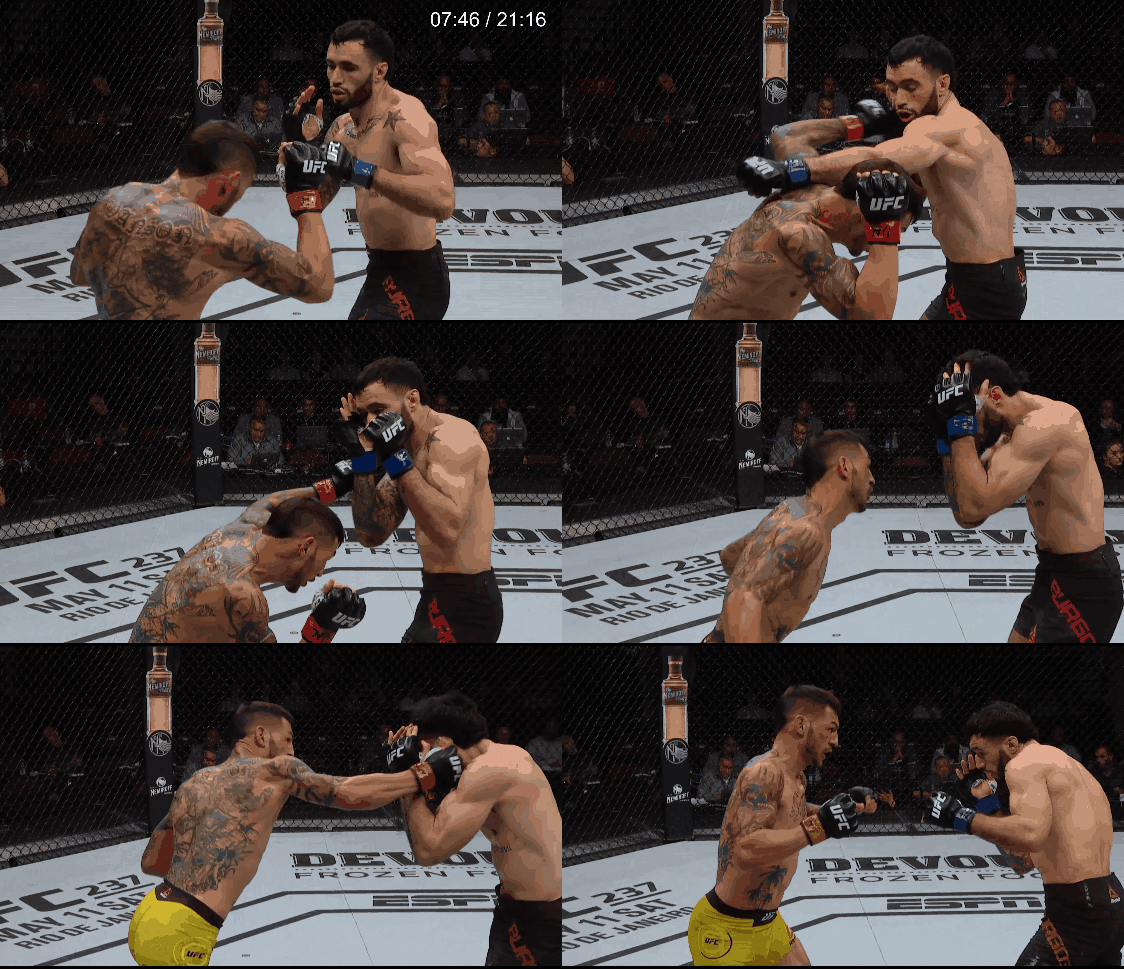
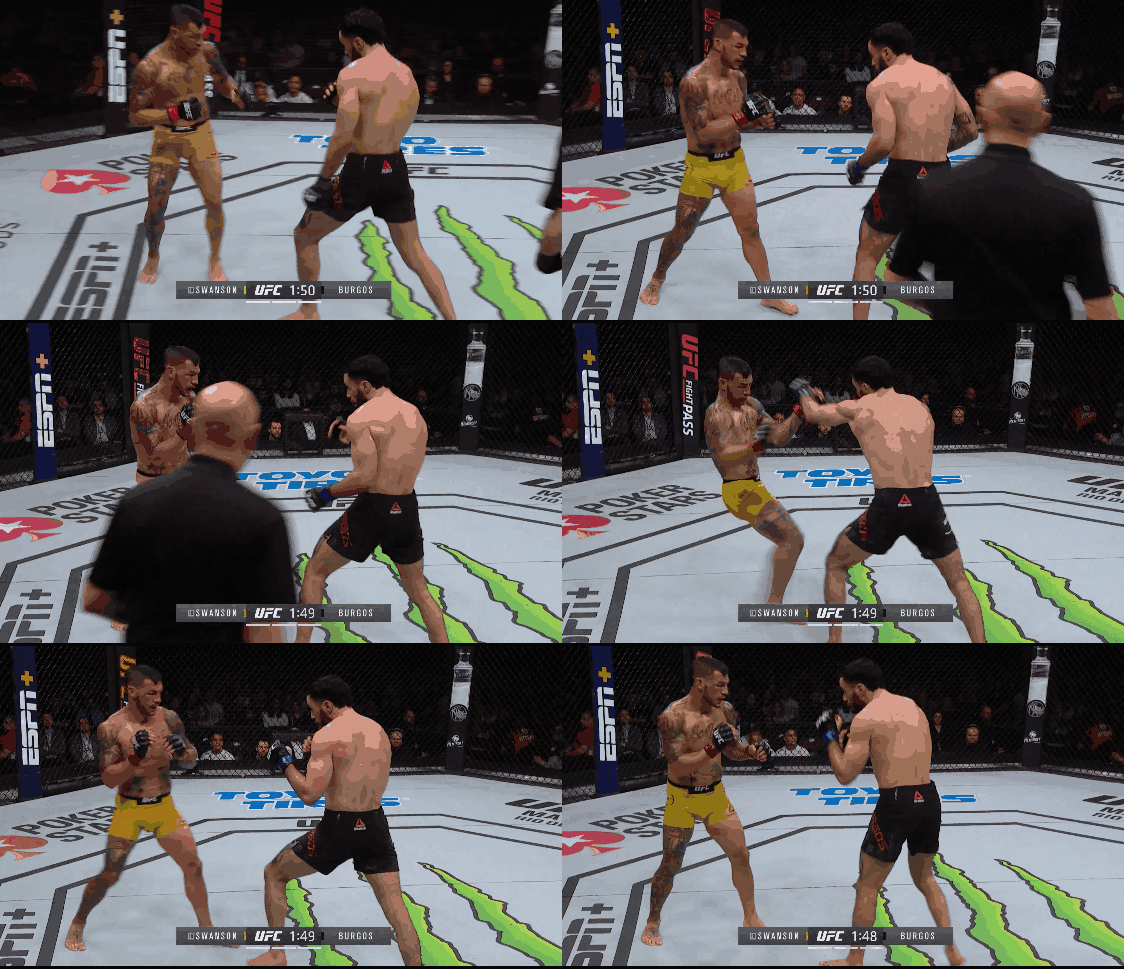
The hands low guard—or perhaps absence of a guard—allows Swanson work very effectively with right hand leads. These shoot in straight off his chest or from down by his solar plexus. Here is an example from his fight with Shane Burgos.
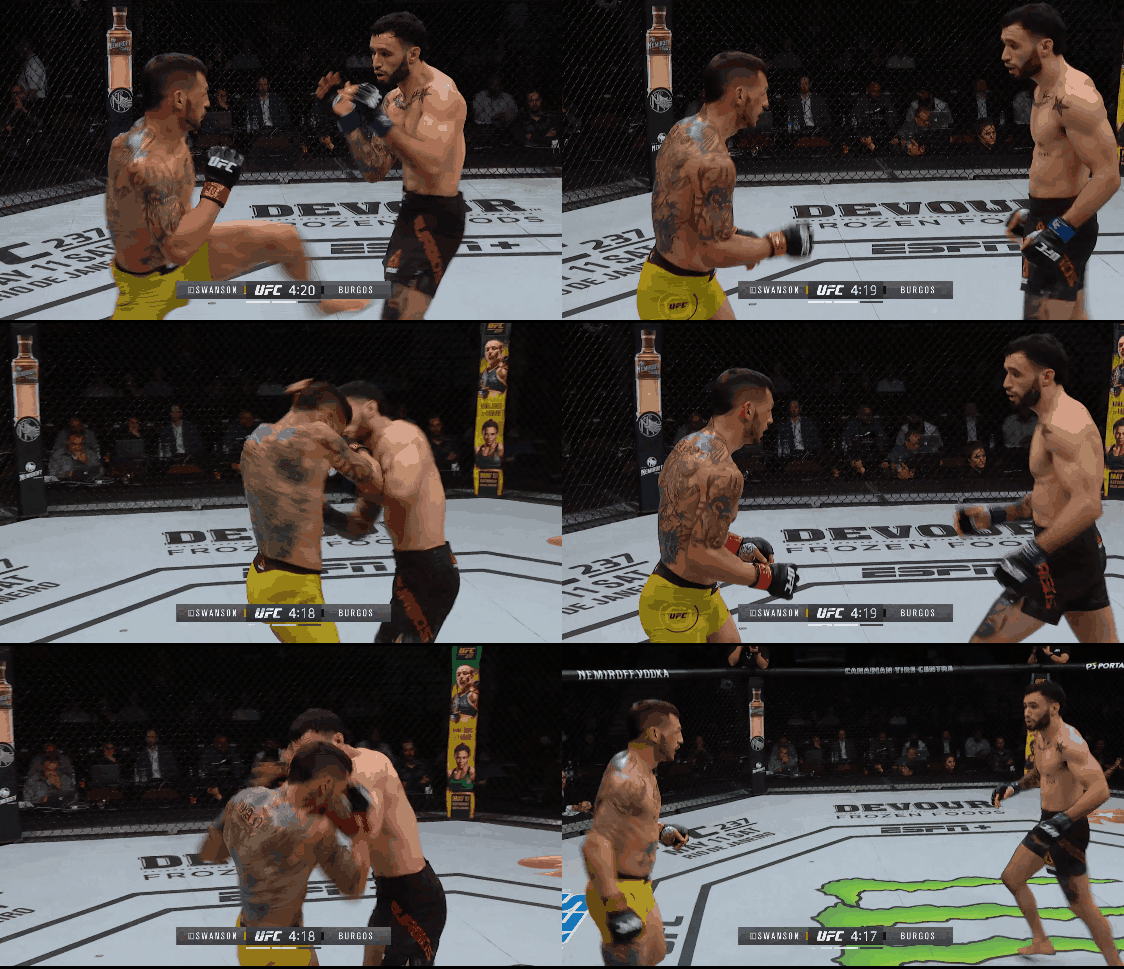
By carrying the hands low, the fighter removes the telegraph of his gloves leaving his guard and his fists obviously changing orientation. If he can encroach on the opponent to the point where his hands are in the blind angle—the spot just below peripheral vision when looking at any opponent’s face or chest—he can create real discomfort in the opponent. It takes guts to try to crowd an opponent while carrying your hands down by your waist though.
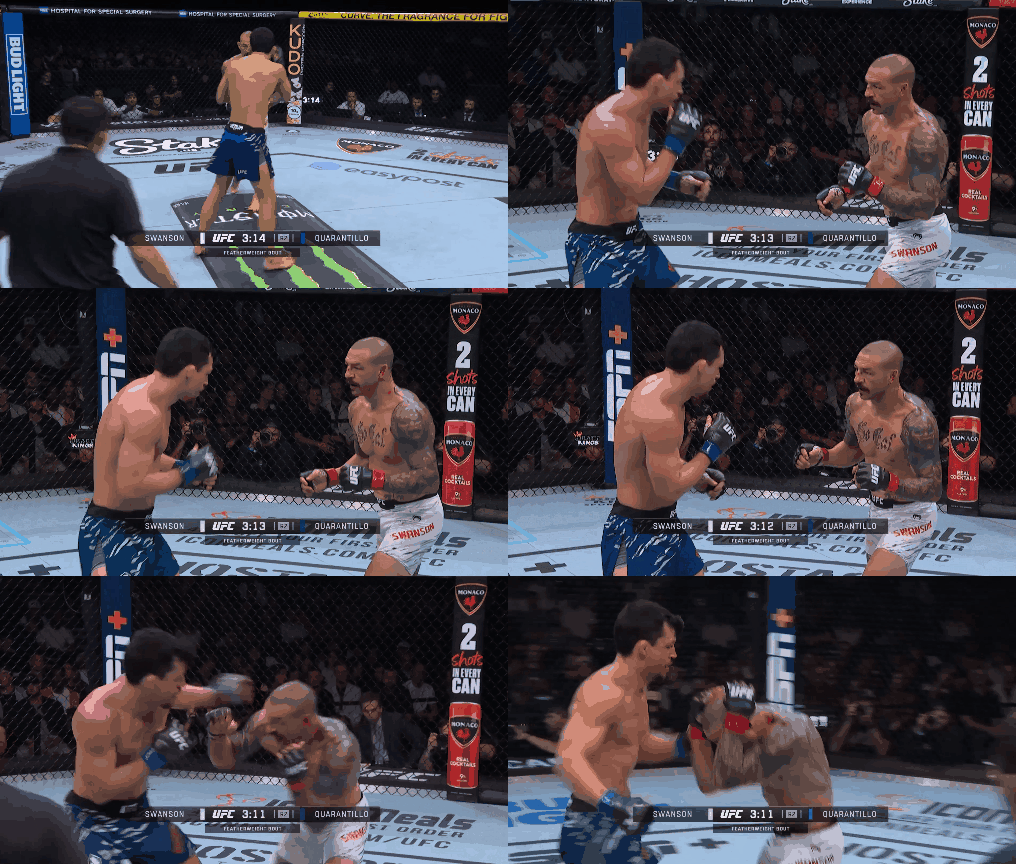
The upside of dropping your hands and still standing close enough to box, is that the opponent can only make reads from what remains in their vision. This means that having low hands often amplifies the effects of shoulder feints.
Swanson has had great success through his career with a sort of lagged right hand off his shoulder feints. This is similar to the stutter jab, where a fighter steps forward, shoulder feints, holds for half a beat, and then delivers a jab with just his arm. The fighter deliberately ruins the kinetic chain of his technique in order to throw and land off-rhythm.
Swanson shoulder feints his right hand, squaring his upper body. Then he pauses just long enough to surprise the opponent when he pumps out his arm in a weaker, but far sneakier blow. In Swanson’s triumphant retirement bout against Nate Landwehr, he used this repeatedly from both stances and even dropped Landwehr with it.
Short Low Kick, Long Hook
Swanson is a proponent of the Russian / Soviet / palm out hook. This means that when you throw your left hook, you turn your thumb down as if you are looking at your watch. In traditional hooking range, “palm in” vs “palm down” vs “palm out” is much for muchness. You hit the guy however you like. Where the thumb down hook comes into its own is out at jabbing range.
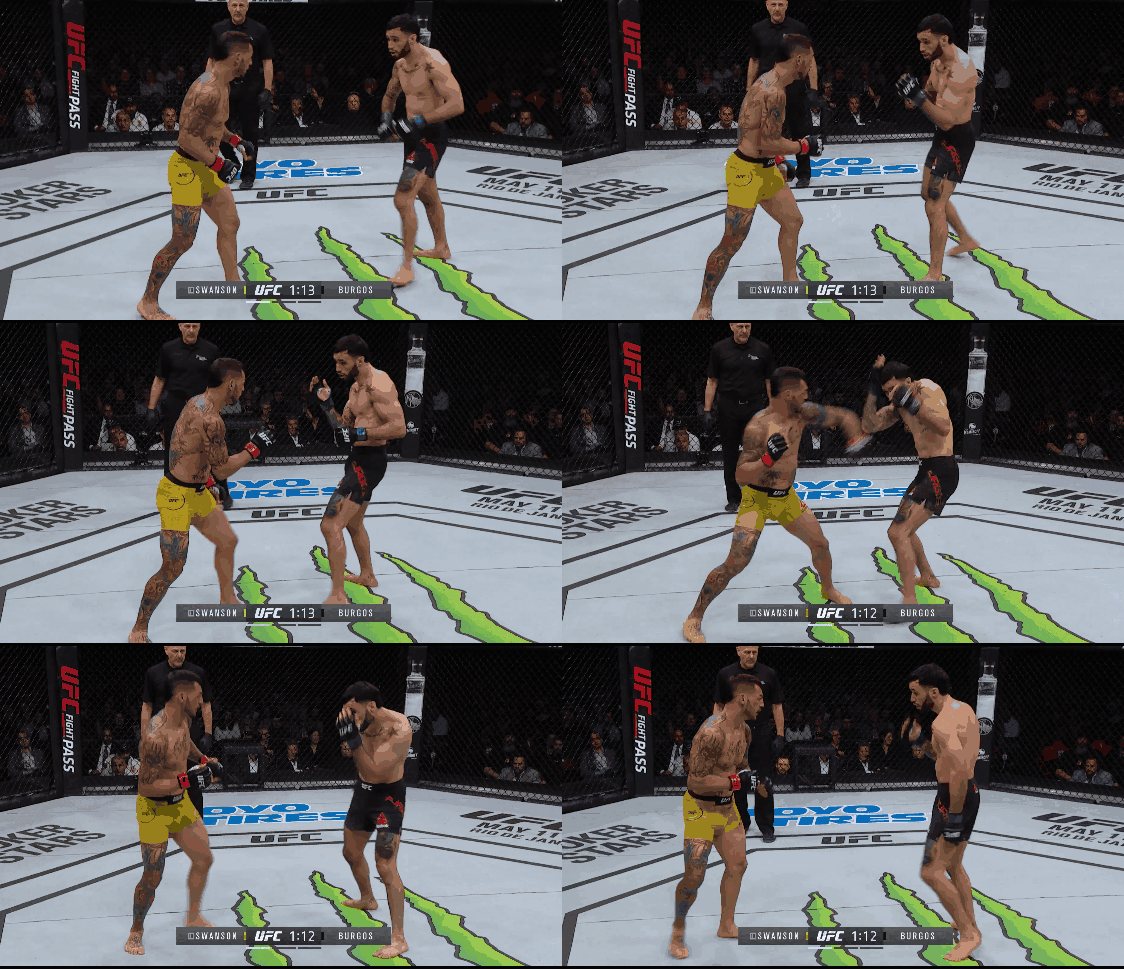
By turning the thumb down, the fighter can ensure that even if his hook is whipped in with an almost straight arm, he will connect with the padded part of his glove. This means that his left hook can be thrown almost as long as his opponent’s jab. Attempting to throw a left hook at this length, with the thumb up and the palm in, the fighter is almost guaranteed to connect with his “door knocking knuckles,” and risks injury to his fingers.
Here is a great illustration of both the virtue of the thumb-down hook and the danger of the long palm-in hook. Swanson’s long left hook counter lands perfectly with the glove, and then he swings a palm-in right hook immediately afterward that lands mostly through his fingers.
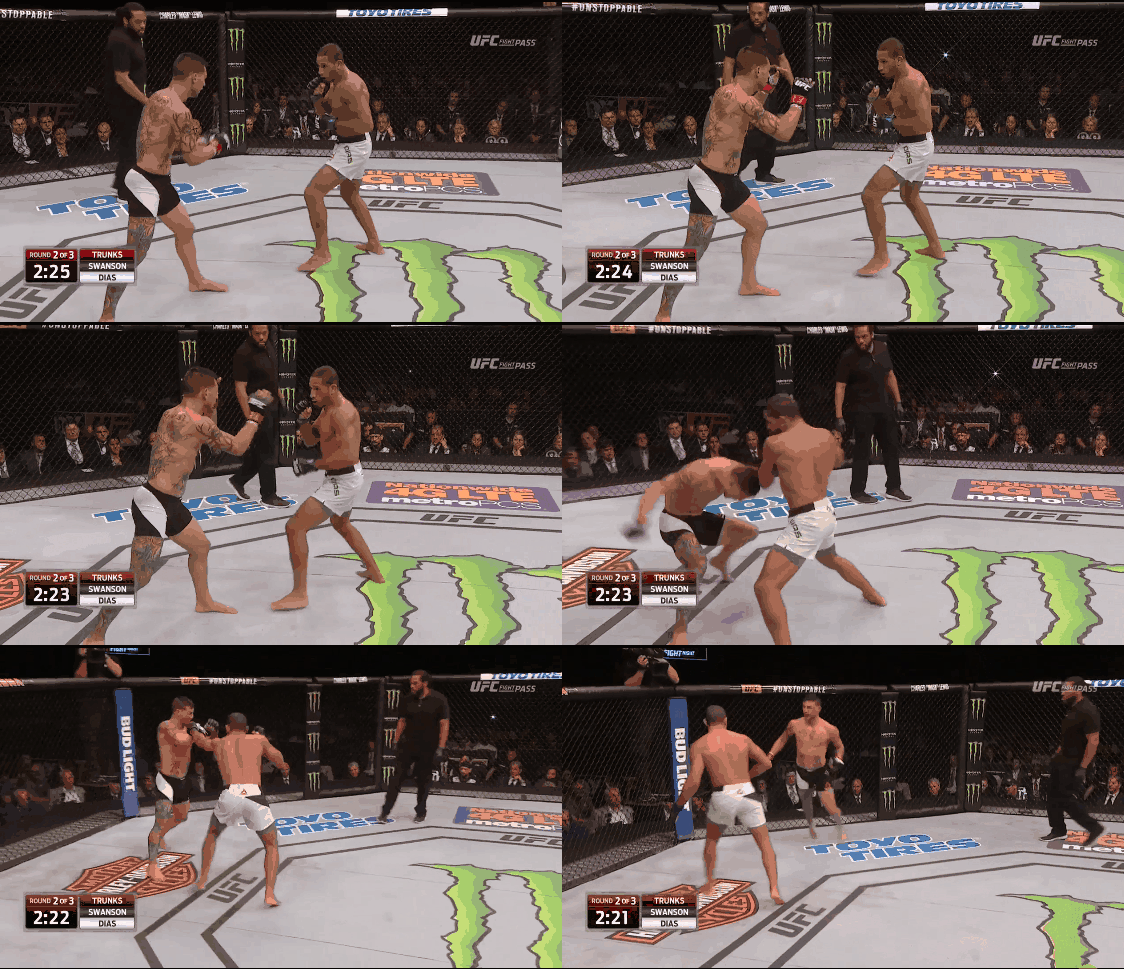
Swanson used the thumb-down, dipping hook to counter the opponent’s jab or step in, and often pivoted off or pulled into a collar tie. Here he chin checks Nova Uniao’s Hacran Dias.
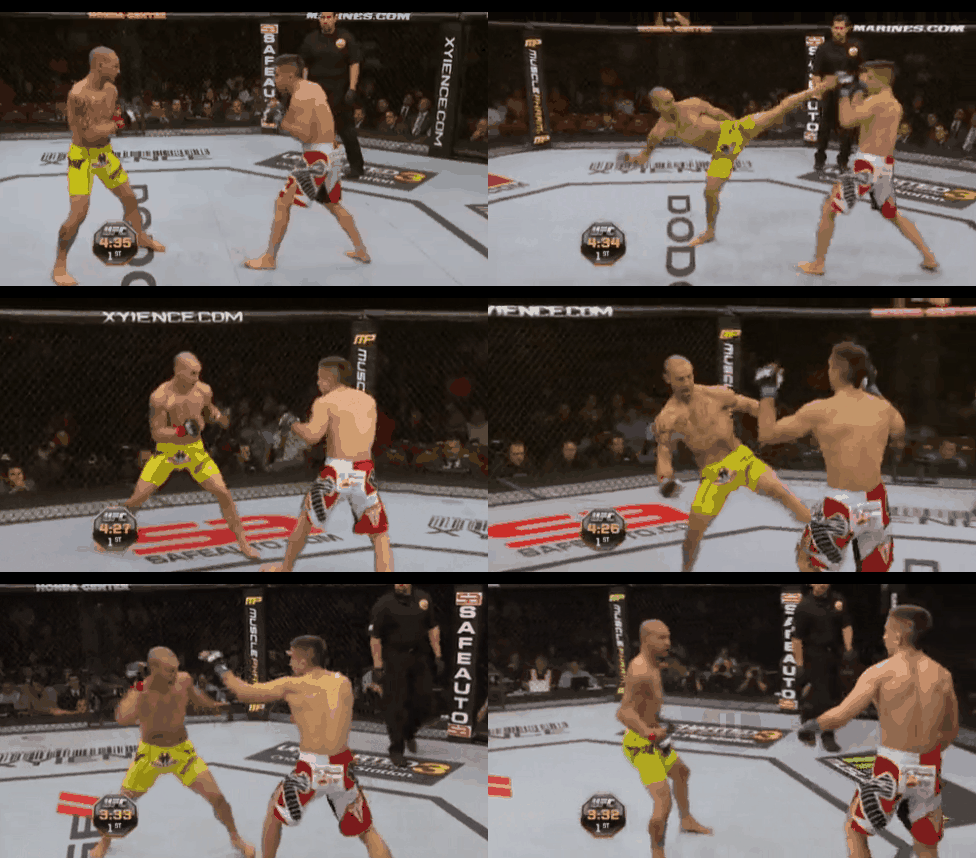
The way that Swanson threw his head off to his right and completely rotated his body while throwing the left hook allowed him to awkwardly stagger into a left kick in a way that regularly surprised opponents and often knocked them off balance before they could follow up.
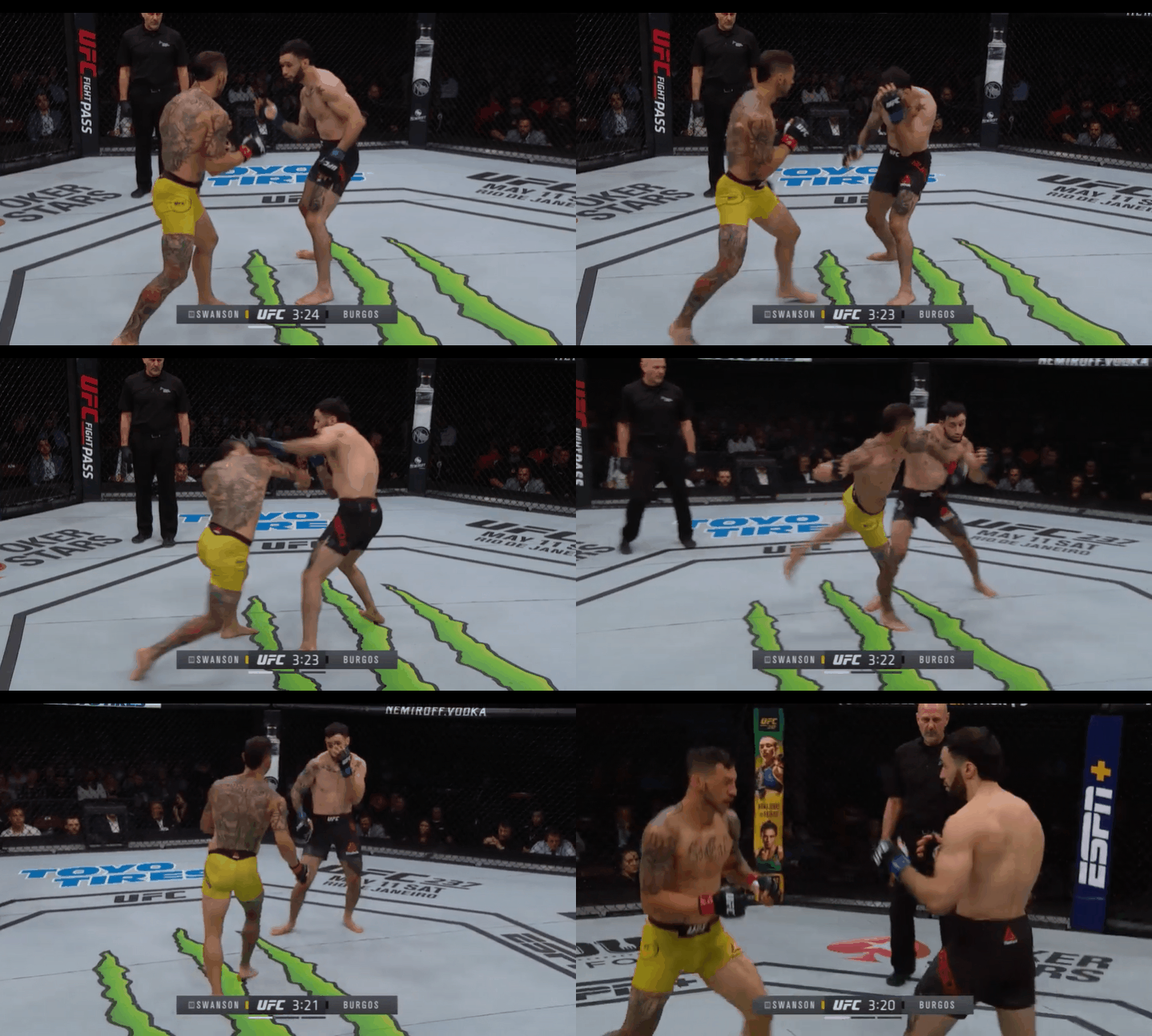
While he was known for his boxing, Swanson’s kicking game was the bridge that enabled him to leap in on opponents. It was never terribly fancy outside of the goofy stumbling kick mentioned above, but he got more mileage out of the simple right low kick than most fighters billed as kickboxing world champions. The trick of it is that there is not just one low kick: the right low kick can be thrown at a number of different ranges.
This is partly due to the length of the striking surface: you can connect with anything from just below the knee to the end of the foot. However, the further down your leg you connect the more you are likely to feel it. The variance in range based on striking surface can be seen on the high kicks of someone like Superbon, who can score high kicks from an infighting range due to his hip dexterity, and by connecting the kick higher on his shin. Superbon can, of course, also throw the long, foot to neck high kick we can all just about manage on our stiffest days.
When throwing the low kick there is the added variable in the length of the target. Most of the upper leg and all of the lower leg are available to kick. For extremes of this, take a look at Rob Kaman jumping in, turning over a low kick and chopping down on the quad, and then at Yuki Yoza standing almost on top of his opponent and kicking them only an inch or two above the ankle.
As an aside, when Cub Swanson made his UFC debut in 2011 against Ricardo Lamas, the first thing Joe Rogan commented on was Swanson’s targeting of the calf. This was a full year before Benson Henderson’s famous use of the calf kick against Nate Diaz and seven years before Demetrious Johnson put Henry Cejudo’s foot to sleep. Swanson did not seem to think the kick had any magical properties, but it hurt, and it took the opponent out of balance.
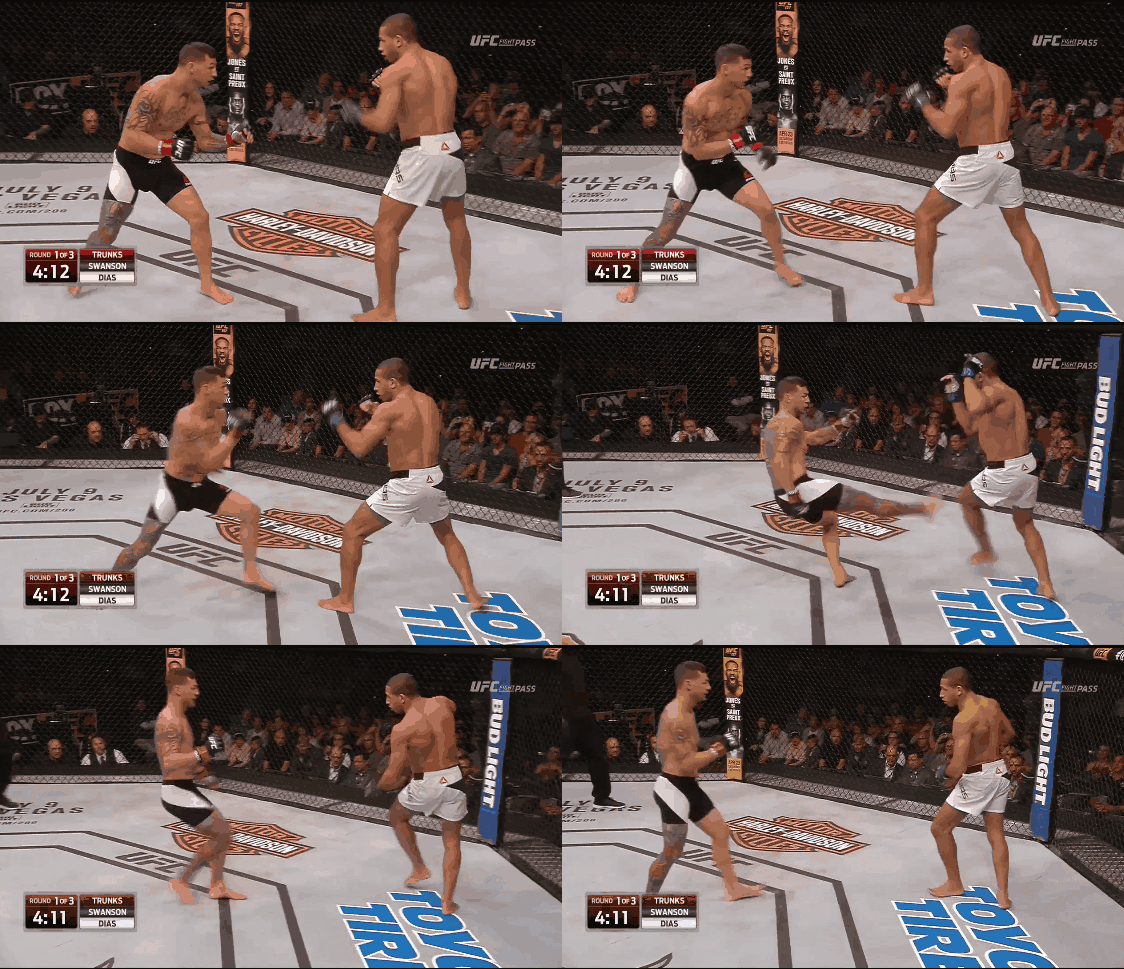
To return to the idea of range on the low kick. Most MMA fighters—particularly since discovering the calf kick—love a long, run up low kick. Longest weapon, nearest target, least scary way to engage. Here is Swanson establishing the low kick early against Dias, throwing long and landing on the calf with the end of his foot.
Yet Cub was only able to truly blend his low kick with his boxing game by insisting on kicking from closer in. Swanson would shimmy his shoulders, bob his head, and get himself close enough to kick the leg with minimal step and at a low angle, almost on top of his opponent.
After scoring this short low kick, Swanson replaces his kicking leg behind him, but in a longer stance and on the ball of his back foot. An exaggerated version of that sprinter’s stance that made Felix Trinidad one of world’s greatest left hookers. From this stance, Swanson jumps in with his left hook—which he can throw longer than most fighters because of his thumb-down over rotation.
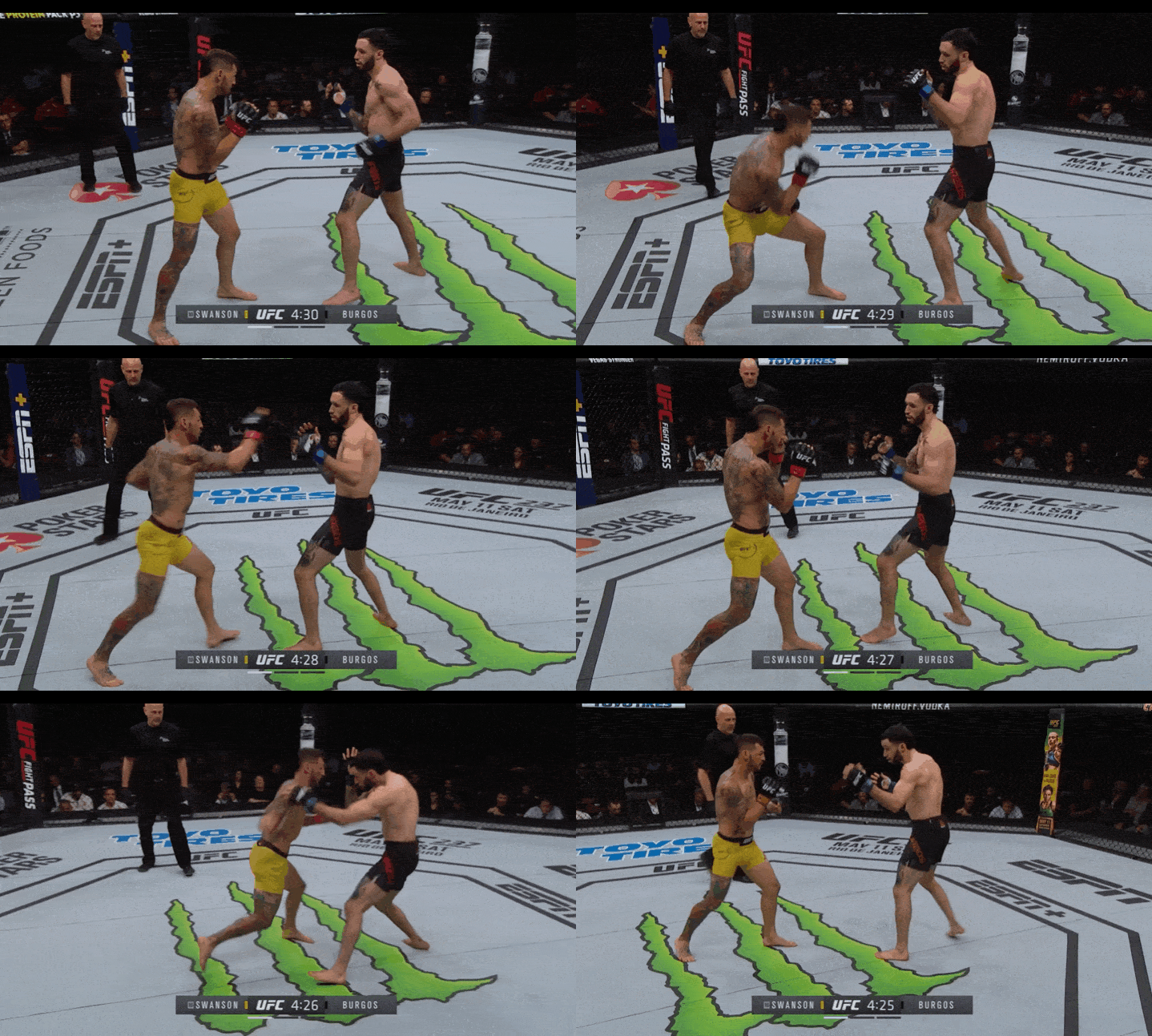
This sequence: short low kick, long left hook, appeared in just about every Swanson fight in his fifteen years in the UFC. He did it against Ricardo Lamas and he did it this past weekend against Nate Landwehr, and if you judge from the Landwehr fight he got better at it through the years. It is something that could be applied by many other fighters if they put the time into it. But like much of Swanson’s game the deterring factor is that you have to be courageous. You have to know that you are going to low kick from punching range and accept that the opponent should be punching back. Swanson was great at slipping, pulling, and even shoulder rolling—as he did so well off his jab against Quarantillo— but most of the time off this low kick he would leave his right hand out to check the opponent’s left, in the split second before he ripped into the leaping left hook.
Here is a gorgeous example from the Dias fight. This short clip crystalizes the essence of Cub Swanson: shoulder feints to close distance, short range low kick, long leaping left hook that drops Dias, and the off-balance left kick as an afterthought.
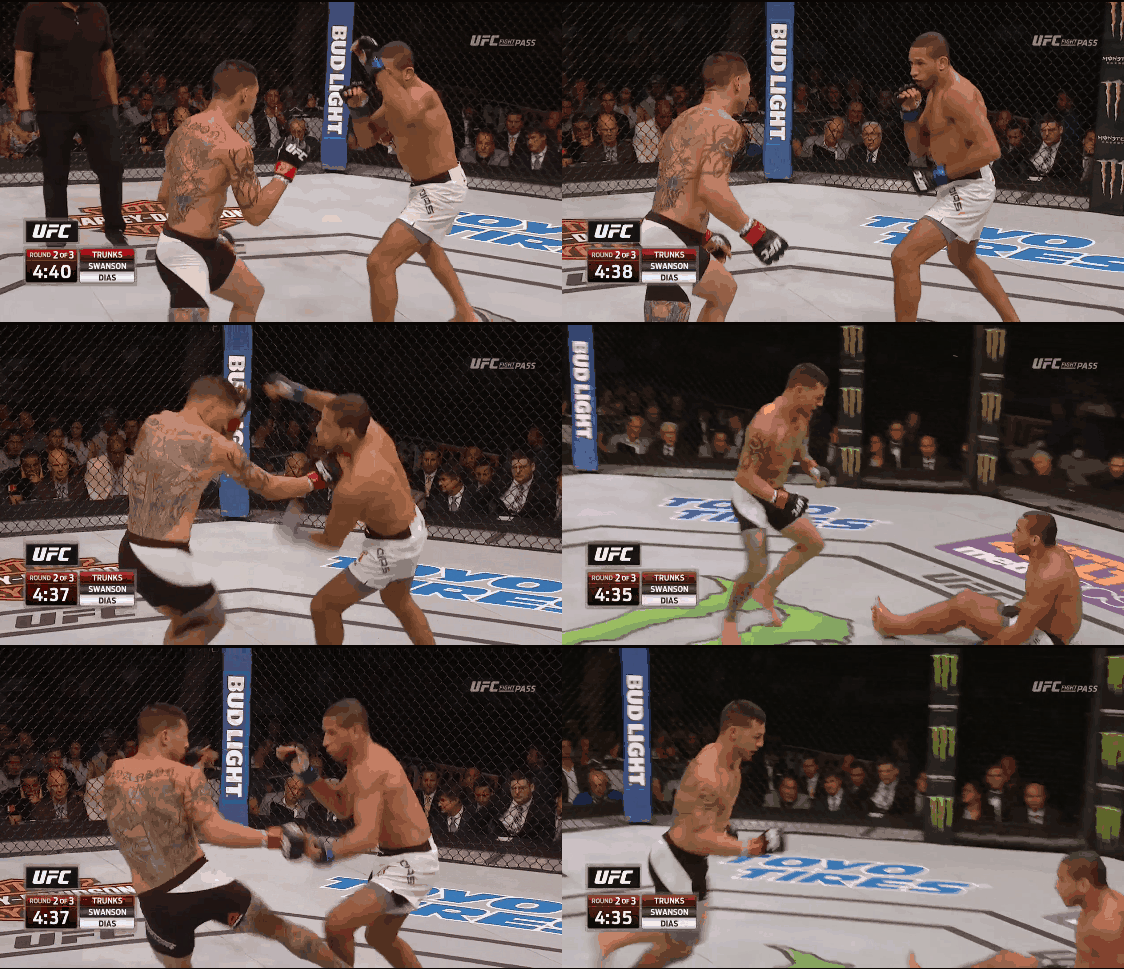
After dropping back into the sprinter’s stance off the low kick, Swanson is also squared and ready to throw that right hand lead, as if he had just completed his shoulder feint.
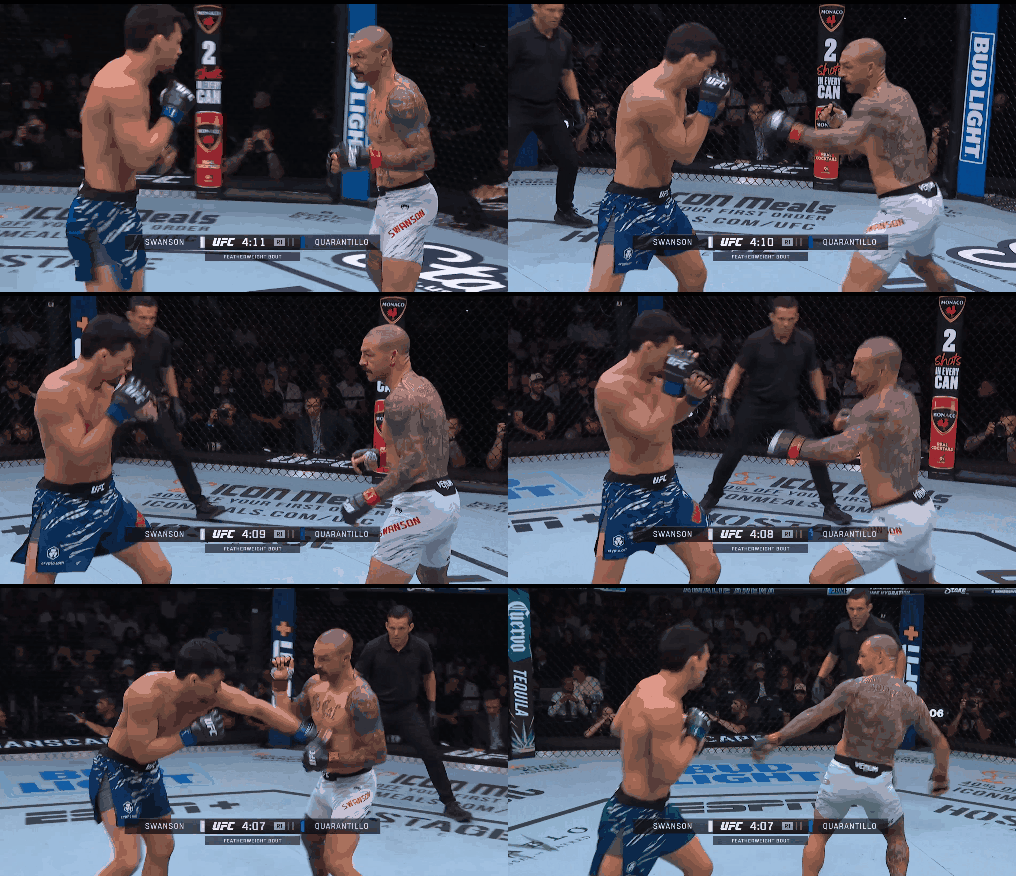
With forty-five fights on Swanson’s record, he will probably always be a subject of fascination to me. Two years ago I wrote an entire article about his unusual get up from closed guard, when I had started reviewing Swanson tape with the intention of writing about his striking.
Though the meat of his game can be boiled down to these few things— the low hands, shoulder feints, long lead hook, short right low kick—there are many more wrinkles and moments from his fights where he sets traps or picks up on the opportunity to counter. The man tried a cartwheel kick in almost every fight and I cannot remember either talking about it on the podcast or writing about it in almost fifteen years of articles because there was always so much else going on in his bouts.
I cannot be sad that Cub Swanson is retiring because he strode off into the sunset about as well as anyone has, and it had to happen sooner rather than later to avoid becoming one of those sad final acts that outnumber stories like Cub’s about fifteen-to-one in this sport. It has been a blessing to witness Swanson’s career, and I consider it another great treat that he was discovered so early and that so much of it took place on camera and was preserved. On a sad, bad day in 2045, I can still picture a classic Cub Swanson fight being a salve for many of my woes.