
Over the weekend, a ragtag bunch of misfits descended on Krakow to wrench each other’s knee ligaments in a gruelling tournament for a relatively small cash prize and bragging rights. But those bragging rights are everything because, while it is still the Wild West, Abu Dhabi Combat Club is the most prestigious submission grappling tournament in the world.
Expectations were low because of several big name absences due to injuries and UFC BJJ contracts, and it being the first ADCC since the retirement of Gordon Ryan. It is no secret that the top grapplers in the world resent having to win ADCC Trials, for no pay, and then compete against the best grapplers in the world at the ADCC World Championship, again for free. I have seen it said that ADCC is where you make your name, and then it is on to superfights and seminars. But this year’s breakout stars seem as talented as those in any previous crop.
With five men’s divisions, three women’s divisions, the absolute tournament, and a super fight (that no one watches anyway), there is obviously too much to cover here. Rather than a comprehensive assessment, I want to focus on a few of the big storylines and—from a technical perspective—the stuff that I intend to steal.
Note: All of these matches are available in full on FloGrappling, many of them on their Youtube channel, and they did a great job covering ADCC this year.
Schuardt’s Run
The grappling world is strange because you can see a humble Youtube short creator turn up to the biggest tournament in the world and become the big story. I only knew Daniel Schuardt as “Precision MMA”, and had spotted him in some of Lachlan Giles’ rolling footage, so I was knocked sideways by his run in the -99Kg division. Schuardt submitted the highly regarded Michael Pixley and Eoghan O’Flannagan back-to-back, lost in the final seconds against tournament favourite Kaynan Duarte, and took the bronze by leg locking the seemingly un-leg-lockable Achilles Rocha.
The move that stole the show was Schuardt’s Mussolini lock. So-called because the grip that Schuardt uses involves crossing his arms in a style similar to the theatrical, pouty pose that the Italian fascist made his trademark. The Mussolini lock takes a place alongside the recently popularized Woj lock as an attack from the 50/50 leg entanglement that isn’t a heel hook. The Woj lock—made famous by Chris Wojik—involves overwrapping the leg and then slipping the opponent’s heel free in the style of an Aoki lock. Schuardt’s Mussolini lock keeps the foot deeper in the armpit, which likely means less of a clean attack on the ankle and a bit more horsepower is needed, but it also means that the attack is much more accessible without the work of slipping that heel out.
Schuardt’s entry against Pixley was an unusual look. Using a low knee shield with the feet crossed—sometimes called a hip clamp—Schuardt turned away from Pixley and got to his hands, before walking backwards and knocking Pixley over. Alex Ecklin popularized this as the G-roll, but Caio Terra had success with the same technique in competition and used it to roll through his own legs on back takes.
Daniel Schuardt with the HUGE win over fan favorite Michael Pixley - he’s in the semifinals against Eoghan O’Flanagan!
— FloGrappling (@FloGrappling) September 12, 2026
[ #ADCCWorlds | Sept 12-13 | Live on FloGrappling📺 ] pic.twitter.com/BpmvGrxeKo
The meme move stole all the attention, which might be a shame because Schuardt’s performances were brilliant all around shows of grappling and they give us a chance to discuss a couple of other facets of modern no gi. For about two weeks, while everyone in your gym is trying it, the Mussolini lock will seem unbeatable, and then people will adjust, escapes will become better known, and it will fall into place as just another technique. The last one of these was the Woj lock, and a little before that it was the Z-lock.
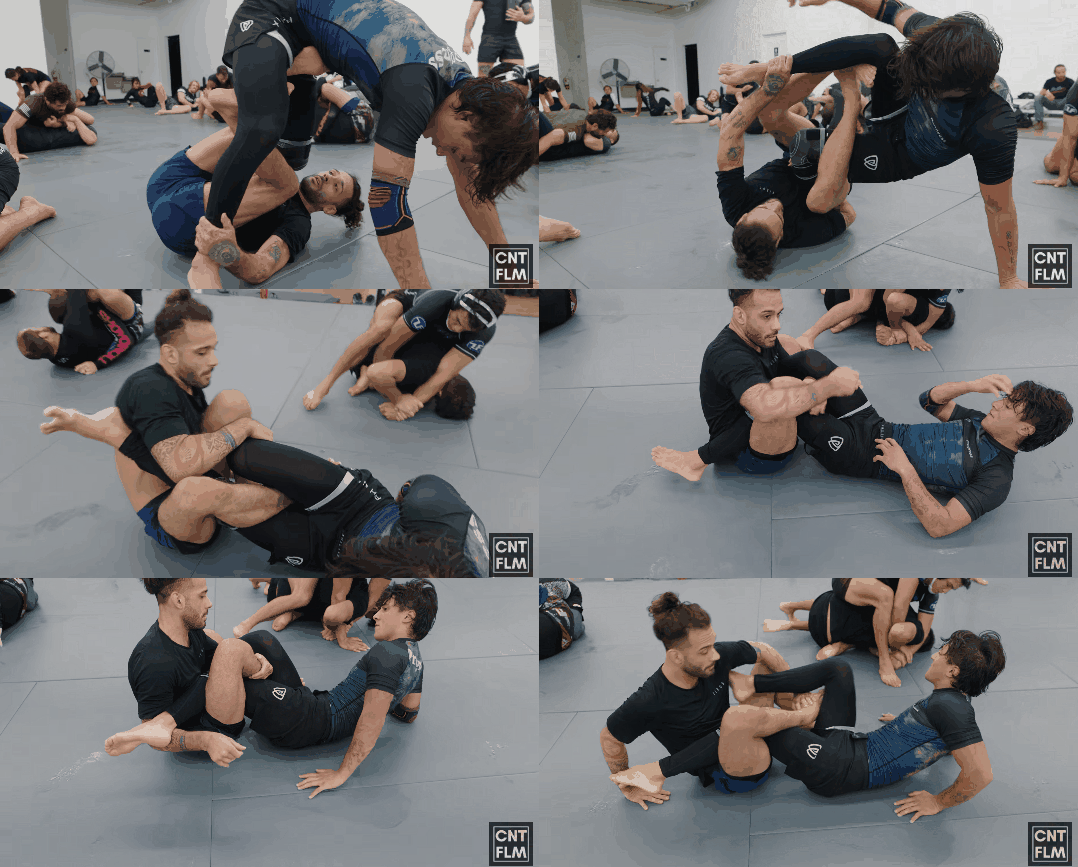
Fig. 1
The Z lock involves reaping one of the opponent’s legs with your legs, in the style of an outside heel hook, while collecting their other leg with your arms, and then pushing the reaped leg up behind them until they tap or their knee ligaments snap. Junny Ocasio demonstrates it in Figure 1.
The Z-lock seemed like a dead to rights submission because both of the opponent’s legs are controlled and his movement options are limited. Schuardt demonstrated how fast the grappling world adjusts to new ideas by nullifying and escaping the Z-lock against Eoghan O’Flannagan. Keeping the hip of the reaped leg on the mat, he denied O’Flannagan the Z-lock finish.
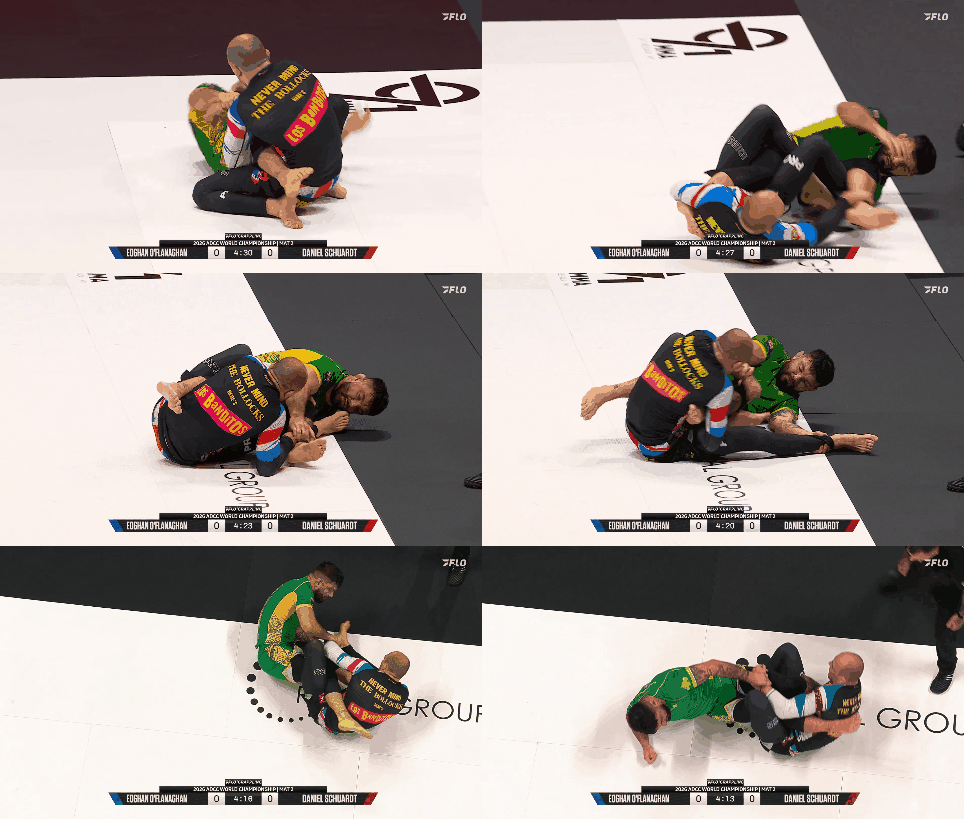
Fig. 2
In Figure 3 you can see that even though O’Flannagan was controlling both legs, he has no meaningful attacks on the Schuardt’s right leg as his legs are encircling the other leg, which Schuardt is hiding on the mat. Schuardt eventually slipped his leg free and began scrambling through to end up on top.
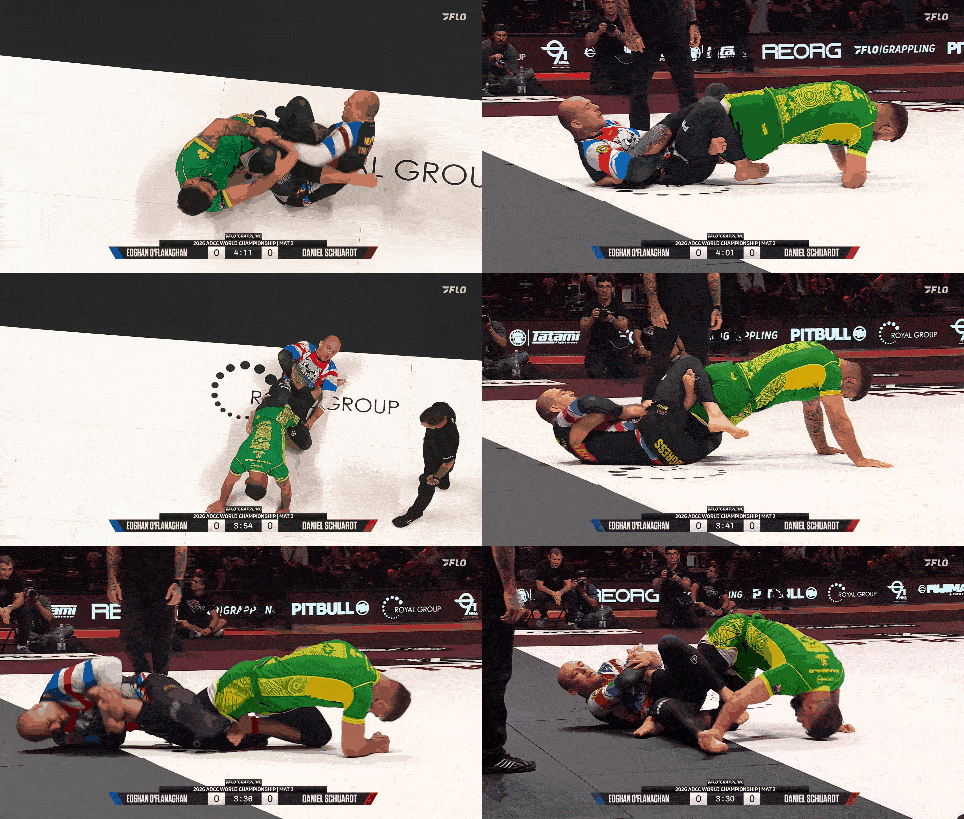
Fig. 3
To stay with leg spaghetti, Schuardt’s onslaught against Achilles Rocha’s leg was beautiful as he repeatedly raised his hips to line up a kneebar on the standing Rocha, before spinning through to attempt the heel hook again. The way he finally got Rocha was with a lateral kneebar from the saddle.
The problem with the saddle and the inside heel hook is that the opponent can turn their toes in, put their knee on the mat, and begin turning their whole body away to perform a number of different variations of a running man escape.
In Figure 4, Schuardt begins attacking Rocha’s left leg (a), but Rocha throws his right leg away and uses it to turn his body to begin a running man escape, if left unchecked his left knee will turn in and deny Schuardt the heel hook (b). By grabbing the foot on the inside of the base of the big toe and pulling it to his chest, the Schuardt kills the spin (c). Schuardt hips in and you can see that Rocha’s knee goes one way and his foot turns the other, creating some horrible, heel hook type damage (d).
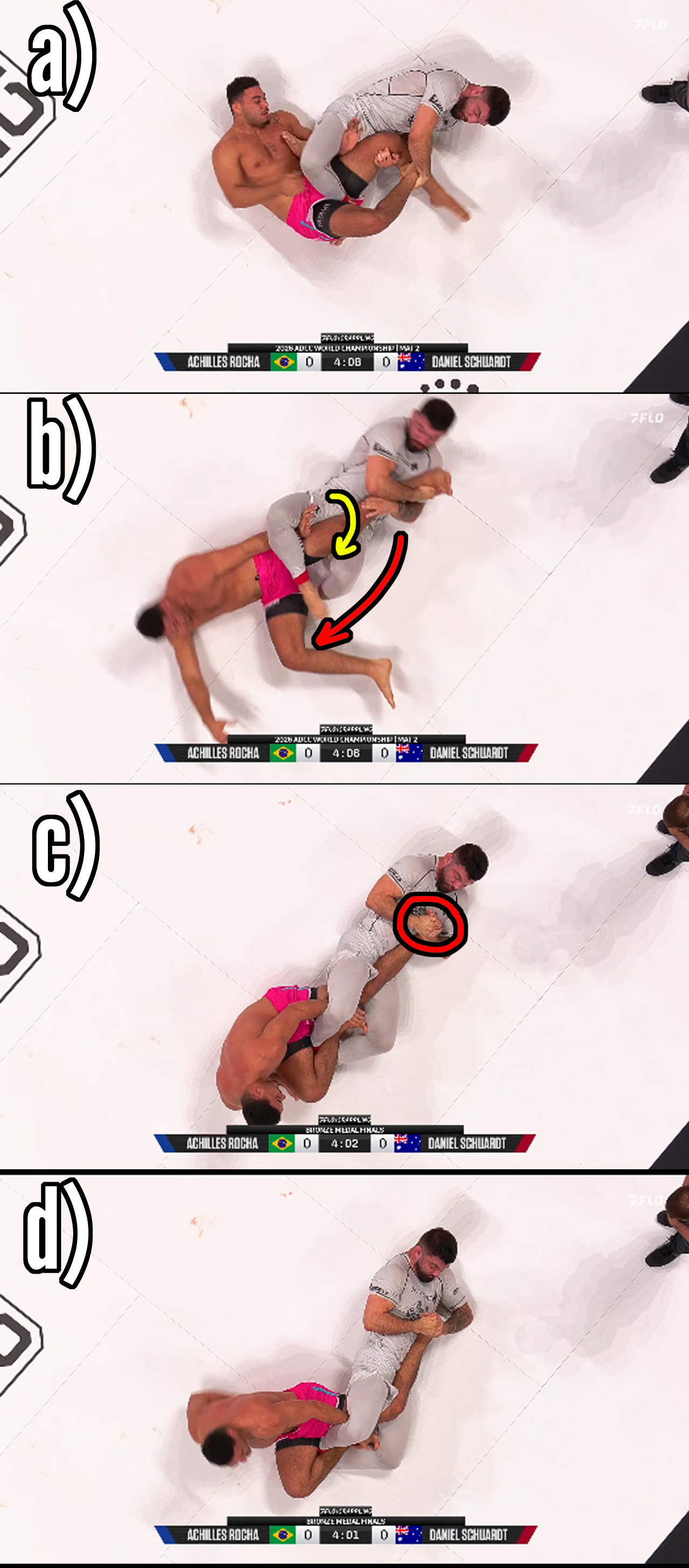
Fig. 4
Schuardt’s story was interrupted by Kaynan Duarte, the returning champion and a man who submitted a whopping seven opponents at the last ADCC. ADCC has a lot of rules, many of which are only occasionally enforced, (Vagner Rocha and his suddenly giant son have made careers from betting on the referees doing nothing). The one rule that does make ADCC unique is that going to the turtle fast enough nullifies any points scored on you. The opponent has to take you down and keep you down, or pass your guard and keep you flat, there are no half-measures. Each time Duarte passed Schuardt’s formidable guard, Schuardt went berserk to get to his knees.
Eventually, as the final minutes ran down, Schuardt managed to grapevine Duarte’s trailing leg (a) and began reaching over Duarte’s far leg to create a half guard sweep (b) without having the underhook.
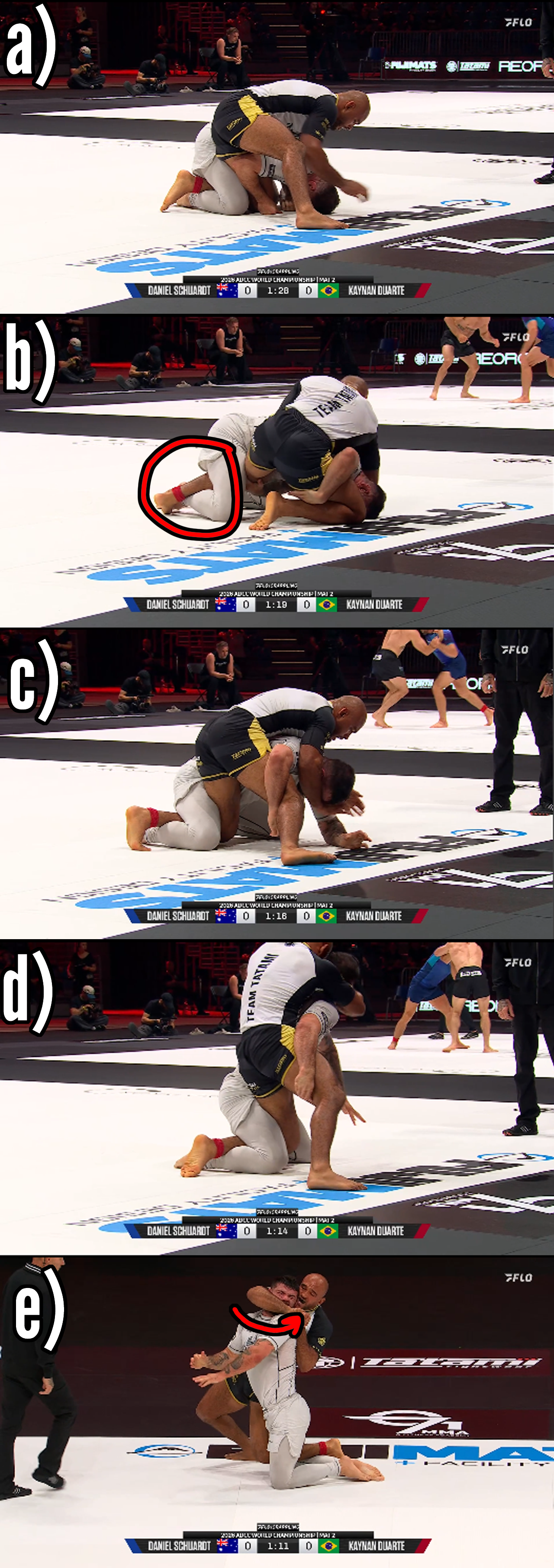
Fig. 5
With seconds left in the bout, Duarte recognized that by stepping over his leg, Schuardt had block his own hip and he could not turn with the cross face. Duarte grabbed a neck crank and Schuardt had no way to spin with it, forcing the tap. It should be noted that neck cranks are another element that make ADCC unique, as they are forbidden in most other high profile competitions.
The importance of the turtle and the legality of the neck crank also link ADCC to catch wrestling more than a simple Brazilian Jiu Jitsu tournament. In the old days of catch wrestling, rotational submissions such as neck cranks, kimuras (or “double wristlocks” in this context) and toe holds were used to force the opponent to turn their own back to the mat. In the rules that men like Frank Gotch competed under, turning the back to the mat was the submission, and it was only blocking the turn as Duarte did here that made a hold illegal.
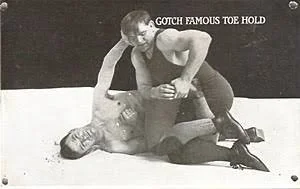
Fig. 6
Chen’s Passing
For a break from leg spaghetti, let us consider Jozef Chen’s ADCC run. There are a lot of guard players in ADCC, and a lot of grinding top players and stallers, but not an awful lot of effective guard passers and Chen stands out as one of those rare few. Chen’s career has been one of re-evaluating techniques that have fallen out of favour or been deemed ineffective without the gi, most notably the high tripod pass—a Roger Gracie favourite in the gi—and the over under pass. Both of those were on display in Chen’s matches, but one look that struck me was Chen’s use of the cross grip pass. This is quite common in the gi, but it never found much purchase on the no gi scene. In fact, seeing Chen using the cross grip immediately conjured the image of Leo Vieira attempting to use this against Rafa Mendes to zero success back in 2009.
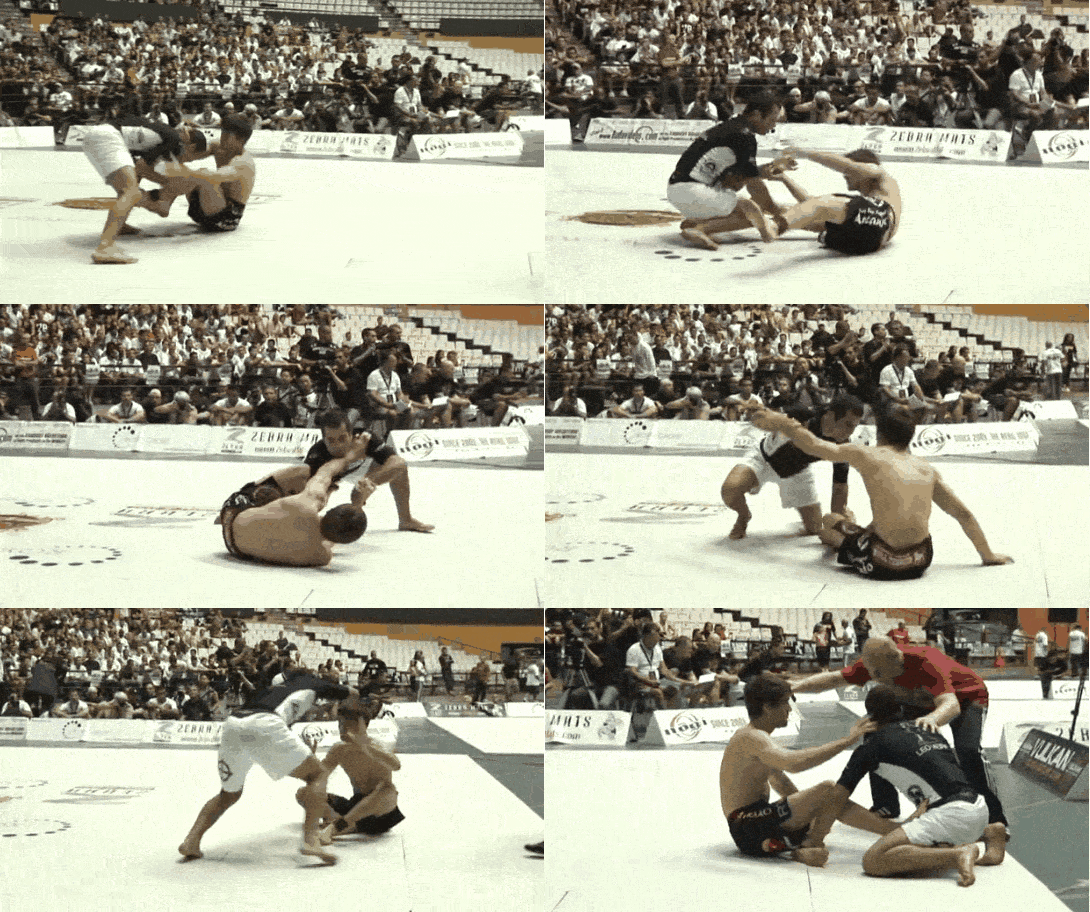
Fig. 7
Chen would get a slight outside angle on the opponent in one of many ways, then pass it off to his cross hand and work himself up their body, almost facing backwards. Figure 8 shows Chen in Margarida position, or on an over under pass entry where the opponent’s bottom knee is still in front of his chest (a). Chen performs a base switch, dropping his right knee and bringing his left up (b), then brings his left hand from underneath Diaz’s right leg to gripping Diaz’s left ankle (c). Chen pushes the ankle to the floor and walks around towards Diaz’s head on his knees (d).
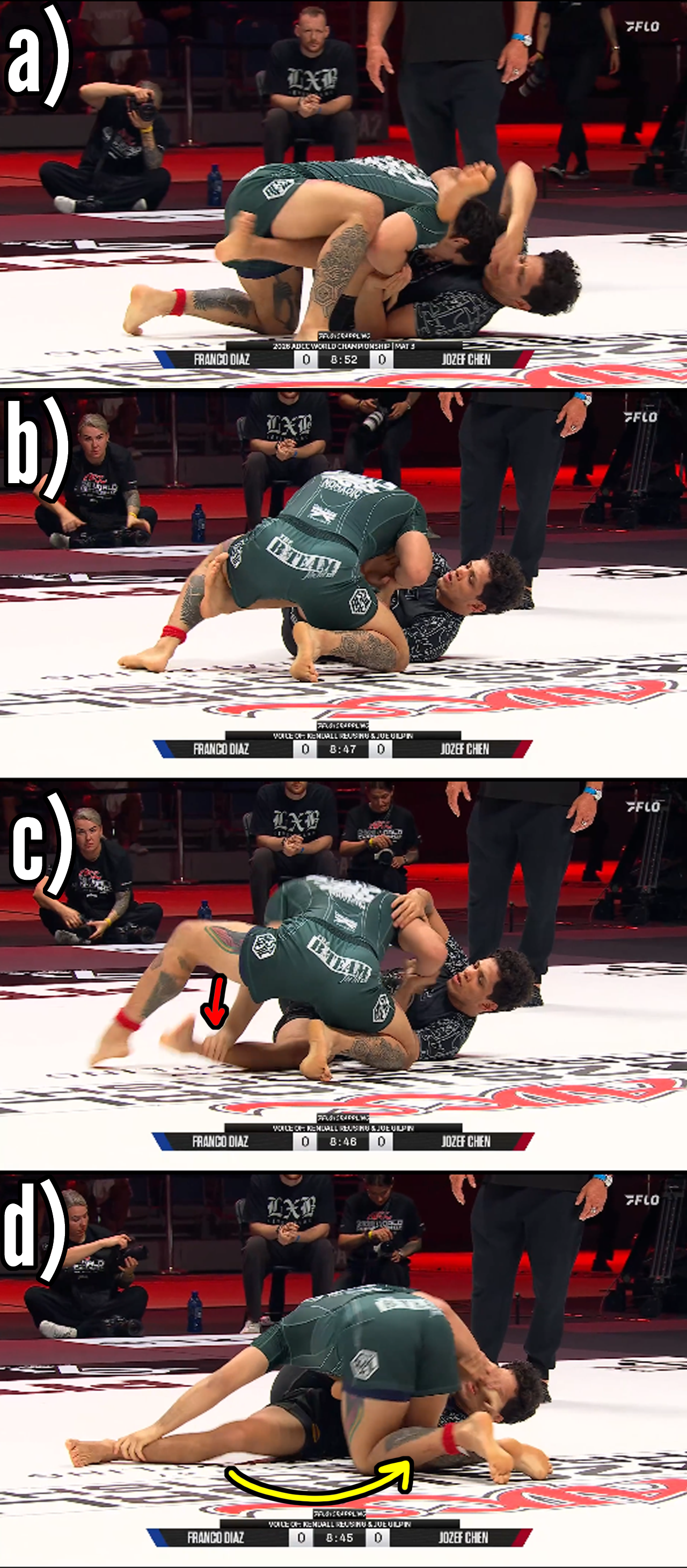
Fig. 8
This neat little grip switch is one that Youssef Zalal used against Aljamain Sterling a couple of times in their bout. Going from over under position, where the opponent expects forward pressure and an attempt to get as close as possible, to gripping the foot and passing it across the body. It is a tricky change up of dynamic.
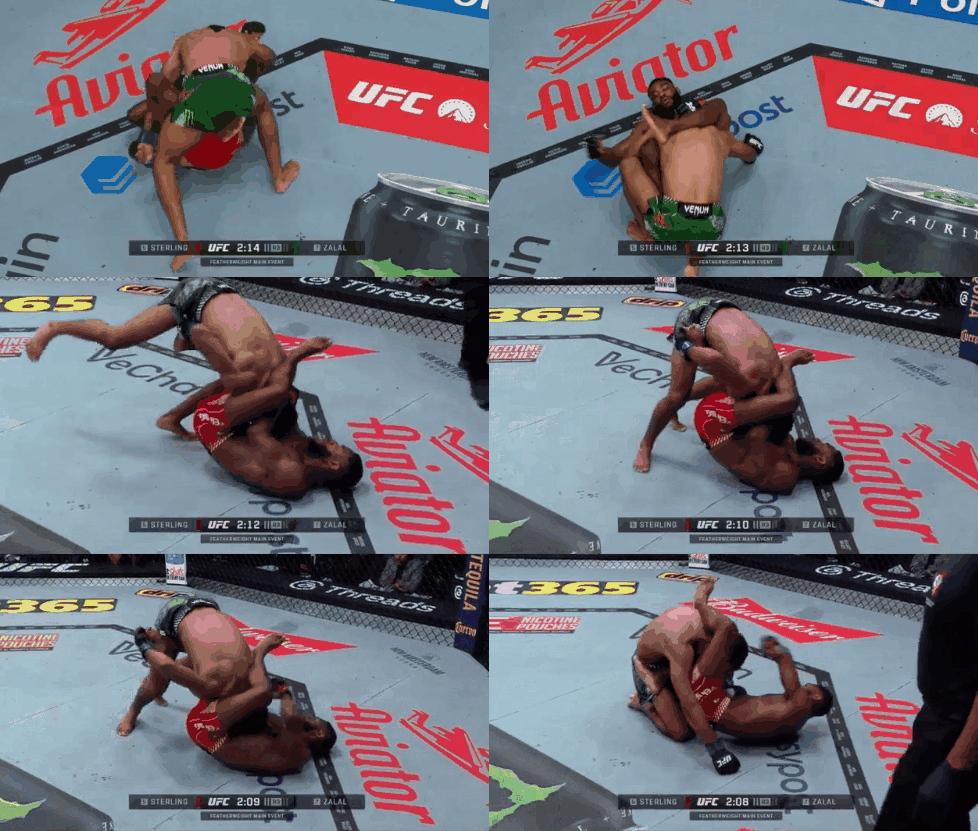
Fig. 9
Figure 10 shows how, as Diaz was attempting to high leg back to guard from this cross grip (c), Chen would be able to punch his other arm through Diaz’s leg (d) and run around to the other side with what is called a cross under or cross scoop grip pass (e) (f) . The cross under pass is a wonderfully powerful technique, but it almost always has to be viewed as a secondary attack, a follow up off an original pass attempt that draws the high leg from the opponent.
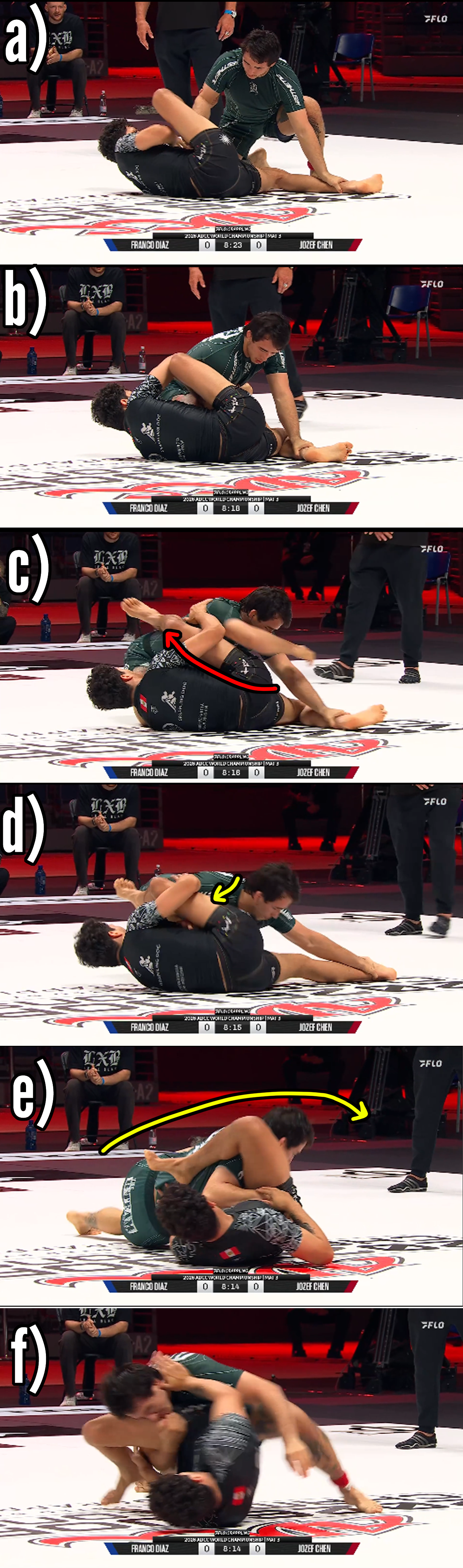
Fig. 10
Late in the match Chen was going from side to side with these cross under passes in a way which looked horrible to have to defend.
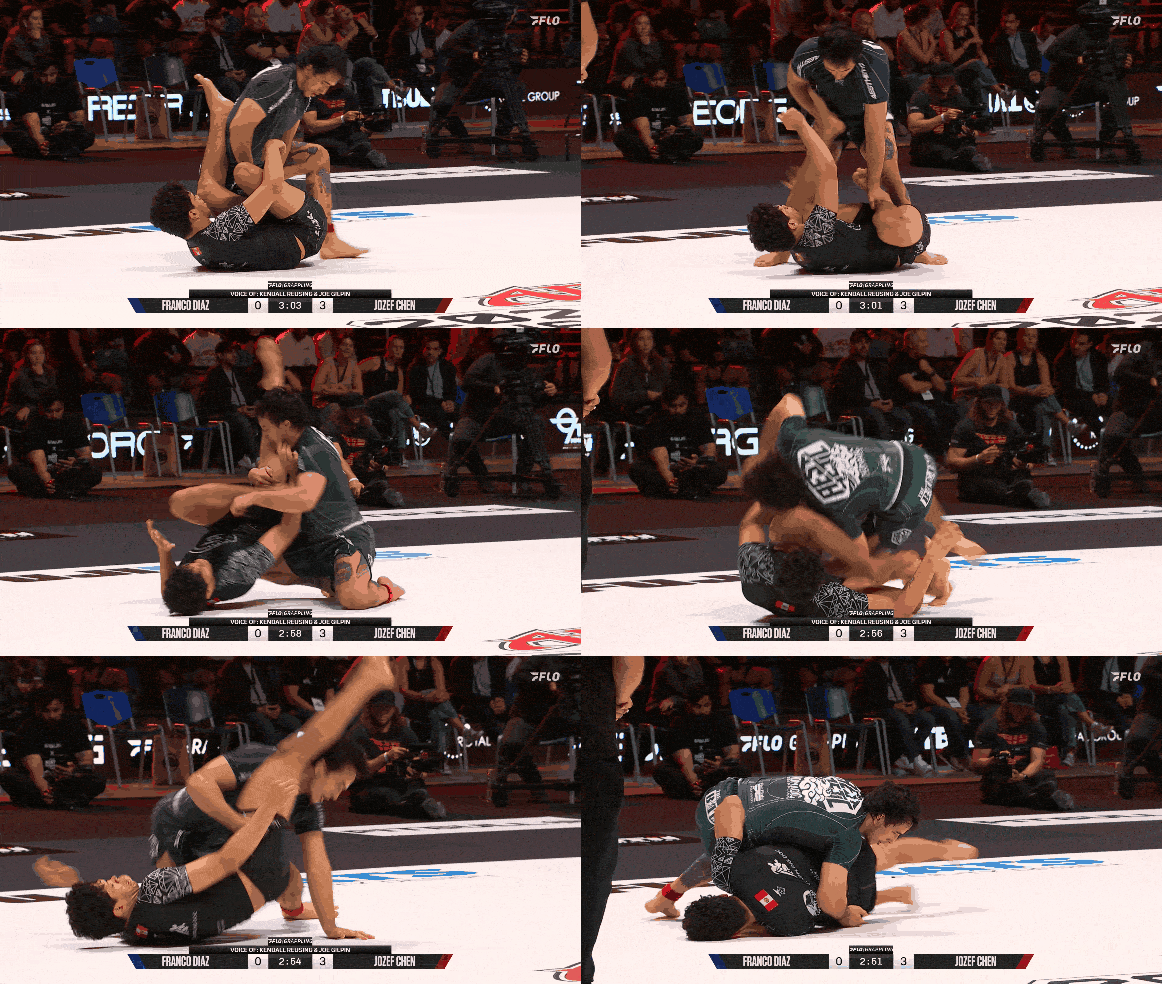
Fig. 11
Legs Like Arms
This brings us to one of the major themes from ADCC 2026: leg dexterity. Being a big, strong, durable athlete is great, but leg dexterity seems to be separating the men from the boys. I use “dexterity” and not “flexibility” because control in the extreme range of motion is the crucial aspect. Pawel Jaworski won the -88Kg tournament entirely from his guard, and he did so with his brilliant false reap. The false reap involves wrapping the opponent’s leg with your arm, but getting your own leg over the top of it. Here’s a quick example from the also freakishly dexterous Cole Abate:
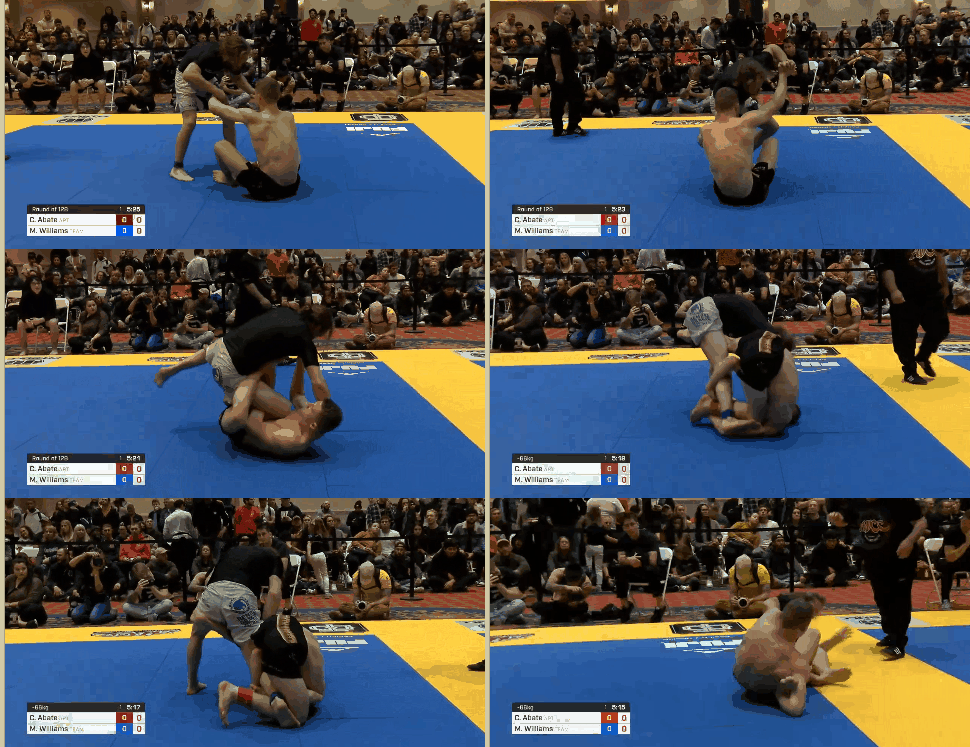
Fig. 12
To a normal person the false reap is a powerful technique but horribly telegraphed as it has to be entered under very specific circumstances. Few normal people can wrap their arm elbow deep around the opponent’s leg and easily throw their own leg over the top of it.
Pavel Jaworski can bring the inside of his ankle up to his collar bone, under his own control, any time he wants. That makes an enormous difference in just how accessible the false reap set up is. The extreme example of this was the combination he was using of K-guard to false reap. Jaworski himself says he got the inspiration from Craig Jones’ use of this combination against Nicholas Meregali in 2022, but as Figure 13 shows, Jones was reacting to Meragali dropping his left knee in the middle to prevent the K-guard attack.
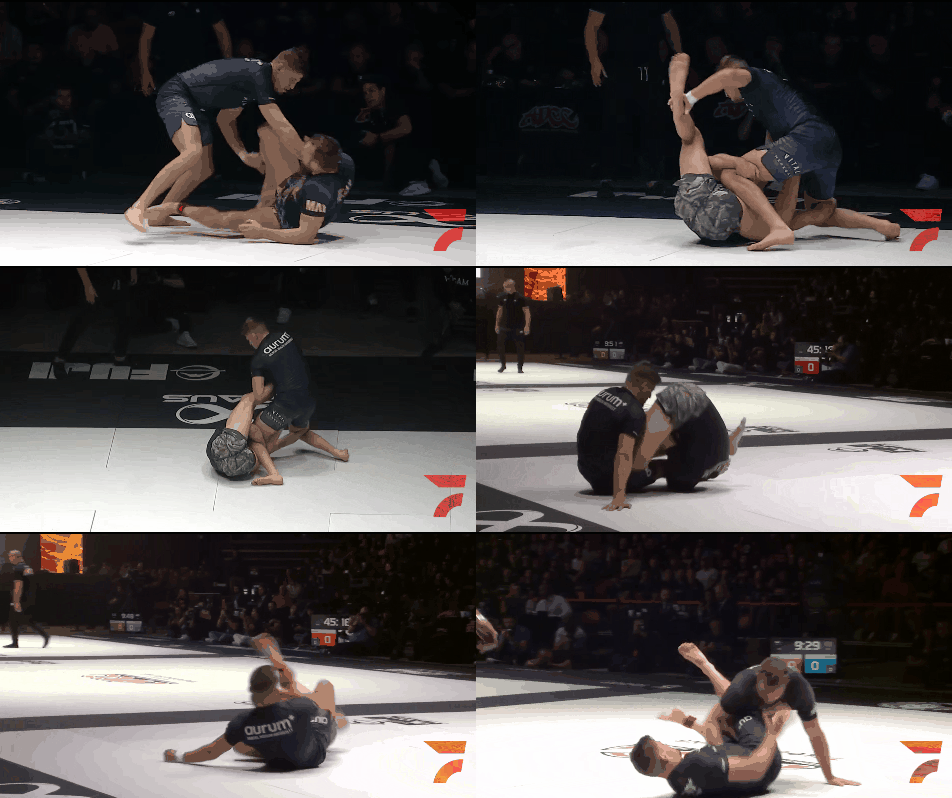
Fig. 13
Figure 14 shows Jaworski’s variation. Jaworski begins attacking the K-guard by scooping under Frias’s right leg with his left arm and bringing his right knee in front of Frias’ body (b). Note how he is holding the triceps grip to pull Frias on top of him. Jaworski releases his grip on the leg, and throws his left hand all the way across under his back to grab the inside of Frias’ left leg (c).
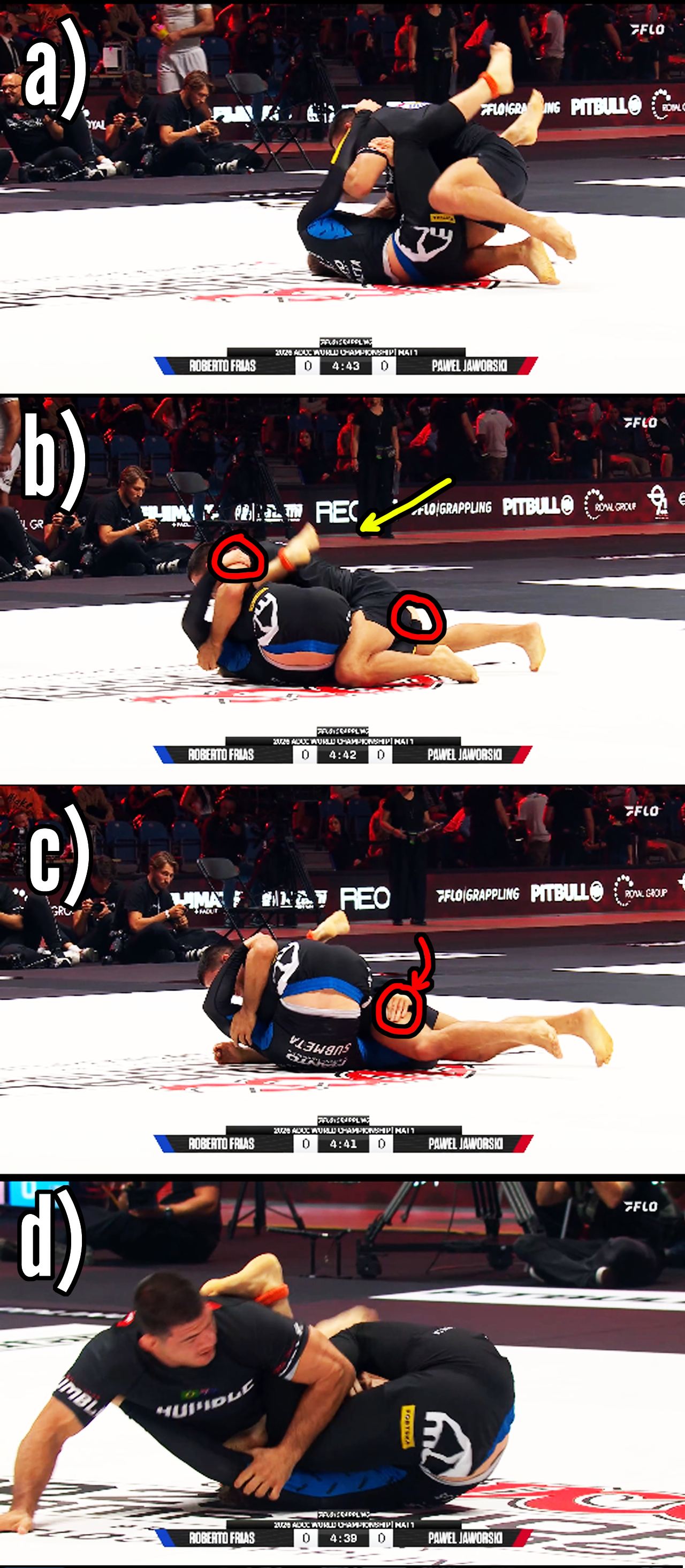
Fig. 14
The tricky part is the leg pummeling, as Figure 15 shows. Pavel brings his right foot from behind Frias’ armpit, between his chest and Frias’, and places it on Frias’ right hip (e). Almost simultaneously he must get his left foot from the right side of Frias’ body to the left side, through the same space between their bodies (f). His knee slams in behind Frias’ left leg to collect the false reap (g) and he forces Frias’ weight away to give himself the ability to extend the leg out from under Frias.
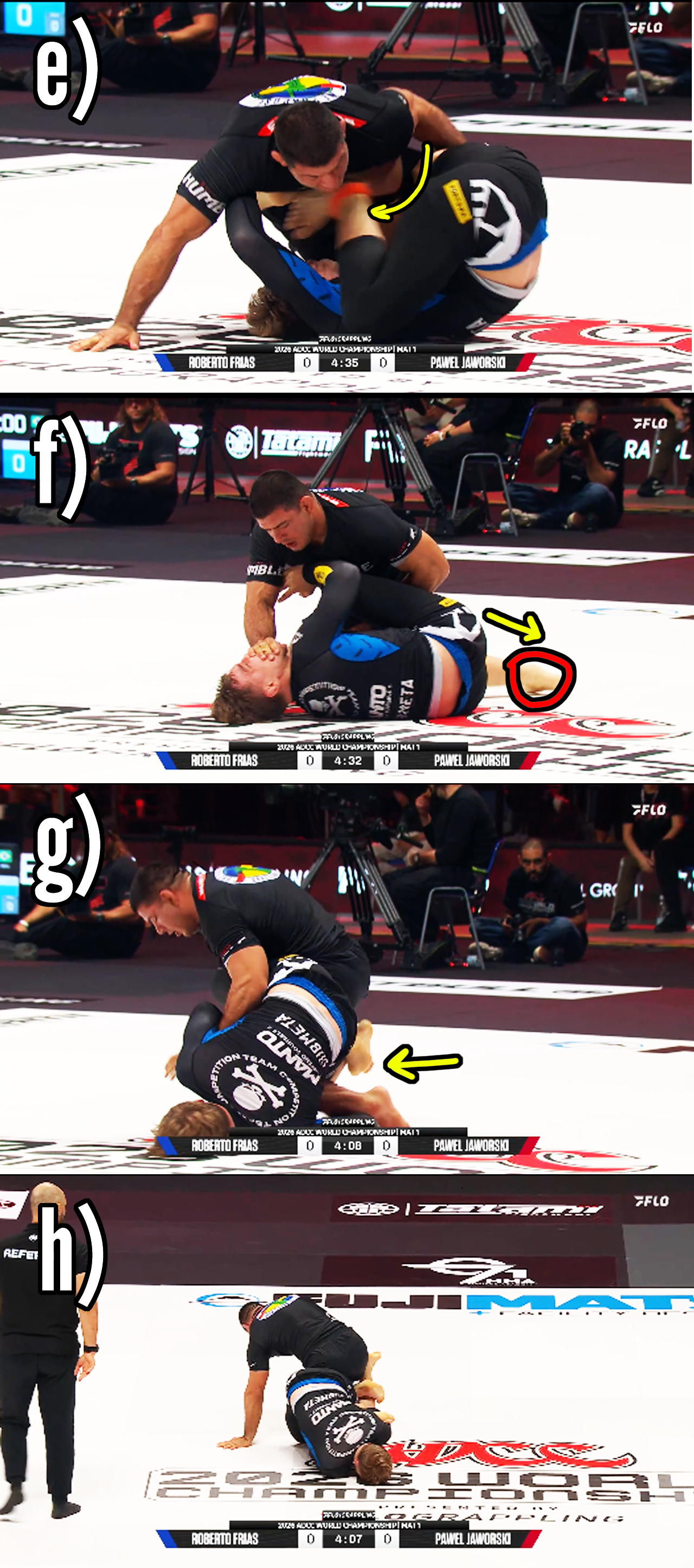
Fig. 15
Pawel Jaworski has been murdering the no gi world with his false reap for a couple of years at this point, but it has often been from the reverse De La Riva guard and the butterfly half guard. Figure 16 and 17 show how he used his classic reverse De La Riva entry against Gabriel Brod in the same tournament, but the intricate K-guard to false reap entry that he hit on Frias has given Jaworski another very tricky string to his bow.
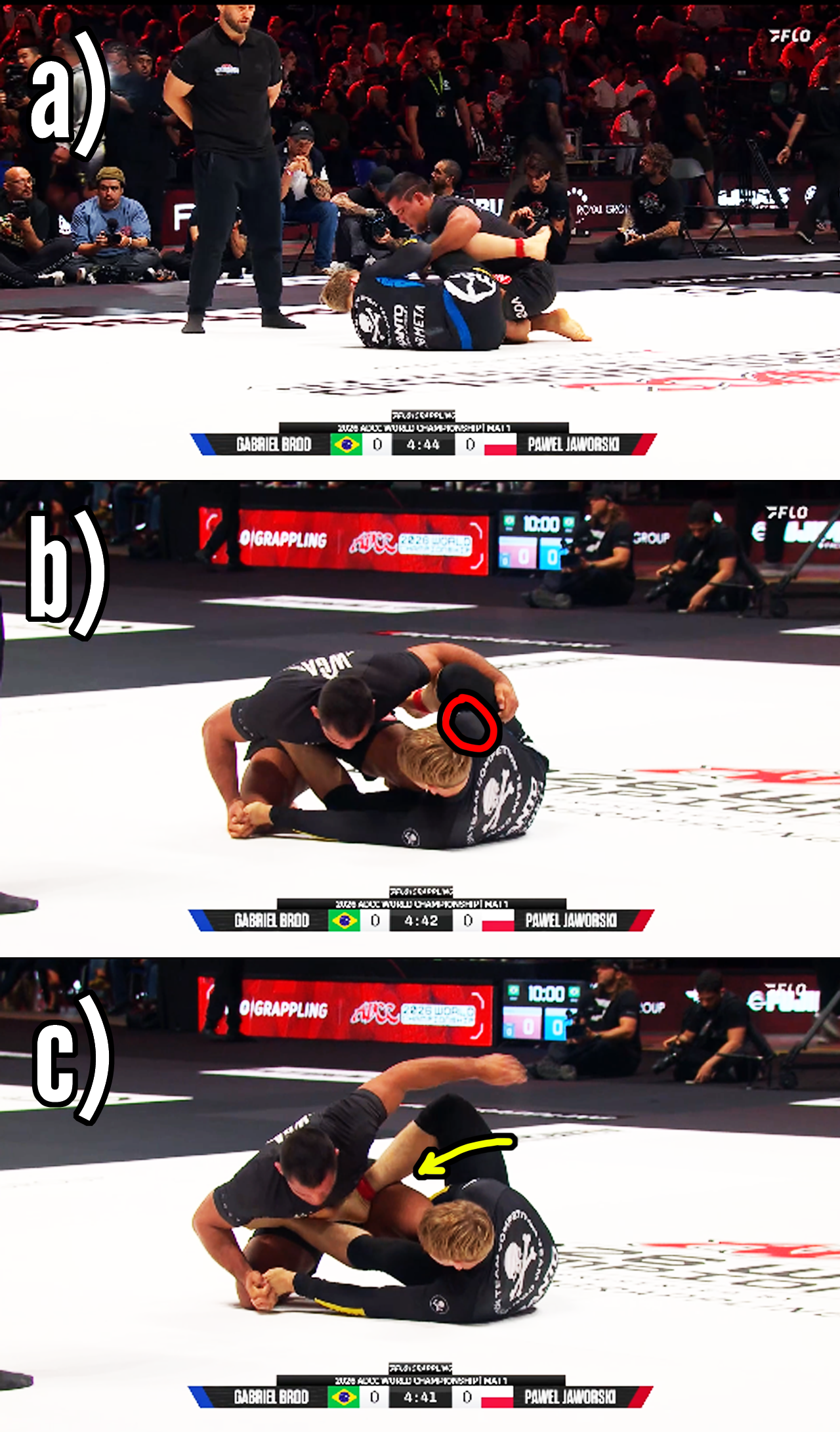
Fig. 16
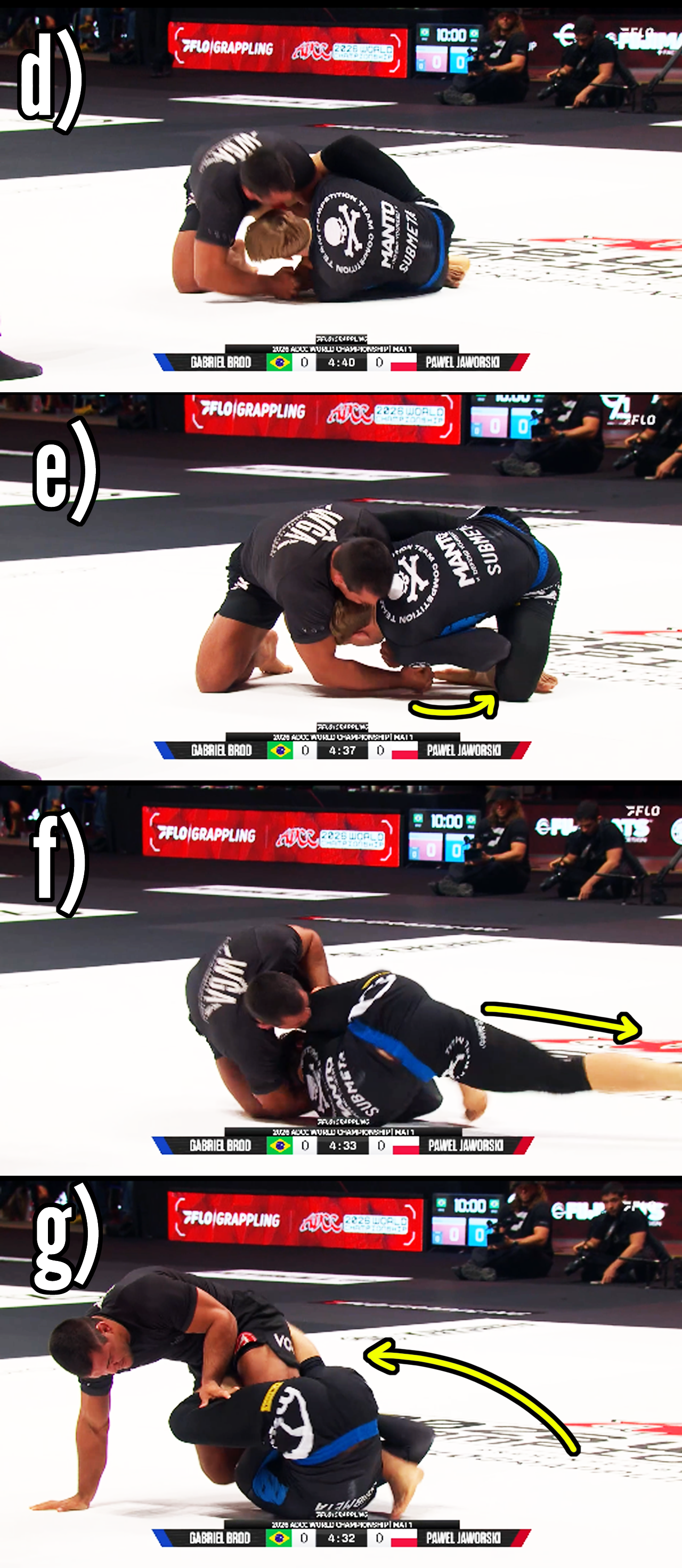
Fig. 17
In the finals Jaworski’s incredible flexibility prevented Marlon Tajik from passing his guard through the entire time period and took Jaworski to a points victory. Each time Tajik attempted to pass in one direction, Jaworski would pull his other foot onto his chest, and Tajik would pass around on top of it, never completing the pass.
Magic Marlon Tajik
Marlon Tajik was the other great surprise in this tournament. While we are discussing leg dexterity, the gold standard has always been BJ Penn and one of his most famous feats was hitting a no-hands jailbreak escape from side control against Georges St. Pierre. At one point in my life I could perform this one one side, by propping my foot on top of my other thigh and feeding it in with that, but Penn just places his foot straight into his own hip pocket with no assist at all.
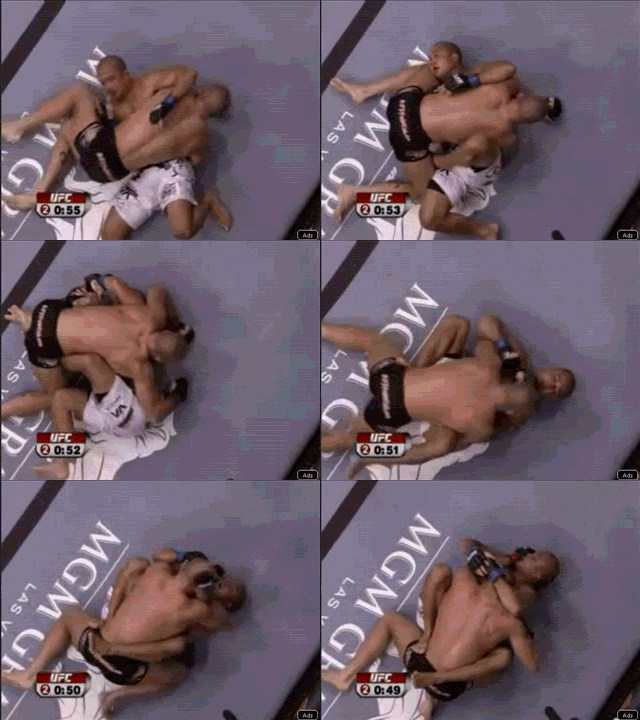
Fig. 18
After losing to Pavel Jaworski in the finals of the -88kg division, Marlon Tajik entered the Absolute, and used the jailbreak to escape from underneath the larger Pouya Rahmani. Tajik used a hand assist to perform his jailbreak and the escape carried him into perfect position to hit his own false reap. Here is a nicely edited clip showing the key points from Open Note Grappling.
marlon tajik uses a jailbreak to get an inside heel hook
— Open Note Grappling 📝 (@OpenNoteGrapple) September 13, 2026
he uses his inside arm to grab his far foot
then he grabs pouya's thigh with that same arm
marlon uses his far foot to elevate pouya's thigh and kani basami from underneath him
pouya tries to spin out but it's too late pic.twitter.com/JibRg6DBwg
Fig. 19
To quote the father of modern karate-do, Gichin Funakoshi, “To search for the old is to understand the new. The old, the new, this is a matter of time. In all things man must have a clear mind. The Way: Who will pass it on straight and well?” Or in common parlance: the old school is the new school. Eddie Bravo made the first famous use of the jailbreak escape to get out from underneath Royler Gracie all the way back at ADCC 2003. He too, used a hand assist, and was able to spring the match winning triangle choke seconds after the escape.
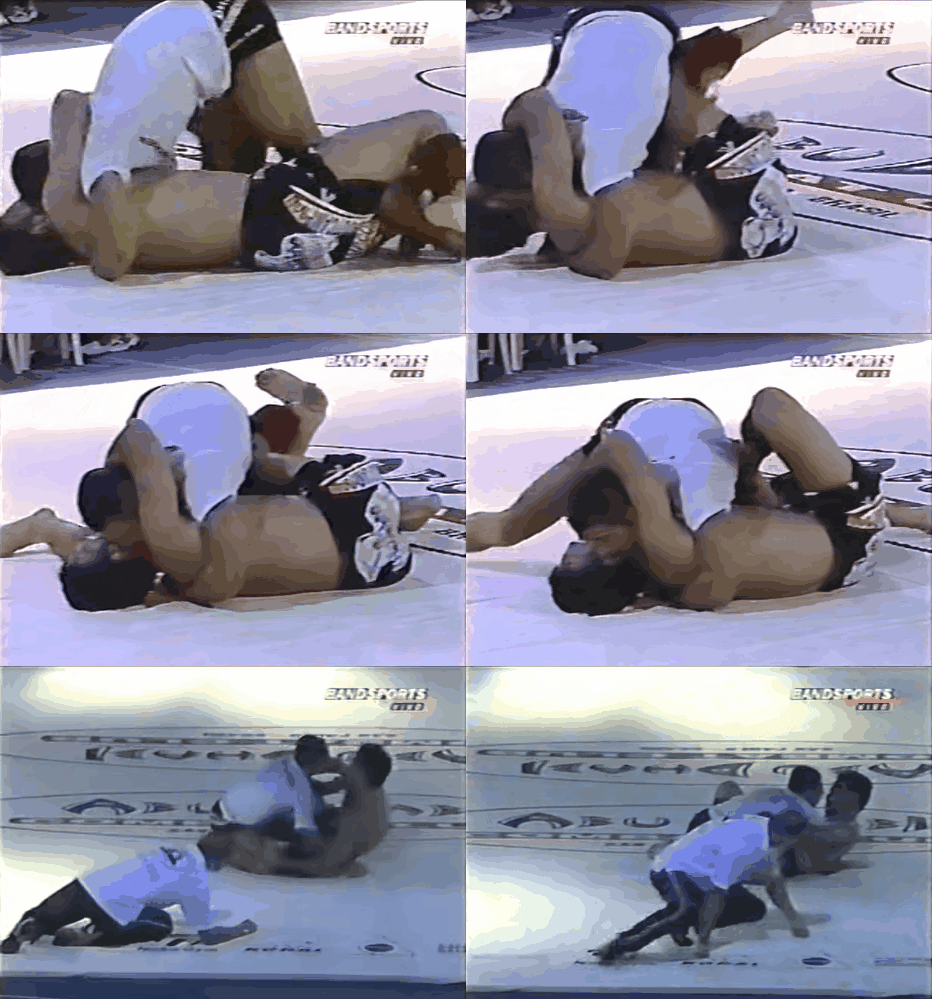
Fig. 20
Tajik demonstrated a well rounded game: he had the leg locks, he had the escapes, and he recognized that ADCC often turns into a wrestling tournament and could more than hold his own on the feet. One look that I particularly enjoyed was Tajik’s guard against the headquarters passing position.
Here is Tajik demonstrating the headquarters position himself, against Jozef Chen. Tajik leads with his left leg—which is less common—and places it into the back of Chen’s right hamstring. He sits on Chen’s other foot, and drops his knee to kill any leg pummeling Chen tries to engage in.
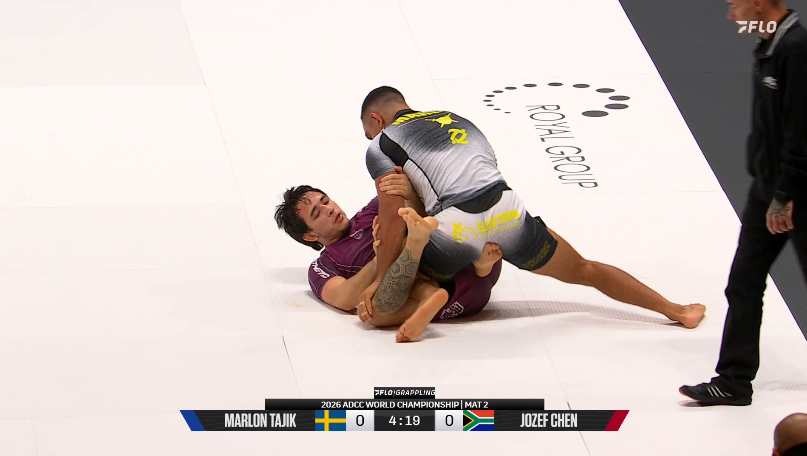
Fig. 21
Chen used his R-guard, arm drags, and pummeling the foot to undo this position or stop it early, but Tajik had a novel approach against Nathan Haddad shown in Figure 22. As Haddad stepped into headquarters with his right leg in the back of Tajik’s left (a), Tajik used his left arm to underhook Haddad at the knee (b). Using his right leg to maintain a frame, Tajik wiggles his way back to pummel his foot in front of Haddad’s shin (c). Once his foot gets inside, he can begin off balancing and attacking Haddad as he has inside position with both feet (d), (e).
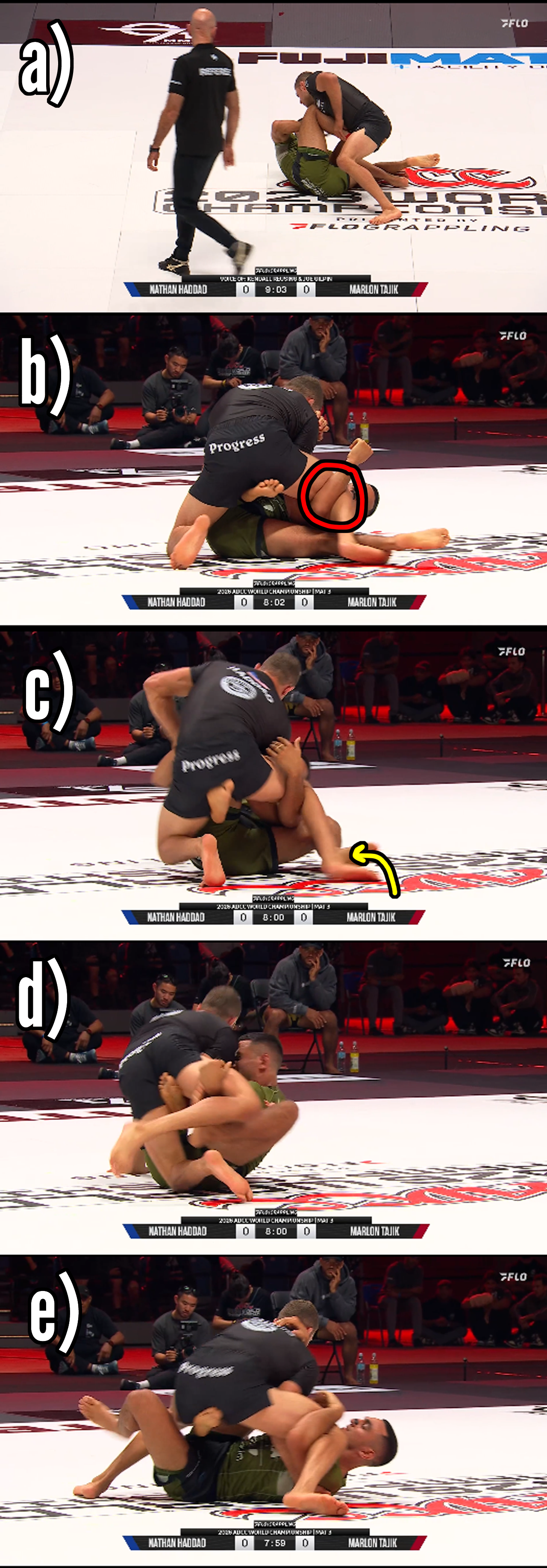
Fig. 22
In the first instance, Tajik inverted to attack Haddad’s right leg as he tried to backstep.
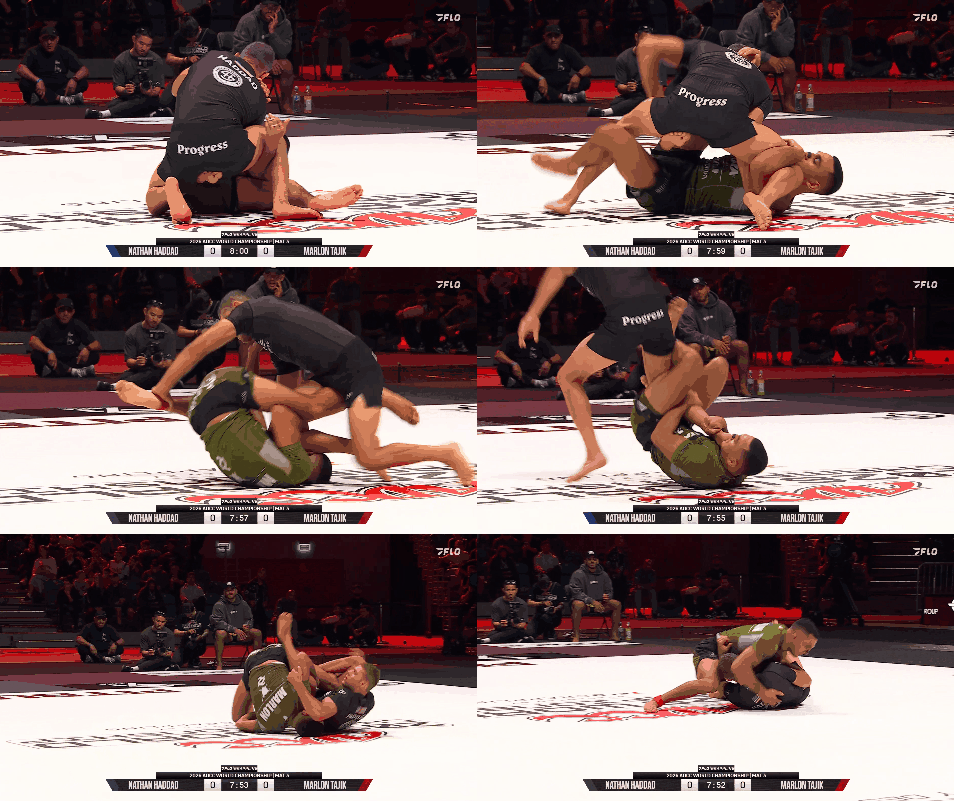
Fig. 23
Later in the match Tajik was able to scoot himself in, underhook Haddad’s other leg, and demonstrate an exciting new set-up to the false reap once again.
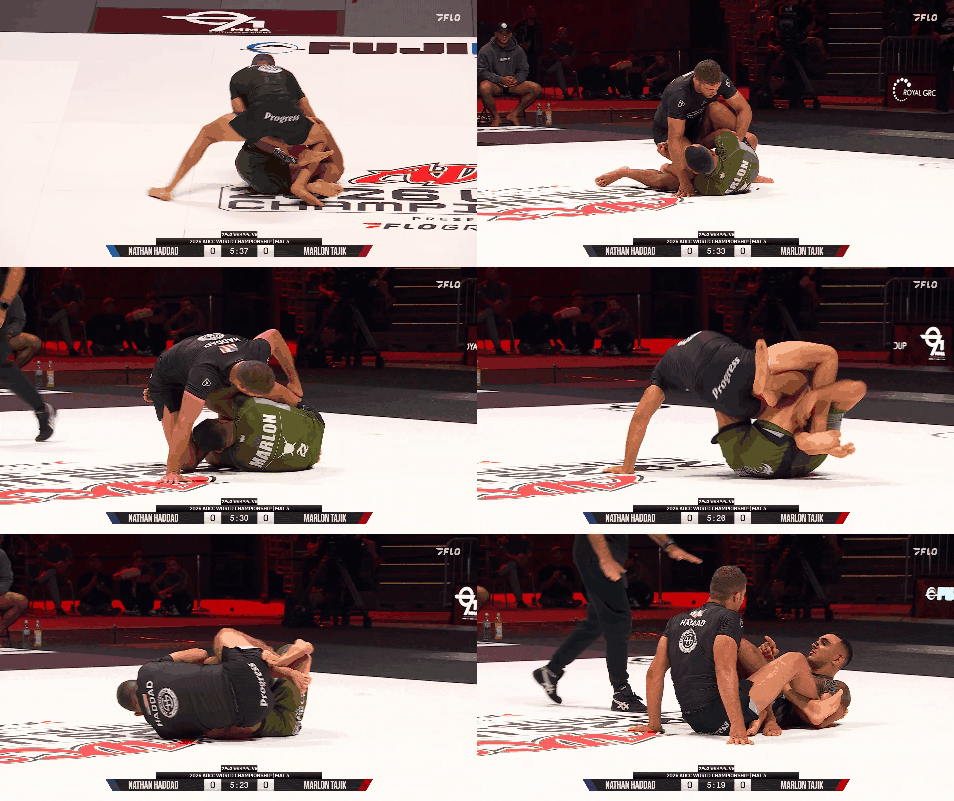
Fig. 24
My second most impactful lesson from ADCC 2026 was that the false reap is undoubtedly here to stay. It seemed like the set ups were so few and so obvious that it would be a gimmick for a while and then become a less favoured technique, but between Jaworski, Tajik, Diego Pato and others demonstrating new set-ups and nuances to the established couple, it seems like the false reap is going to continue to be the guard player’s great equalizer.
The single greatest takeaway from ADCC 2026 was that even in a slow year, even with UFC BJJ attempting to suffocate the rest of the grappling field, and even without Gordon Ryan, there are still plenty of talented young men and women mad enough to fly anywhere in the world and throw down for the vague promise of a small cash prize and niche fame, hidden on the other side of a field of cold eyed killers.