
A Brief Review of Usyk vs Verhoeven
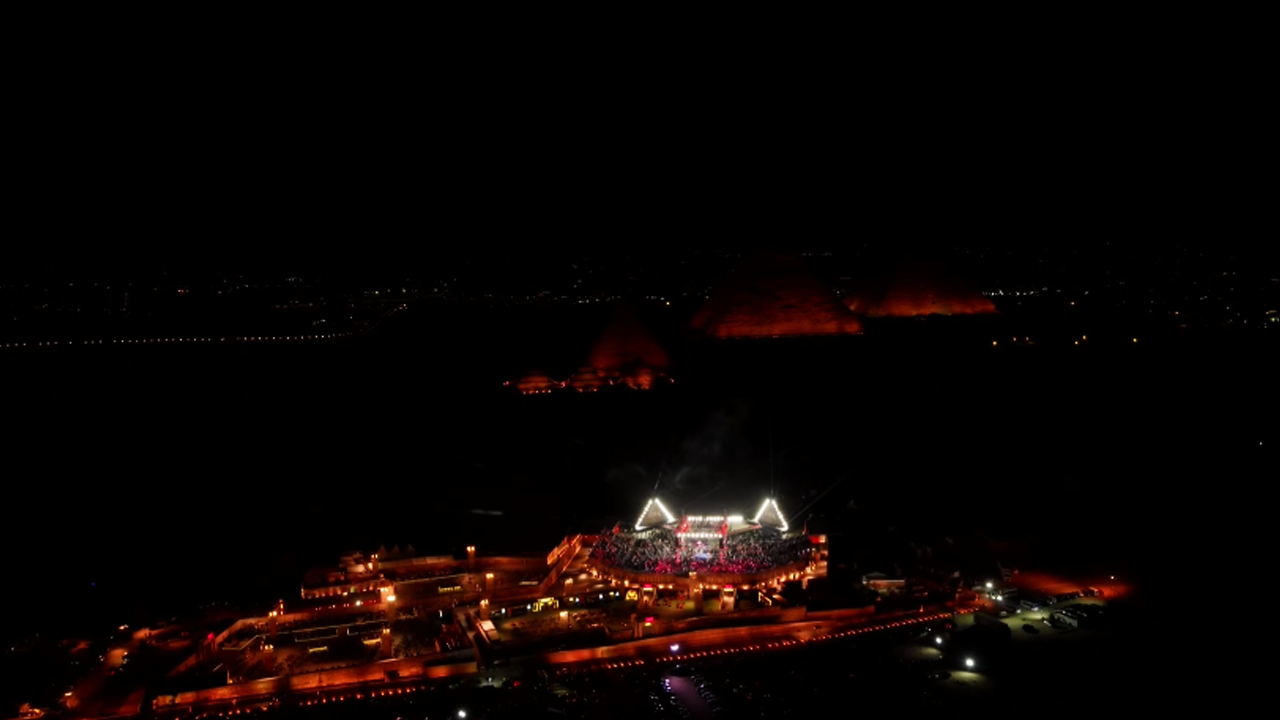
Even as the first pictures were arriving of the temporary arena in front of the Great Pyramid of Giza, most fight fans only lamented that such an amazing spectacle was being wasted on such a pointless fight. Rico Verhoeven had no business being in the ring with Oleksandr Usyk, and in fact was only taking up valuable time at the tail end of Usyk’s career, in which the champion should be fighting more legitimate challengers like Agit Kabayel and Moses Itauma. Verhoeven came from kickboxing, where he dominated the worst period in heavyweight kickboxing history, and where he relied heavily on his kicks and maintained just a twenty-nine percent knockout rate in that time. At least with Francis Ngannou and Conor McGregor there was the idea of the puncher’s chance to throw at anyone who felt less than enthused by the match-up.
In the other modern example of a non-boxer challenging the heavyweight champion, Francis Ngannou was able to catch Tyson Fury unawares back in 2023. Ngannou’s power proved legitimate even in heavyweight boxing, and Fury’s heavy reliance on the clinch let him down against an opponent who had spent his MMA career trying to avoid being grappled. That seemed to be the result of a unique match up, completely different to Verhoeven vs Usyk. What is more, Usyk had seen that fight: he was well aware of all the talk around Fury not taking the bout seriously. For Usyk to turn up and look so flat against Verhoeven was genuinely bewildering.
But let us not undersell Rico Verhoeven’s work in this fight. His tactics were simple, and strange, but proved effective against the best heavyweight of the generation. The fight was not terribly complicated, as Verhoeven did the same couple of things over and over, and Usyk attempted to time an uppercut and largely failed until the tenth and eleventh rounds.
Being an unknown commodity undoubtedly helped Rico Verhoeven because no one could have predicted the stance and movement he used in this fight. Many kickboxers look upright and stiff in their boxing matches but Verhoeven went the other way, he fought out of a crouch with his chin on his chest so that he was effectively looking down through the entire fight. He set to work jabbing and handfighting and circling clockwise around the ring. With his lead arm extended, his posture hunched, his chin on his chest, and his legs bent to do the exact opposite of making use of his height and reach, he evoked the stories one hears about Jim Jeffries.
The entire Verhoeven gameplan can be summed up in a phrase: circle clockwise, charge to two o’clock. Verhoeven would throw his right hand, mostly straight and occasionally to the body, and then shift through to collide with Usyk. Verhoeven is not the crispest puncher, but Usyk must have felt every ounce of Verhoeven’s two hundred and fifty pound frame barging into him after every slipped or blocked right hand, and pushing him to the ropes.
It was at the ropes that Verhoeven was often able to get in a few good digs. He attacked the body, which was lovely to see because so many of Usyk’s opponents have not been able to commit to that. But more often he landed two or three awkward uppercuts to the face that annoyed Usyk and scored. In most of his heavyweight fights, the quick and well conditioned Usyk almost always has the job of denying the clinch. Every time Verhoeven pushed in, chest-to-chest, Usyk would drop his shoulder to meet Verhoeven, and keep his elbows on the inside in an attempt to have some control over when to push out and start hitting. This meant that Verhoeven’s hands were loose and free to punch. It was only later in the fight where Usyk seemed to overcome his own habits and remember to pull Rico in to prevent the ugly short punching on the inside.
Comparing boxing and MMA striking, the prevalence of the shift in the latter is normally a negative. Shifting in MMA is sometimes well executed and can be a terrific boon to a fighter—such as Dustin Poirier—but for the most part MMA fighters shift because it is still largely a game of running forward when you are on offence and running backwards when you are defending.
One of the reasons that Verhoeven’s shift worked so well was that he would throw his right hand and immediately move in with his gloves nailed to his head and his chin stuck to his chest. The opening for the counter left hand was relatively small and he physically pushed Usyk back out of his stance as soon as he could.
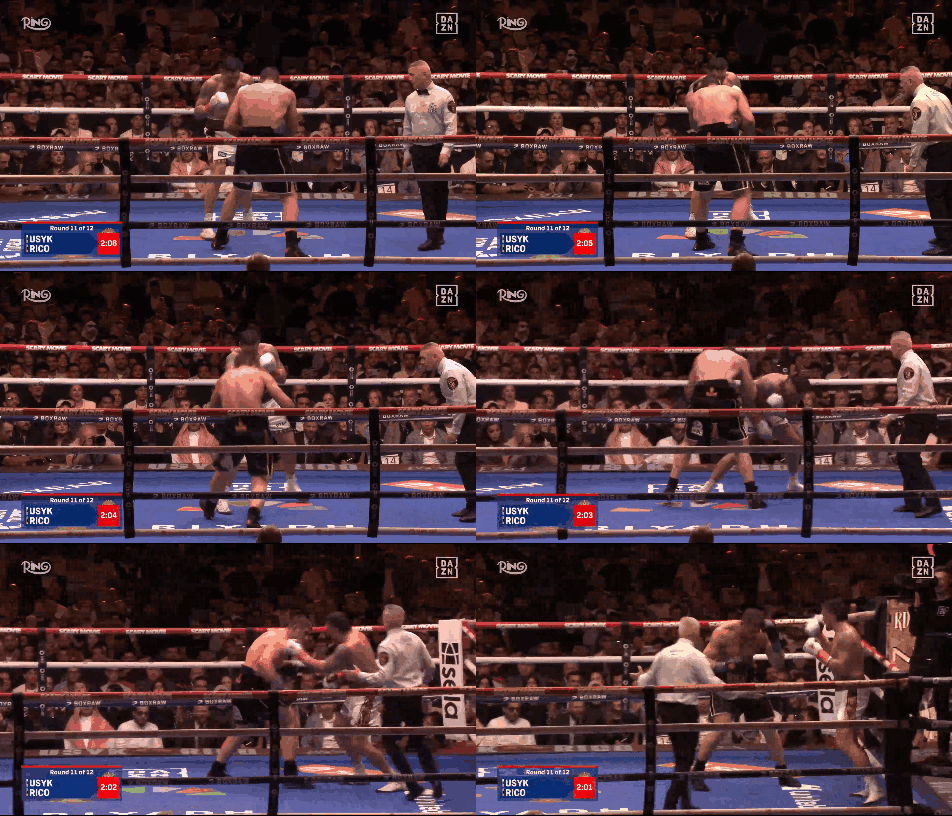
Fig. 1
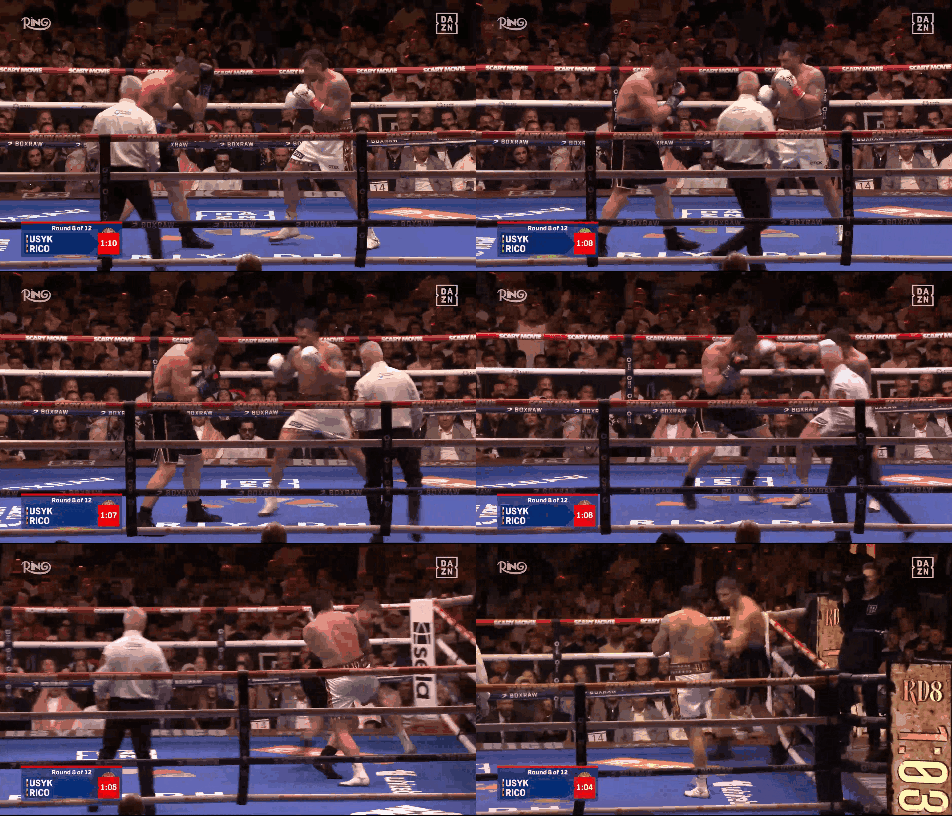
Fig. 2
By circling to the outside of Usyk’s lead foot, Verhoeven could keep Usyk turning. Then when Verhoeven threw his right hand and charged to two o’clock, Usyk was a step behind on dropping back to his left and finding the open side counter.
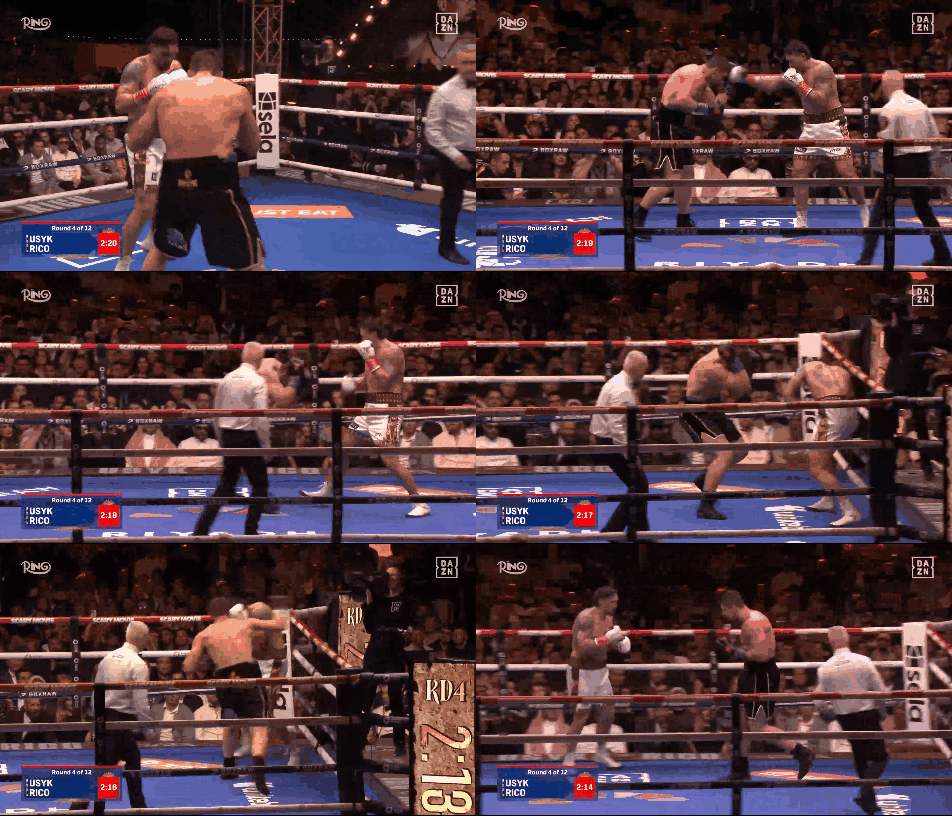
Fig. 3
Finally by shifting, in this open stance match up, Verhoeven closed the distance into a closed stance position. In an open stance match up the lead leg serves as an obstruction to closing to the infight—both accidentally as both men try to occupy the same space, and deliberately if fighting a skilled operator. There are a number of good examples of boxing’s greats shifting stance in order to create a closed stance match up for the infight. We discussed this in The Tao of Marvin Hagler—as Hagler was a southpaw who switched to orthodox to work on the inside—and Roberto Duran also used this tactic against the fleet footed southpaw, Hector Camacho in his later career.
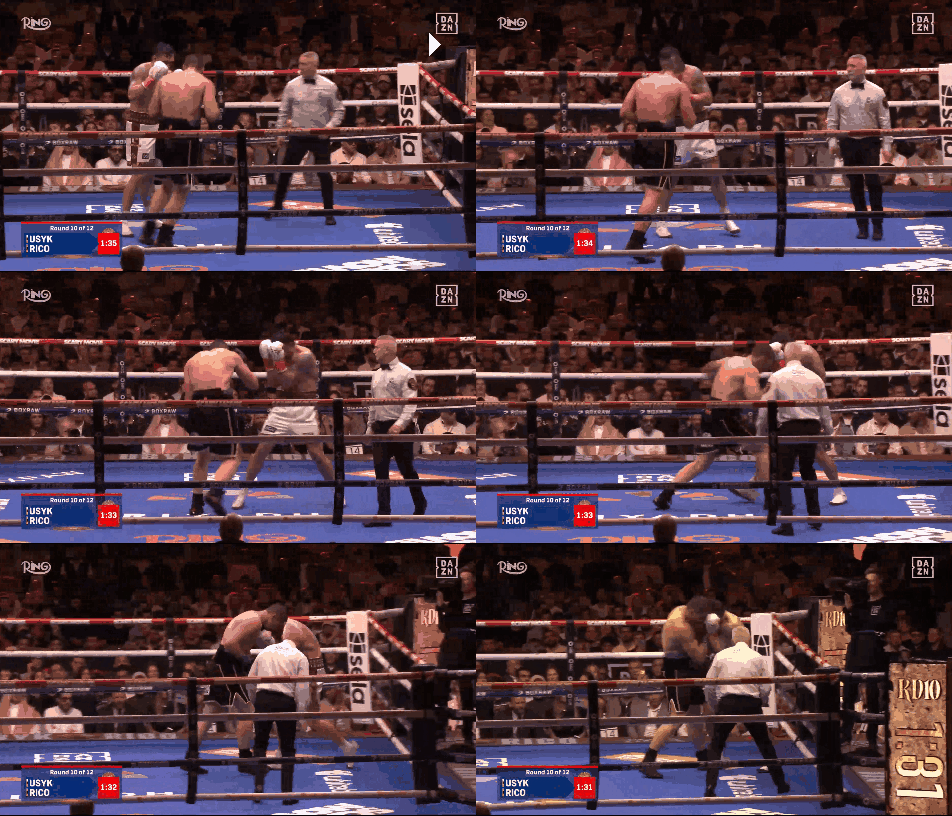
Fig. 4
The biggest differences between amateur and professional boxing are usually considered to be the length of the matches, and the scoring criteria and methodology. One significant factor of amateur boxing that gets overlooked is that when you turn up to a tournament you will know some of the key players, and you will have met others in other tournaments, but some you will have to work out on the day. Usyk is fifteen years removed from his sensational amateur career but he has always seemed to retain his ability to make reads and adapt in the fight. This bout was the first time I can recall that I began questioning his ability to do that.
Verhoeven’s stance and movement looked as though he had learned boxing from audio descriptions of a fight. The way that he hunched meant that his face was almost fully facing the floor and his forehead was half a foot forward of his shoulders. The uppercut is at its best when the opponent’s head exceeds their hips, and at its worst against an upright opponent. Verhoeven was begging to be uppercutted, and Usyk set to work trying to do that, with limited success, for ten rounds.
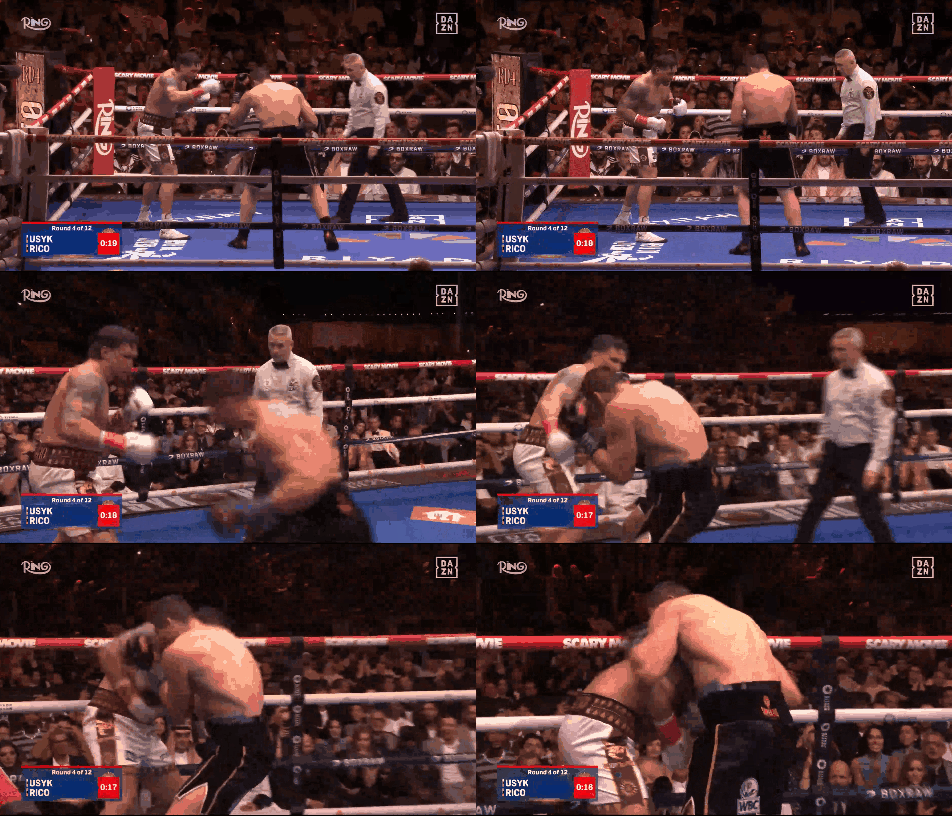
Fig. 5
Often Usyk would attempt to time the left uppercut as Verhoeven began charging him down, and would then be either hit or shoved to the ropes in the wake of his uppercut, where Verhoeven could score two or three scrappy little punches in close.
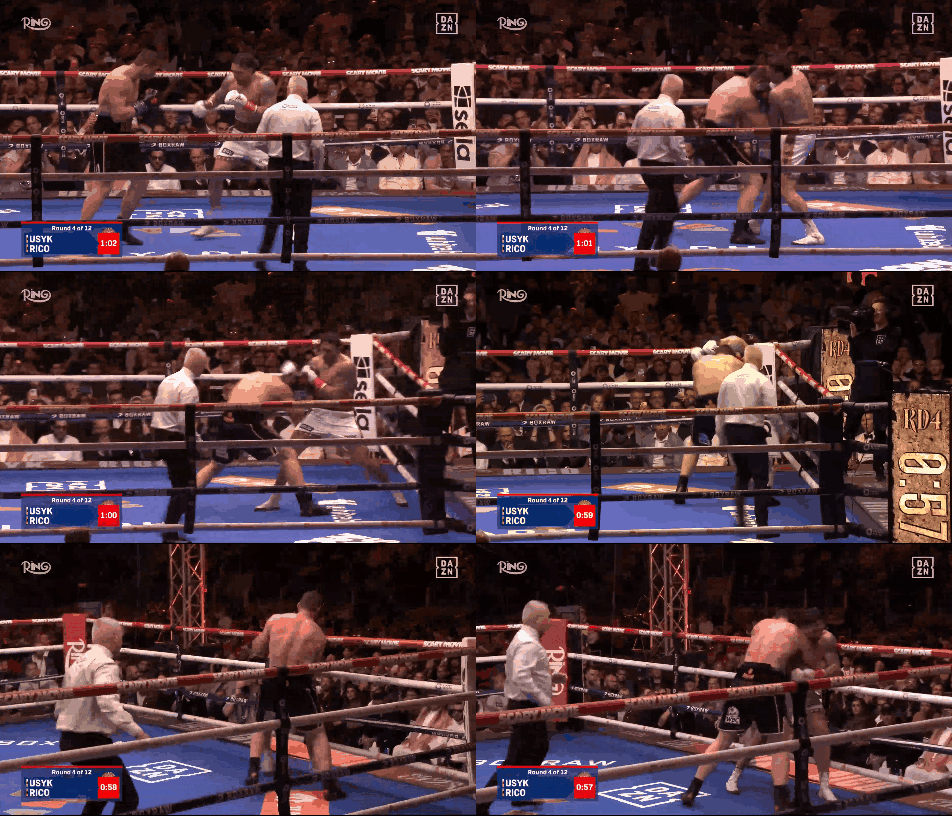
Fig. 6
Finally in the eleventh, Usyk was able to find his uppercut with both his left and right hands. Verhoeven got rattled and did what he had avoided the entire fight, he started swinging and reaching from exchanging range, which got him dropped.
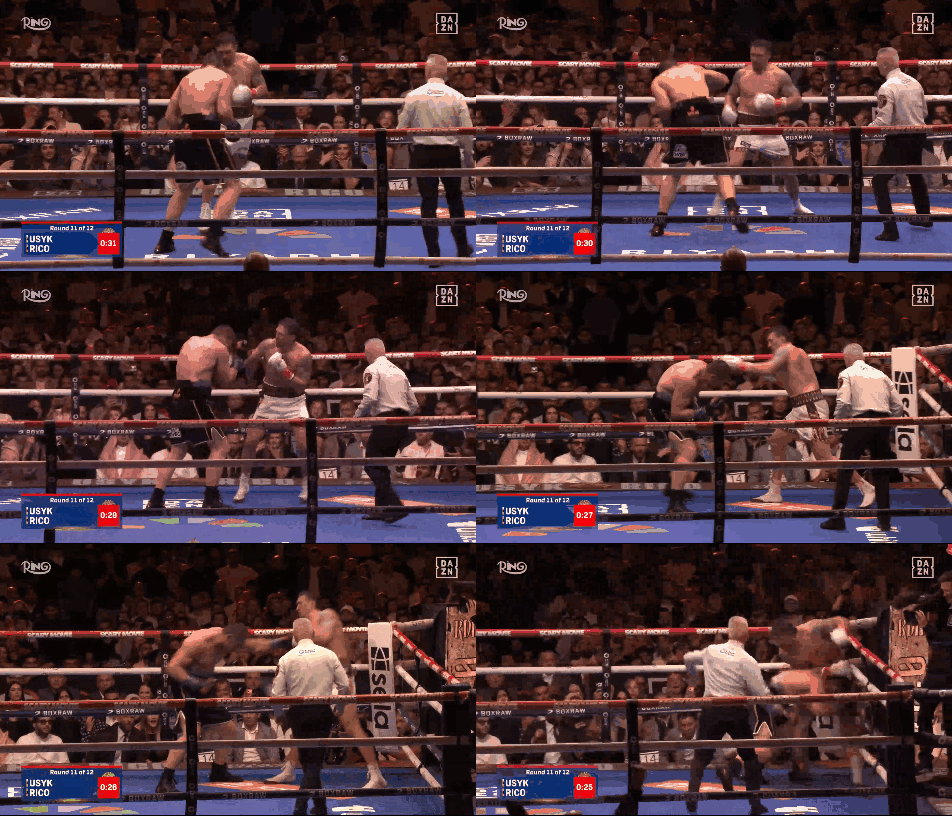
Fig. 7
I am not sure how much there is to learn from this fight. Usyk could well have thought he was in for an easy night’s work, and even if Usyk had a stellar camp, Verhoeven clearly benefited from the element of surprise. That surprise was that he could box a little and came with a rudimentary but effective gameplan that he stuck to religiously. I suspect few rate Verhoeven’s chances of remaining among the top heavyweights in boxing if he has to earn that place through consistency against the many monsters that swim those waters, but this fight and this one moment, is worth celebrating.
Rico Verhoeven has been the favourite in every fight he has for over a decade because he is a great kickboxer and most of his opponents are honestly not even close to that. He was the main attraction and the one fighter that Glory fought to keep above all others. He did not need to go out and seek the challenge. Once he got it and the money was secured, he did not even need to try. He could have swung a few blows, taken a knee when he got hurt, and retired. Instead he had everyone the arena asking if he was about to become heavyweight champion in his second professional boxing match. I have always been technically impressed by Rico Verhoeven as a kickboxer, in the way that I am supposed to. This circus sideshow against Oleksandr Usyk is the first time I have ever been straight-up, no qualifier, impressed by him.